
Mature Flâneur Down Under
A River of Wine: Marlborough, New Zealand
Why their Sauvignon Blanc is the perfect souvenir

The Globetrotters October monthly challenge is about souvenirs. To me, wine is the perfect souvenir. You can open a bottle from a place that you want to remember, and the genie within will transport you back through your senses to those magic moments in that land you love.
In our ten weeks in New Zealand (so far), my adorable spouse Teresa and I have stayed in chic hotels and cheap motels, beach-side cottages and mountain-side chalets. But the one place we had not yet stayed was in the middle of a vineyard. As we completed our circuit of the whole South Island, we decided to make our last stay in Marlborough, the nation’s most famous wine-growing region, world-renowned for crisp and flavorful Sauvignon Blanc white wines. So when Teresa found a vineyard that rented out its entire tasting room as an Air B&B in the off-season, we jumped on it.
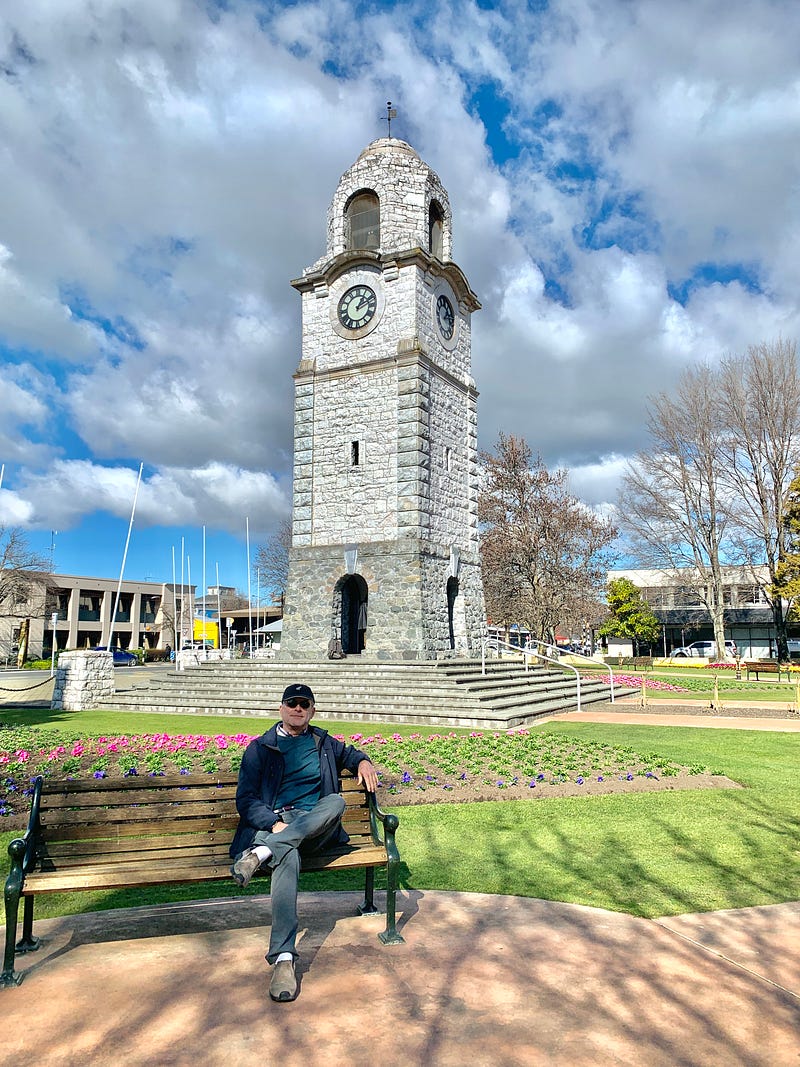
As we drove from Kaikōura up the rugged mountain coast, we were sad to say goodbye to the Pacific Ocean, which we would not see again on this trip. Entering the wide and flat Wairau Valley at the heart of Marlborough, and then driving through the main town of Blenheim was frankly kind of a downer. It looked like the dullest town in New Zealand. The center had all the character of a strip mall, with a few pretty gardens. Rows of pansies? That’s what they plant in a land so lush? This must be Blandheim.
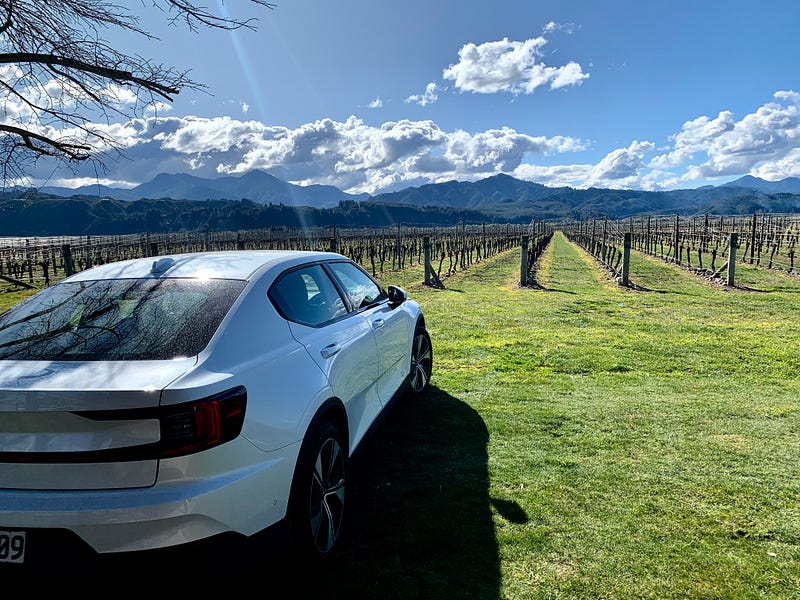
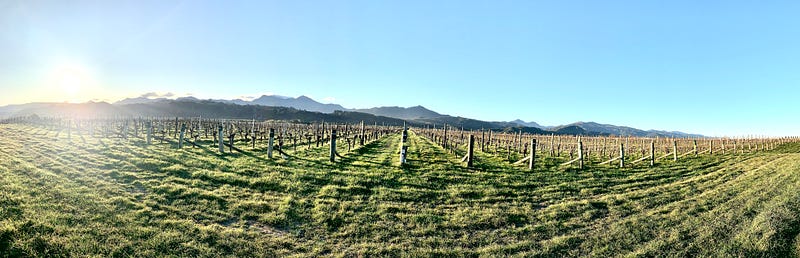
Just past Blenheim, however, we hit wine country. The entire, broad valley was wall-to-wall grapevines, with dramatic craggy hills to the north and south of them. We drove for about twenty kilometers, passing dozens of wineries on the roadside, before finding the sign to Misty Cove Wines. A gravel road led us through endless rows of vines to a slate-black building with a pool in front of it. There was no one there, just us, alone in the tasting room and the entire vineyard.
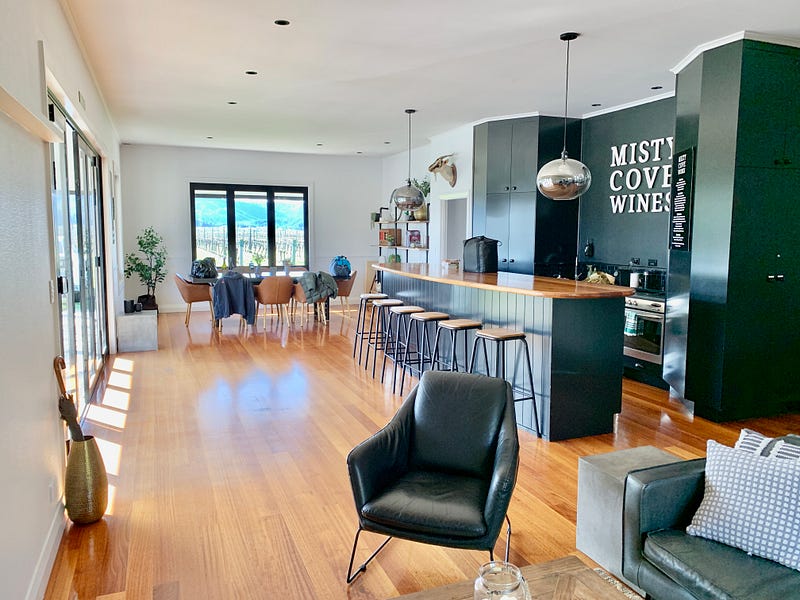
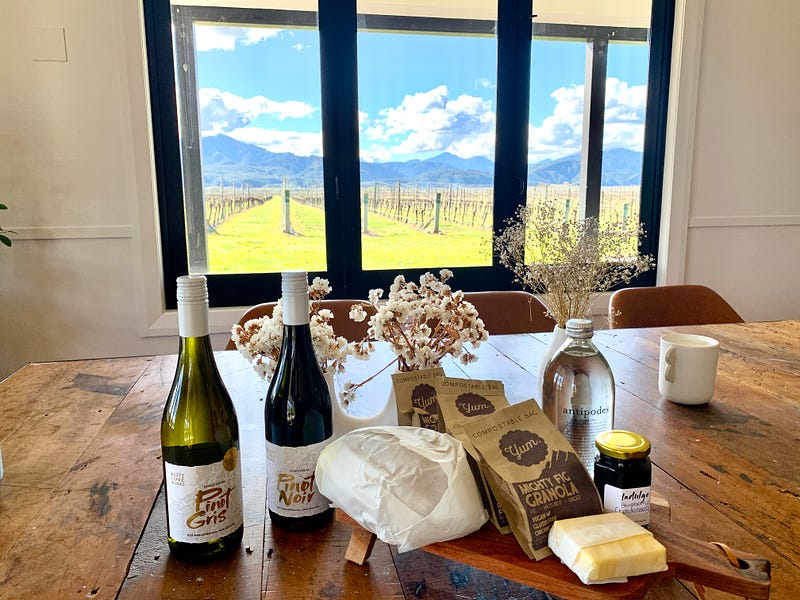
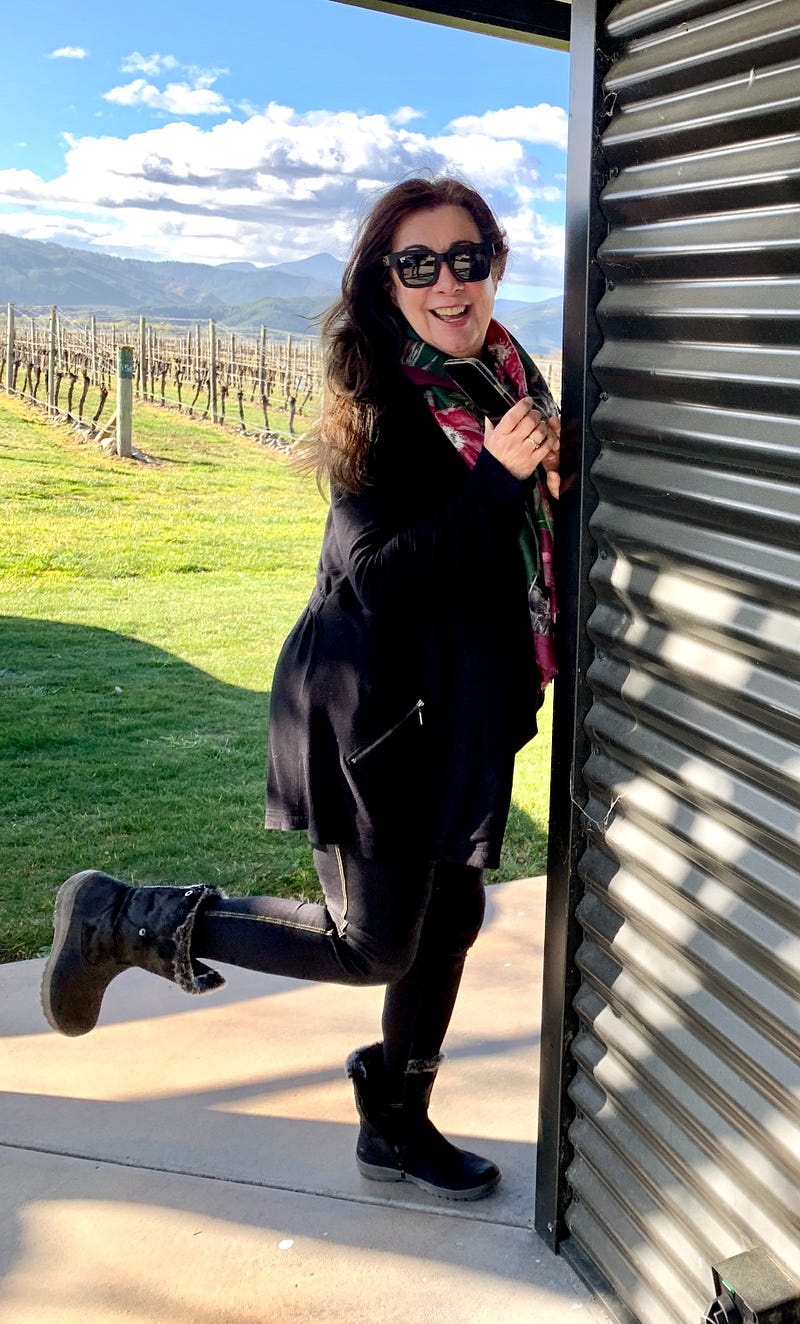
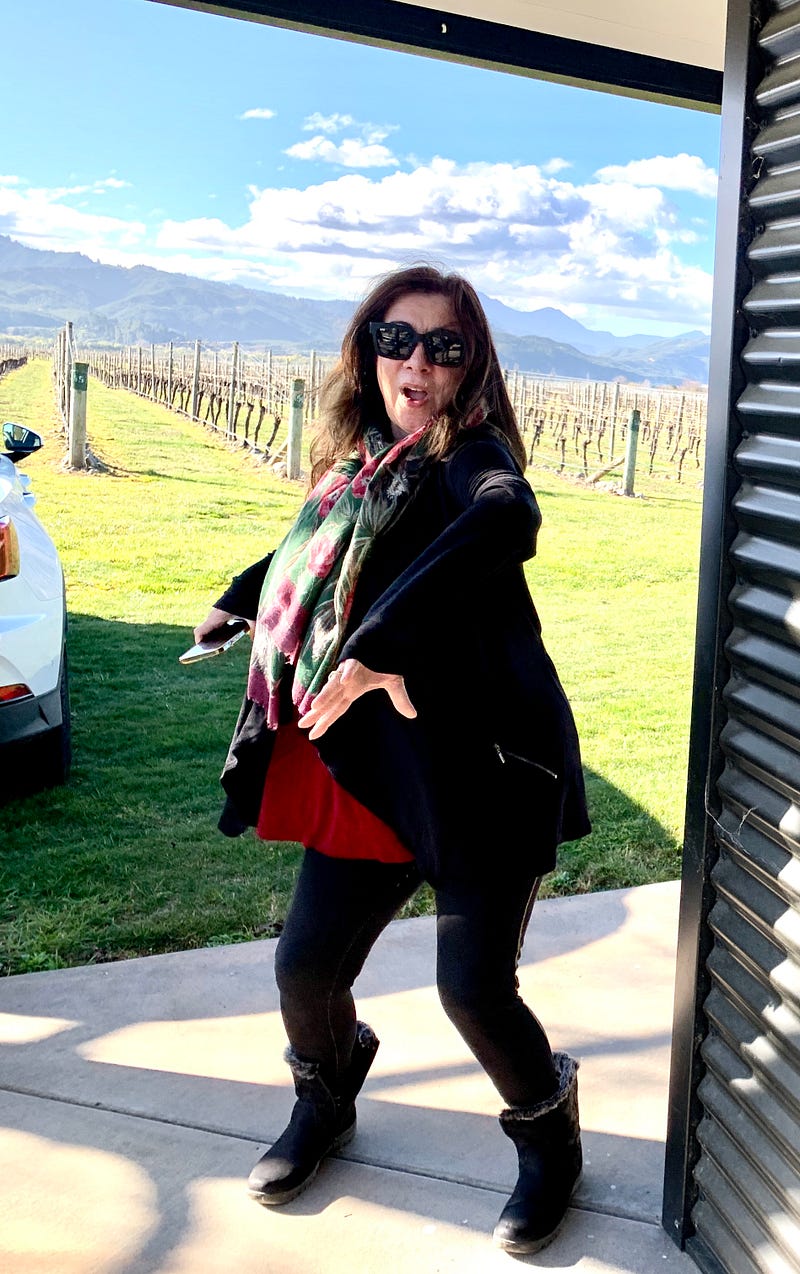
The sliding doors were unlocked, the keys just inside. The polished wooden floor was long enough for indoor bowling. There was a gas fireplace, a full kitchen with an island and six barstools, plus a TV lounge. A party of thirty people would not have felt cramped in this space. Our hosts had left us some breakfast goodies on the dining room table, and two bottles from their winery. Teresa announced that she was never leaving the premises. Here she is, below, doing her happy dance:

The only way to lure Teresa out of our tasting room was to go visit the tasting room of another winery. Fromm Winery was just a few vineyards down the road, an easy hop. Teresa chose them from all the winemakers in Marlborough because they make a lot of wines other than Sauvignon Blanc. One can buy NZ Sauvignon Blanc everywhere in the world. Teresa wanted to know what else the region’s vineyards could do.
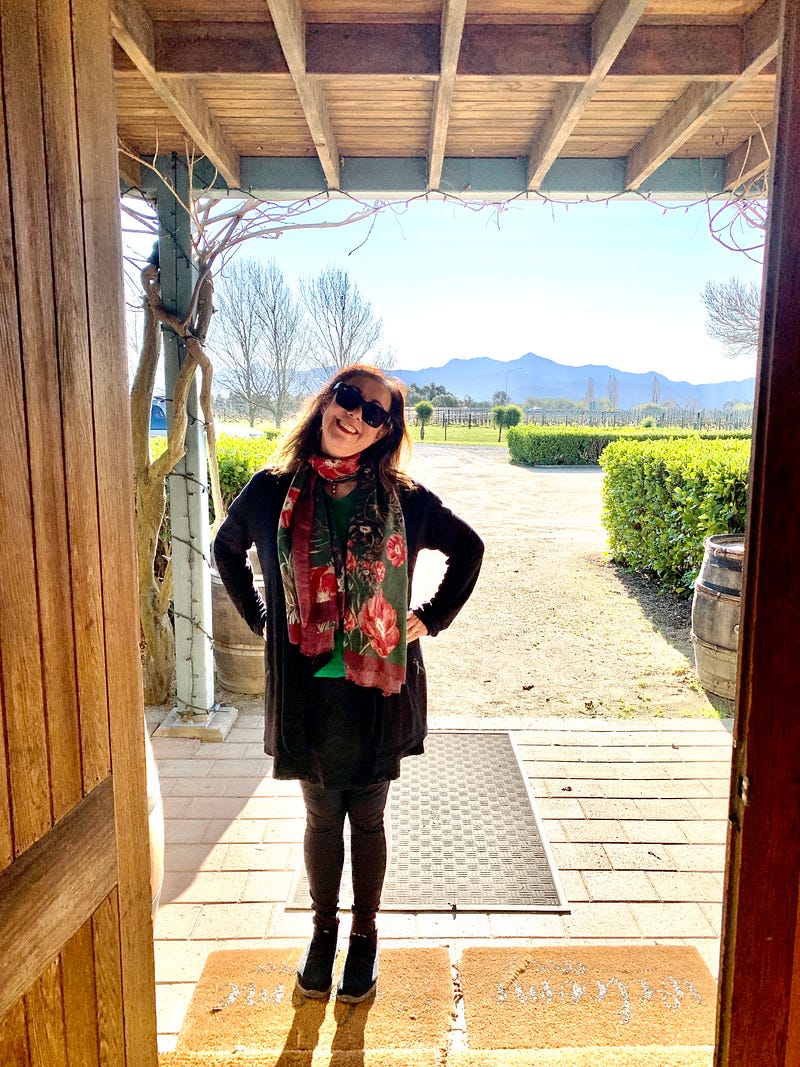
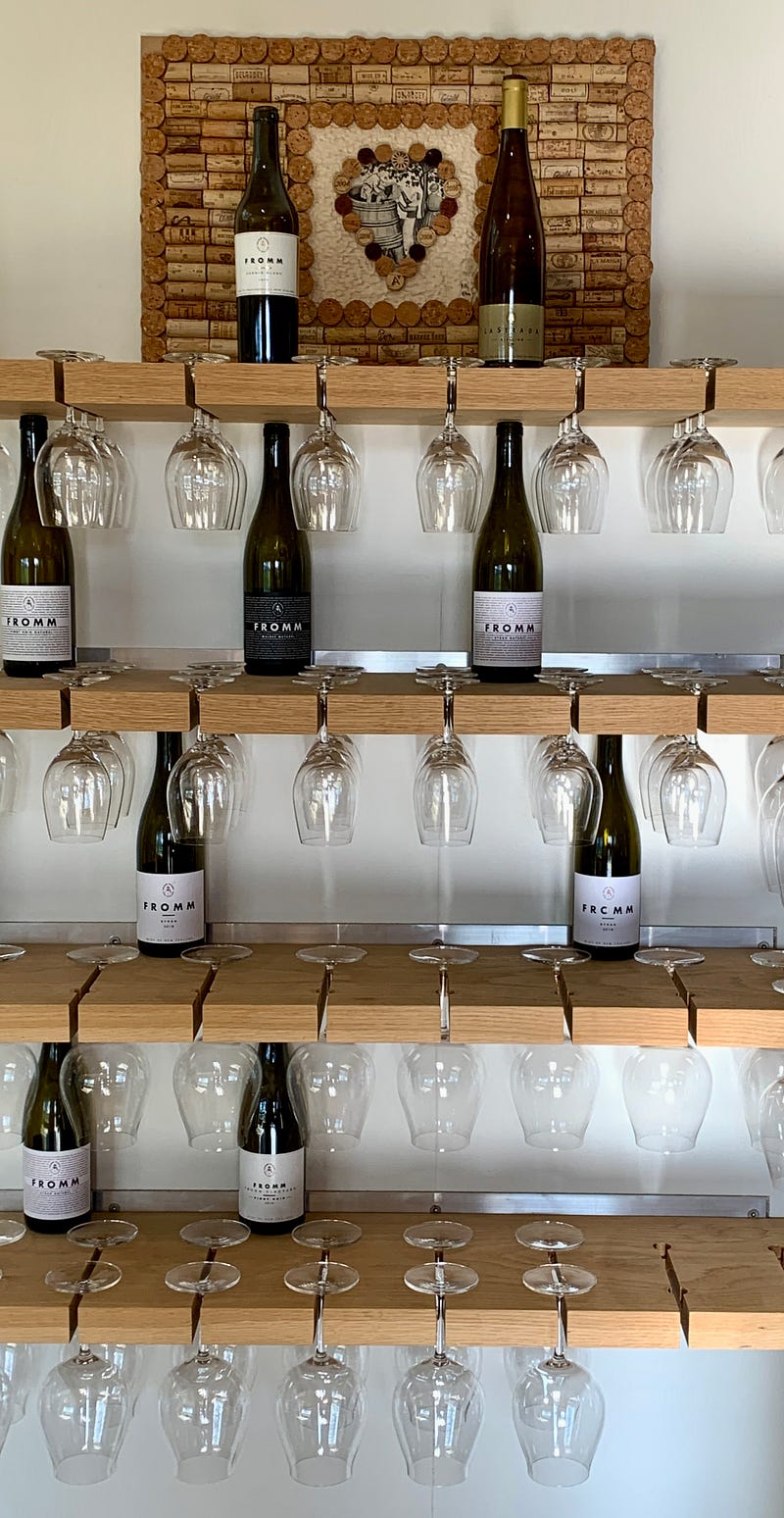
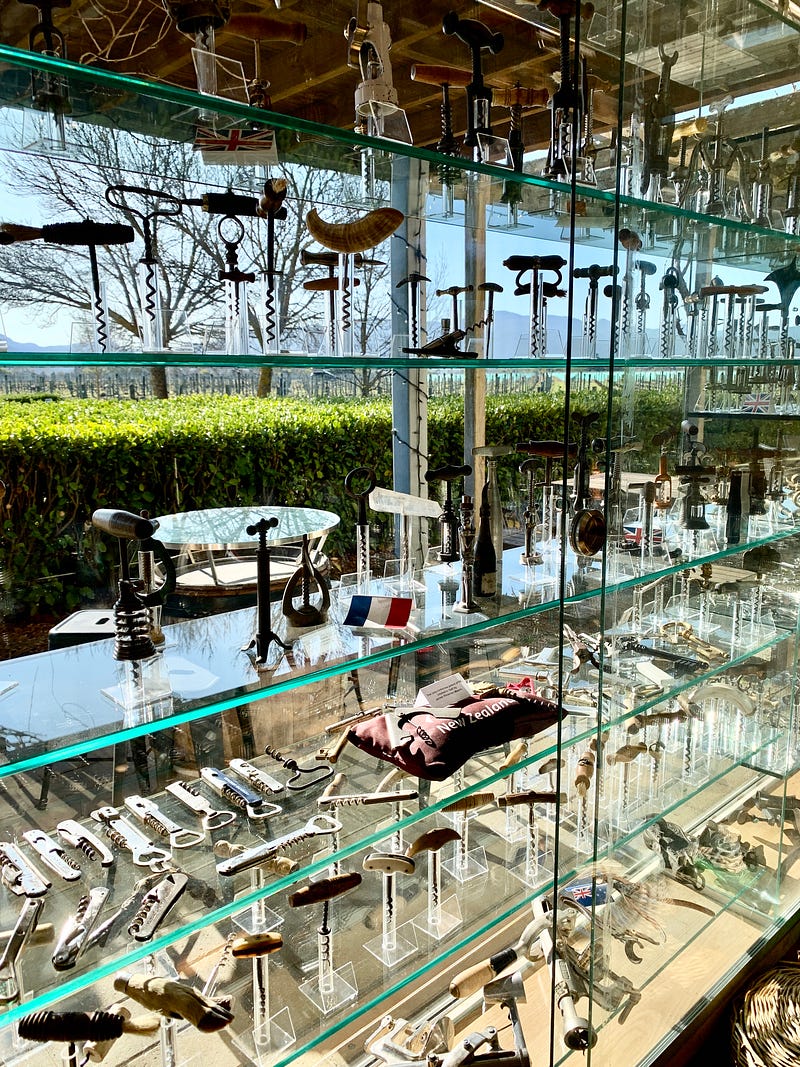
Fromm also got our attention because they have the audacity to use cork to stopper their bottles, not the ubiquitous metal screw top. It’s not that one can’t cork a New Zealand wine, simply that most producers are so small, they sell out and hold back no bottles to mature later. Fromm practically dares its customers to take a bottle home and wait for it to peak! Just to drive the point home, their tasting room displays the owner's collection of over 100 different antique corkscrews (below).
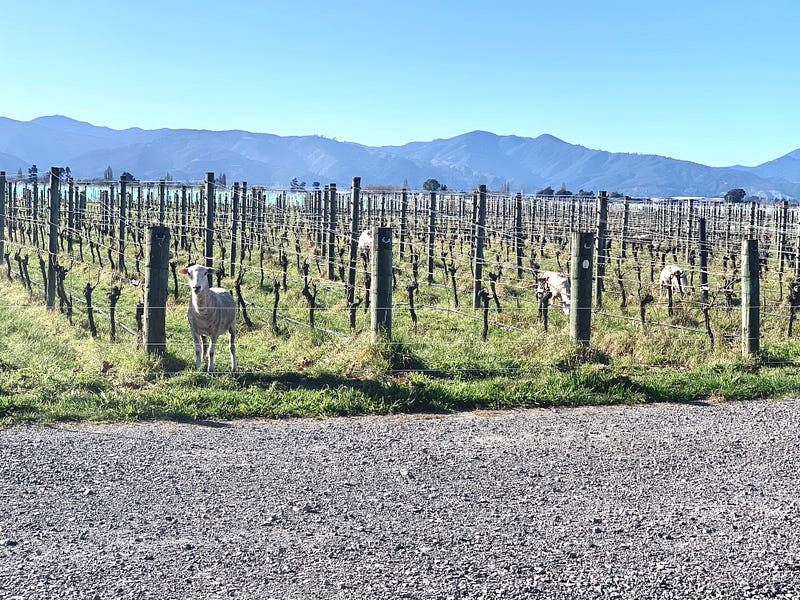
We set ourselves up on the vineyard’s terrace for the tasting, with an old barrel for a table. Across the parking lot, we could see sheep eating the grass between the vines, which were dormant now, in wintertime. Clever, we thought. Sheep to mow, and also fertilize the soil (“Does this vintage have notes of merino?”).
The lovely woman who poured our tasting was a local, and this was her first job at a winery. So she was rather flummoxed when we asked her a question — one that we had been pondering all morning long. In fact, realizing we did not know the answer made us feel downright ignorant:
“Is white wine only made from white grapes, or can it be made from red grapes too?”
While the pourer of our drinks could not answer, she had a lifeline — the winery’s resident wine expert was on hand. He had just finished a tour of the vineyard with some customers, and was now chatting with them at another barrel-top. She brought him over to our table. Stephen was wiry, with silver hair and wire rimmed glasses. He spoke with a passion about Marlborough wines that reminded me of Carl Sagan talking about the cosmos, as if wine was the absolutely most fascinating topic in the entire universe.
Stephen told us that the color of the grape is not what determines the color of the wine. He said, for example, that “Champagne is often made with a blend of Chardonnay (white grapes) and Pinot Noir (red grapes). It’s the skins of the red grapes that gives red wine its color. So, if you leave the skins in with the crushed grapes, you get red wine. Pink Champagne, for example, is made by leaving the skins of the crushed Pinot Noir grapes in with the juice for just a few hours.”
Before he could leave us, I asked Stephen my real burning question: “Why is it that New Zealand Sauvignon Blanc wines are renowned throughout the world while New Zealand Chardonnays, Bordeaux blends, Shiraz and Pinot Noirs are equally excellent, but you can’t get most of them outside the country?”
Stephen warmed to the topic.
“Yes, our other wines are also excellent! But why would you pay to import a New Zealand wine to the US or Europe when it’s much the same as the good vintages those countries already make themselves? But, Marlborough Sauvignon Blanc wines are both excellent and distinctly unique…”
We nodded. We often drink it ourselves in the US and heck, you can even buy Marlborough Sauvignon Blanc in wine stores in Paris!
“So, what makes them so distinctive?” I prompted.
“Most Sauvignon Blanc wines taste clean and crisp, but they don’t have much flavour. Ours are full of flavor” — we could hear Stephen’s voice swell with pride at this point — “If you open a bottle of Marlborough Sauvignon Blanc on one side of the room, you can smell the aromas clear over in the other side. Usually, when you get intense flavors in a white wine, it’s also sweet. But not wines from Marlborough! They are flavorful and also crisp, which is what makes them so unique, and so popular. You don’t get this combination anywhere else in the world.”
“And why not?” I hated to keep pestering Stephen, who was being so generous with his time and knowledge. But I couldn’t stop myself.
Enthusiasm undimmed, he continued:
“Sauvignon Blanc grapes in other countries must be harvested before they are ripe to keep them from getting too sweet. Once the grapes are fully ripe, they have too much sugar, and the wine loses acidity (which is what gives it crispness). But here” — he gestured with a swirl of his arm, taking in the whole valley — “we get the hot sun in the daytime, which the Sauvignon Blanc grape loves, but then, because of our extreme southernly climate, the summer nights get cold again. The grapes ripen in the day, building flavor and sugar, but then cool down at night, easing off the production of sugar. They can stay longer on the vine, and get more ripe, without gaining the same sugar content as grapes grown in other parts of the world. And, we get full flavors while retaining their acidity. That’s what makes Marlborough Sauvignon Blanc so unique.”
Mic. Drop. Honestly, we felt like applauding Stephen for so clearly and succinctly explaining the mystery to us.
We brought two bottles to take home with us. In fact, what’s unique about Marlborough Sauvignon Blanc is that you don’t have to take it with you. Because you can buy it anywhere, you can remember it everywhere. (“Remember” is the literal meaning of the French word souvenir)
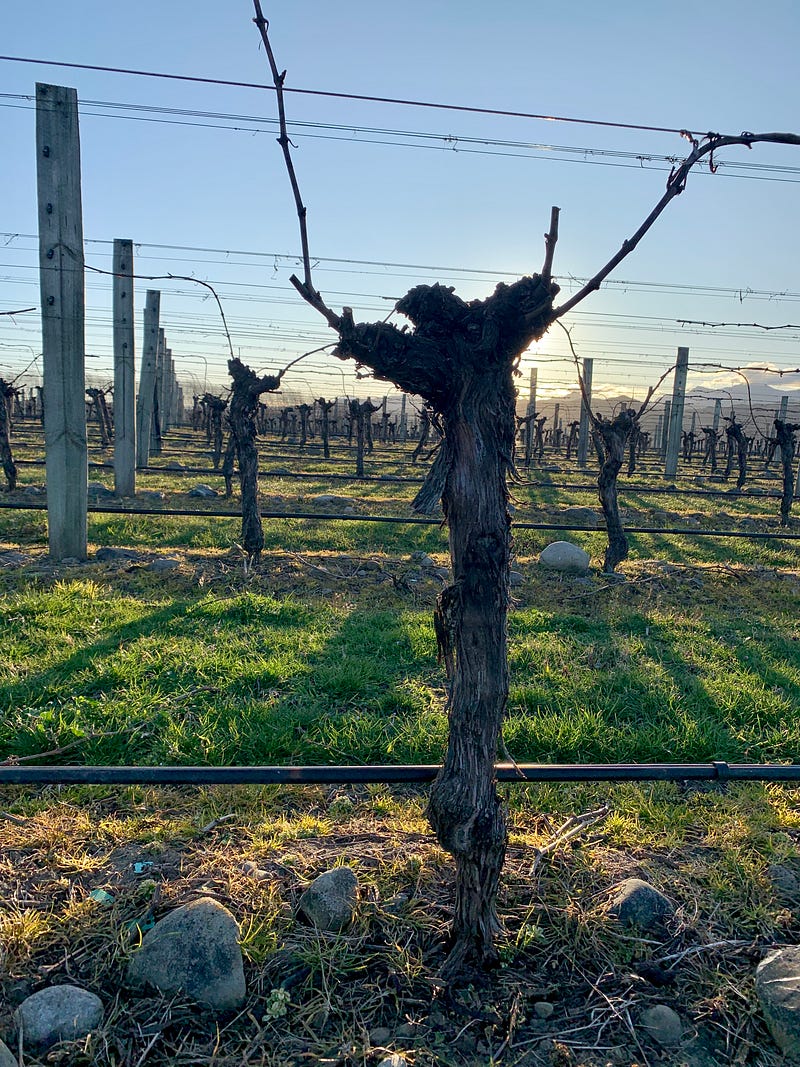
Our final day in Marlborough, I was able to hike into the forested mountains to the south of the Wairau River, and from that vantage, I could see the length of the lower Wairau Valley floor, covered with dormant vineyards, which from the distance resembled the fine brown fuzz on the surface of a kiwifruit, some whole hundred kilometers of it.
I could only imagine what this great valley of Marlborough must be like in harvest time, bursting with billions of ripe grapes under the warm fall sunshine, a veritable river of wine. Not a river that flows to the sea, but rather a river of carefully harvested golden globules, crushed, fermented, bottled, and then shipped out to the port, to flow across the world, ultimately splashing into wine glasses everywhere. I hope you souvenir that, when you open your next bottle of New Zealand Sauvignon Blanc.
Here’s a quick sum up of what we’ve learned about New Zealand wines from our various investigations:
Waiheke Island: (in the North Island): Bordeaux blends are their specialty. These are the wines that put New Zealand on the international wine map. Some of the island’s prize winners have tied with the best vintages in France and California — and it’s easy to taste why. Because of the small size of most of the wineries, it’s hard to find Waiheke wines outside New Zealand. Only a small number of Michelin-star restaurants have them on their menus. In New Zealand, though, the wines are not too expensive, and it’s well worth a day trip to Waiheke to sample them.
Hawke’s Bay (East part of the North Island): This is perfect wine country for Shiraz and Chardonnay — those full-bodied, big personality wines. You can find Hawke’s Bay Shiraz internationally — but if you ever find one of their Chardonnays, please give it a try. It’s nothing like the oaky California Chardonnays.
Otago Valley (Southern part of the South Island): This is the furthest-south wine-growing region in the world. The cool, dry climate, plus the mineral-rich schist-and-clay soils are a perfect place for finicky Pinot Noir grapes. I find most of them have a distinctive earthy aroma. Some call it the “forest floor.” It’s actually a bit sewer-like to me. But hold your nose if you have to, because the flavors are worth it — far richer and darker than Pinot Noirs from the northern hemisphere. Their Pinot Gris is also worth trying — dry and crisp, with a strong personality.
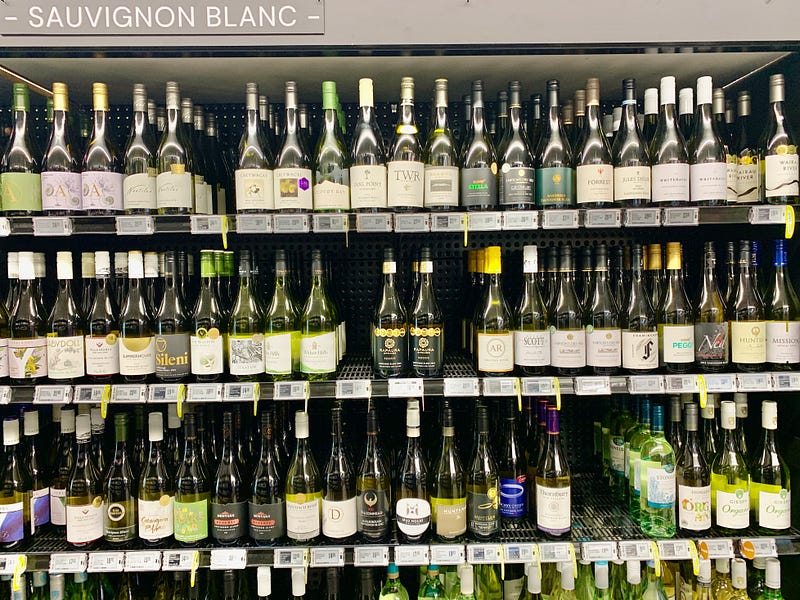
Marlborough (North in the South Island): Sauvignon Blanc! But, if you run across anything else from this marvelous, magnificent valley of vineyards, don’t hesitate to unscrew and sip. If it’s a bottle from Fromm, remember you will need a corkscrew.
***
Here are two other great tales of souvenirs from Globetrotters’ October monthly challenge: Erie Astin, whose writing on Globetrotters I have enjoyed for a long time, wrote a funny yet deep and personal story about bringing home three gargoyles from Oxford:
And Ellen Eastwood, a Globetrotters writer I only just discovered (thanks to this challenge), spoke to my soul with her “souvenir minimalist” approach to collecting mementos in this story:
One of the things I love about these monthly challenges is that they help us connect with new writers, and seek out stories we might not discover on our daily lists of recommendations. Thanks, team of creative editors, JoAnn Ryan, Adrienne Beaumont, Anne Bonfert, Michele Maize, and Jillian Amatt - Artistic Voyages for all the work you put into making Globetrotters the best travel pub on Medium.
Please check out my New Book, Mature Flâneur: Slow Travel through Portugal, France, Italy and Norway:


