
A revenge ‘outing’ in Bible scholarship
The story of Morton Smith and the “gay Jesus” manuscript
In 1960, a scholar at Columbia University named Morton Smith reported that he’d found a letter apparently by a ‘church father’, Clement of Alexandria.
The contents were quite extraordinary. The letter said that two passages in the gospel of Mark had been removed—and quoted them. Jesus was in some close, apparently erotic proximity to a young man.
Clearly, many Bible scholars asserted, the manuscript was forged, and Morton Smith was gay.
The matter has been enormously contentious in Bible scholarship.
The manuscript could be thought potentially very significant to biblical studies, and the authenticity of ‘Secret Mark’ is often debated. The debate often ends up pointing, for some reason, at the question of Morton Smith’s own sexuality.
A new book purports to solve the matter. I bought The Secret Gospel of Mark by Geoffrey S. Smith and Brent C. Landau and read it. The authors say that the Smith was gay and that the ‘Secret Mark’ manuscript was a forgery—but by a forger sometime in the past. Smith, being gay, they infer, was too gullible to examine the manuscript closely enough.
But I’m hung up on a question: what evidence do they have that Morton Smith was gay?
No specifics are given at all.
Geoffrey S. Smith and Brent C. Landau offer their assurances:
“In our extensive interviews with individuals who were both friends and colleagues of Smith…it appears to have been widely known that Smith was gay. He was not ‘out’ in the sense of having a longstanding partner or making some other public declaration about his sexual identity…Nevertheless, most of his friends and colleagues did mention his sexuality in our conversations with them, which leads us to believe that Smith’s identity as a gay man was something of an ‘open secret’…”
I’m not seeing any evidence here that Smith was gay.
When I write to Geoffrey S. Smith asking about their sources for his homosexuality being a “fact,” Landau replies:
“I phrased this a bit inelegantly here, and I should have said ‘the apparent fact.’ My apologies for that flaw in my prose.”
These are not scholars one would associate with queer studies on any level. Geoffrey S. Smith went to Biola University, one of the most anti-LGBT campuses in the nation.
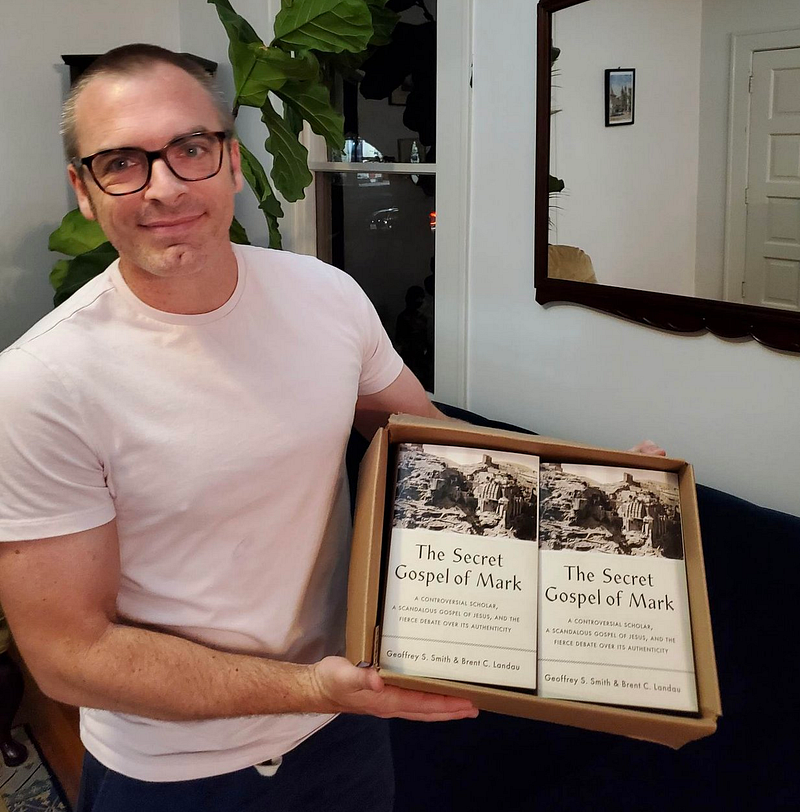
Brent C. Landeau, likewise seems to have no record of writing about gender or queer subjects. I read them as clearly Evangelical attack dogs.
I start emailing people who knew Morton Smith, asking about his sexuality.
His former student and assistant, Tom Alwood, writes back:
“From the time I spent with him I would be more inclined to say he was asexual. But the rumor always was that he was gay, but people aways say that if you aren’t overtly heterosexual. He was never married and didn’t seem to have any close female friends. But then again I don’t think it matters one way or another to his scholarship.”
Smith’s literary executor, Shaye J.D. Cohen, writes back:
“Many people say that Morton Smith was a homosexual. I do not know on what basis this claim is made. I at least never saw Morton do anything, never heard Morton say anything, that would reveal his sexual proclivities.”
So now I’m going over Morton Smith’s life.
I’m pretty good at spotting gay suggestion—more so, I hazard, than Evangelical scholars. So maybe I’ll find some and that will be that.
He was born Rupert Morton Smith in 1915, the only child of a doctor father. He grew up in the Philadelphia area. His family belonged to the New Church, a very liberal Christianity.
He went to Harvard, graduating in 1936 (studying English), then went on to Harvard Divinity School. As a Ph.D. student, he went to study in Jerusalem. In one report he had a Jewish girlfriend.
Smith seems to have had a Catholic girlfriend, and almost married, but then didn’t. He decided to focus on his scholarship. While completing two Ph.Ds, he worked as an Episcopal priest, serving in parishes in Baltimore and Boston from 1946 to 1950.
He had positions at a few Ivy League universities.
From late 1957 into 1958 he dated a woman named Miriam Chesterman, who had a shop in New York City selling Oriental furniture.
Miriam’s daughter, Ethne, had Smith as a professor. Ethne later described her mother then as “a recent widow, British-born, beautiful, vivacious and highly intelligent.”
On a trip to Jerusalem, looking over manuscripts at a monastery, he found the “Secret Mark”letter. He came back to America and in 1958 went to work at Columbia University as a professor of ancient history.
He seems to have quit dating.
In 1965, a colleague in Israel thought of him as “just an Anglican clergyman who had had an unsuccessful love affair and afterward condemned himself to bachelorhood.”
In person, Smith was described as “staid and somewhat stiff, always well-dressed and perfectly mannered.” As a writer, however, he could be very derisive. One thought him like “a little boy whose goal in life is to write curse words all over the altar in church, and then get caught.”
It does seem there was a great aversion to traditional Christianity. He testified in a lawsuit to remove the Nativity display from a public school.
In his scholarship, as the Database of Classical Scholars put it, Smith “often attacked both Judaism and Christianity unmercifully.”
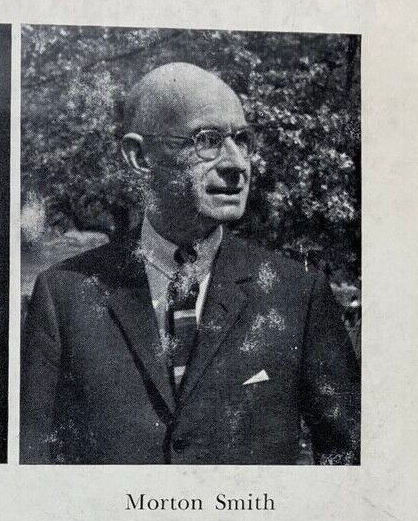
He’d come to view the Christian messiah as less a god than a ‘magician’.
When he took in the ‘Secret Mark’ letter, Smith thought that erotic rituals might’ve been involved in whatever was happening between Jesus and the young man.
This was a forced reading of the letter, but not that unusual given early Christian descriptions of ‘Gnostic’ sects. Early Christians were often said to be very sexually degenerate (a standard attack). The Carpocratians were said, in particular, to practice “every form of man-mounting…”
Smith never claimed Jesus was ‘homosexual’, any more than the Carpocratians are called ‘homosexual’. It was one detail that was certainly a possible reading of the manuscript.
When presenting the manuscript publicly, he seems to have known Christianity would try to cancel him. “I’m reconciled to the attacks,” he tells the New York Times in 1973. “Thank God I have tenure!”
But in fact, the attacks were only beginning.
He was being profiled. An opening for attack was spotted: he was unmarried. The Bible scholar sex detectives went to work looking into Morton Smith’s sexual history.
Some notes made in 1983 by a Catholic scholar named Quentin Quesnell record conversations about supposed “psychological explanations” for their theory of Smith forging the text.
Examination of the manuscript itself was not the focus. The focus was Smith’s sex life. They knew about the Catholic girlfriend. But maybe the religion stuff was a mask over sexuality, the scholars reasoned.
As the notes say: “Was this a cover-up?”
If ‘Secret Mark’ had gay suggestion, as the logic went, Morton Smith was gay himself. His profession was convinced, and a whispering campaign began. As Guy Stroumsa put it in 2008: “Smith’s homosexuality was widely speculated upon in the American academic community.”
Smith went into lockdown on personal information.
He “consistently shunned disclosure of his personal life,” as one scholar noted. Smith must’ve known his profession was looking for anything to delegitimize and deplatform him.
During his lifetime, Smith would have been able to sue if libels were printed, which seems to have dissuaded them. When he died, it was on.
A former student named Jacob Neusner kicked off the effort to destroy Smith’s memory. Nursing wounds over a falling out, Neusner published in 1993 a book-length attack on his former mentor.
Against the backdrop of their former closeness, Neusner calls Smith “the nasty old fool” and his work “anti-Christian propaganda,” insulting his intelligence, dismissing his career, and many times mocking him for his supposed “homosexual Jesus” theory.
Neusner plays up any accusation against Smith, including calling ‘Secret Mark’ a forgery, but I notice only a hint of gay insinuation. Neusner writes: “Smith showed another face altogether, especially to young men.”
It’s was more invective. Ethne H. Chesterman wrote of Smith: “He was an inspiring, brilliant and intellectually honest mentor.”
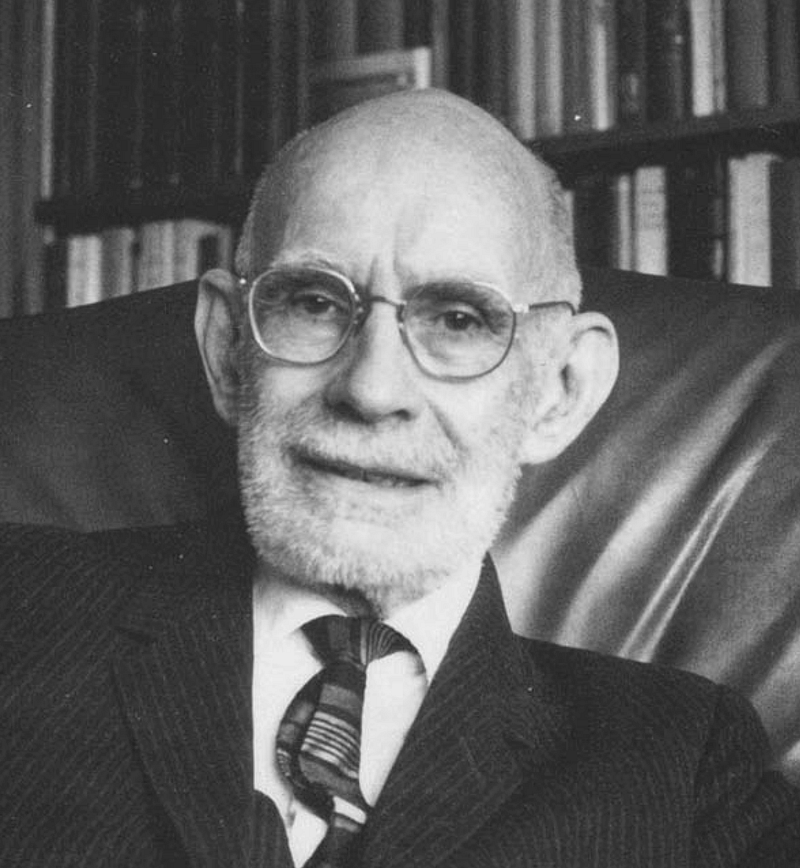
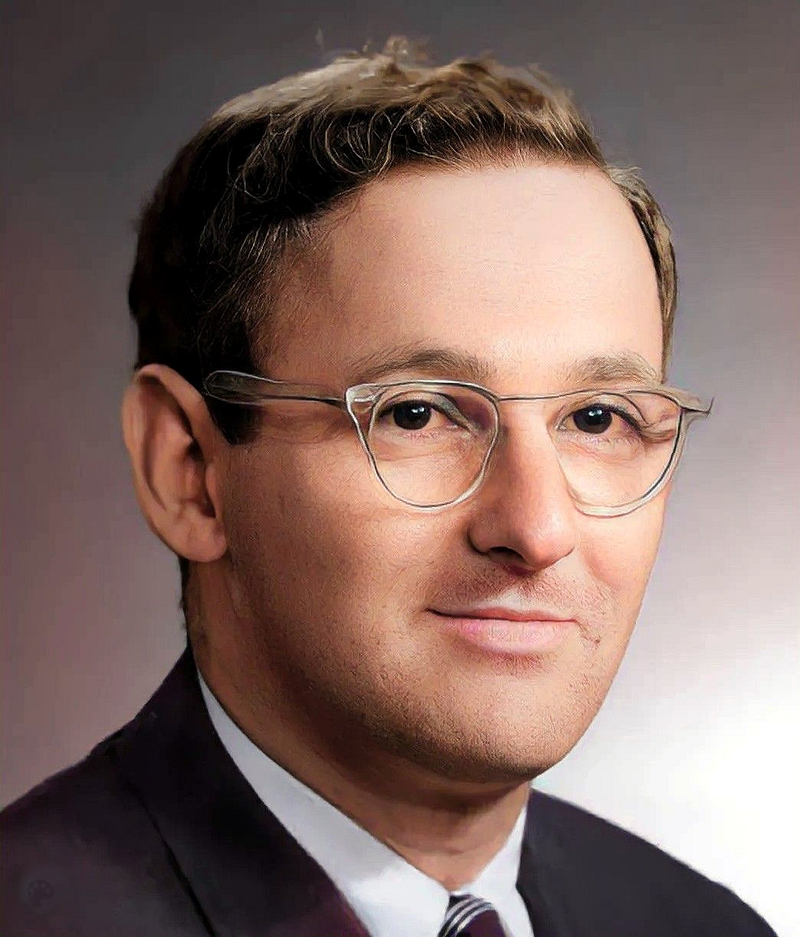
Christian scholars kept up the homophobic attack.
A Catholic lawyer (later Bible scholar) named named Stephen C. Carlson published The Gospel Hoax in 2005, making a range of absurd charges and heavily insinuating—but not quite stating—that Morton Smith was gay.
In 2007, a Christian music scholar named Peter Jeffery was a bit more overt in The Secret Gospel of Mark Unveiled. The psychological profiling went into the absurd:
“My impression is that Morton Smith was a man in great personal pain, even if (which I don’t know) he was usually able to hide this fact from the people who knew him.”
But there was never evidence of gayness in Morton Smith’s life.
There was just Christians looking for an easy way to dismiss the ‘Secret Mark’ manuscript. 🔶


