
A Recap of my 10-Day Silent Retreat
Less than .01% of the world population will ever experience 10 days of complete silence.
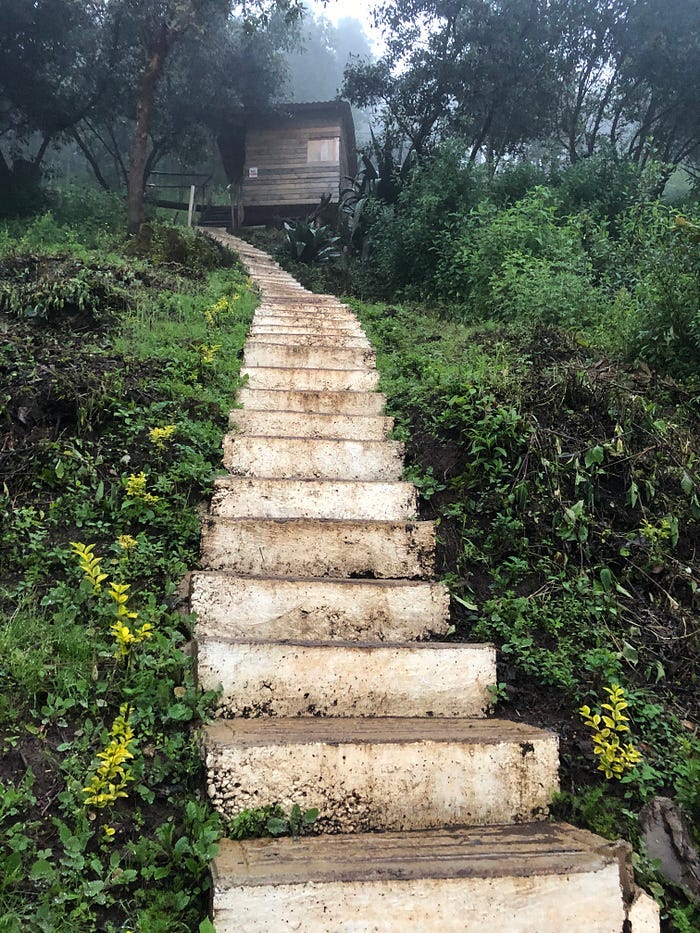
With no forms of stimulation allowed, you have nowhere to run.
100 hours of meditation in 10 days.
This post will dive into:
- A day in the life of a 10-hour meditation courseDark self-observations
- Why our minds are the real enemy
- Life after the retreat, is it any different?
- How you could attend a 10-day retreat for free
What is a Vipassana retreat?
A vipassana retreat is a silent meditation course. The standard practice is 10 days, however, many participate in much longer periods. The meditation technique itself is called vipassana.
The origins of vipassana date as far back as the 10th in East Asia, mainly Burma. It was reintroduced in the 19th century and focused on more contemporary teachings.
Vipassana is Pali for “insight” or “seeing things clearly”.
At these retreats, students are not allowed to speak with one another, write, consume any content whatsoever, or practice other rituals/rites.
The purpose of this is to minimize all distractions and strip oneself down to what is really there to allow for prime focus. The technique itself follows the same philosophy.
Students are fed two meals per day, at 6:30 am and 11:00 am. At 5 pm there was light fruit available.
Hours Before The Silence Began
I arrived at the center around 2 pm with a few other meditators that I drove along with me.
Once you drop off your luggage, you are required to hand over your electronics. After that, I sat in the cafeteria at my designated spot.
Waiting…
Waiting…
There were five other names at my table, but no one had arrived yet. I noticed other tables filling up. Conversations arose I couldn’t help but eavesdrop on.
- “What brought you here?”
- “Have you practiced in the past?”
I wanted to go talk to this specific group of people. They were around my age and talking about things I could always sink my teeth into, but I was too nervous.
Every table was talking except for mine. I noticed some people floating from table to table with ease, introducing themselves and engaging in wonderful chats.
After some time, my table filled, and conversations naturally occurred.
A common question that was asked was:
“How long have you been meditating?”
Having meditated for the past two years consistently, I felt I was equipped to “defend myself”
I say defend because that’s the story I played in my head before I ever met any of these people.
I was under the assumption that everyone here would be serious meditators who could talk your ear off about the practice, as well as theory.
I felt like I wouldn’t belong.
“I’m still too new.”
To my surprise, many people never had a meditation practice before this retreat.
One older gentleman was convinced by his daughter and he came with almost no idea of what to expect.
Regardless of their experience, everyone possessed a strong level of openness and curiosity as to what the hell is going on in their minds.
We were served lunch at 6 pm. a hearty lentil soup with cornbread. Tensions had dissipated by then. We realized we had a little less than 2 hours of chatting with one another before Noble Silence began.
So we let it all out.
Someone asked me,
“Why’d you start meditating?”
I said,
“Because I had a porn addiction.”
He was initially surprised by my blunt response, but the table understood. Time is ticking, let’s speak from the heart.
After some time, the bell rang, commencing Noble Silence.
Men and women were separated from one another by a curtain.
I wouldn’t hear see a woman for the next ten days.
Daily Schedule
The bell rang at 4:00 am. It was soothing. As if someone was hitting a large meditation bowl.
I’d come to develop a love-hate relationship with this bell. At times, it signified lunch.
Other times, a two-hour meditation.
I excitedly jumped out of my rock-hard bed, brushed my teeth, and made my way to the meditation hall for 4:30 am.
I finally met my roommate, well not really. I just saw the man I’d be sharing a room with for 10 days in silence.
4:30–6:30 AM: Meditation
The first 30 hours of meditation are spent using the Anapana technique.
Meditating solely with the awareness of the nostril breath. Specifically the sensations in the nostrils, on the nose, and the mustache area.
Not the rising and falling of specific body parts. Students are asked to observe their breath in its natural state.
This means accepting each breath as it comes. If it is a shallow breath, don’t try to breathe deeper, just accept it as it is.
Anapana is programmed first as a means of preparation for the Vipassana technique.
One will ideally become so sensitive to the sensation of their respiration that even the gentlest breath will be felt.
The teacher specifically picks a tiny location on the face to sharpen our focus. If asked to feel it throughout the body, we may jump from place to place, missing the subtlest sensations.
To say I reached this level in one two-hour session would be a joke.
You could say I was “lost in thought” the whole time.
6:30–8:15 AM: Breakfast and Rest
The first day I heard the breakfast bell, I jumped out of my meditation and headed straight for the dining hall.
I heard so many good things about the food here, I couldn’t help myself.
Keep in mind that we’re all navigating as a group in complete silence with no eye contact.
Holding the doors for people only for them to ignore you was something that took time some time to adjust to.
BREAKFAST MENU
- Sourdough bread
- Tons of spreads
- Oatmeal and buckwheat
- Cereal
- Hot fruit sauce
- Bananas, apples, oranges
- Coffee and tea
This was heaven.
We lined up behind one another in an orderly fashion and filled up our plates.
As I usually do, I filled my bowl to the rim with oatmeal along with fruit sauce, causing it to spill over onto the plate underneath.
Two pieces of toast with each spread on both, along with all three fruits.
As I ate, I couldn’t help but look at others.
“Eye contact is only when two people look at one another… right?”
I very quickly found myself having an opinion about everyone’s food choices.
- “No fruit sauce?”
- “No oatmeal?”
- “That portion size won’t fill up anyone, what’s wrong with you?”
At this time, nothing about these thoughts felt profound. They felt very normal.
It would be in the coming days that they would show me something I’d failed to notice.
7:15–8:00 AM: Rest
45 minutes. What a great feeling. But what to do?
Bed.
It felt like the moment my body hit the bed, the bell went off, initiating the next meditation session.
8:00–9:00 AM: Group Meditation
We continued with Anapana meditation. I very quickly found my mind judging the technique, not fully understanding it.
My prior meditation practice contained much more liberty. On different days, I’d focus on breath, sounds, thoughts, sensations, visualizations, etc.
I was craving novelty already, but I stuck with it.
9:00–11:00 AM: Meditate In Your Room
One would think meditating in your room would be easier than in a hall full of 40 people coughing and moving around.
Not for me.
The vibe in the hall felt sacred. There was white noise and meditation cushions everywhere. The sole purpose of that room was for meditation.
My dorm room had a bathroom, a bunk bed for two, an uncomfortable chair, and thin walls. It was eerily silent.
Here I was, sitting with my eyes closed for two hours, just THINKING.
I’d get moments that “felt like meditation”, then many moments following of trying to get back to whatever that was, with no success.
I’d hear other people from their dorms farting, flushing the toilet, walking around, and taking showers.
My mind would quickly start judging.
- “These people aren’t disciplined. Not like me!”
- “It’s not that hard, just sit in the damn chair.”
Completely forgetting that I’m in a chair meditating, I’d be relishing in these thoughts about how I’m strong-willed and destined for greatness.
25 minutes later, oops.
Then, new thoughts would creep in.
- “I’m sitting directly in front of my bed. What if I just lay down for a bit? No one would even know.”
However, I was committed to not moving from that chair. But that didn’t stop the thoughts.
After clocking in what felt like two hours, I’d be wondering when the hell this bell would ring for lunch.
The next minutes would consist of me trying to time the bell. That duration would often range from 5–45 minutes.
*REALIZATION*
15-minute meditations are good for helping you develop consistency with your practice, but it just isn’t enough time.
In these one-hour sittings, the first 15–20 minutes are almost like a warm-up. You’re scanning through all your thoughts and opinions about the past and future.
Our mind often operates in loops. At a certain point, you’ll have spent so much time combing through your brain that these same thoughts won’t hold much weight anymore. You just saw them 10 minutes ago.
Your mind then “puts them to bed” for the time being, and you truly get to a place where it feels like only a few thoughts are arising and passing.
11:00–1:00 PM: Lunch and Rest
After that amazing breakfast, you wouldn’t believe how excited I was for lunch.
Same as before, I rushed from my chair straight to the hall, as if there wouldn’t be enough for everyone.
The menu was pasta with lentil tomato sauce, toast, and salad.
Magnificent.
I did as before, a mountain of food.
As I sat down to eat, I noticed my thoughts going back to the same place.
People were eating slowly, in small portions, and skipping certain foods.
Why was I so agitated by this? For intense meditation like this, we were told to eat less.
No matter how many times I said I would, I always ate until I was more than full.
I justified it by saying that the food is healthy so it’s okay. I’m also a fit guy so I need a lot of food!
I wasn’t there to eat buffet-style. I was there to meditate.
I think having people remind me of that bothered me.
I grew up being praised for my appetite by my family and my past girlfriend’s parents.
I’m not sure why I found comfort in this. Perhaps it was just another form of acceptance.
I always perceived eating more as good, provided it’s not garbage food.
To be in a space of such mindful eaters, at times, made me feel gluttonous.
Keep in mind, the above thoughts have come to me only in recent days, as well as while writing this. During those 10 days, I was just annoyed and I really couldn’t figure out why.
My attachment to food is intense.
11:45–1:00 PM: Rest
Time for my first walk outdoors!
The center had marked boundaries for us to walk within. There was a short, 6-minute nature trail that we’d all walk on. Over and over.
Surprisingly enough, I never got tired of it. The sun was always shining through the leaves that were changing colors and falling over those ten days.
The trees, rocks, and dirt looked very vibrant, though nothing was different about them. I guess I was the different one.
Every so often, I’d get stopped in my tracks by a very strong beam of sun rays shining through a gap in the trees.
I’d close my eyes and let the sun glaze on my face. All I could hear were birds, branches rustling, and the sounds of other meditators crushing autumn leaves as they walked through the dirt.
My eyes closed and I’d see a burgundy or orange color from the sun penetrating my eyelids. 10 minutes would pass fast. I could stand there all day.
My mind felt empty. Thoughts were there, of course, but they’d never stick. they’d just pass, like a sensation on your elbow.
I felt very okay with whatever happened. For example, during my walk, I slipped on a log and got mud on my pants. This wasn’t an “Oh no!” moment like it would usually be, it was just another moment. I smiled, got up, and kept walking, enamored by nature.
As much as I tried not to look at others, I did.
Everyone was collectively absorbing the elements of nature. Some were sprawled out in the grass, some stood in front of a bush.
How do you capture words for many moments of silence?
1:00–5:00 PM: Meditation in the hall/room
It’s day one and I’m already annoyed.
- “We’re still doing anapana? I want a new meditation!”
I said this as if I’d already mastered this meditation technique. Far from it.
Sooner or later, that thought would pass as my mind began to settle and focus on my breath.
This was when the pain began.
I’ve always sat on a chair to meditate, never cross-legged. When I got here, I saw that almost everyone opted to sit cross-legged.
You could say I was swayed by their choices.
My left leg would turn into what felt like pure static. my heel had a continuous pinching pain from my right knee resting on it.
I’d get so fixated on the pain in my legs that I would forget I was slouched forward. So I’d straighten up and suddenly a sharp pain, a pulling sensation in my groin area.
This is when the inquisitive mind would rear its ugly head, I’d peek my eyes open and begin scanning the room. Everyone looked upright and relaxed. No one was shuffling around desperately to find a comfortable position like I was.
- “How is this possible? Am I the only one suffering right now”?
These are questions I’d normally ask, but given the circumstances, had to hold off a couple of days.
Now my eyes are closed and I’m creating stories.
- “I think I’m the tallest in this room, maybe my body isn’t meant to sit cross-legged.”
- “What if I cross my other leg? Ouch, never mind!”
- “Maybe there’s only 5 minutes left. Surely I can withstand it until then”
- “There are at least 45 minutes left, I need to move to a chair.”
- “Everyone else is sitting on a cushion! I don’t want to look weak being the only one in a chair”
- “That guy at the front is at least 3 times my age. If he can sit on the floor, so can I.”
I likely spent close to an hour fussing about my meditation posture. Once I started hearing other people shuffling and switching to a chair, I mustered up the courage to do the same.
What a relief that was. Meditating in a chair, I was able to focus faster.
But why did I have to wait for others to permit me? No one cared what position I was in.
Besides, if you’re meditating for ten hours a day, the pain will find a way to make its presence known no matter what position you take.
At the midpoint, the teacher would tell us we could meditate in our room should we desire.
I believed it’d be beneficial to meditate by myself, and I still do. While it’s still difficult in the hall, having other meditators present forces you to commit more.
In your room, you’re free to do as you desire since no one is watching. What better way to develop discipline than that?
5:00–6:00 PM: Tea Break
As I mentioned earlier, no dinner was being served. They had fruit for first-timers as well as beverages.
At this point, I began to notice that I felt different. I mean, after eight hours of meditation in one day, how could you not?
If I tried to fixate on any of my problems outside this retreat, such as work or relationship matters, they’d quickly fizzle. All I could think about was the meditation technique, my respiration, and the sensations on my feet from walking.
What a unique feeling it was.
The big lesson in this retreat was about how our attachments create our misery.
I understood that I was at a retreat and that these feelings would likely subside when I had to go back to the city and operate within societal norms.
That doesn’t mean I was detached like I “should be”. I wanted to live with this feeling forever. When I felt it began to diminish, I yearned for it.
The practice is about becoming aware of our cravings and aversions that arise at every moment and demand we react.
Rather than react, watch them long enough to notice that inevitably pass away. Easy to say, harder to practice.
Meditation is the exact tool used to do this. Vipassana is a deep body scan technique.
Scan your body from head to toe, without missing a body part. When you’re doing this, you’re just becoming aware of the sensations that are already occurring in your body. Your job is to just notice everything.
- Sensations of ants crawling on your skin
- Heat
- Sweat
- Cold, breeze
- Pulsation
- Tingling
- Vibration
- Twitching
Upon noticing these sensations, we’ll notice (or not) how quickly our mind will label every single sensation as pleasant or unpleasant and request us to react by either scratching, switching positions, etc.
If we’re not agitated by an unpleasant sensation, we’re enjoying a pleasant sensation.
This could be a vibration, tingling, etc. Once we’re enjoying it, we begin clinging to it, never wanting it to end.
When it naturally gets replaced by an unpleasant sensation, the mind gets even louder, trying to get back to the pleasant sensation.
S.N Goenka (Vipassana teacher) very calmly reminded us during every session,
“Maintain perfect equanimity with the understanding of the law of impermanence.”
Again, easier said than done. However, the ability to sit down and just notice how reactive your mind is towards everything is a huge leap of progress.
7:00–9:00 PM: Meditation and Recorded Lecture
There are 10 different lectures for each day. They are pre-recorded, 1-hour videos of S.N Goenka that go into detail about the technique and its practicality in everyday life.
Other than the food, this was the only other stimulation we received.
9:00 PM: Bedtime
We all slowly followed one another to our dorms. I was so ready to hit that wooden bed! Who knew thinking would be so exhausting?
I had an urge before I fell asleep while staring at the ceiling, to message a friend and tell them about an emotional moment I had during my experience.
I instinctively moved to grab my phone then quickly remembered,
“Oh, yeah.”
So, I just had to sit with that.
I couldn’t believe I had to do this for another nine days. It’s not that it was tortuous, per se, well at times it was.
I just couldn’t fathom finishing the course anytime soon. It felt so, so far away.
Dark Self-Observations
Since you have nothing to distract yourself with, you can’t help but focus on every single thought you have.
As I mentioned earlier, we weren’t supposed to look at one another, but I couldn’t help myself.
While I ate, I’d look at others eating, washing their dishes, and grabbing their food.
I’d also look at others during breaks and meditations.
It took me five days to stop looking at people entirely. When I say entirely, I mean only look at the floor.
Completely block out other people because even their pants and shoes were recognizable.
I did this because I realized I unconsciously attached personalities to everybody I looked at. People I’ve never spoken to before.
The Dining Hall Guy
- He was always the last one at the table to start eating
- He ate slowly with table etiquette
As I ate, I stared at him through my peripherals, getting myself so irritated.
His table etiquette reminded me of a period during my adolescence when I struggled to feel accepted because of how I held my knife and fork.
I thought I had gotten past this, but it appears not. He showed me that.
Second, after every bite, he’d put his fork down and just relax his hands on his lap for a few moments before taking a sip of his drink.
It took me six days to realize that he irritated me because I couldn’t eat like that.
I eat fast and often messy. I felt gluttonous and “non-meditative” in front of him.
So I copied him.
I tried eating exactly like he was. One bite at a time.
I couldn’t do it for more than five bites.
He ate better than I did. As stupid as that sounds, that’s what went through my mind.
“Kadrian, why are you so agitated?”
On the 11th day, we were all able to speak. Unfortunately, he left early, so we never said hi.
The Man In The Staircase
I also noticed this gentleman in the dining hall with my wandering eyes. He wore socks with toe sandals and performed every action very slowly.
I’d sometimes catch myself stuck behind him on my way somewhere thinking something like,
“Okay we get it, you’re deep in reflection. Get out of the way!”
This unique environment provided me with the space to just be aware of these thoughts I was having. I was watching myself get annoyed.
Not having my phone to distract me forced me to dissect these stories in my head. They weren’t always pretty.
After a few days, I realized he was inadvertently showing me how aggressive my actions were. Not in the violent sense, but in an objective-orientated sense.
I’d grab food as quickly as I could and walk incredibly fast even though I had nowhere to be.
While speed sometimes proves necessary in normal living, it wasn’t needed here.
Ideally, every moment in life should be meditative, not just when you’re sitting in the chair formally meditating because there’s no difference between either of the two.
Both situations are within the same realm of consciousness.
One part of me was receiving that lesson, the other part was resisting.
“He’s a better meditator than me. He can sit longer than I can. He’s smarter and more disciplined than I am.”
My Deep Insecurities, Masqueraded
On my way to my room for a meditation session, I passed him on the staircase.
A few minutes into my session, that moment of passing him replayed in my mind a few times, only this time, I sized him up and proceeded to push him down the stairs violently.
He was hurt, not just physically but emotionally. His face was covered with utter confusion as he looked at me.
That image was etched in my mind for a few minutes.
At first, I thought nothing of it. Just one of the five thousand thoughts I’d had that hour, no big deal!
After all, if I told you to imagine yourself punching your mom, you couldn’t help but imagine it, regardless of how unlikely that is to occur.
The difference in this situation was that I couldn’t run away from this dark thought. Just me and my thoughts for the next 8 hours.
My Two Stages Of Reflection
- Denial
“I’ve never been in a fight in my life! I’d never inflict pain on someone.”
I kept denying and trying to push the thought away, but 15 minutes of that proved to me it just wasn’t working.
2. Acceptance
Regardless of my past, this thought arose. It could have been anyone at this retreat, but it wasn’t. It was a specific person who I’d been bothered by.
I just had to keep questioning why I would hurt this man.
Not from a place of judgment, from a place of understanding.
Whenever I find something I’m passionate about, I go all in on it. In doing so, I end up surrounding myself with others who are usually more experienced than I am.
When I see someone who I deem “better than me”, I shrink. I suddenly feel like everything I’m doing is wrong and it’ll always be that way. I then proceed to go into defense.
My defense manifests in a withdrawn, quiet nature because I’m deep in my head.
- “He may have this over me, but I bet he doesn’t have the mental strength to work out like me.
- Can he run for hours on end?
- Can he work out twice a day?”
This part of me used to make me ashamed. I was planning on omitting this whole section altogether.
Had I left this out, this would not have been a truthful post.
Not addressing my darkness is probably one of the most dangerous things I can do.
Accepting the monster inside is the only way I can be free of it. The moment I accept it, my mind begins trying to understand rather than shun it.
Reality Vs. Stories
The majority of people we come across in life, we never talk to. Yet we constantly craft stories in our heads as to who these people are and why they are our source of misery.
Communication is often viewed as an exchange between you and me. While this is an effective method to dissipate prejudice, communication with oneself triumphs all.
People don’t owe us a conversation to help us get rid of our judgments.
Vipassana teaches us to become aware of our endless, exhausting attempts to try to control the uncontrollable from the exact moment they arise.
- REALITY: “There’s a throbbing sensation in my lower stomach. It’ll stay for some time, then pass away.”
- STORY: “My god, this pain is killing me. Is no one else in pain right now? There’s no way I can sit like this for 30 more minutes. Maybe I should go to the bathroom. No one else is? What if the teacher sees me leave?”
Those two men have no idea about the lessons they taught me. It took hours and hours of battling with myself before I was able to pivot to a more compassionate approach.
Your Mind Is Public Enemy #1
During the retreat, around five people left throughout the duration.
No one would make an announcement, you’d just notice an empty seat at breakfast that was once full.
First, you’d think that they probably slept in. By lunch, you’d know they’d left. No way they’d miss this lunch.
When you exercise, at a certain point you stop and likely blame the physical activity for your pain.
- “Running is exhausting, I hate it.”
- “The burning sensation when I work out is too much.”
Yet, sitting in a chair for over an hour seems to breed the same reaction.
- “One hour!? I could never, that’s too intense.”
What’s so intense about it? One hour of thinking? You think during every waking moment.
Yet people come to these retreats and leave midway through because,
“They can’t handle it.”
What can’t we handle?
The naked mind, it seems.
Nobody is speaking to you and giving you a reason to feel annoyed. No social media instilling inadequacy in you. No news getting you angry.
It’s just our mind, and “we can’t handle it.” Yet there’s no escaping it.
When We Finally Spoke
The retreat ended after the 4–6 am meditation. On this day, we were allowed to speak. I instantly bolted over to my roommate, asked him his name, and hugged him.
It felt like cake time after school graduation. I could have sworn there was music playing in the background
He apologized if he was noisy at all, I assured him I was a deep sleeper anyway.
(P.S. He was one of the only two other brothers there. ✊🏾)
We all asked one another,
“How was your experience?”
Every response was proceeded by a deep, pensive breath.
“It was everything.”
I thought it would feel strange to speak after 10 days of silence, but it felt normal. After all, I have been speaking my whole life. What felt different were the pockets of silence.
We just sat in them so comfortably. There was no urge to fill up the air with noise.
As expected, My judgments about everyone dissolved that day. I loved everyone I spoke to, especially The Man In The Staircase.
Anybody who does a Vipassana retreat is someone I’d want to be around.
One guy called me the Sunrise guy because I would watch the sunrise in the woods every morning.
This gave me a chuckle. I began to wonder what judgments others had cast on me throughout those 10 days.
But it was none of my business. It’s for them to work through.
Life After The Retreat, Is It Any Different?
The big question of all.
Upon returning to “the real world”, I noticed how hard everything was working to get my attention.
People, companies, my phone, the news.
There’s a “high” you ride for a few days after the retreat where you have no urge to engage in any form of stimulus. That’ll dissipate quickly.
The societal pull is way too strong.
At this point in my life, I have no desire to renounce all of my attachments and become a monk in the mountains.
I still want nice clothes, I still want to desire women and have women desire me. I still want to salivate over the finest cuisines.
I want to want.
Therefore, I must learn to protect myself in a world orchestrated to strip us of our innocence.
Our instructions upon leaving the retreat are to meditate two hours per day, one hour in the morning and one at night.
Retreat can’t the end all be all
After all, it is only 10 out of the 27,375 days that we’re alive. (on average)
Also, most of us aren’t afforded the privilege to be able to slip off the face of the Earth and meditate for hours on end uninterrupted.
Some people have families, careers, and other responsibilities to care of.
Right now is the true testament of the practice. Were you aware of the hundreds of judgments that arose from reading this article alone?
Are you aware of how your judgments manifest themselves in how you carry yourself, do your work, and speak to those around you?
If we sit for one hour of meditation “completely zen”, and then flip out about traffic fifteen minutes later, I think we’ve missed the point altogether.
The retreat can be viewed as a propeller for developing a new relationship with discomfort, but it’s just the tip of the iceberg.
Why It’s Free And How To Attend
There are official centers all over the world operating under the same website,
Search for a location closest to you, find a 10-day block that works for your schedule, and set a reminder in your phone for when the registration date opens.
They fill fast.
It’s free to attend. Everybody who works there volunteers their time to do so.
Meditators can attend solely through past donations.
After your first retreat, you are considered an “old student”. Old students have the option to do a 3-day or 10-day retreat as a food server.
The purpose of it being free is so that no one would be limited by societal economic situations. Anybody can experience the retreat.
Making it free also instills an egoless environment. Everyone cleans up after themselves, and no one complains about the food or bedding.
Someone paid for me to experience this, how can I not be grateful?
While Vipassana does derive from Buddha’s teachings, the teacher has designed the course so that there are no religious undertones.
This means an Atheist, Muslim, Christian, or scientist can attend.
No one is trying to convert you or even convince you of anything.
As The teacher Goenka says,
“You’re here to give a fair trial to the technique.”
You are encouraged to take what resonates and leave what doesn’t.
Wrapping it up
This was a whole different type of suffering.
It’s an experience that I wish upon every single person I can think of.
My mother, brother, father, ex, relatives, friends, and strangers on the street.
Never will you ever have the opportunity to be this alone.
Even after re-reading this post, I still feel there’s so much I haven’t touched on yet.
Ten days of meditation revealed to me that I have an unwavering level of discipline inside me that I can no longer ignore.
Ideally, you’d develop and continue a meditation practice after a retreat. But even if you don’t, this will still serve as an invaluable, unforgettable experience.
This is trickling into other parts of my life now. If I can sit in a chair and do nothing for three hours, I can run a marathon, an ultra marathon.
No matter the activity, the pain comes from the same place.
The stories we tell ourselves.