
A Real-Life Movie Caper
We were never caught
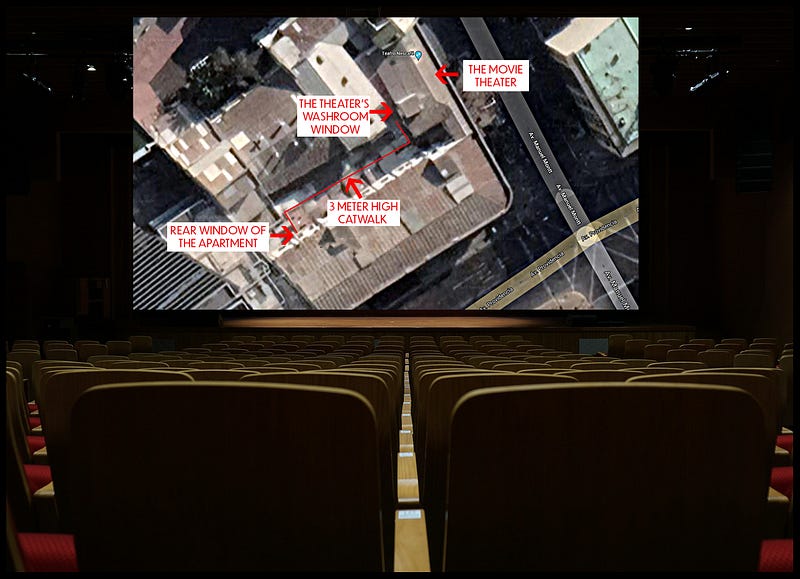
I grew up around the corner from a movie theater. The building was a low-rise structure that contained just four apartments. There were three of these buildings strung together: two facing the main avenue, and one around the corner next to the theater entrance.
At street level, the buildings housed small retail stores: mom-and-pop type of operations. I remember the German deli and the book/toy store — which displayed a tantalizing array of objects of desire targeted to kids.
The rear of our building looked down onto the back lots of these businesses. It was not a pretty sight. Right below us, each retailer had a modest outdoor space. The areas were just big enough to hold refuse containers, or boxes of inventory.
Beyond that, the theater building was visible. The walls that separated these outdoor areas were about three meters tall. They were made of concrete, and topped with narrow saddlebag caps which provided a smooth surface to walk on.
By now you’ve probably guessed where this is heading.
My cousin Richard — my dear friend and partner in crime — lived on the second floor of our building, and I lived right above him on the top floor. Our apartments were identical.
We figured we could jump from one of the rear windows of his apartment onto one of the capped walls below. It was a daring feat considering it was quite a long drop onto a narrow landing area.
From there we would crawl/crouch along the cap until we reached the back lot of the theater. We would jump down, then climb up through the window of the men’s washroom into the theater.
The operation required a lot of luck since all of the neighboring apartments had an unobstructed view of the crime scene.
We also had to ensure that nobody was in the washroom when we climbed in, as we would have been caught red-handed.
The last step in our master plan was to wait until someone came into the washroom, then proceed to follow them out when they left as to appear that we were together. Once we were in our seats, in the dark, we could finally relax.
We were never caught.
The theater showed slightly older movies, but what made it popular was that it rotated three different movies throughout the day.
The main Hollywood genres ubiquitous at that time were westerns, gangster, and war movies. If I had a dollar for every person I saw getting shot I’d be a wealthy guy right now.
The glorification of war inspired by the personal stories of returning soldiers after WWII was another reoccurring theme.
Well-dressed gangsters wearing fancy hats, and carrying machine guns hidden inside violin cases were also in heavy rotation.
I’m a bit surprised that I grew up to be a pacifist, as my childhood world involved watching a lot of gun conflict.
Most of the characters in the movies I saw were so far removed from my world that they could have been aliens. I could not relate to either the town sheriff or the tribe chief as being real people.
No one I knew had gone to war, and the Chicago gangsters could have been characters plucked from a Superman comic. The people seem fictional in the purest sense of the word.
The first movie I remember having a real emotional impact on me was the 1959 film The Five Pennies. The film depicts the semi-biographical story of trumpet player Red Nichols: who moves from a rural small town to New York City, finds work in a band, marries the lead singer, starts his own Dixieland band, and at the pinnacle of their fame their young daughter contracts polio.
If you were a child in the 1950s, then the polio epidemic definitely touched your world. Not unlike the Covid-19 pandemic of today. The image of that beautiful child trapped inside an iron lung got etched in my brain and sent waves of fear rippling through my body.
I felt empathy for the girl, and sadness for her family. I did not have that kind of reaction when I watched two sweaty poker players shoot each other at the local saloon in a black and white western.
This film was different: it was projected in full Technicolor, and perhaps because the story was based on real-life events — including appearances by the great Louis Armstrong as himself — it presented an air of reality that I was unaccustomed to.
It also made polio — even if antiseptically depicted — seem frighteningly real.
As the decade flipped into the sixties what once was rare became more common: movies were often shown in full color. I don’t know if there is any correlation, but I started to see fewer war, or gangster movies, and a lot more uplifting, lighter themes.
Elvis Presley seemed to take permanent residence in my neighbourhood theater. He liked to frolic in Hawaii surrounded by scantily dressed beach bunnies. That was fine for a young boy starting to develop an interest in girls.
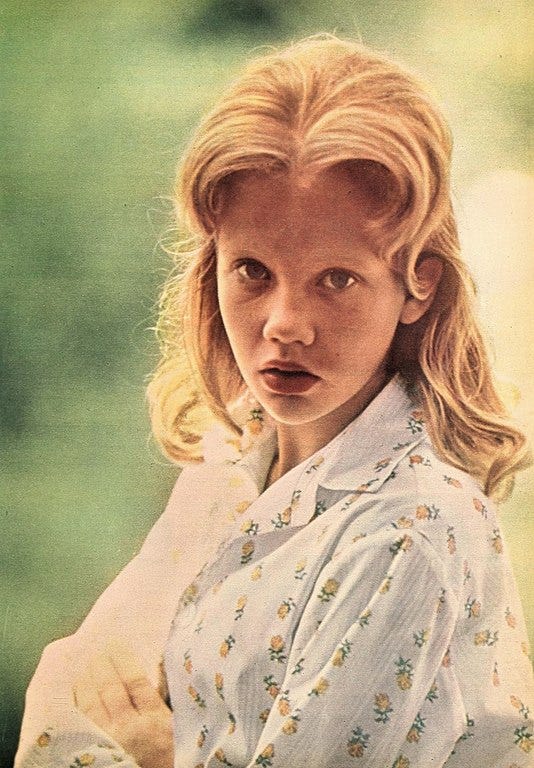
Although Elvis had a constant trove of beautiful girls around him, none of them captured my heart the way Hayley Mills did. That beautiful British girl became my first Hollywood crush. Not only was she drop-dead gorgeous, but she also possessed an adventurous spirit that could outwit and defeat modern-day pirates.
That’s exactly what she did in the 1965 film The Truth About Spring. I loved that movie so much that I think I went to watch it every day for a week.
My infatuation with Hayley faded once I had a girlfriend in real life.
The first half of the sixties produced two of my all-time favourite movies: The Great Escape — a war film based on real-life events in which a massive escape from a POW camp is fictionalized; and A Hard Day’s Night — a wild and wacky romp with the Beatles at the pinnacle of Beatlemania.
That film is responsible for me becoming a drummer.
Over the decades I have had a number of movie theater experiences that have left a permanent impression. Some are snippets or scenes that are so flawlessly crafted that make them unforgettable. The opening scene of the 1975 Steven Spielberg classic thriller Jaws left a mark. (pun intended)
Tom Hanks — facing mortality from Acquired Immunodeficiency Syndrome — introduces opera to his lawyer (Denzel Washington) in the 1993 film Philadelphia. It is perhaps one of the most beautiful and emotional movie scenes ever filmed.
Hanks cranks the sound system up to eleven as Maria Callas sings the aria La Mama Morta (They Killed my Mother.) He dissects the composition for Denzel to understand: “Oh, that single cello!…” Hanks cries out in anguish as if expressing the solitude that comes when approaching the end of life.
I am incapable of watching that scene without crying. Hanks deservedly won an Oscar for his performance in that movie.
There are a few movies that have delighted me from title to credits. Those are the rare gems that I have seen dozens of times, and would gladly watch again: The Shawshank Redemption fits that category. It is the complete package: great story, superb acting, beautiful art direction, and the good folks win.
What can you say about a movie about a writer who enjoys wine, which also includes golf, a beautiful Asian woman, and a road trip: I cannot relate (nudge, nudge, wink, wink.)
The movie Sideways…
“is beautifully written, terrifically acted; it is paced and constructed with such understated mastery that it is a sort of miracle. The observations are pitilessly exact and meshed with impeccably executed sight gags and funny lines, and everything is bathed in the solvent of exquisite sadness. Yet its gentleness and humanity do not preclude a mule-kick of emotional power” wrote Peter Bradshaw for the Guardian.
Yes! it is that good.
One of the most visually stunning movies I’ve seen is Woody Allen’s Manhattan. Filmed in black and white using fixed lenses, no zoom, and vintage lighting equipment gave the film its stunning look. The wide-screen Cinemascope 2.35:1 aspect ratio further enhanced the cinematic experience.
All controversies aside, it was that film — in my humble opinion — which elevated Woody from talented comedian to superb film director.
If you were to ask me to name my favourite movie I believe I would run into the same problem as anyone else: ONE movie?! Hmmm.
I could tell you that I loved the quirkiness of Harold and Maude, the mind-bending structure of Memento, the dark comedy of Fargo, the intensity of The Godfather, the coldness of Slingblade, the loneliness of Ordinary People, the craftiness of Oceans 11, the anguish of A Marriage Story, the heartbreak of About Schmidt, the goofiness of Caddyshack, The Hangover, and Trading Places.
One movie would never be enough. But, The Big Lebowski would come close. Yeah, well, you know, that’s just, like, my opinion, man.
