
A Psychologist Made These Shocking Predictions About Hitler During World War II
Inside the Mind of Adolf Hitler.
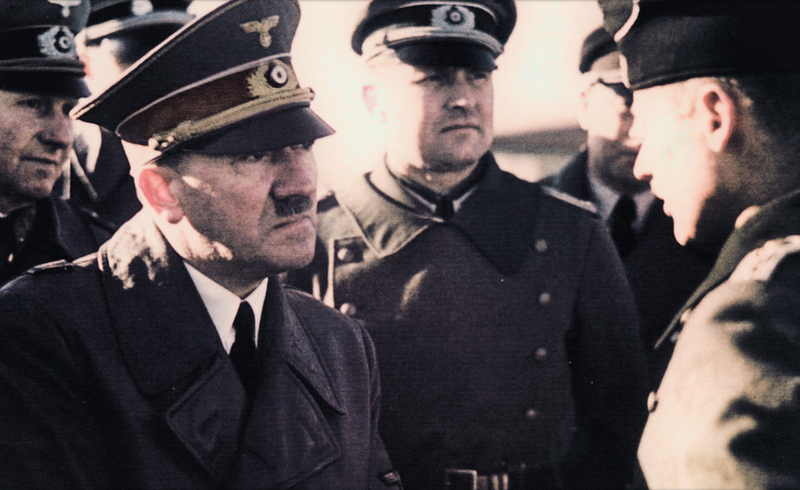

What were Hitler’s toilet training days like? Was he a neglected child? Did he really steal some paint later in Vienna?
Myths about Adolph Hitler predate the Second World War. As the war (and the violence) accelerated, however, the need to separate myth from fact became more dire — not to feed the propaganda machines or wild imaginations, but to figure out a possible plan of action to end the war.
To achieve this task in 1943, instead of a secret agent a doctor — Dr. Walter C. Langer, a psychoanalyst and Harvard professor — prepared a long study for the Office of Strategic Services (OSS) based on Hitler’s psyche, aptly entitled The Mind of Adolf Hitler. The OSS was the wartime predecessor to the Central Intelligence Agency (CIA).
Some of the predictions rooted in the study were in fact remarkably accurate. They make us question whether the scale of the destruction the Nazis wrought was predictable.
1. Hitler will become more neurotic as the war progresses
If all the Nazis who worked for Hitler were actually interviewed, one thing their accounts would have in common is this: Hitler was not an easy guy to work with. The rather chaotic administrative structure of the Nazi regime mirrored Hitler’s own personality.
Hitler depicted many tendencies that drove those like Murray to speculate that he was schizophrenic. His days were marked by increasing paranoia and suspicion, and his nights filled by nightmares.
If the Fuhrer suffered from counteractive narcissism, Hitler’s personality was a two-fold one was the softer side that, for instance, wept at the passing of a canary, while the other was the cold, ruthless, aggressive side that increasingly dominated when he was seen in public rallies or meetings.
Some even say he had a split personality disorder. During the war, as the latter side fought with the other and rose to the top, Hitler’s mind and actions moved to the realm of the impulsive, irate, and inevitably aggressive.
With news of German defeats like the failure to invade England, Hitler’s anger and inner-conflict would only grow.
2. Hitler will reduce his public appearances
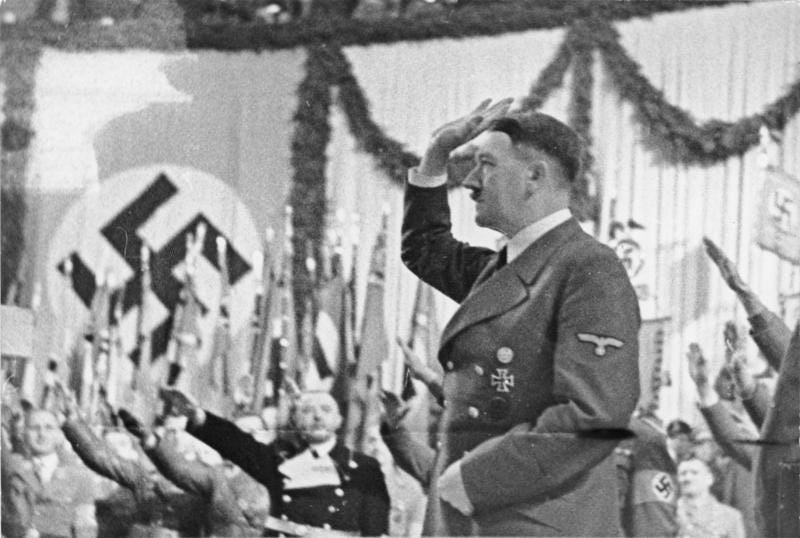

Masterful at putting up appearances, giving speeches in elaborate public rallies and using his ‘charisma’ as a weapon, during the war Hitler appeared only occasionally before “his” people.
Not really one to give up, Hitler could have done this because of safety concerns given the assassination attempts on him and, you know, the risk of bombs dropping from the sky — the making of another Dresden. His charisma on stage may also be eclipsed by his rage and aggression with the war drawing to an end and Germany steering away from victory.
Whatever it may be, the prediction that Hitler would appear less before the public was accurate, with people getting to hear him nine times.
3. Hitler would always blame others and act more ruthlessly after Nazi failures
Even at the face of embarrassing defeats, Hitler only doubled down on his programs instead of reevaluating or assessing the damage his followers had done. One aspect of this is his plan for Jews — the ultimate scapegoat for all of Germany’s problems.
One can trace the history of Hitler’s anti-Semitism all the way to his Vienna years, yet the question of what he wanted to do with the Jews once he came to power remains unclear.
Without veering into the territory of myths, one can see that Hitler’s decision to completely exterminate the Jews — not just force to emigrate — was officially announced in December, 1941 after the declaration of war on the US (declared in December) seemed inevitable.
Whether the Final Solution always meant complete extermination is still widely debated, but the vengeful violence against Jews in the war’s final days, whether it be death marches or gassing, evinces the need to continue blaming others. Self-reflection in 1945 would make the war meaningless.
4. Hitler would be admired by the German people until the bitter end
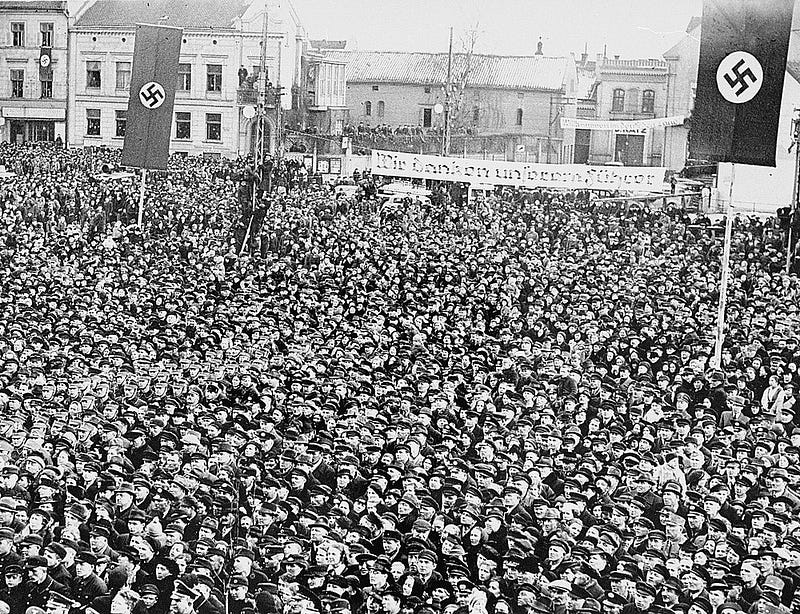

Despite his many shortcomings (or blatant villainy), Langer conceded that Hitler had succeeded in building a persona that made ordinary people believe in him and his central mission.
For Langer, this was a result of the dominant side of his personality through which even speeches that may have started weakly ended with a charismatic appeal that pulled people towards him, compelling them to accept him as a leader.
Even at the brink of failure, the Hitler’s ideology combining anti-Semitism and the extermination of all Jews (manifested in massacres towards the end of the war) were still adhered to, pointing to the success of indoctrination which includes admiration.
Of course, one can’t discount the role of the propaganda machine at work to curate Hitler’s image — the outlines of this image were drawn by Hitler himself — at rallies, marches and processions and in private meetings.
5. There would still be an uprising against Hitler
The contradiction between this and the previous prediction is resolved by how only certain elite elements of German society rose against him during Operation Valkyrie in July 1944
Better known as the (20) July Plot, the operation was (fortunately for Hitler and unfortunately for the world) unsuccessful. Led by aristocratic army officer Colonel Claus von Stauffenberg. The plan was to carry a bomb in Stauffenberg’s briefcase to the conference room in East Prussia where Hitler was meeting with military aides. The plot failed as Hitler survived the explosion, shielded by an oak table leg, just like he survived previous assassination attempts.
Had it been successful, the military commanders would have negotiated peace terms with the allies. After the failed attempt, instead of this, 200 additional alleged conspirators in addition to army generals negotiated terms of their own demise by committing suicide. Conspirators who didn’t were shot or strangled to death or fled to the Allies. To be sure, their bodies were sometimes hung up on hooks.
6. Hitler would never accept defeat
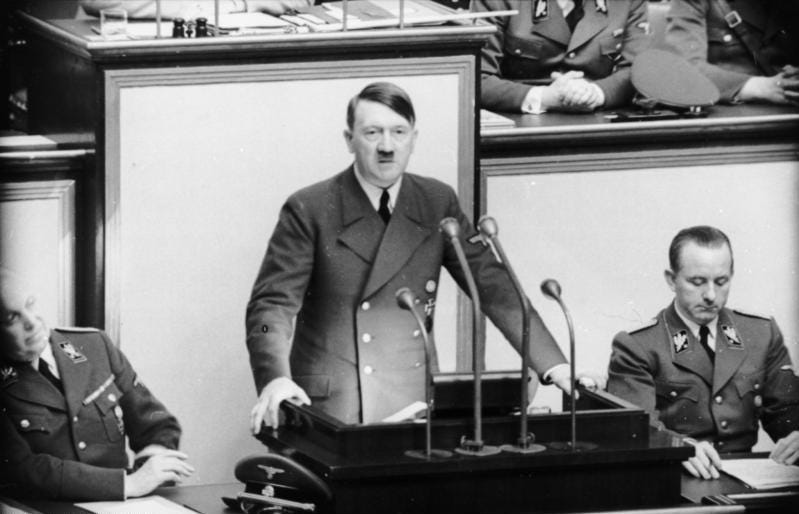

Blaming others and stirring violence through his own resentment is inevitably linked to the prediction that Hitler would not accept defeat in the War. This meant the Allies would have to go all-out against Germany to bring the war to an end.
To fully capture Hitler’s behaviour, his behavioural tendencies (gleaned from detailed sources) were compared with histories of patients exhibiting similar tendencies. Through this analysis, Dr. Langer showed how Hitler was someone who despised being in a position that did not “do justice” to his perceived accomplishments and sense of self.
For context, Hitler had given himself the title of the Fuhrer (leader), the centre of his personality cult and his power and authority in the Third Reich. Anyone with this personality and title would never surrender. People with a personality like Hitler want the “first place” or nothing, in other words, victory or death.
A failed artist, Hitler’s interest in the arts is evident in his concern for the theatrics. Even in death, he wanted to be dramatic with some postulating that he would go as far as arranging to be killed by a Jew.
Ultimately, like Langer predicted, Hitler committed suicide (as is widely believed), shooting himself in the right temple in an bunker under the Reich Chancellery. By then, defeat in the form of Soviet soldiers stormed Berlin up on the ground on April 30, 1945.
References
http://reader.library.cornell.edu/docviewer/digital?id=nur01134#page/13/mode/1up