
A Prodigious Woman — Maryam Mirzakhani
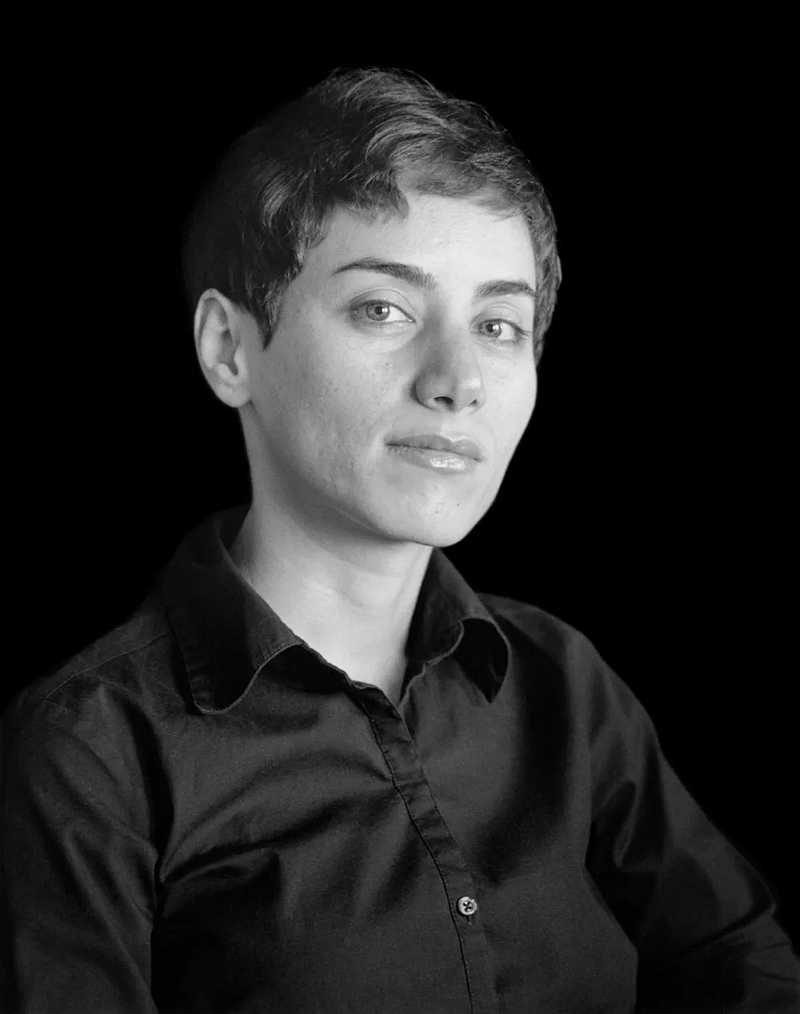
Many outside STEM, specifically mathematics, have never heard of Maryam Mirzakhani. However, she was an exceptional trailblazer who etched her name in history books on multiple occasions as the first. The most famous “first” title is becoming the first woman and Iranian recipient of the Fields Medal in 2014. The Fields Medal is so prestigious that it is often called the Nobel Prize of Mathematics.
The Early Years
Mirzakhani was born in Tehran on May 12, 1977. She displayed an extraordinary intellect and passion for mathematics at a young age. Her early years were characterized by curiosity and ambition, paving the foundation for her future accomplishments. Initially, she was very interested in storytelling and the arts; however, her trajectory diverged significantly when she attended Farzanegan. At this high school for gifted students, she became enthralled with mathematics.
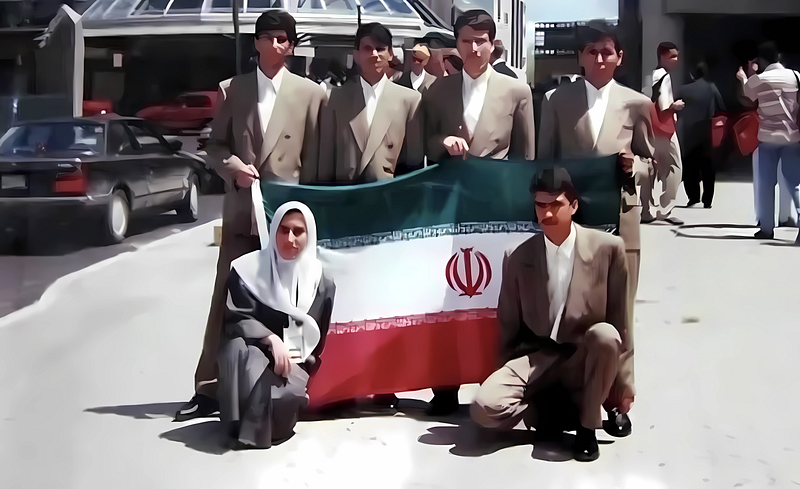
As a junior in high school, she started making history when she became the first female Iranian student to conclude the competition with a gold medal in the International Mathematical Olympiad (IMO) with a score of 41 out of a possible 42. The IMO is the oldest international scientific competition held annually (except in 1980) since 1959. The following year, she became the first Iranian student to achieve a perfect score and garnered two additional gold medals.
After graduation, her academic journey continued at the Sharif University of Technology in Tehran, and later, she relocated to the US to complete her graduate studies at Harvard University. The renowned mathematician Curtis McMullen mentored her as she continued to flourish academically and excelled in research that preceded the pioneering discoveries that would define her career.

Her Research
Maryam Mirzakhani’s research profoundly impacted the field of mathematics, particularly in hyperbolic geometry, topology, and dynamical systems. One of her most significant contributions was her work to understand better the symmetry of curved surfaces, such as spheres, doughnut shapes, and hyperbolic surfaces (saddle-shaped surfaces with a negative curvature).
Her groundbreaking work on the geometry of Riemann surfaces and their moduli spaces broadened the understanding of the mathematical universe. It provided new insights into the dynamics and geometry of complex structures. Considering their underlying mathematical properties, she explored how these surfaces could be morphed and stretched in various ways and solved longstanding problems related to the volumes of Riemann surface moduli spaces.
Her influential work expanded our understanding of geometric structures, providing insight into string theory and other disciplines outside of mathematics, like the behavior of particles and forces in quantum physics and the development of algorithms in computer science.
Lessons
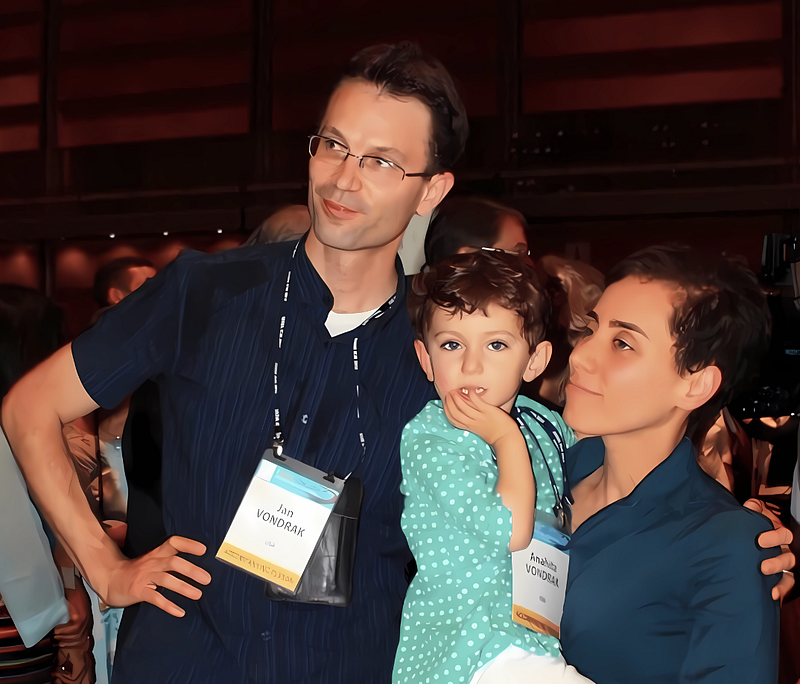
Maryam Mirzakhani took a path less traveled by women in the predominantly male field of mathematics. She broke barriers and set new precedents with her scholarly activity in the IMO and later in her research. While her work product and its applications are far beyond the understanding of laypersons like me, her breakthroughs are undeniably highly valued, and her legacy is a testament to the power of determination in the face of societal expectations and norms.
Although she passed away on July 14, 2017, at only 40 years old, after a battle with breast cancer, she left an indelible legacy that lives on as an inspiration for women with a passion for the sciences. Her exemplary performance shatters stereotypes regarding women’s capabilities in STEM fields. Thank you very much for taking this journey to learn about an extraordinary woman.
If you want to read about more extraordinary women, have a look at some of my other offerings below:


