
A Pesto Journey through Liguria
One dish at a time
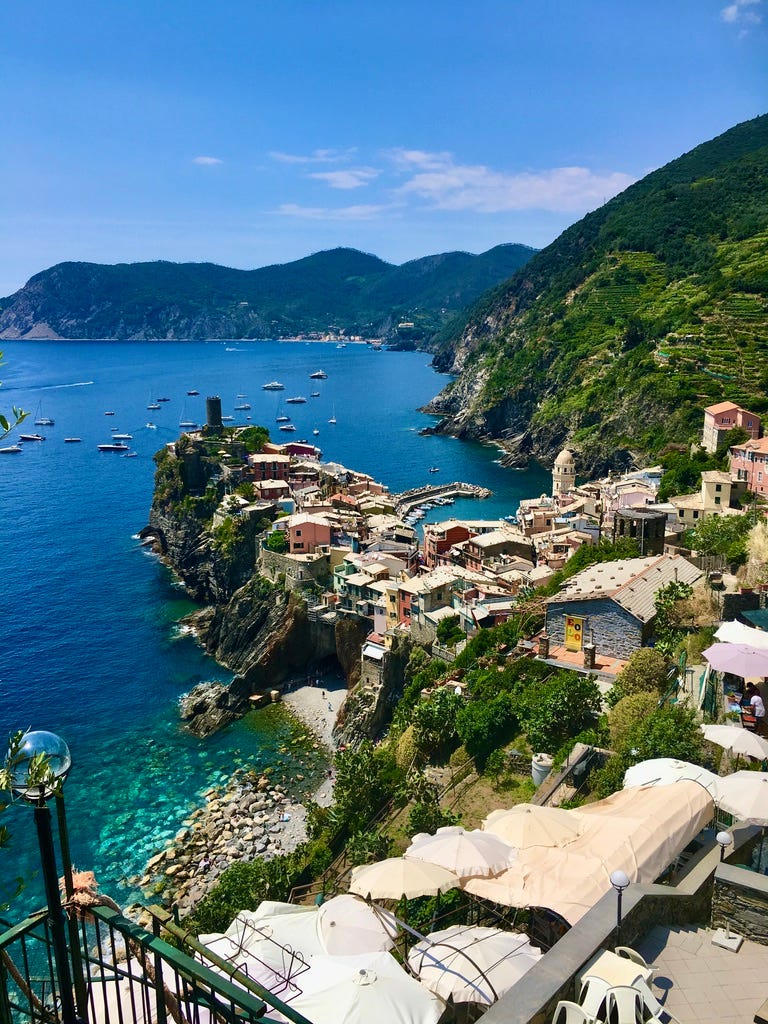
I’m a self-proclaimed Pesto Connoisseur with a keen appreciation for the aesthetic delicacy of pesto. If I didn’t inherit the fat gene, I’d eat it breakfast, noon, and night. Pesto scrambled with eggs, Pesto, salumi, and pecorino on a focaccia, Pesto chicken. You get it.
It’s such an important part of my life, Pesto is a proper noun.
Legend has it that Pesto originated in a convent between the hills of Genoa, Prà, dedicated to St. Basil. One of the monks of the monastery gathered the aromatic grass growing on those hills, basil, and pounding mortar with other simple ingredients to prepare the first pesto. And voila, Pesto was created! He is my patron saint. St. Pesto.
(I tried to choose St. Pesto at confirmation, but the nuns scoffed at me.)
Pesto is traditionally made with basil, pine nuts, garlic, Parmesan cheese, and olive oil, and is typically served over pasta. The name “Pesto” is derived from the Italian word “pestare,” which means “to pound or crush,” referring to the method of preparation in which the ingredients are ground together using a mortar and pestle.
While Pesto might have originated in Genoa, Liguria, a region in northwest Italy, is also known for its production of basil, which is a key ingredient in pesto sauce. The region’s warm, sunny climate is well-suited to growing basil, and it has a long tradition of using the herb in cooking. In addition to basil, Liguria is also known for its production of pine nuts, which are another key ingredient in pesto.
The combination of basil and pine nuts, along with other ingredients like garlic, Parmesan cheese, and olive oil, gives pesto its distinctive flavor and has made Liguria one of the best places to savor this sauce.
From my experience, Cinque Terre, consisting of five small villages — Monterosso al Mare, Vernazza, Corniglia, Manarola, and Riomaggiore — known for its rugged coastline, colorful architecture, and picturesque views, boasts the best Trofie al Pesto in the world.
I know; I’m an amateur Pesto Connoisseur, remember?
Trofie al Pesto is a traditional Ligurian dish and made with a type of pasta called trofie, which are short, twisted noodles, and of course, Pesto sauce basil, pine nuts, garlic, and cheese. It is such a popular dish in Cinque Terre that you can find it at many restaurants in the area.
Some restaurants in Cinque Terre that are known for their Trofie al Pesto include Trattoria dal Billy, Ristorante il Porticciolo, and Trattoria da Sandro. It is also possible to find Trofie al Pesto at many other restaurants in the region that serve traditional Ligurian cuisine.
https://ilporticciolo.metro.bar/?lang=en#
If you are like me, you can get the fresh ingredients to make your own Pesto from the little shops of the Cinque Terre; however, I recommend going to the local open-air weekly markets in Vernazza (on Tuesdays), Monterosso (on Thursdays), and La Spezia (on Fridays). The basil and cheese is fresher and cheaper than in the stores.
Pesto Recipe for Five
Ingredients: 100 g basil 30 g pine nut 2 cloves of garlic 40 g parmesan cheese 2 dl olive oil Salt Trofie pasta
Preparation: Traditional Pesto is made by hand in marble mortar with a wooden pestle. Crush up basil, pine nuts and garlic with some salt in a mortar. Then mix with grated parmesan cheese and olive oil.
Bowl water pour in trofie pasta. Take out one-two minutes before time indicated on package if you are using dry pasta. (An Italian trick for pasta al dente).
Pour Pesto over pasta. Serve.
After dinner, head out to the trails as you just consumed about 750 calories.
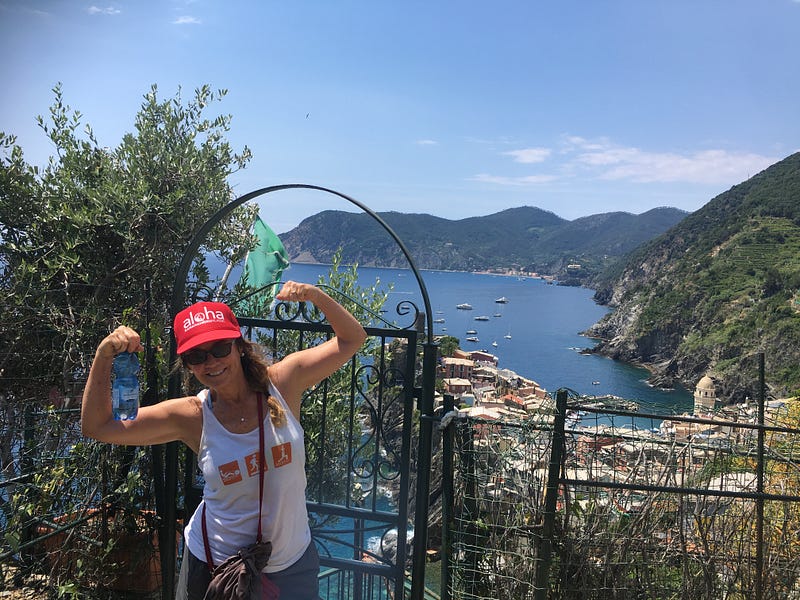
Eat, drink, and be merry.
If you love food, consider checking out Jackie on Italians Who Love Food on Facebook.