
A Parent’s Brief Guide To School Behavior Support Plans
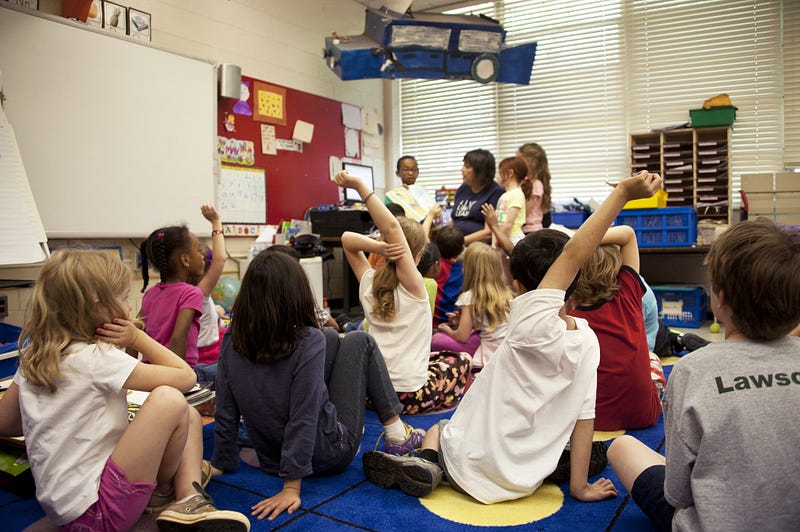
People have a lot of feelings about Behavior Support Plans (let’s call them BSPs because schools love to abbreviate them and I love to type faster). Sometimes also called Behavior Intervention Plans (BIP), these are plans at school intended to encourage wanted behaviors and extinguish unwanted behaviors. At their best, BSPs are individualized ways to teach kids skills they need to succeed in school- and isn’t that what school is for? At worst, parents may feel like the plans are a “gotcha” designed to pinhole or prove their child has too many struggles for the classroom and teachers may feel like plans are more hoops to jump through when they are already struggling with challenging behaviors. If they are done right, BSPs require upfront effort that pays off big time in the long run, ideally with happier successful kids, and less stressed parents and teachers.
Behavior as Communication
Behavior is how we communicate when we aren’t just using words. The kid who pushes on the playground? She might be communicating that she needs more space, or that she is feeling overwhelmed. The kid who always walks out of the classroom might be avoiding showing he doesn’t understand the material, or he might be experiencing sensory overload. The problem with behavior as communication is that we may not always interpret what they are telling us with the first guess. Dr. Ross Greene has focused his life work helping people understand that children do well if they can. This means that if they are not doing well, it’s because they are lacking a skill- and not because they are trying to be “bad.” Sometimes it can be hard to not take behavior personally and as something to fight against. When we are working with students, if we remember that their behavior is communicating something (albeit not in an ideal way) perhaps we can find a way to collaborate.
What the heck is an FBA?
If your child has been struggling behaviorally in school, you may have heard someone suggest an FBA (Functional Behavior Assessment)- and if they haven’t you may want to request one. The process is involved, but worth it. An FBA requires a team (of which you, parent, should be a part) to look at:
- What skills the student brings to the situation
- What skills we know the student is lacking (low frustration tolerance? Struggles with sensory integration?)
- What happens right before the problem behavior
- What happens after the behavior
Then, armed with this information- what does the team think the function of the behavior is? What is this behavior trying to communicate? And how do we meet that same need in a healthier, safer way?

Let’s say Jennifer, second grader, has been having afternoon meltdowns. After lunch recess, the class comes back to the classroom for reading groups and Jennifer just won’t take her seat. Every time the teacher asks her to take her seat, Jennifer gets angrier. She’s yelling at the teacher, she throws her reading book, and ultimately she runs out of the room. Staff have to go after her- it takes a long time to calm her down and lately the school has just been calling mom to come and pick her up. She is now missing most afternoons, and mom can’t keep leaving work. Everyone is unhappy.
Sound familiar? Maybe the teacher tries the old behavior tracker- often green/yellow/red, or smile/neutral/frown (why these don’t work can be an entirely separate piece.) Maybe the student even earns stickers or computer time for good behavior. The problem with this approach is that it doesn’t acknowledge what Jennifer’s behavior is communicating (Is she struggling with reading? With transitions in from recess? Is she eating enough at lunch? So many possibilities!) and it doesn’t teach Jennifer any new skills (what is a healthier way to communicate that reading is frustrating?) or adjust anything in her environment (does she need more time warnings to transition in from recess?).
If the team were to complete an FBA, they could use that information to create a useful BSP. If it isn’t done as a team- it won’t work. If it doesn’t take into account the information from the FBA- it won’t work.
Ultimately BSPs are there to Support your child- and that means making adjustments to the environment, teaching them skills they need, playing off their strengths, and viewing behavior as communication.
I hope this article has been helpful! If so, consider becoming a Medium member for only $5/month. I earn a small commission if you sign-up using my referral code at https://medium.com/@beccadornmedeiros/membership