
Poetry | Spirituality
A Pantoum Prayer of Reflection
“The only difference between the saint and the sinner is that every saint has a past and every sinner has a future.” — Oscar Wilde
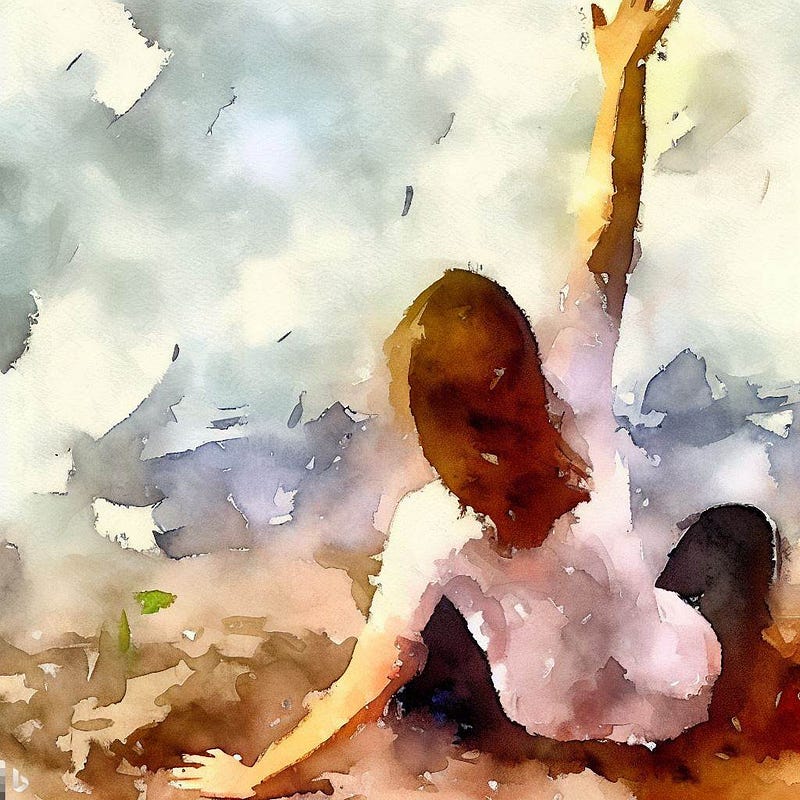
I’ve always walked four steps forward, two back. You always waited for me to catch up. You waited when I fell right off the track. And when I lay weeping, You pulled me back.
You always waited for me to catch up. I left You to dance with forbidden love. And when I lay weeping, You pulled me back. I said I was sorry and You forgave.
I left You to dance with forbidden love. You watched with sadness while I was happy. I said I was sorry and you forgave. You gave me the Word to turn me around.
You watched with sadness while I was happy. I knew in my heart that this love was wrong. You gave me the Word to turn me around. I held tight to You as You changed my course.
I knew in my heart that this love was wrong. You waited when I fell right off the track. I held tight to You as You changed my course. I’ve always walked four steps forward, two back.
In A Poet’s Glossary (Harcourt, 2014), Edward Hirsch writes:
As a form, the pantoum is always looking back over its shoulder, and thus it is well-suited to evoke a sense of times past. It is always turning back while moving forward; that’s why it works so well for poignant poems of loss…Poets.org
In each stanza, lines two and four repeat as lines one and three in the following stanza. This cyclic pattern guides the reader through four steps forward and two steps back, mirroring the journey. The poem culminates by echoing line 3 from the first stanza within the second line of the final stanza, while the first line returns in the closing line. Thus, the poem represents the concept of a full circle.
This is why I chose the pantoum form, aiming to contemplate my journey of faith, inclusive of the transgressions that brought pain to myself, others, and the Lord. The Lord, unwaveringly faithful, remains poised for our return. At times, He gently pulls us back from the precipice of disaster. Yet, as humans, we invariably stray, invariably requiring the Lord’s unending forgiveness and redemption