
A No-Nonsense, Minimalist Approach To News
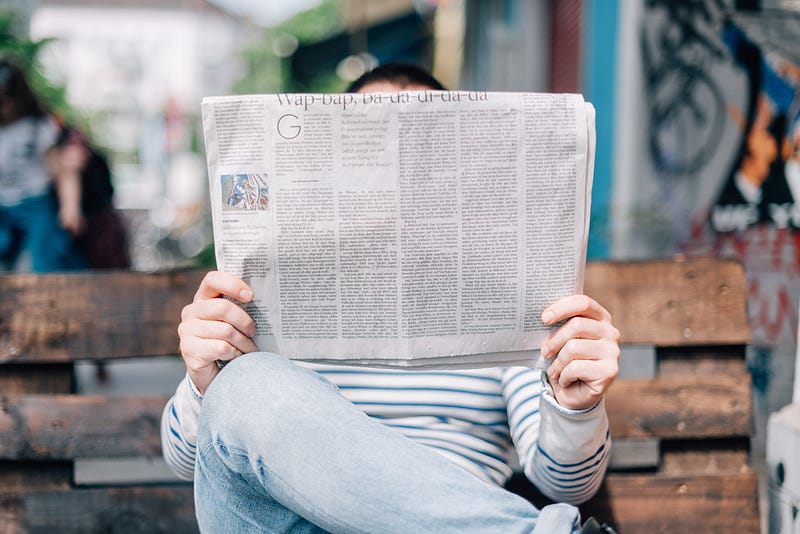
Minimalists and others who prefer simple living to a complicated life try not to waste time by focusing their attention on things that aren’t important. But does news fall into the category of mental clutter or brain-enhancing self-improvement?
News reports create a shared experience among people. If you’re up on the news, you have something to talk about.
News is also important because reporters hold politicians, businesspeople, and others accountable. It may not be important for you to know what a reporter finds out but knowing that a nosy stringer is snooping around helps keep some processes honest.
And this is something I know about.
My degree is in communication with an emphasis in broadcast management, and I worked as a freelance print reporter for a decade. Although I never worked in radio or television (except for an internship in public affairs at a TV station), I know how print, broadcast, and newer media slant stories differently to hook consumers.
And minimalists, I would think, should be resistant to being hooked by anything.
Here are five facts that might help you decide how much news you want to consume:
1. You don’t need to know as much as you think you do.
Most of the stories on CNN’s homepage and on the evening news are useless to you. While it may be interesting that a Hollywood celebrity is expecting a child, it doesn’t matter to you.
Even the day-to-day process of electing your country’s leader isn’t important. All you need to know is who wins, and you only need to know that if you want to have a conversation with anyone the next morning.
2. If you need to know, you don’t need to know as much as you think you do.
To write a story, journalists try to find out WHO, WHAT, WHERE, WHEN, and WHY — and often HOW. Quotes from grieving relatives, market analysts, and company public relations people add very little information. They’re intended to make stories more appealing to the masses.
If you understand the 5 Ws and the H of a story, you know all the facts and can move on.
3. You can stay informed by catching up on headlines while your body is doing something else.
Reading the news on a desktop PC is usually an all-consuming process. Reading it on your smartphone while waiting for an appointment is a valid way to occupy your mind while your body is attending to the waiting.
In one phase of my life, I turned on the end of the local TV news and the beginning of NBC Nightly News while I was cooking dinner. I learned a few things while sautéing — or more likely reheating. A quick radio news break might be a good thing while driving alone.
4. Local news is less important than you think.
Local TV newscasts and newspapers seem, at first thought, to be more important than national news. They report about things happening near you.
But look again. Do you need to know that a house burned 20 miles away during a thunderstorm that’s now long past? Does it matter that a nearby city is considering allowing alcohol sales when your city already does — or doesn’t?
A glance at local headlines will tell you if anything is happening that applies to you. If not, watch or read the local news for amusement or recreation, if you want, but not for useful information.
5. You must explore some stories in depth.
Of course, exploring some stories in depth is mandatory. Yes, mandatory. You can’t protest an injustice, contribute to a worthy cause or even satisfy curiosity without getting inside a story once in a while.
News is information about other inhabitants of the planet — or the possibility that there might be inhabitants elsewhere. It explores the systems in which you once participated. It links you with causes and cases you wouldn’t have known about otherwise.
So go ahead: Take a few minutes, when you must, and explore the news. But consider it a product like any other — one that can consume you while you’re consuming it.
Then, step away. Come back to the stories that compel you to act — and skip over the ones that don’t matter.


