
A New Wave of Women Is Refusing to Remove Their Body Hair — I’m One of Them
We’ve rejected the idea that we should feel shame for an aspect of our bodies that’s perfectly natural
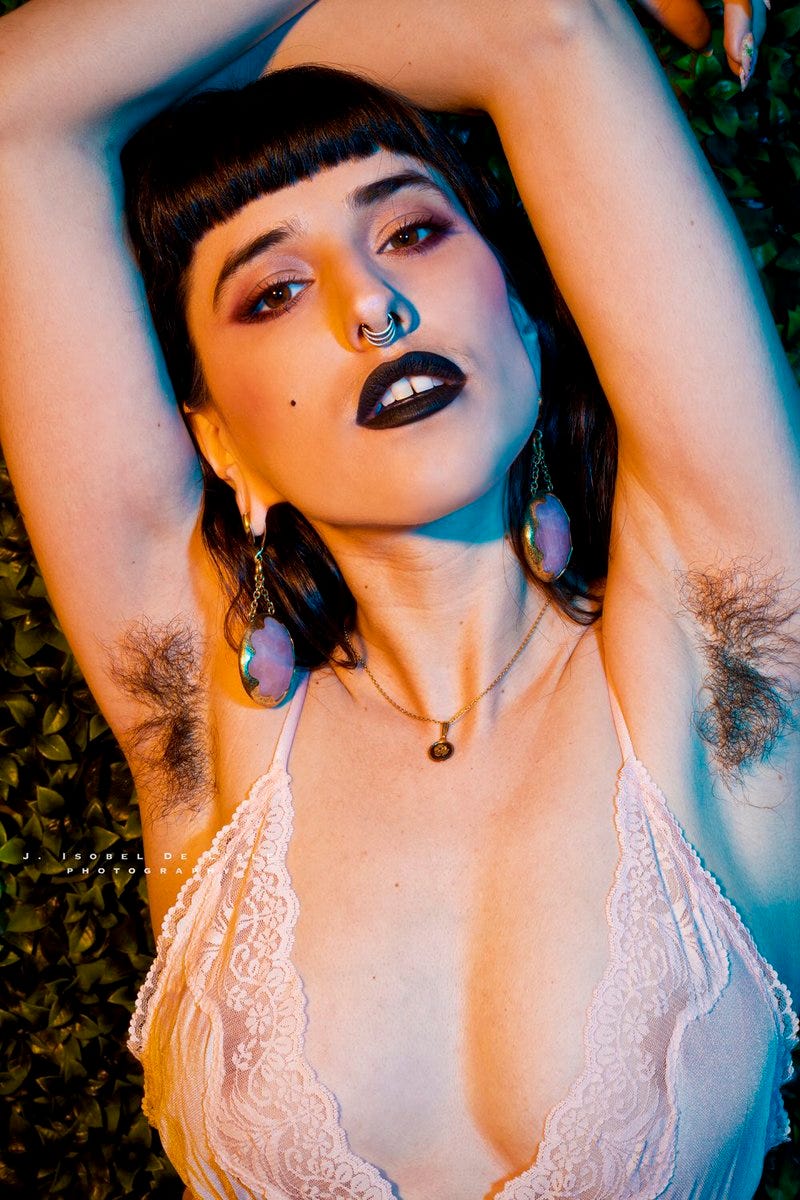
Research shows that Millennial women aren’t removing their body hair like their Gen-X predecessors, who were intent on waxing off every last follicle from their legs, armpits and pubic area.
Instead, a younger generation of women is refusing to undergo painful procedures that leave their skin irritated and ridden with ingrown hairs.
They’re dismissing marketing campaigns that encourage women to spend extra money on razors that are virtually identical to the less expensive ones that men can buy.
They’re rejecting a belief system that deems their unshaven forms to be undesirable and even worse, shameful.
I’m one of these women
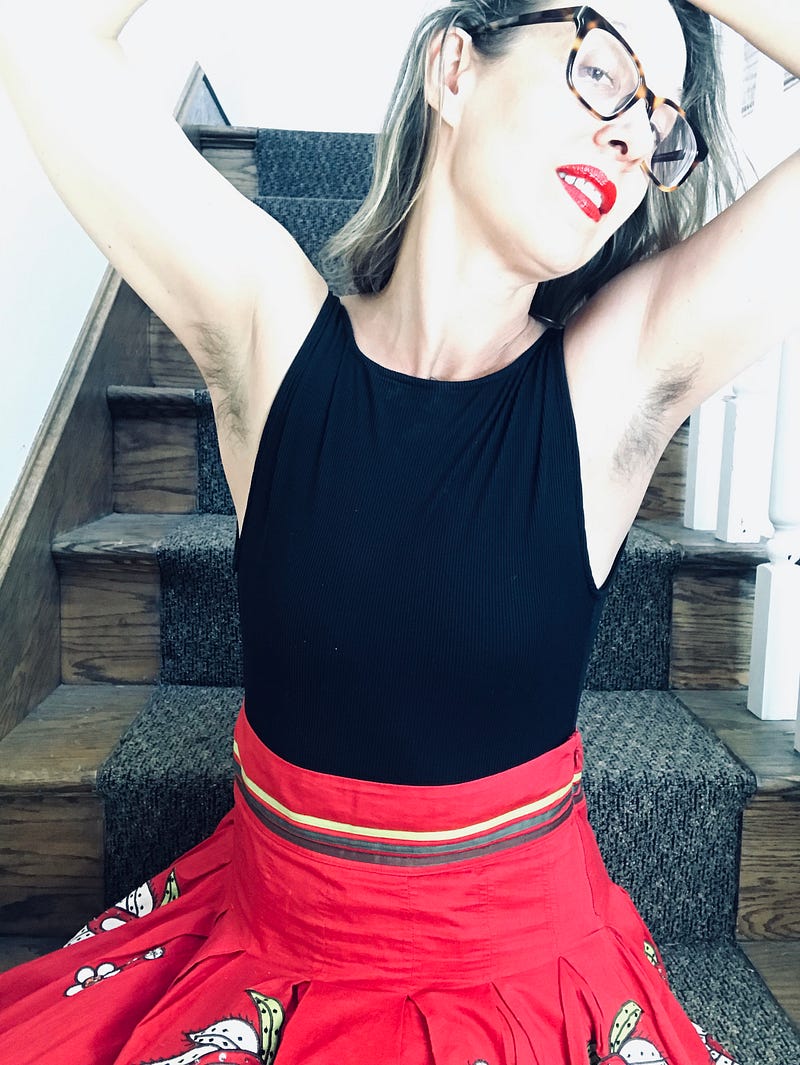
Though I’m a Gen-Xer, I feel an affinity with today’s younger females who have chosen to celebrate the beauty of their bodies, regardless of their shape, size, color, age, or hairiness.
This has been an important change for me since, for so much of my life, the state of my body hair has been about control — or more, who’s controlling it other than myself.
My mother dictated the state of my body hair when I was younger, forbidding me from shaving until I reached what she deemed to be an “appropriate” age.
She was appalled when a friend of mine encouraged me to shave my legs one afternoon when I was twelve.
That was too early for my mother. She wanted to be the one who decided when I was allowed to shave.
I had to grow my leg hair back. It was a couple of years later when she told me I could finally shave: my legs and my armpits, just never my pubic region. Shaving there was “slutty.”
I obeyed and did what was expected of me. However, soon enough there was a new expectation. This was the social expectation of the 2000s: women should shave everywhere.
You were no longer only supposed to remove your leg and armpit hair but now the hair from your pubic region as well.
Brazilian waxings came into vogue. I bought into the trend.
But once I married and had children, I started to wonder what I wanted.
Did I shave everywhere because I wanted to or because society told me it was ugly if I didn’t?
I simply became tired of beautifying myself. Why couldn’t I ever leave the house unless my legs and armpits were shaved?
That was when I finally stopped following any trends.
I simply became tired of beautifying myself. Why couldn’t I ever leave the house unless my legs and armpits were shaved?
It was more than that. Why couldn’t I leave the house without also plucking my eyebrows, wearing makeup, or dressing up?
Why couldn’t I just go outside as my natural self?
I finally stopped caring about what was expected of me and started doing what I wanted.
Is the natural body hair movement just another trend?
Of course, I understand it’s trendy at the moment for women to let their natural hair grow out.
Everyone from Miley Cyrus to Gigi Hadid to Michelle Rodriguez to even Madonna have stopped shaving and waxing (at least long enough to take advantage of the publicity).
I have worried that I’ve simply hopped onto yet another bandwagon. Will I start shaving again as soon as the current pro-body-hair trend ends?
I don’t think so. I believe that I’m finally doing what I want with my body hair. And if it is a trend, at the very least it’s a healthy one.
It’s a trend that doesn’t require women spend money on costly procedures to remove the body hair we’ve been told is ugly and embarrassing.
It isn’t a trend that requires us to treat our skin in unhealthy ways.
It’s a trend that’s finally good for women.
Pop culture is reflecting this change
This is why it was so important to see actress Emily Ratajkowski pose with unshaven underarms in the September issue of Harper’s Bazaar.
In her article on CNN, Why Women Feel Pressured to Shave, Marianna Cerini points out why Ratajkowski’s hairy armpit pictorial was significant:
“In 1915, Harper’s Bazaar was the first women’s magazine to run a campaign dedicated to the removal of underarm hair (‘a necessity,’ as it was described).”
Featuring Ratajkowski with unshaven pits was “a full 360-degree turn for the publication since its early anti-armpit hair messages,” writes Cerini.
If we are going to be influenced by the social powers that be, I’d rather it be to leave our bodies in their natural state.
Too many women feel forced to shave as a means to fit in
This is because many women feel like they don’t have a choice but to remove their body hair.
“Today, most women feel like they have to shave. Like they have no other option,” Heather Widdows, author of Perfect Me: Beauty as an Ethical Ideal, told CNN. “Removing body hair went from being ‘expected’ to the norm.”
In an Instagram story, Get Hairy February, an Australian feminist pro-body-hair advocacy group, asks: “Why do 97% of women remove their leg and underarm hair? Is it a choice we make without judgment, fear or stigma?”
No — we remove our body hair because we’ve been told it’s gross and that embarrasses us.
And that’s wrong.
Removing our body hair isn’t even healthy for our skin
Though we’ve been taught that removing our body hair is more hygienic, Rebecca Herzig, author of Plucked: A History of Hair Removal, told CNN, “It’s worth noting that those are ideas about cleanliness, contingent social norms, rather than about actually removing ‘dirt.’ Most hair removal practices tend to introduce new opportunities for abrasion and infection.”
In my case, any time I shaved my pubic region, red pimples would emerge, containing ingrown hairs and pus.
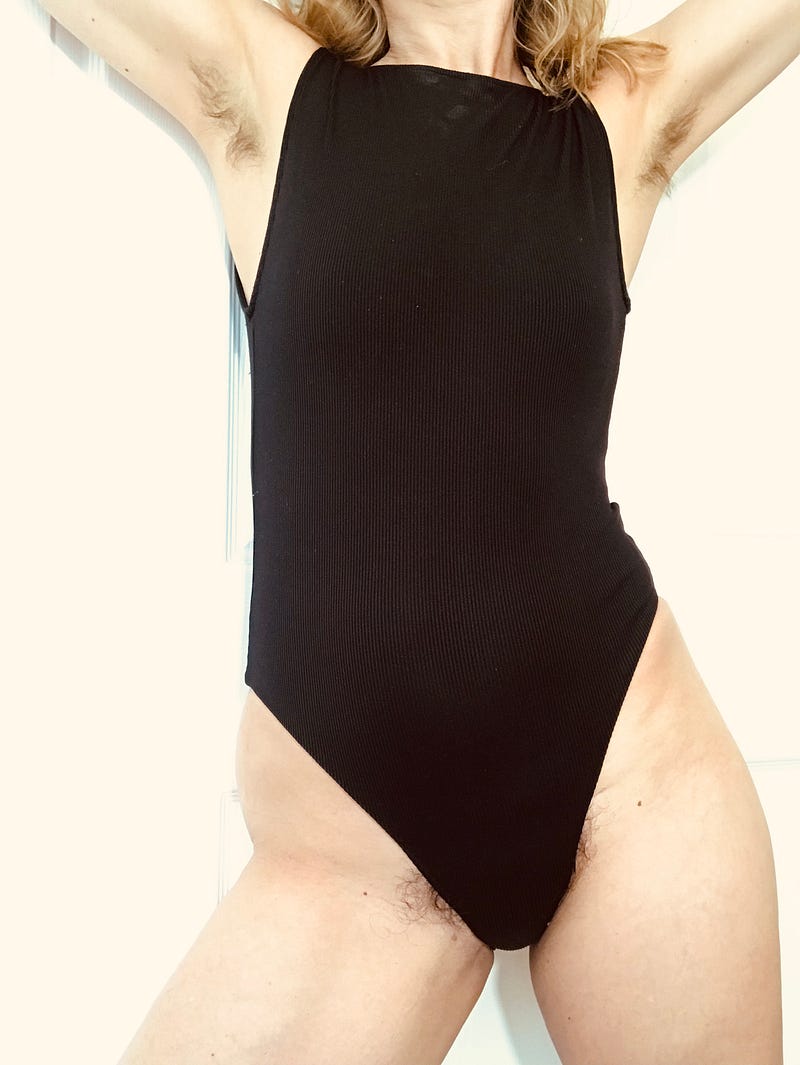
Those ingrown hairs were not only unsightly but painful too — and far more “disgusting” than the hair itself.
I’m glad I no longer feel the need to endure pubic-hair removal just because society deems women’s body hair “revolting.”
Whether or not we remove our body hair is a feminist issue.
For too long, razor manufacturers have also benefited from our insecurities about our body hair, capitalizing on our shame to sell us razors.
Gillette was the first company to do this, launching the Milady Décolletée in 1915, a razor marketed specifically for women, which effectively introduced the idea that women would be more attractive with shaved armpits.
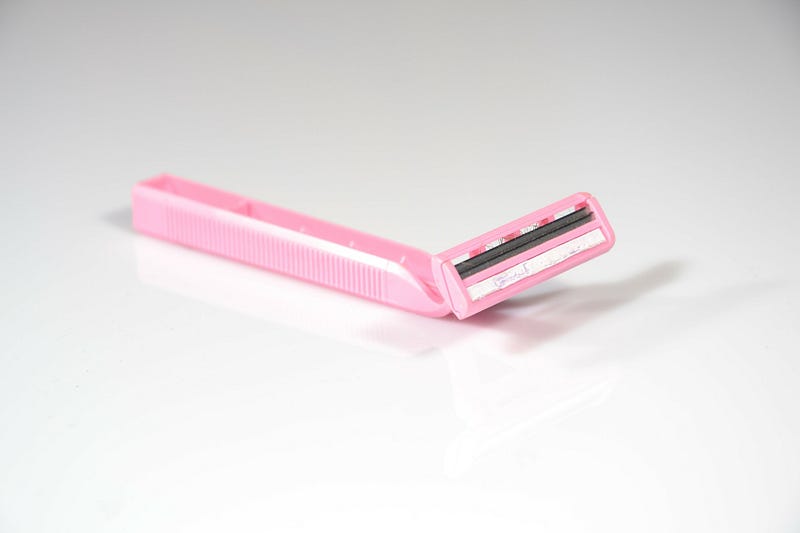
And not just that — companies raise the price of razors for women that are “really the same as the male version,” says Ian Parkman, assistant professor of marketing at the University of Portland, only they’re smaller and pink.
This, when women already earn less money on average than men.
It’s not fair.
Women no longer want to feel ashamed of their natural bodies just so companies can grow richer.
Not only that. Saf.Love, a pansexual, intersectional feminist, asks why women are expected to remove our body hair while men are not.
“[This] is unacceptable to me, and part of my resistance is to grow my hair as and when I want and remove it only if I feel like it. This applies to my pits, my pussy, my legs, my arms, my sideburns and my brows and upper lip. Removing selective hair and not removing others is hypocritical in my p.o.v.”
I agree, and this is why I’m committed to embracing the real me — stretch marks, wrinkles, body hairs and all.
Not shaving is a form of self-acceptance.
Crazy as it may sound, a woman embracing her natural self is an act of rebellion.
I’m beautiful as nature intended me to be
Today, I’m intent on being as authentic as I can.
Whether it’s speaking up more to advocate for myself, or cutting relations with people who don’t uplift me, or quitting being such a people-pleaser, letting my body hair return to its natural state feels like just another step in the direction of becoming more myself.
Social justice educator Ryse (they/them), lets their body hair grow freely as an expression of self-love.
“I didn’t always love the human I am… in fact I quite hated myself..my hair, my name, my skin, my voice, my emotions (I’m super sensitive)… I hated being me, I hated being black, I hated my sexuality…”
“This is me bare. I am who I am. I am me. I am black and prouder than ever. I am queer and don’t want to explain it. I am what I and I alone allow myself to be.”
In a world in which females are so often told to pluck and fill and contour and slim down, it’s empowering to let our body hair grow out and not care who likes it or who doesn’t.
Now if I lift my arms in public, affording passersby a glimpse of my armpit hair, it’s as if to say, “This might disgust you, but I’m okay with that. This is my body, and I’m defining how I want to groom it.”
I happen to like the soft hairs sprouting from my armpits. I have hairy legs — so what? I don’t care if at the beach my pubic bush springs out of my bikini bottoms. Yes, my pubic hair has grays in it. And? It’s still beautiful — because I’m me.


