A TRAVEL MEMOIR | NEPAL | CULTURE
A Nepalese Harvest: When People Came Together in The Spirit of Love, Family, Support and Survival
The lakeside Himalayan people showed me community spirit at its finest
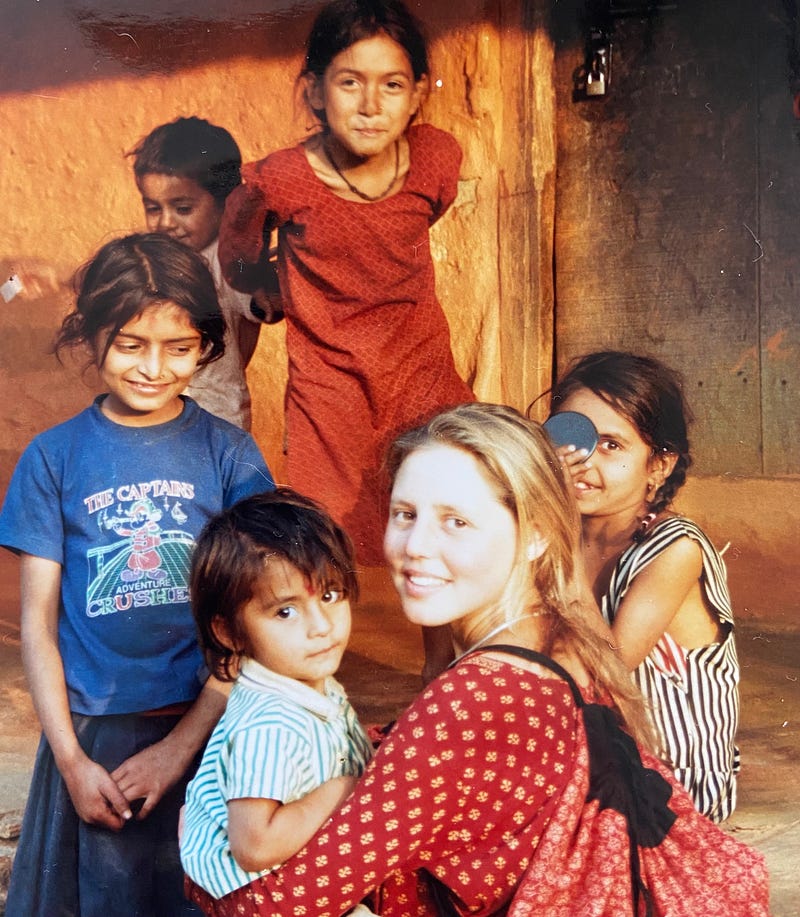
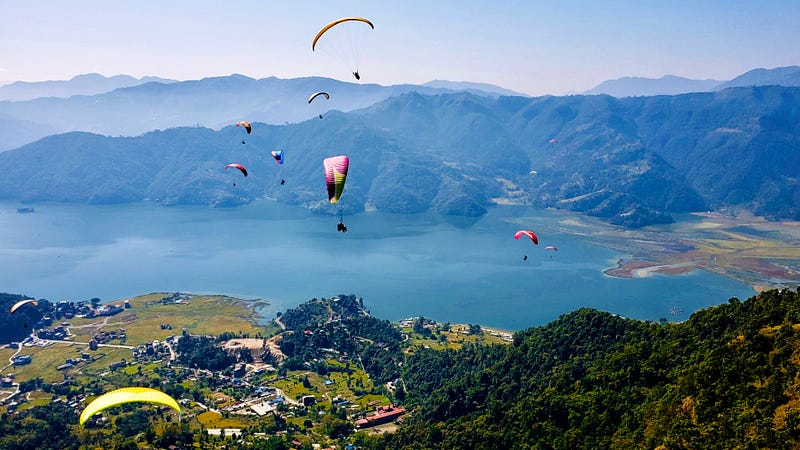
The six months I spent living beside the lake in Pokhara, Nepal, had been one of the most healing periods of my life.
It wasn’t just the clean air, the uncomplicated way of life and and wholesome yet simple food, it was the way people came together as one big family in that Himalayan kingdom that made me feel so nourished.
During a brief visit of around three weeks to check on some projects for a charity I was working with, I decided to stay on for longer. After all, it was during the months after my partner and I had upped and left the farm we were living on in England, and I had nowhere to go back to. Since it was now late October and the cold of the autumn and winter was closing in back home, returning to have to try to find a place to live was unappealing at best.
So I trotted along to the visa office in Pokhara and had another month’s visa added into my passport. Over the following five months, I would return each month to do the same.
I wanted to spend my time usefully. This manifested in various different activities, including quiet, introspective, creative time spent weaving in the garden, with views over Phewa Tal, the famous lake overlooked by the hotels where weary trekkers would enjoy rest and recovery after a challenging expedition.
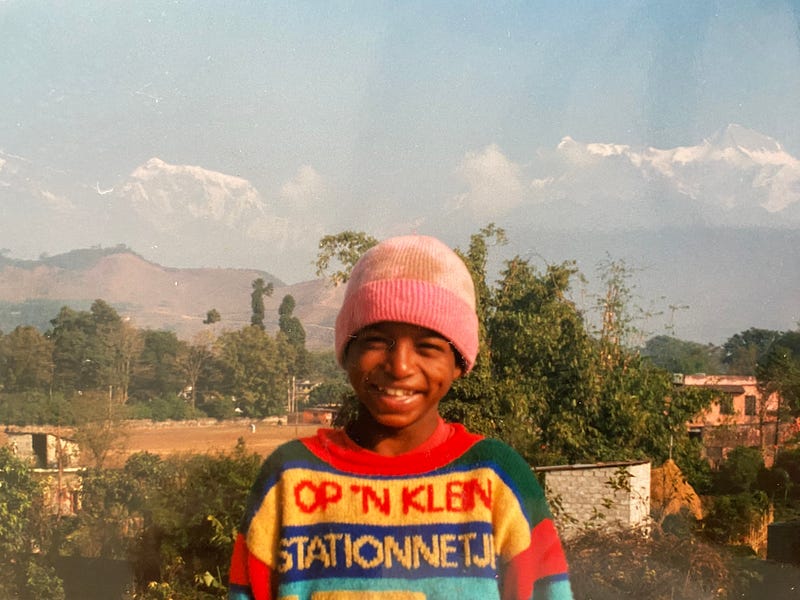
I also went to offer my time to the NGOs that I was already involved with and found myself teaching English to kids who’d been sent at a young age to work in the city from their poverty-stricken mountain villages.
Socially, I spent time with fellow Europeans I happened to meet over breakfast at a local cafe, or in the guest house where I was staying. But I also found myself being adopted, in a way, by the family who owned and ran the guesthouse.
And it was through this connection that began, and then deepened over the months I was there, that I came to experience what became, for me, one of the greatest highlights of my time there.
The great rice harvest.
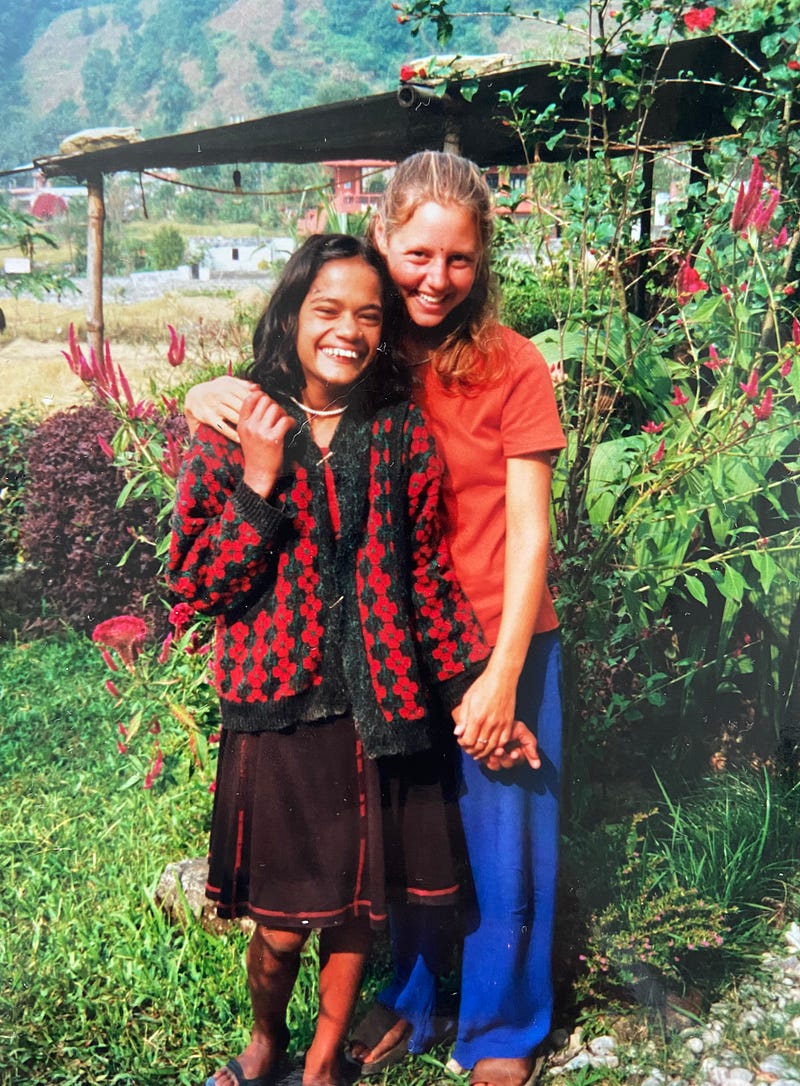
My newly acquired family was very respected in the area. They also held themselves in high regard, being Brahmins, the highest caste of the Nepali social structure. I would often eat meals with them and sit and chat, sometimes throughout long chunks of the day, with the daughter, Parvati, the eldest of the three kids. Beginning with morning chai at 7 am, right through until the late morning dhal-bhat-tarkari — lentils, rice and vegetables —and beyond, we somehow found things to natter about for hours.
She was twenty-three, just two years younger than I was at the time. Among her community, she was considered old for an unmarried woman but she continually refused her parents pleas to match her with a suitable husband, since she was holding out for a European man to sweep her off her feet and take her back with him.
It was every Nepali girl’s dream to leave Nepal and have the freedom that women in the west experienced. And spending time with western women helped to reinforce her belief in her right to wait. Being unmarried myself at the age of twenty-five, I found it baffling that she was regarded as ‘old’. But Parvati was able to use the fact that her mother still needed her help until one of her younger brothers would bring home a bride, and so they didn’t press her.
Parvati would do all of the cooking. Except for three days per month, that is. In true Brahmin style and due to a dated belief that women and girls are dirty when they are menstruating, during the first three days of her period she wasn’t allowed to step foot in the kitchen. Because the family would eat sitting on the floor of the kitchen, the closest she was allowed to sit to the food preparation area was in the entrance — far enough away to keep her ‘toxicity’ at bay but close enough to still be part of the conversation.
We may have never synched our cycles during my time there but I always chose to sit in solidarity with Parvati. I always told her that if she was dirty then so was I.
It was one of the things we found ourselves laughing raucously about during those months that I lived there with her family, much to the bemusement of her family. The other things were all due to the terrible and corruptive influence of her married friends.
Slowly, Parvati introduced me to these friends. Other than her best friend, a beautiful, dark-skinned girl called Leela with whom Parvati had grown up, her friends were all older women.
Parvati only had women as friends, for she was far too timid to ever talk to any men.
These older women loved to tease Parvati about her shyness and innocence. It was from them that she learnt what married life must look like, and why she clung onto the belief that a good, western man would want her to marry him. After all, their husbands would regularly be drunk on locally brewed rice wine and order their women about, beat them, or force themselves on them. And they accepted it — that was just how married life was for them.
These older women would make sexual references that had them cackling out loud, making light of their abusive husbands, and would refer to their husbands’ genitalia as big bananas. Parvati would then drop a big banana into any conversation she could and then laugh out loud while blushing furiously.
I grew to learn how important these women were to Parvati and her mother; that they made up Parvati’s community and her family’s support network. They knew each other’s business and they helped each other out when needed.
This included helping whenever there was an emergency to take care of, or helping on the land when work needed doing.
Which was how I then found myself, one day, being invited along to help cut rice in the surrounding paddy fields with Parvati and her older women friends.
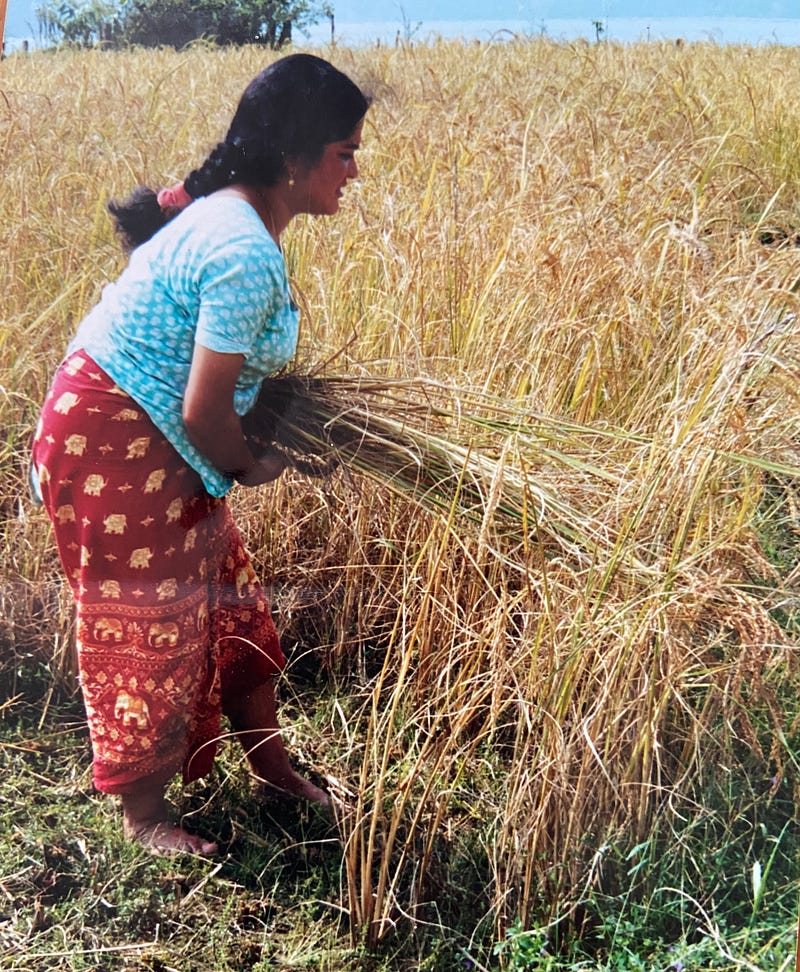
When a neighbour needed help with their annual crops, the entire community pitched in. They all knew the process, for they repeated it every year.
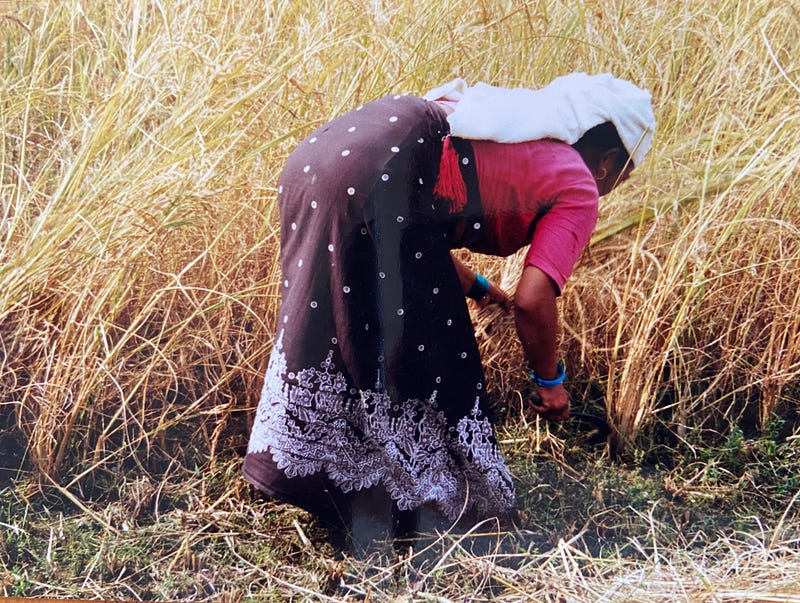
The first stage in the process was the reaping of the paddy. This was the job of the women in the community, who would spend several days cutting the stems with sickles and bundle up the haulm.
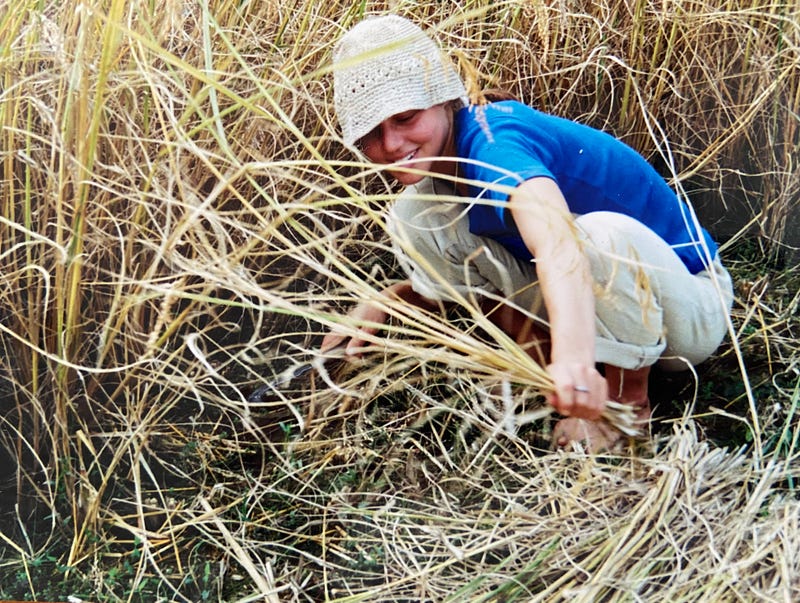
This was our moment! The raucous laughter rang through the paddy field as we worked together, fuelled by Parvati’s older female friends finding solace from difficult marriages by telling stories with humour.
Women had little power within the family structures but they proved to themselves that they were every bit as powerful as men when surrounded by a sisterhood of other women. They even went as far as to explain to me how they too could pee discretely in a sari while standing up, without getting a drop on themselves. It looked like it would take many years of practice to perfect so I wasn’t about to start trying.
Some days later, in the large, open yard of the house of the paddy’s owners, the rice would be arranged in a circular-shaped mound with a stake in the middle. Tied to a stake would be an ox or a buffalo.
The length of the rope that tied him to the stake was long enough for him to trample the rice on the edge of the circular mound, and round he would go, egged on by the men of the community, whipping his butt to keep him moving. As he walked around and around the stake, trampling the rice and freeing the grains to fall to the ground, the rope would wind around it, gradually becoming shorter as he went, until he would be walking in a tiny circle immediately around the stake.
This process took hours. Once it was over, everyone dove into the centre to collect up all the stems and thrash any remaining grains off by hand. The ground, meanwhile, was covered in all the tiny grains of rice, which were then swept up and collected, before being put through enormous sieves.
Eventually, the grains were as pure and clean as they would ever be and then piled into sacks.
Away from all of this action, several of the women were busying themselves together again, chopping, stirring, and feeding the fire upon which giant vats of dhal and vegetable curry were cooking. And rice, of course.
I offered to help but the rules of the Brahmin community excluded me from being allowed to be involved in the cooking, so instead I just watched the whole day’s activity from a perch on the hillside.
As the thrashing, sifting, and collecting of the rice was coming to a finish, stainless steel plates of delicious steaming hot food would begin to be passed to the hard-working participants. Everyone’s reward for the many long days of hard labour in the heat that meant the family had rice to last them the winter with plenty enough to trade with their community.
With Pokhara lake in the background, and the peaks of the Annapurna mountain range in the distance, we filled our bellies with well-deserved deliciousness that came right from this land.
Parvati’s family offered me solace at a time when I felt lost and without anywhere to call home back in England. For that, I will always be grateful.
But more than that, what they invited me to share when I joined in the harvesting of the rice was a beautiful insight into to real trials of living so simply off the land, and the solutions that true community provided.
I thought I was just getting a good workout but it turned out to be so much more.