
A Nebular Haiku
The elements that compose our bodies and frame our world were conjured in the hearts of stars…
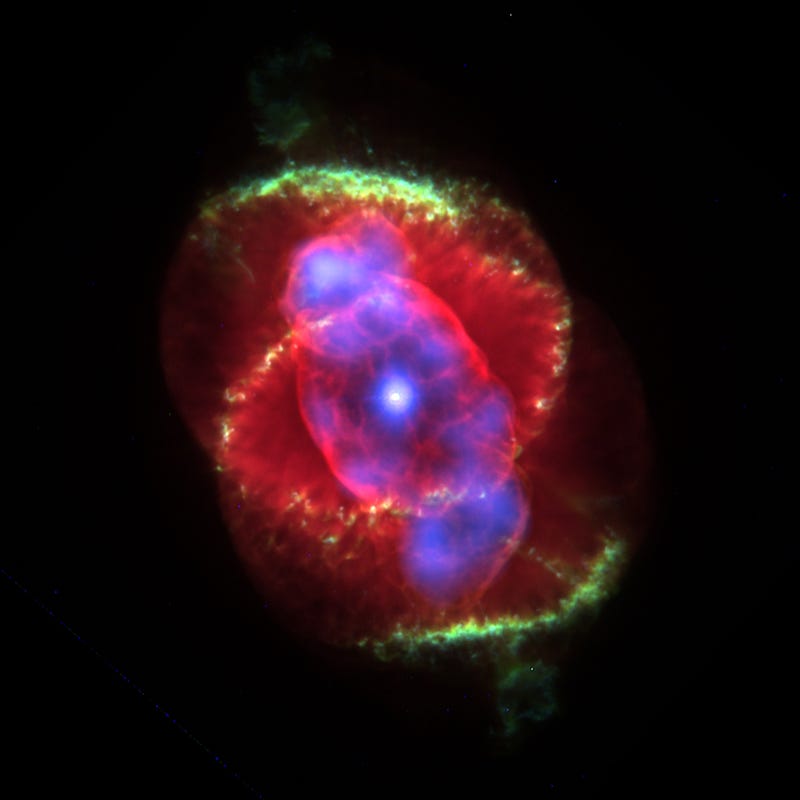
Nebula
We are kin to stars. Phoenix. Rising from their ash. Our dust feeds new stars.
Stars die. Medium-sized stars like our sun go gently, slowly, gracefully, shedding successive layers, glowing kimonos of ionized gas. The stellar wind from the carbon corpse of the dying star blow the layers of the kimono outwards and form a spectacular memorial called a planetary nebula (like the Cats Eye Nebula above). Approximately a tenth of the star’s mass blows away in the planetary nebula.
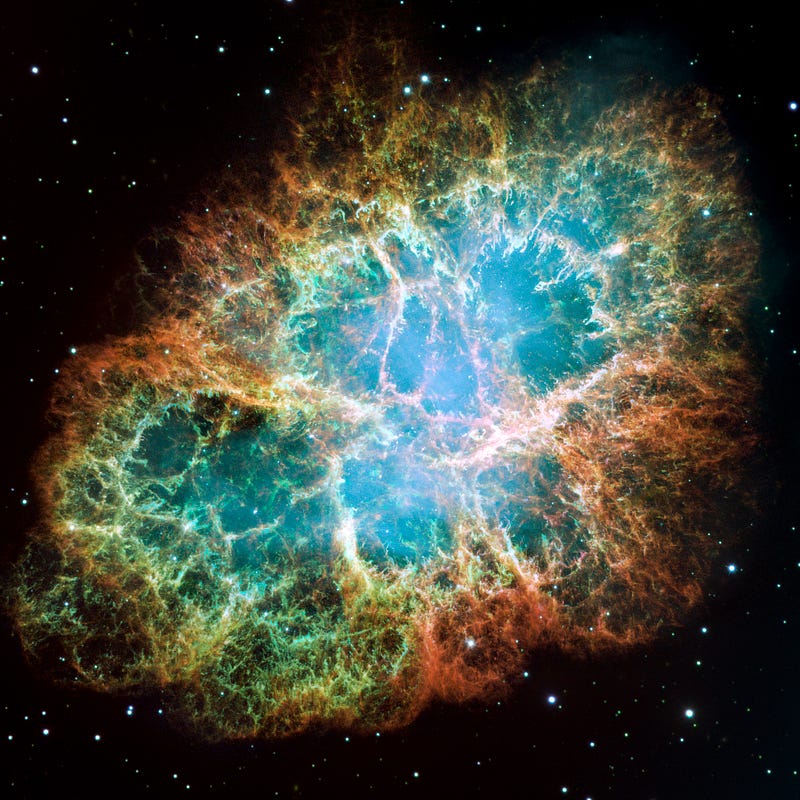
Massive stars more than eight times larger than our sun live bright but brief. Often, they die in a supernova explosion that can light up a galaxy and can be seen during the day if close enough to Earth. The remnants of supernovae are spectacular splashes of gas and dust like the Crab Nebula. Depending on the mass of the star and other factors, the remnant left after a supernova can be a neutron star or a black hole.
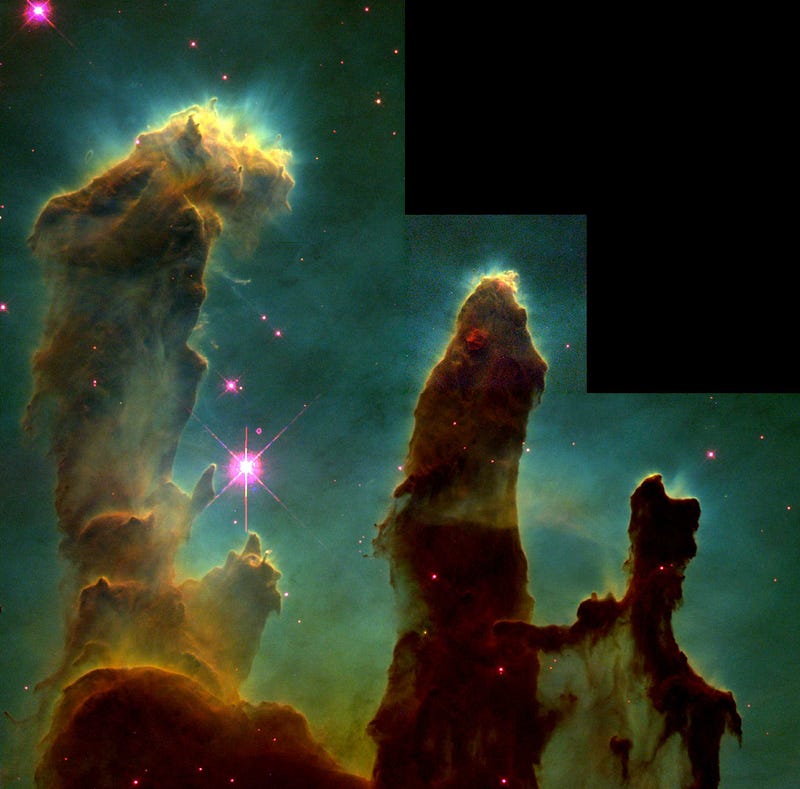
Gravity gathers the bones of dead stars, nebular gas, and dust, and squeezes them into new stars, often in clusters called stellar nurseries. More than 70% of the gas in these nebulae is hydrogen, and most of the rest is helium, the raw materials for new stars.
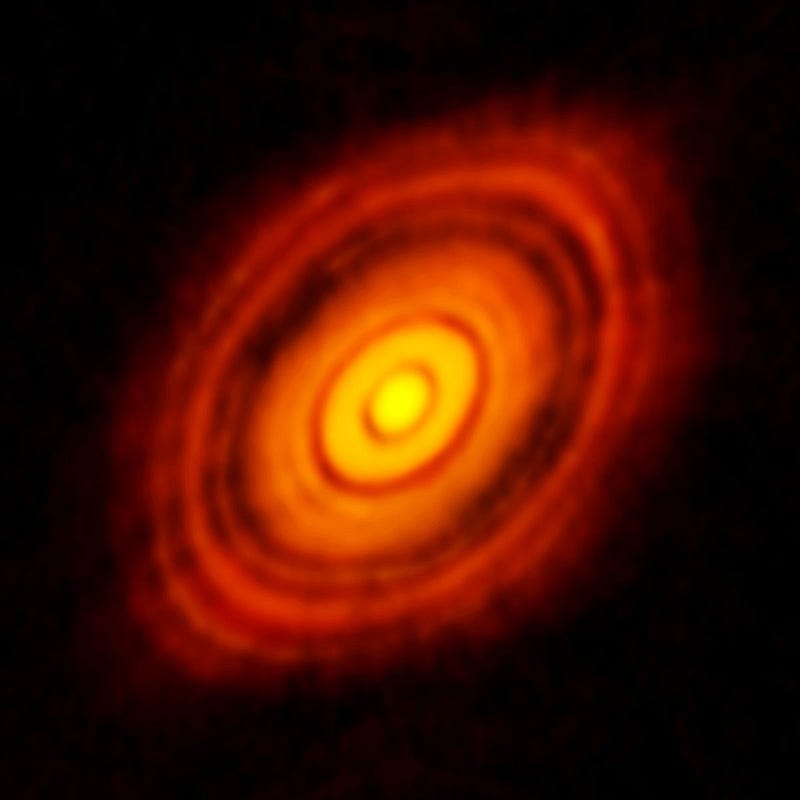
As gravity gathers material into an embryonic star called a protostar, it slowly begins to rotate, like water spiraling down a drain. The collapsing gas and dust in the protostar flattens into a disk, and soon the core of the protostar ignites, and a star is born. Surrounding the new star is a disk of dust and gas called a protoplanetary disk, the birthplace of new planets circling the new sun.
So, our Earth and the solar system likely formed from the ashes of dead stars, and when our own sun dies, gravity will gather our ashes, in turn, to bring new stars to light with a new generation of planets and perhaps life.
For more on #30DaysOfScikuChallenge


