
A Nazi versus Virtue-Signalling Canadian Politicians
The saga of a standing ovation’s retraction
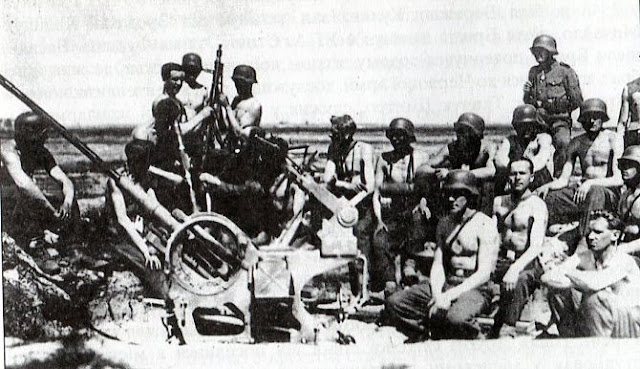
The sun must have shone more brightly for 98-year-old Yaroslav Hunka in that glorious moment when he sneaked into Canada’s House of Commons and received not one but two standing ovations by Prime Minister Justin Trudeau and hundreds of other political representatives for his military service in WWII.
“A Ukrainian hero” and “a Canadian hero,” the Speaker called him for having fought for Ukrainian independence against the Russians. Canada’s political leaders must have assumed that Hunka was just like the Ukrainians who fight in 2023 under Volodymyr Zelenskyy in Vladimir Putin’s war of aggression.
The glow lasted for two whole days when Hunka was the man of the hour, the talk of the town. Strutting around Ottawa, Hunka walked a little taller. Birds alighted on his shoulders and rabbits nuzzled his outstretched hands.
Then came the turning and Hunka’s descent into ignominy when Canada’s leaders put two and two together, discovering that Hunka’s military unit was also known as the 14th Waffen Grenadier Division of the SS. Hunka had been a Nazi.
Thereafter, the sun refused to rise, and the animals fled Hunka’s presence, apart from a patriotic horse that spat in his face in downtown Ottawa. Canada’s leaders spent days retracting their applause and salutes, with excruciating bluntness.
The Speaker who had invited and honoured Hunka resigned in disgrace and “with a heavy heart,” as he put it. The opposition parties called for Trudeau to take further responsibility, so the Prime Minister apologized for the national disgrace of having had Hunka in their company. Poland wanted Hunka extradited to stand trial for war crimes. The Kremlin called the official honouring of Hunka “outrageous.”
The hue and cry only grew more comprehensive from there.
Government ministers held press conferences displaying the clothes they’d worn on that terrible day, which they’d subsequently burned in a purification ceremony. “With this costly suit turned to ashes, having been made putrid by proximity to the Nazi Hunka, I stand cleansed,” said one. “May I never again be cursed with the sight of him who shall not be named,” said another.
Other ministers had taken a televised medieval walk of shame. Naked with heads bowed they went through the streets of Ottawa, as jeering crowds threw rotten vegetables at them. “May you roast in Hell, Hunka, for having once been in the same room as me,” shouted one of these contaminated paragons of virtue.
Another happily lobotomized herself to eliminate all trace of the memory of that fateful day, and her secretary sent a copy of the medical records to Hunka’s address to clarify for him that he’d been honoured only in error. As he opened the letter, Hunka dropped his morning cup of tea, his tears staining the documents.
Effigies of Hunka were burned, journalists bayed for blood and rent their garments, and each of the offended members of Parliament publicly exchanged their applause for curses. Said one of these ministers, “What a wicked, dastardly day it was in 1925 when Yaroslav Hunka was born. May that entire year be stricken from the Canadian record!”
The most ingenious retraction, however, was undertaken by a minister who ordered the invention of a time machine, which enabled her to physically kidnap herself before she was about to enter the House of Commons and deliver her applause for Hunka, thus preventing her from being sullied in the aftermath.
While all this was playing out, Yaroslav Hunka was naturally crestfallen. Had he committed those atrocities against villagers in vain? Had he somehow failed to appreciate the virtues of Stalin, who killed more people in the gulags than Hitler did in the death camps? What a bizarre sense of humour God must have, Hunka mused, to have overseen the honouring of his bravery and patriotism one moment only to cruelly retract it the next. Has there been anyone else so singled out for excommunication in Canada?
The ignorant, hillbilly Canadian politicians had been so concerned with their reputations, but did they stop to consider this proud soldier’s feelings? No, they didn’t, Hunka thought. And that’s how wartime atrocities are made possible.
I collect my Medium writings in paperback and eBook forms, and I put them up on Amazon. Check them out if you’d like to have them handy and to support my writing in that way. The newest one is Questing for Epiphanies in a Haunted House, and its 600 pages include 99 recent, wide-ranging articles of mine.


