
A movie about teenagers in Lockdown!
Only, it’s more than that.
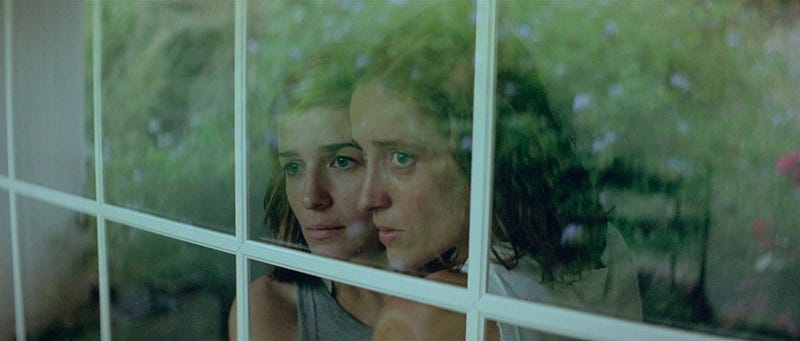
Dogtooth was the second feature of Greek director Yorgos Lanthimos and immediately made Mr. Lanthimos the highlight of Greek cinema for his absurdist yet subtle portrayal of a Josef Fritzl-like case.
Dogtooth was initially released back in 2009 and it’s strikingly remarkable how relevant it has become during this pandemic. Especially, for those who are protesting against the lockdowns simply for the sake of their freedom. I can give reference to Kashmir being in worse lockdowns, but that won’t affect many. So let’s analyze these imposed lockdowns from a different angle.
One of the underlying similarities in the movie and current-day lockdowns is that they are both for the benefits of the subjects — that would be us in this real world and the three kids, of the unnamed family, in the movie. Though, the protective behavior of the parents went a little far presenting a new extreme and far more radical approach of parenting.
The movie is about a family with three children, (two girls and a boy) all in their late teens, living in the secluded outskirts of Greece. The paterfamilias (father) is trying to protect their children from bad influence. He oversees their education, monitors what they watch and read, exercising and swimming lessons are all part of the routine. Sounds pretty normal, right?
Only it went a little far on the scale of parents trying to brainwash their children by teaching them distorted meanings of regular things, misleading them about the external world by keeping entertainment out of their reach, and infusing a false sense of family unity.
Children should only go out of the house when their Dogtooth comes out. Only then their body will be prepared to face the dangers that lurk in the outer world. <Brainwashed>
Their overprotective parenting involved, crippling the abilities to process the external world. For instance, actual airplanes are as big as the toys they play with. Distorting the perceptions of distance and image formation in order to deny the existence of such thing that flies and carries people, hence suppressing the idea of freedom.
The father’s unorthodox sexual education for his son, for example, involves bringing home a female guard from his factory. (She’s blindfolded for the car ride.) She eventually introduces what could be called cultural contaminants into the household in the form of videotapes.
Though, however radical and superficial this story may sound — it carries a startling touch of resemblance to reality. One such or even more gruesome example is the Josef Fritzl case where a father in Australia held her daughter captive and constantly raped her for 24 years.
A more fitting movie on such an incident is the Brie Larson starrer Room. The movie is more focussed on the mother’s suffering (for which Brie won Oscar for Best Actress in a lead role) and the son’s (Jacob Trembley) incapabilities of coping up with the world he is exposed to, after spending his first 6 years in captivity.
Room, which is the Magnum opus of the Irish director Lenny Abrahamson, focusing on how living in captivity affects your social receptiveness and emotional expression.
On the other hand, Dogtooth is a more gloomy yet psychological study of what can go wrong in the absence of social interactions and controlling the emotional expression of kids (or teenagers).
The flat tone of kids reflects the absence of emotional expression. As if they are reading their feelings of a sheet of paper; a weird cross between a manager’s stern dictation to his stenographer and the voice of HAL from 2001: A Space Odyssey.
The lack of emotional expression accumulates deep within, which is often vented out in a violent form. Though, it was sadistic by the director, for not letting any of his characters cry.
“I think children are really violent with each other often. And if you take that situation to these grown-up people who have remained like children, it escalates. There’s all this tension between them that somehow has to be released.” — Yorgos Lanthimos
But he made the point about how an attempt to control someone’s emotional expression might have drastic impacts. This practice is more prominent in the Eastern and African countries, wherein some cultures crying is either a sign of weakness or completely forbidden.
Apart from their emotional expression, another aspect that their father tried to control was their exposure to sex — another element displayed in a psychologically disturbing manner. But what startled me was the first exposure of a sexual act (for the elder daughter) and false perception of it.
For instance when the visitor, Christina asks the elder sister to lick her “keyboard”, in exchange for a hairband. She perceives licking to be a pleasurable thing. She doesn’t realize that licking to be a part of oral sex. This type of misconception was a mockery of the culture where sexual education is filtered or even prohibited.
Since the kids are not allowed to leave the house at any cost, the father is their only source to get things from the outside world. This sense of dependency makes the kids fragile and less adaptable to the external environment. I mean if you are planning to keep your kids isolated from the world that’s fine by me (and cruel by you).
Psychological control involves not letting kids make their own decisions, not allowing privacy, and encouraging feelings of dependence.
But in a normal scenario, you would be letting your kids move out in the real world without your assistance and for that, you have to prepare them, especially for girls. I mean, I know the world is a cruel place and some men do take advantage of them.
But you can’t keep limiting their liberties and wait for things to get better. They are never going to get better if women are kept in the comfort of their houses, raised to be dependent. (Chillout west, I am talking to the East).
You have to let them take care of themselves every once in a while, probably before their dogtooth comes out.
I know there are a lot of differences in the house in the movie and our own house, but the underlying trauma of being in isolation is deepening and making us more and more fragile (mentally). Probably, that explains a worldwide outcry to ease the lockdown despite the increasing number of cases. (Especially in the United States.)
Oh yes! There’s another reason: The tumbling economy. That reminds me of the fact that the hypothetical house in the Dogtooth was economically sufficed, and the children were well provided for — like in China. So whatever you distorted meaning you teach them, they are okay. Hence less number of revolts.
Dogtooth is a mature movie about immature teenagers living in lockdown since their birth. This means their lush greenhouse is the extent of their world, while our extent of the world evolves with our age and wealth. The outside world to them is like what space is to us.


