avatarBritni Pepper

Free AI web copilot to create summaries, insights and extended knowledge, download it at here

4950

Abstract

ublic domain, it is just plain rude to publish it as if it were yours.</li><li>Copy a photograph from a commercial source and present it as a free image. If a photograph is on the front page of several newspapers, it’s unlikely to be a free image. Some images, especially of current events, are extremely valuable, and photographers go to a great deal of trouble, risk, and expense to get the best shots.</li><li>Grab a still of a news bulletin video. That doesn’t make pirating commercial footage legal.</li><li>Copy someone else’s illegal use, such as from a social media post. If someone steals something, that doesn’t mean you can steal it off the thief and make things right. It’s still theft.</li></ol><h1 id="a42c">But I’m special!</h1><p id="19b0">Yeah, and you think the law doesn’t apply to you. Wrong!</p><p id="7abe">I found a few stories about the Australian bushfires using images pirated from news outlets. When I quizzed their use, I was generally lied at, ignored, or blocked. Apparently the end justifies the means.</p><div id="aa67" class="link-block"> <a href="https://medium.com/@nicole.phillips/australian-bushfires-how-you-can-help-f4d623dd2ff4"> <div> <div> <h2>Australian Bushfires: How you can help</h2> <div><h3>With 24 confirmed deaths, thousands of people evacuated, the estimated loss of over half a billion animals, over 12…</h3></div> <div><p>medium.com</p></div> </div> <div> <div style="background-image: url(https://miro.readmedium.com/v2/resize:fit:320/1*rgevN8gHwKIQQKtfIyj6uw.jpeg)"></div> </div> </div> </a> </div><p id="20f3">This is blatant. A <a href="https://www.nytimes.com/2020/01/09/reader-center/australia-wildfire-photo.html">commercial photographer on assignment for the New York Times</a> shot this image, which has been re-used under license by many major news outlets. In this Medium article, it is presented without any attribution or link at all.</p><div id="5e68" class="link-block"> <a href="https://readmedium.com/if-not-now-when-db829f5e972b"> <div> <div> <h2>If not now, when?</h2> <div><h3>When is the right time to talk about bushfires and climate change? About the effect of global warming on natural…</h3></div> <div><p>medium.com</p></div> </div> <div> <div style="background-image: url(https://miro.readmedium.com/v2/resize:fit:320/1*FEZ4V-FjiRUm7VmMlg_21A.jpeg)"></div> </div> </div> </a> </div><p id="4ab6">Here the lead image has been <a href="https://www.facebook.com/photo.php?fbid=10157989977783395&amp;set=picfp.552763394&amp;type=3&amp;theater">lifted from social media</a> without attribution. Media outlets such as t<a href="https://www.abc.net.au/news/2019-11-08/forster-bushfire/11688392">he ABC</a> and the <a href="https://www.dailytelegraph.com.au/news/nsw/firefighters-brace-themselves-as-winds-fan-fires-across-nsw/news-story/c4436b95aae11370447f90db12044884">Daily Telegraph</a> used this striking image, but gave attribution, and presumably gained permission.</p><div id="867d" class="link-block"> <a href="https://blog.usejournal.com/a-burning-nation-led-by-cowards-c7bc620ca0c0"> <div> <div> <h2>A Burning Nation, Led By Cowards</h2> <div><h3>At the start of every disaster movie, there’s a scientist being ignored.</h3></div> <div><p>blog.usejournal.com</p></div> </div> <div> <div style="background-image: url(https://miro.readmedium.com/v2/resize:fit:320/1*JsUViq9k9F-k_r-I2nUIUQ.jpeg)"></div> </div> </div> </a> </div><p id="5145">Another blatant piece of piracy. This article is packed full of commercial images from Getty, Associated Press, <a href="https://www.reuters.com/article/us-australia-bushfires-insurance/australia-strengthens-bushfire-defenses-as-economic-environmental-costs-mount-idUSKBN1Z601F">Reuters</a> and so on. There was no credit at all given until I raised this with the author. Even then, the attribution was often wildly inaccurate, and without a license, unjustified.</p><div id="3eed" class="link-block"> <a href="https://blog.usejournal.com/australia-is-being-burned-alive-547821bb24e3"> <div> <div> <h2>Australia is Being Burned Alive</h2> <div><h3>As of today: Saturday the 4th of January, bushfires have been raging across the east coast of Australia since…</h3></div> <div><p>blog.usejournal.com</p></div> </div> <div> <div style="background-image: url(https://miro.readmedium.com/v2

Options

/resize:fit:320/0*5j0VmFc78hkG2MIJ)"></div> </div> </div> </a> </div><p id="1fed">Several more images used without permission or attribution. When I quizzed the author, they claimed they had been given permission on social media, and when I asked for the source, they blocked me.</p><div id="fd39" class="link-block"> <a href="https://eand.co/why-were-not-prepared-for-nature-s-revenge-b0a40003b20e"> <div> <div> <h2>(Why We’re Not Prepared For) Nature’s Revenge</h2> <div><h3>Australia Burning Should Have Been the Climate Change Wake-Up Call the World Needs. But is it?</h3></div> <div><p>eand.co</p></div> </div> <div> <div style="background-image: url(https://miro.readmedium.com/v2/resize:fit:320/1*ujl_5oSxFNZhukPyjD8GdA.jpeg)"></div> </div> </div> </a> </div><p id="3649">A striking image, lifted without credit from Associated Press.</p><p id="fbdb">It just goes on and on.</p><p id="5bfd">Many authors, to their credit, have followed the rules — the simple rules — and used free images, or supplied legitimate credit and attribution. Good on them.</p><h1 id="5d94">What can be done?</h1><p id="16b1">Not a lot, it seems. The way for copyright owners or their agents to protest illegal use of their images is to lodge a <a href="https://www.dmca.com/faq/What-is-a-DMCA-Takedown">DCMA takedown notice</a>, and if that is ignored, then take it to court.</p><p id="00bb">Some outlets take action, some don’t.</p><p id="6c89">A person who isn’t the copyright owner can’t do much about blatant piracy.</p><p id="3cc7">Except, I suppose, to question why someone taking the moral high ground is so bereft of morals that they disregard the law. Perhaps their message isn’t quite so pure as they imagine.</p><h1 id="1911">The message for writers</h1><p id="6b7f">Do the right thing. Find out what the guidelines are, and follow them. You wouldn’t copy and paste someone else’s words into your story and pretend they were yours, so don’t do the same with photographs.</p><div id="5d2e" class="link-block"> <a href="https://writingcooperative.com/how-and-why-to-cite-stock-photos-in-your-medium-stories-3c6c554f48b0"> <div> <div> <h2>How and Why to Cite Stock Photos in Your Medium Stories</h2> <div><h3>Because stealing isn't cool and neither is being lazy</h3></div> <div><p>writingcooperative.com</p></div> </div> <div> <div style="background-image: url(https://miro.readmedium.com/v2/resize:fit:320/1*QLPaLTaYl56Y2H0LR1LIVA.jpeg)"></div> </div> </div> </a> </div><p id="91b2">It’s not hard, and it gives you a feeling of satisfaction that you have acted legally, as opposed to having to ignore the angel on your shoulder chiding you, and splitting the profits with the demon on the other shoulder cheering on your criminal career.</p><p id="4b46"><b><i>Britni</i></b></p><p id="3f38"><i>More on bushfires:</i></p><div id="3b3b" class="link-block"> <a href="https://readmedium.com/why-the-australian-bushfires-arent-a-big-deal-e2968d32b905"> <div> <div> <h2>Why the Australian Bushfires aren’t a Big Deal</h2> <div><h3>The continent is burning, but it’s not the end of the world</h3></div> <div><p>medium.com</p></div> </div> <div> <div style="background-image: url(https://miro.readmedium.com/v2/resize:fit:320/1*gDWM-eR1mp7AzD11KiaAsQ.jpeg)"></div> </div> </div> </a> </div><p id="fd0b"><i>Britni Pepper writes for <a href="https://www.amazon.com/Britni-Pepper/e/B07PHWN5TM"></a></i><a href="https://www.amazon.com/Britni-Pepper/e/B07PHWN5TM">Kindle Direct Publishing<i></i></a><i>. She runs a <a href="https://britnipepper.com/">blog</a> where she reviews erotica, and rambles on about this and that. She may be reached on <a href="https://twitter.com/britnipepper">Twitter</a> and <a href="https://www.facebook.com/britni.pepper.bp">Facebook</a>.</i></p><figure id="2160"><img src="https://cdn-images-1.readmedium.com/v2/resize:fit:800/0*1SOFKhU6Mk9ShF46.png"><figcaption></figcaption></figure><h1 id="4b13">Writers’ Blokke</h1><h2 id="d37c">The publication for writers and readers to create and read amazing content</h2><p id="c55a">Following</p><h2 id="94c7">50</h2><ul><li><a href="https://medium.com/tag/travel">Travel</a></li><li><a href="https://medium.com/tag/life">Life</a></li><li><a href="https://medium.com/tag/fantasy">Fantasy</a></li><li><a href="https://medium.com/tag/reading">Reading</a></li><li><a href="https://medium.com/tag/rhine">Rhine</a></li></ul></article></body>

You Don’t Need Morals to Run a Moral Crusade

Steal, lie, kill; the end justifies the means
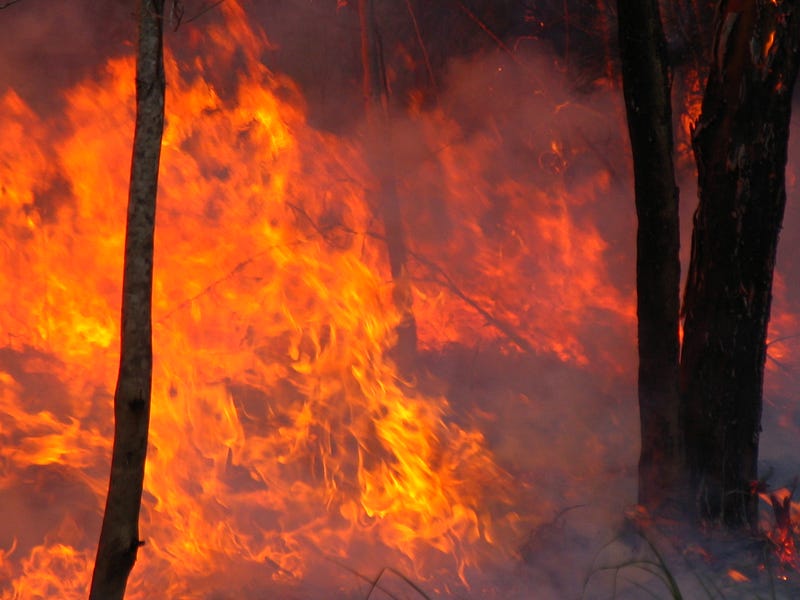
Bushfire image credit: CC by Bert Knottenbeld (contact)

The Australian bushfires have seen me writing about climate change. One of those questions where everybody seems to claim that their own view — out of many possible — is the only correct one.

Climate change deniers call up fake news reports about Greens arsonists lighting the fires, and climate change evangelists insist that this is a taste of armageddon and it’s just going to get worse every year until we see their light.

Me, I’m in the middle. Australia has bushfires every year, and these aren’t even the worst we’ve had. 173 died in a single day of bushfires on Black Saturday in 2009, and at time of counting, there have been 28 fatalities in this current Australian bushfire season.

But there is no denying that global warming increases the chance of bushfires and that they are worse due to the hotter weather. Longer and drier droughts don’t help, neither.

Time to panic!

There’s a certain mindset — best exemplified by former American vice-president Al Gore’s claim “We need to create fear!” — that promotes panic about the future in the hopes of whipping up a general desire for urgent change.
Photo by Markus Spiske on Unsplash

These people see themselves as saving the world, driving the ignorant and stupid to see things their way. Or maybe they see it as consciousness-raising, but they still have the divine light of self-righteousness spurring them on.

The reality is that most people aren’t stupid. Poorly-informed, maybe, but even so, something like 90% of people believe in global warming.

Beating people over the head with what they already accept is probably counterproductive, and telling the 10% who aren’t already aboard that they are idiots probably won’t result in too many conversions.

Hoist the Jolly Roger!

Good images are essential to get your message across, we are told, and it seems that if you don’t have legitimate access to good images, but think it is important that your message gain extra traction, why, but you are entitled to pirate someone else’s!

As I have demonstrated above, there are some very simple ways to use images that don’t belong to you:

  1. Use an image that has been made available via a Creative Commons license. You need to credit the creator, link to the license, and provide a contact method. Wikipedia is an excellent source for these images, and photo sites such as Flickr generally allow you to search for images which may be used under a free licence.
  2. Use an image from a free stock photo site such as Pexels or Unsplash. These can be downloaded freely, and the attribution and link details are usually able to be copied and pasted easily. Sometimes an automated tool is provided.
  3. Pay for a license from a stock outlet. I’ve occasionally done this. The very best photographs attract modest charges.
  4. Use a public domain image. All US government images are public domain, including iconic NASA photographs.
  5. Wait for copyright to expire. All of the early photographs (say by Matthew Brady and Alexander Gardner in the American Civil War) have long since passed their copyright date.

What you shouldn’t do:

  1. Just copy a photograph and present it without attribution. Most licences require you to identify and link to the creator, and even if it is an image in the public domain, it is just plain rude to publish it as if it were yours.
  2. Copy a photograph from a commercial source and present it as a free image. If a photograph is on the front page of several newspapers, it’s unlikely to be a free image. Some images, especially of current events, are extremely valuable, and photographers go to a great deal of trouble, risk, and expense to get the best shots.
  3. Grab a still of a news bulletin video. That doesn’t make pirating commercial footage legal.
  4. Copy someone else’s illegal use, such as from a social media post. If someone steals something, that doesn’t mean you can steal it off the thief and make things right. It’s still theft.

But I’m special!

Yeah, and you think the law doesn’t apply to you. Wrong!

I found a few stories about the Australian bushfires using images pirated from news outlets. When I quizzed their use, I was generally lied at, ignored, or blocked. Apparently the end justifies the means.

This is blatant. A commercial photographer on assignment for the New York Times shot this image, which has been re-used under license by many major news outlets. In this Medium article, it is presented without any attribution or link at all.

Here the lead image has been lifted from social media without attribution. Media outlets such as the ABC and the Daily Telegraph used this striking image, but gave attribution, and presumably gained permission.

Another blatant piece of piracy. This article is packed full of commercial images from Getty, Associated Press, Reuters and so on. There was no credit at all given until I raised this with the author. Even then, the attribution was often wildly inaccurate, and without a license, unjustified.

Several more images used without permission or attribution. When I quizzed the author, they claimed they had been given permission on social media, and when I asked for the source, they blocked me.

A striking image, lifted without credit from Associated Press.

It just goes on and on.

Many authors, to their credit, have followed the rules — the simple rules — and used free images, or supplied legitimate credit and attribution. Good on them.

What can be done?

Not a lot, it seems. The way for copyright owners or their agents to protest illegal use of their images is to lodge a DCMA takedown notice, and if that is ignored, then take it to court.

Some outlets take action, some don’t.

A person who isn’t the copyright owner can’t do much about blatant piracy.

Except, I suppose, to question why someone taking the moral high ground is so bereft of morals that they disregard the law. Perhaps their message isn’t quite so pure as they imagine.

The message for writers

Do the right thing. Find out what the guidelines are, and follow them. You wouldn’t copy and paste someone else’s words into your story and pretend they were yours, so don’t do the same with photographs.

It’s not hard, and it gives you a feeling of satisfaction that you have acted legally, as opposed to having to ignore the angel on your shoulder chiding you, and splitting the profits with the demon on the other shoulder cheering on your criminal career.

Britni

More on bushfires:

Britni Pepper writes for Kindle Direct Publishing. She runs a blog where she reviews erotica, and rambles on about this and that. She may be reached on Twitter and Facebook.

Writers’ Blokke

The publication for writers and readers to create and read amazing content

Following

50

Stock Photos
Life
Ethics
Writing
Climate Change
Recommended from ReadMedium