
HISTORY
A Modern View of Winston Churchill
Complex, imperfect, and deserving of our gratitude
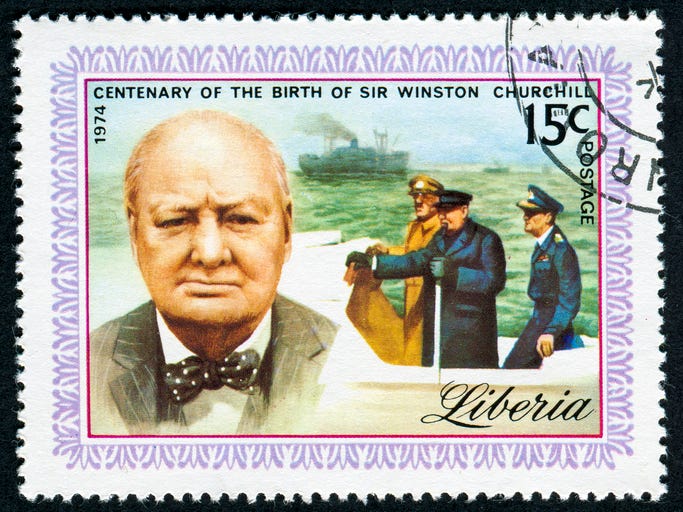
On April 9th this year, Britain celebrated Winston Churchill Day — an annual affair to pay homage to the man who led the allies through the harrowing days of World War II. Having read Mein Kampf in its entirety, Churchill took Adolf Hitler at his word during a time when leaders were in a state of denial. Churchill’s refusal to concede to his many doubters, and forge ahead not only in leading the European response but in building a “Big-three” alliance with the U.S. and Russia, saved the free world.
Still, for some, celebrating Churchill yields complex emotions because along with his brilliance come challenging British aristocratic views. Imperialism and colonialism ran deep, especially in his treatment of India. Critics often cite Churchill’s lack of willingness to sufficiently engage during the Bengal Famine of 1943, where 3 million Indians died. While he did have a global war preoccupying him, it is hard to accept his diminished or non-existent support.
Similarly, Churchill was intolerant of Mahatma Gandhi, India’s spiritual leader who advocated for self-rule rather than remaining under British control. Churchill’s words were excessively harsh, even for the non-woke. Regarding Gandhi’s fasting, Churchill told his cabinet, “We should be rid of a bad man and an enemy of the Empire if he died.” Churchill’s anxiety about the British Empire’s potential downfall probably colored his view of Gandhi as yet another threat.
Still, there are more reasons to celebrate Churchill, who rose like no other to meet the demands of the times. Imagine being called into your future boss’s office, being told you weren’t his first choice for the job, he doesn’t much like working with you — but the job is yours anyway. When the King’s first choice, Lord Halifax, turned down the Prime Minister position, that is exactly what happened to Churchill. The King shared with the Canadian Prime minister that he would “never wish to appoint Churchill to any office unless it was absolutely necessary in time of war.”
With the job won by default, Churchill now had to gain public support, marshal a military strategy, and advocate for an international response. This was all the more challenging because his predecessor, Neville Chamberlain, was Hitler’s chief appeaser. But Churchill had the courage and voice to stand as a lone politician, believing that the only viable strategy was to confront German aggression head-on.
Churchill believed he had time to prepare Britain because France’s Maginot Line — built in the 30s to deter a German invasion — would ward off an attack he knew was imminent. Instead, Germany bypassed the Line, driving north of it, making Britain Hitler’s next target. In a dark moment, Churchill quipped to his staff, “People who go to Italy to look at ruins won’t have to go as far as Naples and Pompeii in future.”
Despite his pessimism, Churchill remained stalwart, demonstrating confidence and purpose in bracing the country for war. In the year ahead, Churchill would contend with three major battles, which Britain could not afford to lose.
At Dunkirk, Britain evacuated 85% of the stranded troops, preserving the manpower to fight future battles. In the Battle of Britain, England’s Royal Air Force (RAF) overcame Germany’s air attack. RAF’s fighter pilots bent but did not break, prompting Churchill to call it “Britain’s finest hour.” Finally, there was the traumatic “Blitz” attack where Germany systematically bombed London for 57 straight days, and Britain did not succumb.
Throughout the turbulence and destruction, Churchill was the bedrock of the nation. He reassured the country that Britain would be victorious while simultaneously pursuing the international coalition critical for their success. Engaging with Russia and the U.S. proved difficult not only because the countries lacked common political views but also distance. Also, the extreme paranoia of Stalin made for delicate handling. But Churchill, the statesman, succeeded.
In addition to Churchill’s role in sustaining the free world, there is also a very human story to the man. Much has been written about his depression and some of the peculiar behaviors that resulted, including taking two baths a day at precisely 98 degrees. His failures in World War I were well-publicized, with ensuing public derision. Validation of his leadership came late in life. But even then, he was driven out of government after the war.
Churchill was a true student of history, having served as a war correspondent covering multiple wars. His voluminous treatments of the World Wars won him the Nobel prize. He did his homework, learned from the past, and never shirked making the hard decisions because, to use his words, “When you are going through hell, keep going.”
We have a habit in today’s culture of tearing down leaders and focusing on their feet of clay — the same feet as ours, only they often walk a lonely and narrow path that deserves recognition in its own right. Churchill was as complex as he was brilliant, and his leadership at a time when the world was cracking was paramount in maintaining our free world. For this, he will always earn my gratitude.