
A Mindfulness Technique to Use While Exercising
It’s a Win-Win
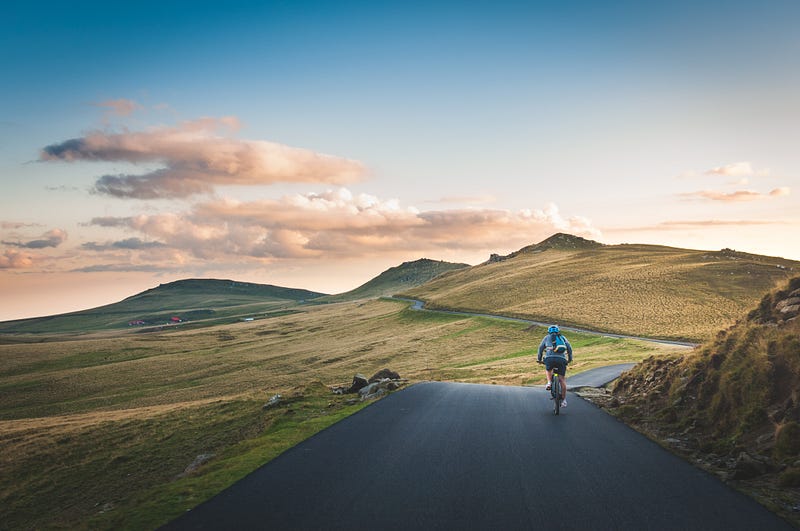
My main form of exercise for decades was running and playing tennis. Unfortunately, that resulted in three surgeries, two hip and one achilles tear, and a ton of calf muscle pulls and back spasms.
So about five years ago I jettisoned running and cut down on the tennis in favor of the joint-friendly road biking and swimming as my go-to cardio workouts. While biking and swimming are fantastic for my heart, joints and overall mental health (the endorphins they produce always seem to slay any anxiety or depression fog I may have), they do carry one drawback: My mind wanders like crazy on the bike and in the pool.
And I’m a regular meditator. I missed maybe five days of meditation in 2020. I’m also a devoted practitioner of mindfulness in my daily life.
45 minutes in the Bahamas
But man, put me on a bike or in a pool for 45 minutes and I am gone. Thinking about article ideas. What I want to make for dinner that night. The storming of the U.S. Capitol. You name it, my mind wanders there.
After years of going to La-La Land on the bike or in the pool, I finally decided to do something about it. It took a total of 2.5 seconds to come up with a solution, which is about 1.5 seconds longer than it should have taken.
Which leads me to a quick sidebar about meditation and mindfulness. Precisely NONE of it is complicated. It’s all about the simple.
Working our way back to kindergarten
The person who expressed this best is Adyashanti, a prominent spiritual teacher in Northern California. His basic dictum is that in normal education we start at kindergarten, then move up to primary, middle and secondary school, then college and end up at the PhD. With meditation and mindfulness, however, we start at the PhD level and have to work our way back down to kindergarten. Why? Because accessing the calm, compassionate genius in all of us occurs at the simplest level, which is made exceedingly difficult by the complexity our minds lust after.
Back to my simple mindfulness idea. It’s this:
I count ten breaths. And on a 45 minute ride I do this six times. So six different times I catch my mind wandering (not hard to do) and then, just as I would in a formal meditation, I bring my attention to my breathing and count ten breaths.
Another wrinkle I’ve added is to designate six easy to remember spots on my ride that can serve as a trigger to count my ten breaths. The light at Jamboree and University Drive, for example. This ensures that I space out those breathing sessions and also that get them all in.
In the pool, you can do it after 10, 20, 30 laps, etc. Or while resting in between sprint intervals.
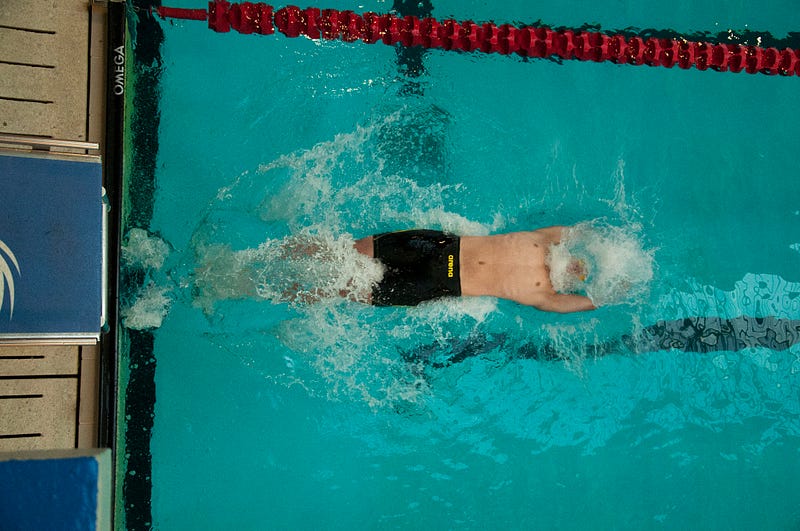
This obviously doesn’t work for exercise that requires moment-by-moment concentration, like weight-lifting, basketball, tennis or rock climbing. But you can do it on breaks between sets of lifting or at a changeover in tennis, etc.
The win-win of it all
Why is this technique a win-win? Well, win number one is the short term benefit of not being as thoroughly absorbed in your thoughts as you would be if you hadn’t counted your breaths at all. Being stuck in Thoughtlandia for 45 straight minutes results in our feeling less centered afterward, which makes us more susceptible to any adversity that may prop up during the rest of our day.
Win number two is simply that we get more mindfulness practice in. Repetition and practice is the name of the game with mindfulness. The more we do it, the better we get at it. And by ‘it’ I mean just being present.
So see if you can work in some mindful breathing work in your exercise routine. It’ll help you feel better during that day and help build your overall ability to be present for the moments of your life.


