
The Renaissance Man Is Dead. The Internet Killed Him
On the hurricane of information, and the rise of superspecialists
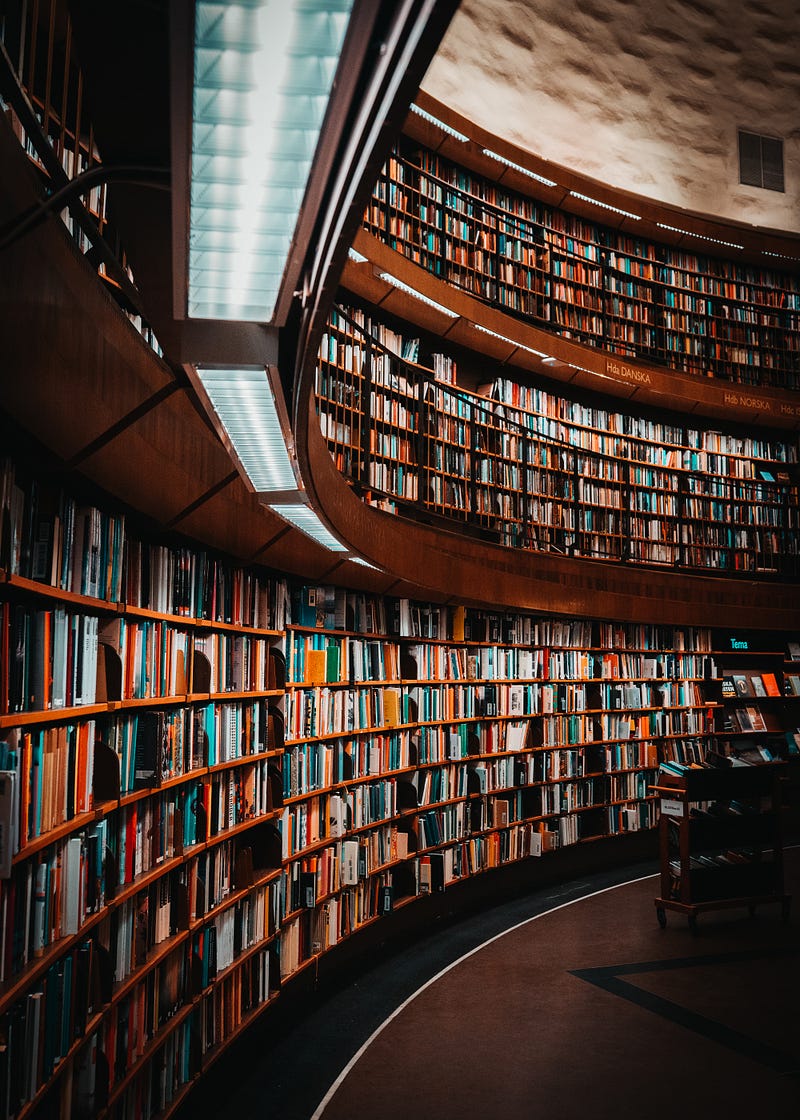
I’ve assumed I was a smart guy for most of my life. This conviction, more than any other thing, propelled me through junior, middle and high school. My grades were excellent, and I generally knew what I was doing. I was the one who knew the capital of Cambodia or the country with the most Olympic gold medals or the meaning of verisimilitude.
But today, I came across a word that absolutely stumped me. The word was bollard, and I have never heard it in my life. A simple seven-letter-word; not too uncommon, by modern-day standards, and I did not know what it meant.
Of course, Google came to the rescue shortly after. But the experience made me realize the futility of cramming random facts in the Internet era and further emphasized the value of actual knowledge. It’s really hard to be smart these days — and intelligence itself has to be redefined.
So here’s what I think about it all. I’ve also sprinkled a few cool facts around, for entertainment purposes. Maybe you’ll learn a thing or two (wink).
Too much to know
Throughout history, there have been a few people with extraordinary prowess in multiple fields. They were especially notable during the Renaissance period — think of Machiavelli, Michaelangelo and Da Vinci, the quintessential Renaissance man. Their one unifying trait was their broad store of knowledge, their curiosity, and their desire to improve themselves.
But polymaths are increasingly rare these days, despite the abundance of information and teaching resources. You might think it’s because people are less inclined to spend time learning as compared to earning money or doing other (more gratifying) things, and you won’t be totally wrong. But that’s not the full picture.
Maybe it’s because there is just too much for one person to learn.
Think about it. Science in the Renaissance era is nothing compared to modern science. The natural sciences such as physics, chemistry and biology have become increasingly faceted, with many sub-fields emerging from each.
A classical physicist might find himself hopelessly lost in a discussion on quantum mechanics. A pharmacist and a material scientist have very little in common, despite both working with chemicals and the principles of chemistry. An entomologist (someone who studies insects) and a microbiologist share almost nothing but the -ogist suffix.
Mastery of multiple fields, especially the sciences, is an almost unattainable goal in the modern world. The era of the Renaissance man seems to be over.
Intelligence and the Internet
With modern technology, the sum total of human knowledge is instantly accessible to anyone, anywhere. Could that be a reason why polymathy is dying?
It seems so. A study in 2011 found that people tend to more easily forget information they are confident they can find on the Internet. Our age-old reliance on memory prowess and research skills is giving way to dependence on search engines.
In modern times, learning and retaining new information is often not worth the effort.
I’ve found that the “wow” factor for intelligence is much higher these days, as even the most niche piece of knowledge is rendered unimpressive by the fact that anyone could “just Google it”.
The upside: superspecialists
As the era of the Renaissance man comes to an end, we’re witnessing the start of another; the era of the superspecialist.
The superspecialist is an individual whose talents are so concentrated in a particular aspect, that they are essentialy the only ones in the world who can do what they do. Think of an entologist that specializes in insect choreography for television.
Superspecialists are well-positioned in today’s world, as they own their own niche and set their own rates. Their unique skillsets are extremely valuable, as one can’t simply replace a superspecialist or hire someone off the Internet to do their job.
Maybe superspecialization is the future of humanity. The future could be one where every individual is extremely valuable to the larger whole because of their extremely narrow set of skills, where each person’s passion has been refined to such a high degree that they become irreplaceable. Maybe that’s the key to economic equality.
I want to be a superspecialist. Don’t you?
Subscribe to DDIntel Here.
Join our network here: https://datadriveninvestor.com/collaborate