
A Look Inside Biosphere 2
Exploring the world’s largest — and most infamous — closed ecological system
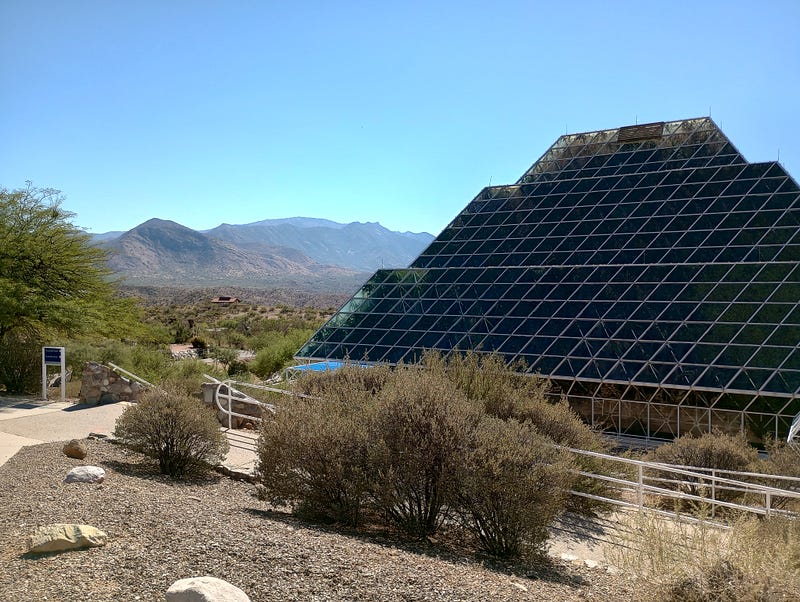
If you’ve ever heard of Biosphere 2, chances are you know of it as a slightly controversial, or you might even say infamous, venture. What started out as high hopes for a viable solution to life on other planets ended in criticism and disappointment from the media and public after its first mission came to an end in the early 1990s. It was deemed by many to be a failure due to the crew not being able to survive without outside help and the lack of transparency about this to the public.
Whether this is a fair or accurate representation depends on who you talk to, of course, and many now also point to the more positive aspects of the missions. According to the Biosphere 2 website,
Space Biospheres Ventures bought the property in 1984 and began construction of the current facility in 1986 to research and develop self-sustaining space-colonization technology. Two missions, between 1991 and 1994, sealed Biospherians inside the glass enclosure to measure survivability. Behind this highly public exercise was useful research that helped further ecological understanding.
Currently, however, Biosphere 2 is a research facility run by University of Arizona. It is open to visitors for a slightly steep — but worth it, in my opinion — admission price of $27.
From Tucson, it took me almost an hour to drive to Biosphere 2. As I drove farther and farther out into the desert, it felt almost spooky in its isolation. But, equally, very beautiful.
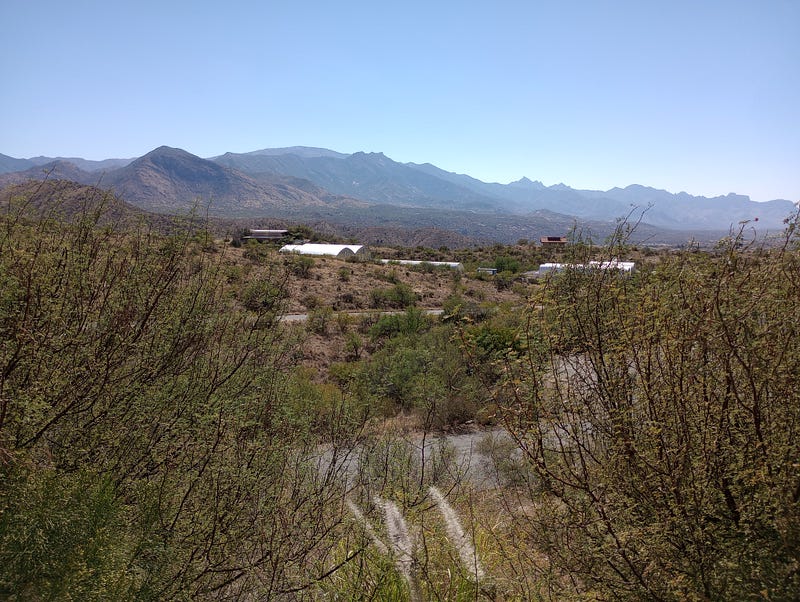
When you arrive, you can download an app which will take you on a guided tour of Biosphere 2. It started with a path around the exterior of the buildings, and then led inside.
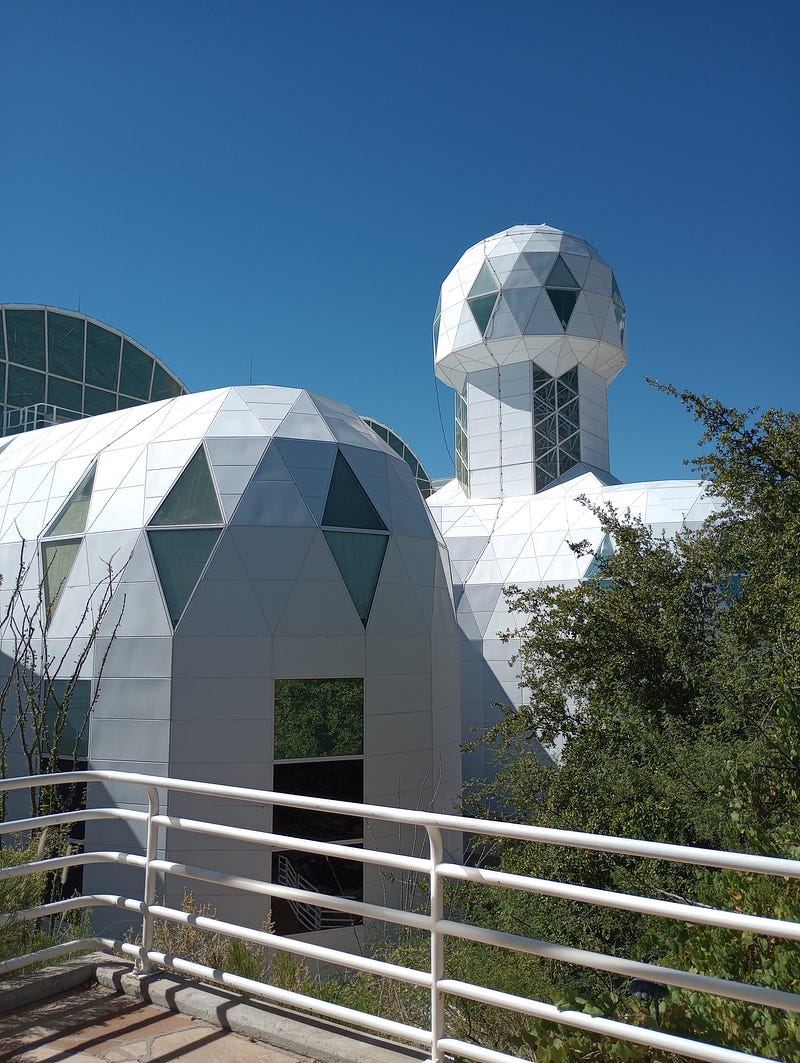
Since Biosphere 2 was originally created to be lived in, one of the first indoor areas that you’ll see is the living quarters. They had a kitchen where they all took turns cooking meals for the rest of the crew, plus of course individual living/sleeping spaces. These reminded me a little bit of college dorm rooms — nothing fancy, but each crew member made them their own with personal touches.
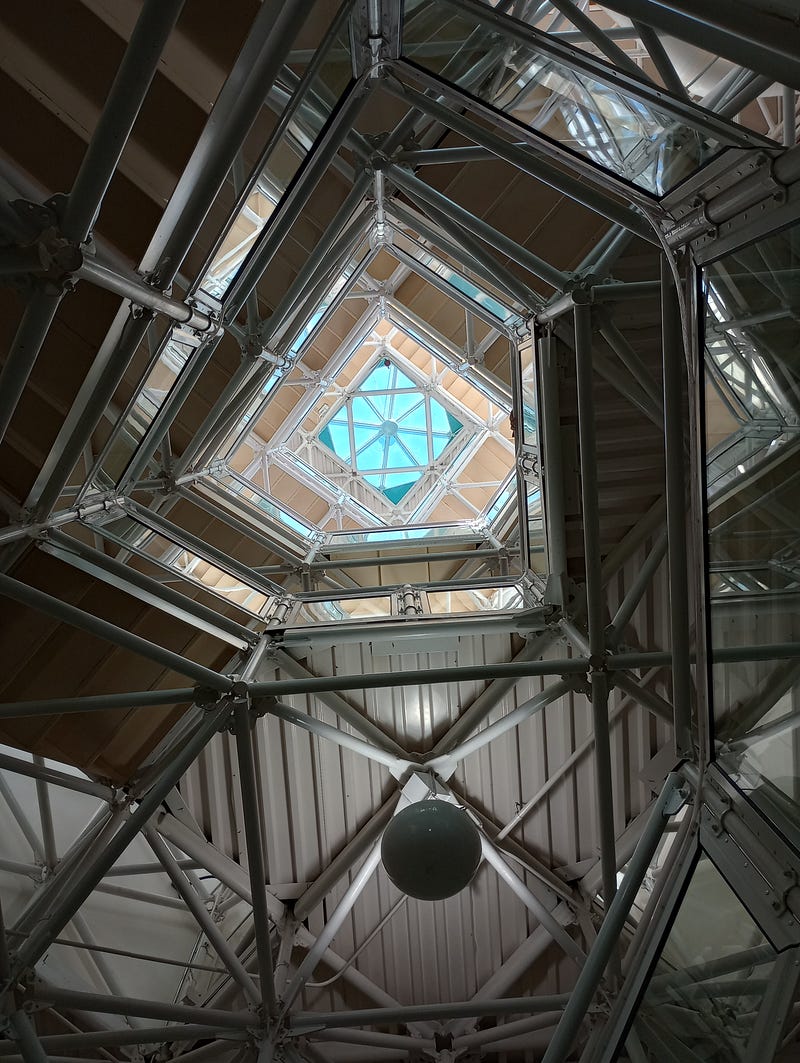
One of the other facilities available to the crew was a library. However, it was at the top of a very tall spiral staircase (photo below). While pretty cool to look up at, it takes quite a bit of energy to climb all those stairs, and as the crew began to run into trouble with calorie deficits and a resulting lack of energy, they ended up not using the library as much as originally anticipated. I felt like this was kind of a shame as I absolutely love libraries, but at the same time, I definitely understand not wanting to go up all those stairs, especially when exhausted from food deprivation.
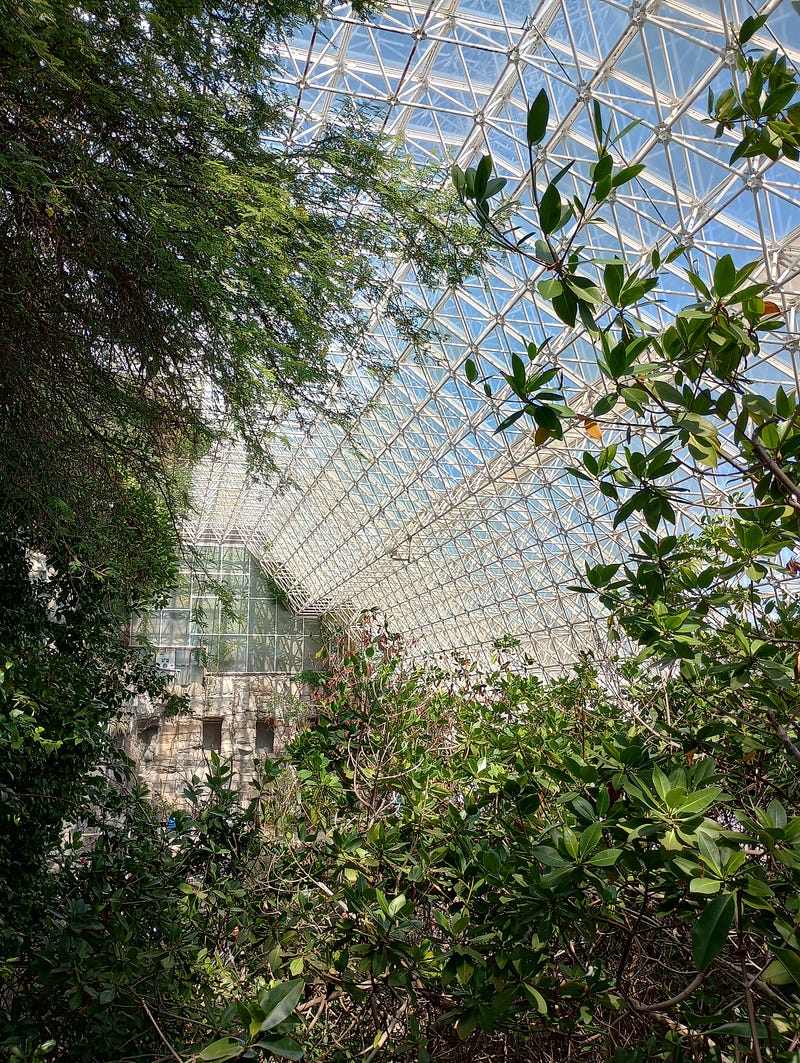
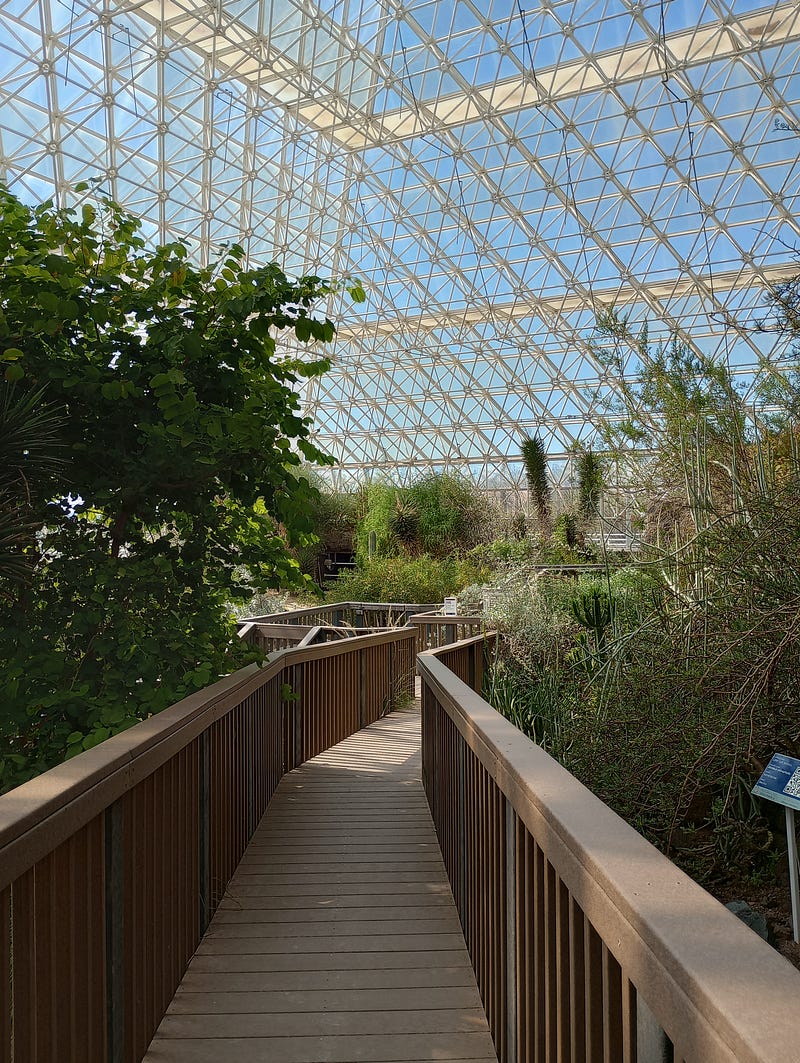
Perhaps unsurprisingly, my favorite parts of Biosphere 2 were their incredible enclosed biomes. These include a rainforest, wetlands, grasslands, and a fog desert. I wasn’t sure if it reminded me more of a botanical garden, or something out of a sci-fi movie.
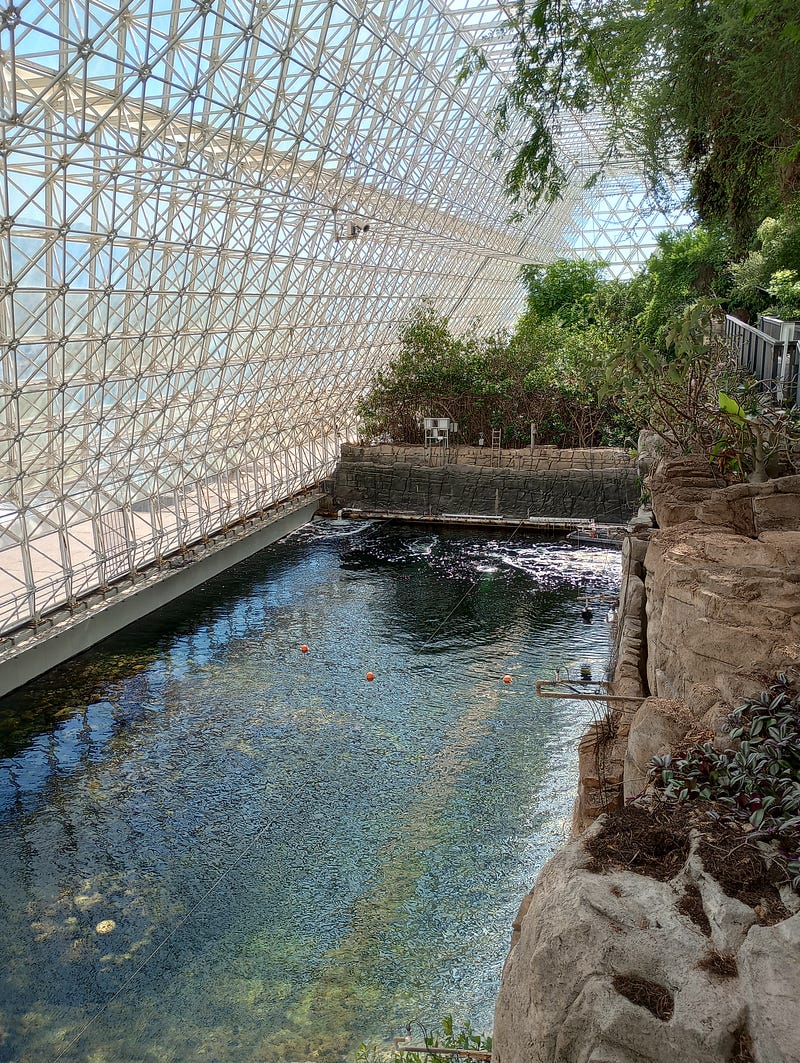
Believe it or not, Biosphere 2 also houses an ocean, which they use for coral reef research. It’s difficult to tell in the photo just how big it is, but it’s pretty incredible in person.
Overall, if you’re in the Tucson area, I would absolutely recommend spending a few hours of your time at Biosphere 2 — even with the steep admission price and long drive. It truly is a unique experience that I don’t think you’ll find almost anywhere else in the world.
Sources:


