avatarKarina Montoya G.

Free AI web copilot to create summaries, insights and extended knowledge, download it at here

4697

Abstract

st 90 days. Everyone is just walking or taking Ubers,” she said. It sounded shocking to me. But why? This city had spent day after day hearing ambulance sirens going off, rushing to get COVID-19 patients to the hospitals. It was an easy conclusion (really, why would you take the subway unless you absolutely had to?), but seeing this new reality was strange.</p><figure id="0e21"><img src="https://cdn-images-1.readmedium.com/v2/resize:fit:800/1*Kqr76N0R8-5IktmRqjSRxA.jpeg"><figcaption>Social distancing to the max. Credit: <a href="undefined">Karina Montoya G.</a></figcaption></figure><h2 id="5968">The Last Days of Lockdown vs Pre-Pandemic Times</h2><p id="a298"><b>It is not often that you can go back to a place that has radically changed and compare it to a similar picture from a time before that</b>. If possible, I told myself, I would try to compile a tiny piece of this moment. Next thing you know I was looking for pictures I took in pre-pandemic times, during my first days in NYC. Each day I was there, my friend and I took a walk after work to stretch out our legs (well, our body, really), so I took the chance to derail her to these spots. The result is this <a href="https://juxtapose.knightlab.com/">Juxtapose</a> showcase.</p><p id="7a28">I’m not a photographer, as you will clearly see, but I like the ‘before and after’ effect of this tool. It is a little eerie to be in the same spots you visited not so long ago, but to feel that ages had passed.</p> <figure id="e8e1"> <div> <div> <img class="ratio" src="http://placehold.it/16x9"> <iframe class="" src="https://cdn.embedly.com/widgets/media.html?src=https%3A%2F%2Fcdn.knightlab.com%2Flibs%2Fjuxtapose%2Flatest%2Fembed%2Findex.html%3Fuid%3D62852500-befc-11ea-bf88-a15b6c7adf9a&amp;display_name=Knight+Lab&amp;url=https%3A%2F%2Fcdn.knightlab.com%2Flibs%2Fjuxtapose%2Flatest%2Fembed%2Findex.html%3Fuid%3D62852500-befc-11ea-bf88-a15b6c7adf9a&amp;key=a19fcc184b9711e1b4764040d3dc5c07&amp;type=text%2Fhtml&amp;schema=knightlab" allowfullscreen="" frameborder="0" height="500" width="700"> </div> </div> </figure></iframe></div></div></figure> <figure id="d64d"> <div> <div> <img class="ratio" src="http://placehold.it/16x9"> <iframe class="" src="https://cdn.embedly.com/widgets/media.html?src=https%3A%2F%2Fcdn.knightlab.com%2Flibs%2Fjuxtapose%2Flatest%2Fembed%2Findex.html%3Fuid%3D741b8b30-beff-11ea-bf88-a15b6c7adf9a&amp;display_name=Knight+Lab&amp;url=https%3A%2F%2Fcdn.knightlab.com%2Flibs%2Fjuxtapose%2Flatest%2Fembed%2Findex.html%3Fuid%3D741b8b30-beff-11ea-bf88-a15b6c7adf9a&amp;key=a19fcc184b9711e1b4764040d3dc5c07&amp;type=text%2Fhtml&amp;schema=knightlab" allowfullscreen="" frameborder="0" height="500" width="700"> </div> </div> </figure></iframe></div></div></figure> <figure id="5e9a"> <div> <div> <img class="ratio" src="http://placehold.it/16x9"> <iframe class="" src="https://cdn.embedly.com/widgets/media.html?src=https%3A%2F%2Fcdn.knightlab.com%2Flibs%2Fjuxtapose%2Flatest%2Fembed%2Findex.html%3Fuid%3Df908e90c-befd-11ea-bf88-a15b6c7adf9a&amp;display_name=Knight+Lab&amp;url=https%3A%2F%2Fcdn.knightlab.com%2Flibs%2Fjuxtapose%2Flatest%2Fembed%2Findex.html%3Fuid%3Df908e90c-befd-11ea-bf88-a15b6c7adf9a&amp;key=a19fcc184b9711e1b4764040d3dc5c07&amp;type=text%2Fhtml&amp;schema=knightlab" allowfullscreen="" frameborder="0" height="500" width="700"> </div> </div> </figure></iframe></div></div></figure> <figure id="d139"> <div> <div> <img class="ratio" src="http://placehold.it/16x9"> <iframe class="" src="https://cdn.embedly.com/widgets/media.html?src=https%3A%2F%2Fcdn.knightlab.com%2Flibs%2Fjuxtapose%2Flatest%2Fembed%2Findex.html%3Fuid%3Da5141bcc-c002-11ea-bf88-a15b6c7adf9a&amp;display_name=Knight+Lab&amp;url=https%3A%2F%2Fcdn.knightlab.com%2Flibs%2Fjuxtapose%2Flatest%2Fembed%2Findex.html%3Fuid%3Da5141bcc-c002-11ea-bf88-a15b6c7adf9a&amp;key=a19fcc184b9711e1b4764040d3dc5c07&amp;type=text%2Fhtml&amp;schema=knightlab" allowfullscreen="" frameborder="0" height="500" width="700"> </div> </div> </figure></iframe></div></div></figure><p id="e23f">At Central Park, there were a lot more people than I would have expected. The same friend who told me nobody was riding the subway anymore said such crowd did not surprise her. It is basically the only place in Manhattan to check if your body still kee

Options

ps its ability to move, after spending your day in a tiny apartment with little room to do anything that resembles any exercise, except by maybe squats and push-ups. After all, the city was getting ready to go back to business soon. People were on the edge.</p><p id="7e4d">On May 30th, as I packed my bag to go back to D.C., I found myself making a weird realization. I arrived in NYC during its last days of lockdown. Unexpectedly, that week also <b>ended up being another turning point in history… Again.</b> Up until then, local news were mostly focused on the evolution of the pandemic, the elections, whether the lockdown had any effect in slowing down the contagion rate, and how businesses were getting ready to re-open their doors. In NYC, phase 1 of the economic recovery was starting on June 8th.</p><div id="a969" class="link-block"> <a href="https://www.vox.com/2020/6/8/21283845/new-york-city-phase-one-reopening-coronavirus"> <div> <div> <h2>New York City, once the nation's coronavirus epicenter, takes its first steps toward reopening</h2> <div><h3>New York City is tentatively, but finally, reopening. Monday marked the start of "phase one" of the reopening in what…</h3></div> <div><p>www.vox.com</p></div> </div> <div> <div style="background-image: url(https://miro.readmedium.com/v2/resize:fit:320/0*gsJsfkkzI6tdDQkw)"></div> </div> </div> </a> </div><p id="65bf">Keeping social distance and wearing a mask as much as possible — and convincing those who refused to do it — were the two major concerns.</p><p id="6539">But on May 25th, in Minneapolis, George Floyd was horribly killed by a policeman who knelt on his neck until he was out of breath. What followed next was an unprecedented wave of protests against police brutality and racial injustice in all 50 states, grass roots movements pushing for changes in legislation and <a href="https://www.brookings.edu/blog/fixgov/2020/06/19/what-does-defund-the-police-mean-and-does-it-have-merit/">several cities being forced to review the allocation of resources to police departments and its competences</a>. Hundreds of cities across the U.S. were immediately flooded with waves of people protesting against what this act represented. There were riots, looting and violent clashes between civilians and the police. On May 29th, NYC was making headlines again, but not due to corona:</p><div id="782e" class="link-block"> <a href="https://www.nytimes.com/2020/05/30/nyregion/nyc-protests-george-floyd.html"> <div> <div> <h2>Protests Flare in Brooklyn Over Floyd Death as de Blasio Appeals for Calm</h2> <div><h3>Demonstrators stormed the perimeter of Barclays Center, hurling bottles and debris at police officers. The police…</h3></div> <div><p>www.nytimes.com</p></div> </div> <div> <div style="background-image: url(https://miro.readmedium.com/v2/resize:fit:320/0*-ZhE7wgMi6yo9GNe)"></div> </div> </div> </a> </div><p id="8e0b">Tomorrow, July 8th, it will be a month since the most densely populated major city in the U.S. officially started to re-open its economy. The shutdown has been real. It has been painful but necessary. This week NYC is also entering into phase 3 out of the state’s four phase plan. In short, the <a href="https://www.nytimes.com/2020/07/06/nyregion/nyc-coronavirus-phase3.html">New York Times tells us to expect the following</a>:</p><p id="f217" type="7">[..] the reopening of nail salons, massage centers, spa salons, tanning salons and tattoo shops, and the return of some “low-risk” youth sports. Don’t expect to see the resumption of indoor dining, though.</p><p id="0020">At this point, the world has been grappling with this virus for half a year, and I doubt anybody believes things will go back to be exactly the same. Truth is, nothing has fundamentally changed in terms of contagion risk. The virus is still out there. NYC could well be headed to an economic recovery, if they are careful and take things slow, but the lessons it will leave us are yet to be seen. Would allowing restaurants to resume indoor dining change anything? Could the so-called “new normal” just be a slower version of our old lives, where we are left to count how many times we go out and fight about how many people we are comfortable being around? Will the City that Never Sleeps still hold that title? For the first time, I don’t dare to say.</p></article></body>

A Look at the Last Days of Lockdown in New York City

A personal archive of a global pandemic that still feels like a nightmare. These are some scenes of the Big Apple juxtaposed with pre-pandemic times, a contrast we might never see again.

Around the end of May, I couldn’t take it anymore.

Before the world fell apart, it was still March, and I was into my sixth month of living in Washington, D.C. Everything was new and exciting. I moved there after spending a year of grad school + internship in New York City, where I had made friends whom I expected to see again throughout 2020. And then maybe in 2021 as well. We had been making plans, oh, so many plans.

But mid-March turned rapidly into hell. COVID-19 had started to leave distant China— distant for us in the Western Hemisphere—to knock on our doors. Chaos loomed over financial markets, borders were closed country after country, and we were bombarded by news about overcrowded hospitals and uncontrollable deaths in Europe. Friends of my friends in Europe started to get sick. In April, the pandemic had taken over the U.S., and then some of my friends here got sick (they all got better, fortunately). New York City was making headlines as the epicenter of the nation’s COVID-19 outbreak. ‘The City that Never Sleeps turned off its lights’, you would hear on TV, or something along those lines. The country… What am I saying? The world was in shock.

Starting May, as the virus hit South America with full force, the emotional burden of being away from home was taking a toll on me and some of my Peruvian friends in the U.S. We were worried for our parents, our siblings, our long-time friends in Peru. What could we do to help them, really, being where we were? At some point that month, a glimpse of good news: the state of New York reported the lowest number of daily COVID-19 deaths since March 24. No victory there, but the picture of new reported deaths by day had improved since April:
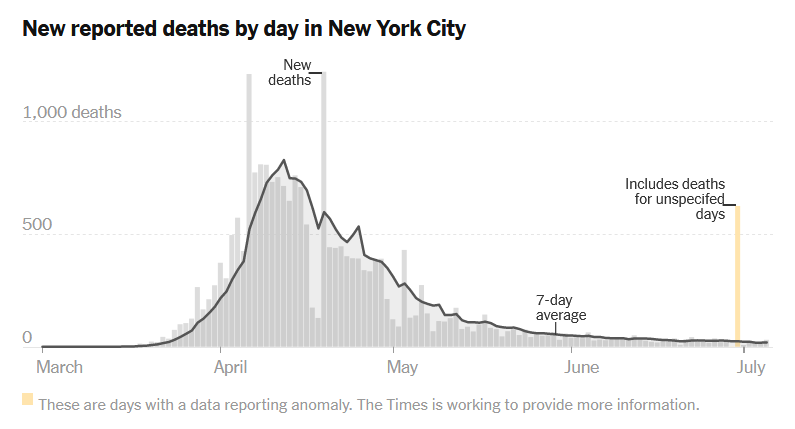
Source: https://www.nytimes.com/interactive/2020/nyregion/new-york-city-coronavirus-cases.html#cases

After dozens of WhatsApp messages back and forth with a friend living in Manhattan about how much we missed familiar faces, I bought my Amtrak tickets to meet her on May 24. One can only be some many days alone, with worries eating you up inside. I didn’t want to become part of the statistic, but sooner than later, the “new normal” required some practice on how to travel while taking all precautions to protect you from catching corona.

“No one I know has taken the subway in the last 90 days”

I had read the stories and seen the videos. One of my favorite pieces about the ghost town NYC had become was published in La Tercera, por Sandra Gutiérrez. But I felt compelled to see it with my own eyes. So there I was, arriving at Penn Station and the first thing I noticed was not the lack of people — I had been at that station before in the early morning, with nothing but the rats and a couple of drunk dudes around. It was the silence and the smell of disinfectant. Not even the rats were there.
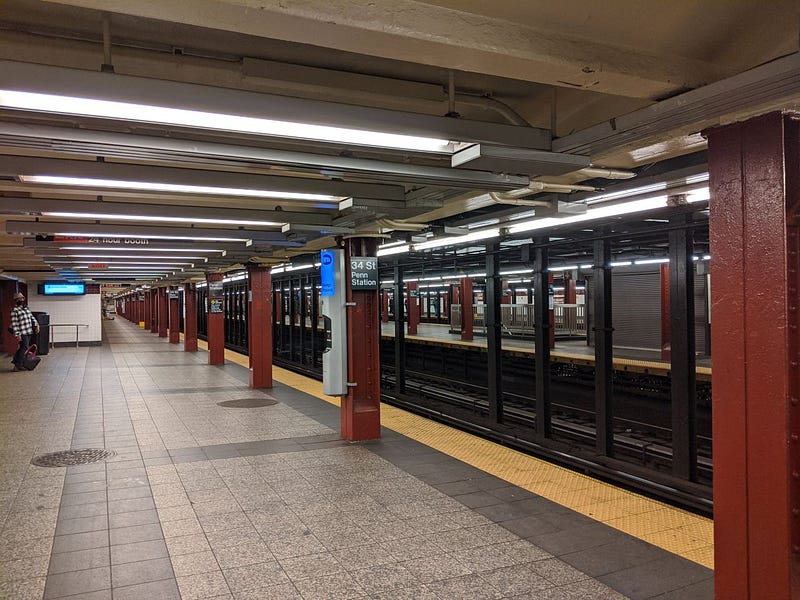
Credit: Karina Montoya G.

It was a Sunday, when ridership in the subway was a its lowest point from an already historically low ridership that went from more than 5 million people a day to less than half a million. Everyone was wearing a mask, thank God.
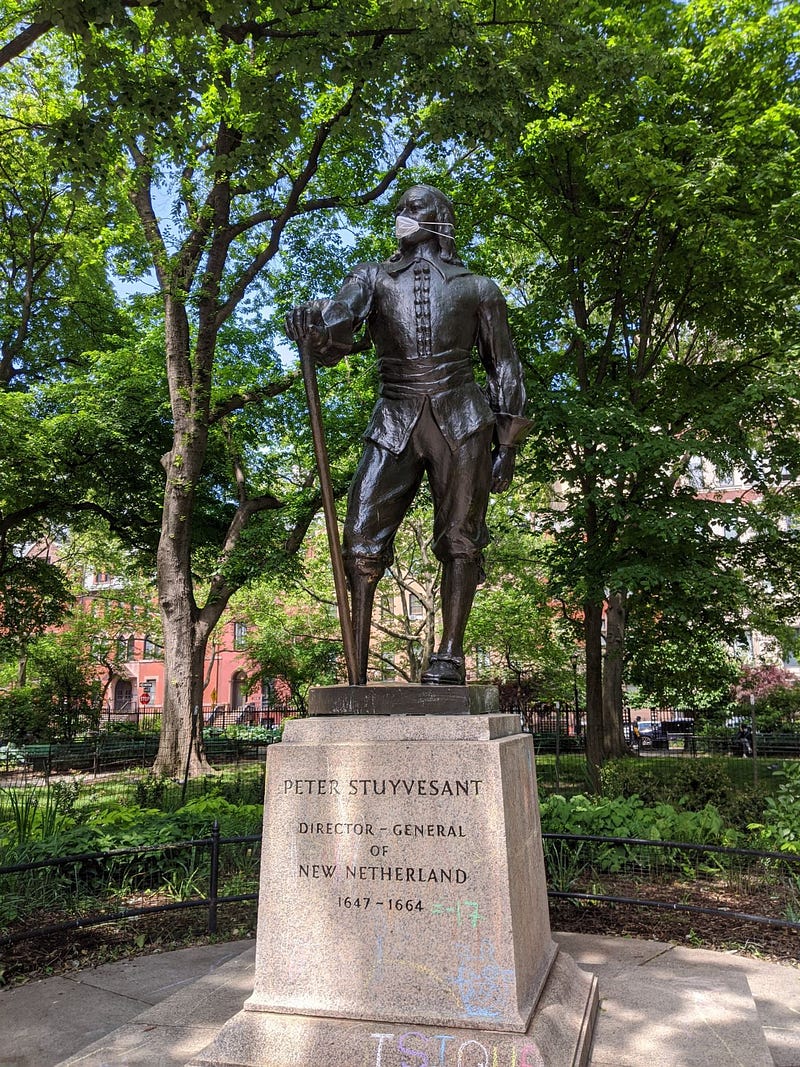
Quite literally EVERYONE was wearing a mask. Credit: Karina Montoya G.

A journalist friend living in the Upper West Side asked me how I got to her place from where I was staying, around Park Ave and E 50th. “No one I know has taken the subway in the last 90 days. Everyone is just walking or taking Ubers,” she said. It sounded shocking to me. But why? This city had spent day after day hearing ambulance sirens going off, rushing to get COVID-19 patients to the hospitals. It was an easy conclusion (really, why would you take the subway unless you absolutely had to?), but seeing this new reality was strange.
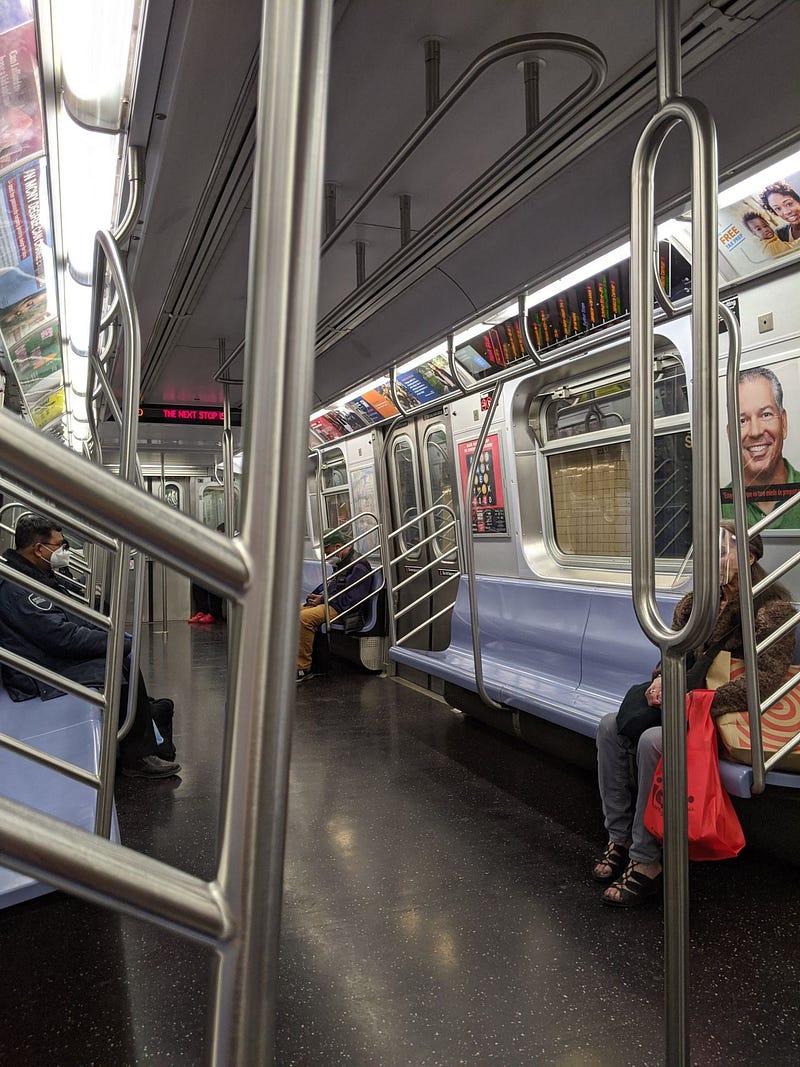
Social distancing to the max. Credit: Karina Montoya G.

The Last Days of Lockdown vs Pre-Pandemic Times

It is not often that you can go back to a place that has radically changed and compare it to a similar picture from a time before that. If possible, I told myself, I would try to compile a tiny piece of this moment. Next thing you know I was looking for pictures I took in pre-pandemic times, during my first days in NYC. Each day I was there, my friend and I took a walk after work to stretch out our legs (well, our body, really), so I took the chance to derail her to these spots. The result is this Juxtapose showcase.

I’m not a photographer, as you will clearly see, but I like the ‘before and after’ effect of this tool. It is a little eerie to be in the same spots you visited not so long ago, but to feel that ages had passed.

At Central Park, there were a lot more people than I would have expected. The same friend who told me nobody was riding the subway anymore said such crowd did not surprise her. It is basically the only place in Manhattan to check if your body still keeps its ability to move, after spending your day in a tiny apartment with little room to do anything that resembles any exercise, except by maybe squats and push-ups. After all, the city was getting ready to go back to business soon. People were on the edge.

On May 30th, as I packed my bag to go back to D.C., I found myself making a weird realization. I arrived in NYC during its last days of lockdown. Unexpectedly, that week also ended up being another turning point in history… Again. Up until then, local news were mostly focused on the evolution of the pandemic, the elections, whether the lockdown had any effect in slowing down the contagion rate, and how businesses were getting ready to re-open their doors. In NYC, phase 1 of the economic recovery was starting on June 8th.

Keeping social distance and wearing a mask as much as possible — and convincing those who refused to do it — were the two major concerns.

But on May 25th, in Minneapolis, George Floyd was horribly killed by a policeman who knelt on his neck until he was out of breath. What followed next was an unprecedented wave of protests against police brutality and racial injustice in all 50 states, grass roots movements pushing for changes in legislation and several cities being forced to review the allocation of resources to police departments and its competences. Hundreds of cities across the U.S. were immediately flooded with waves of people protesting against what this act represented. There were riots, looting and violent clashes between civilians and the police. On May 29th, NYC was making headlines again, but not due to corona:

Tomorrow, July 8th, it will be a month since the most densely populated major city in the U.S. officially started to re-open its economy. The shutdown has been real. It has been painful but necessary. This week NYC is also entering into phase 3 out of the state’s four phase plan. In short, the New York Times tells us to expect the following:

[..] the reopening of nail salons, massage centers, spa salons, tanning salons and tattoo shops, and the return of some “low-risk” youth sports. Don’t expect to see the resumption of indoor dining, though.

At this point, the world has been grappling with this virus for half a year, and I doubt anybody believes things will go back to be exactly the same. Truth is, nothing has fundamentally changed in terms of contagion risk. The virus is still out there. NYC could well be headed to an economic recovery, if they are careful and take things slow, but the lessons it will leave us are yet to be seen. Would allowing restaurants to resume indoor dining change anything? Could the so-called “new normal” just be a slower version of our old lives, where we are left to count how many times we go out and fight about how many people we are comfortable being around? Will the City that Never Sleeps still hold that title? For the first time, I don’t dare to say.

New York City
Covid-19
Reopening
Photography
Recommended from ReadMedium