A Literary Tour of the English North Devon Coast
In the footsteps of Bryson, Theroux, and mystery crime writer Ann Cleeves
What comes to mind when you think of literary tours in England? Locations such as the Brontës’ Yorkshire, Thomas Hardy’s Dorset and Shakespeare’s Stratford, maybe? Beautiful locations, of course, but teeming with visitors.
Or you could escape the crowds and discover a landscape that inspired the contemporary writer Ann Cleeves: the North Devon coast. Also on this literary tour are the travel writers Bill Bryson and Paul Theroux. Although, I have to say, they were less than complimentary about some areas of North Devon.
Let’s begin with the positives. British bestseller Ann Cleeves writes mystery crime novels with a powerful sense of location. Her Shetland series is now a global TV drama that’s drawn many visitors to the distant Shetland Isles. Her latest series, The Two Rivers, is located in an equally scenic but much more accessible location: the English coast of North Devon.
The Two Rivers series began with The Long Call that hit bestseller lists in 2020, followed by The Heron’s Cry in 2022 and The Raging Storm in 2023. Each book features the same moody English coastal backdrop — low tides, wading birds and shifting sand dunes, along with a string of unexplained murders. Anyone would think North Devon was a place where you had to watch your back!
In fact, North Devon — my home — enjoys a relatively low crime rating. Like many other people I moved here for the landscapes, the slower pace of life and a feeling of being on the very edge of somewhere. Not to mention the golden surfing beaches and the switchback coastal footpaths of Exmoor.
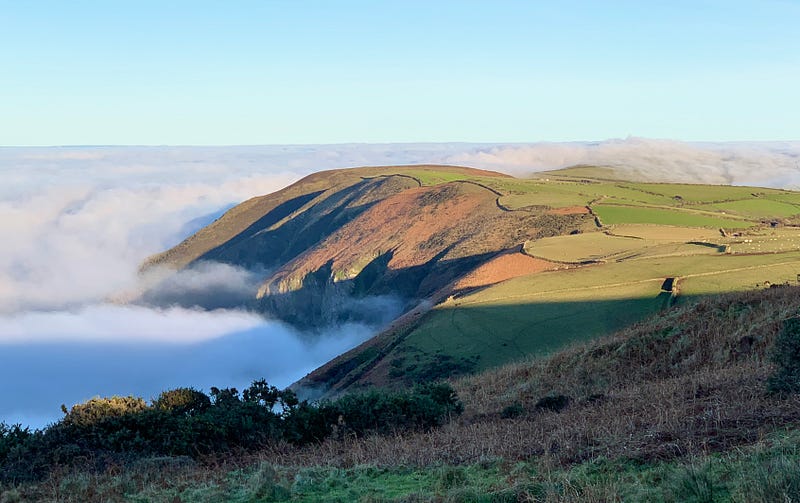
The estuary featured in The Two Rivers series is that of the River Taw. The river meets the Torridge at Crow Point, a sandy peninsula on the estuary, before flowing into the Bristol Channel and eventually the North Atlantic.
Crow Point was where the first dead body of The Long Call — Simon Walden — was found.
Crow Point
Crow Point is famous, but not for murders. It’s the UK’s first protected marine system, a Site of Special Scientific Interest (SSSI), and part of the UNESCO North Devon Biosphere Reserve.
Crow Point jutted into the water from his side of the estuary, fragile now, eaten away by weather and water . . . The Long Call (2020).
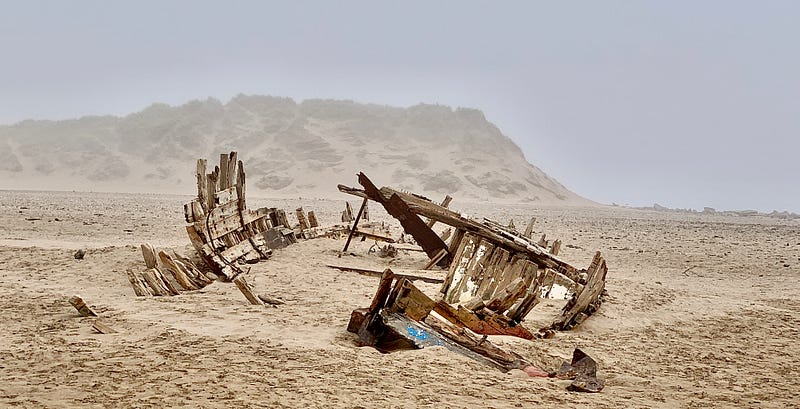
High winds and erratic estuary tides have ravaged Crow Point over the years. Today it’s hard to believe Crow Point was once a busy fishing village. Now there’s little but a rickety metal lighthouse and unstable sand dunes. Climb the highest dunes for a view of waves breaking far out in the open ocean. A few brave stand-up paddleboarders cross the estuary to Instow, where Cleeves located The Sandpiper beachside bar.
Braunton Burrows
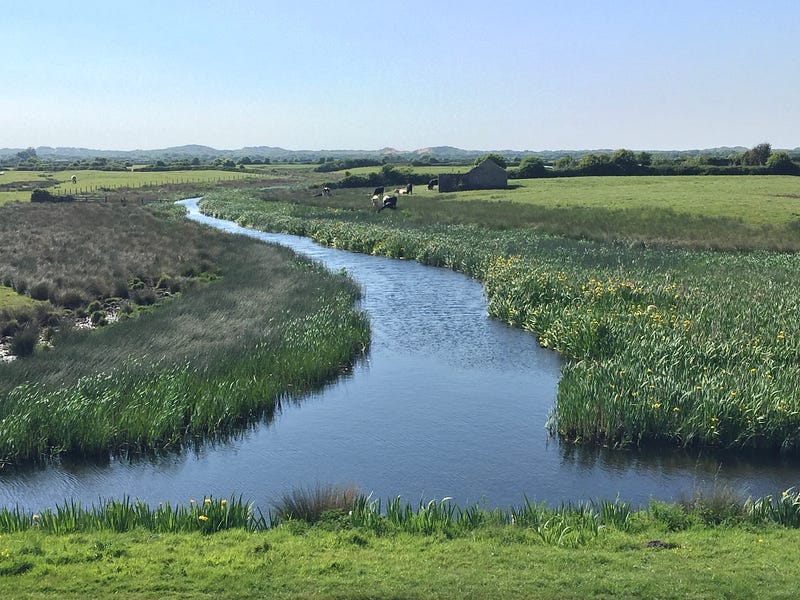
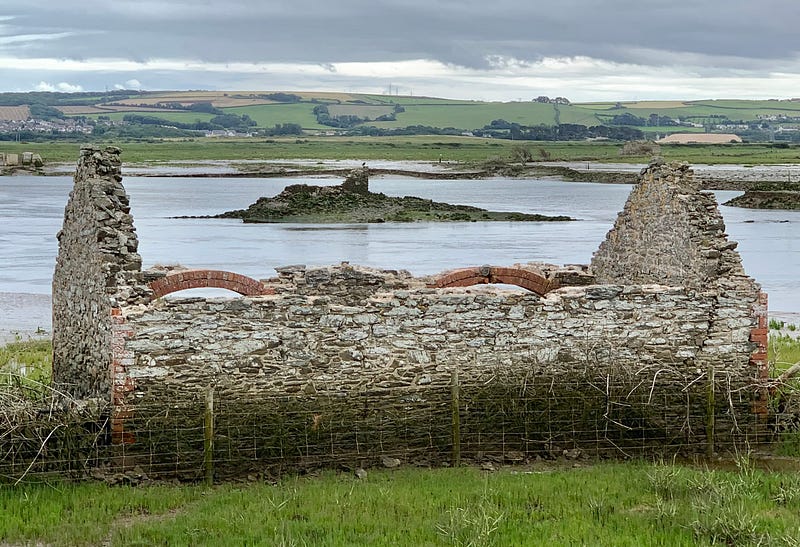
From Braunton, it’s a gentle walk to Crow Point along a low bank between the estuary and Braunton Burrows, the largest sand dune system in England. These salt marshes echo with the calls of curlews, lapwings, and oystercatchers. Ghostly abandoned buildings reveal themselves at low tide, and it’s an eerie place when the sea mist descends. Even more so at night, when, according to The Long Call, the only lights come from Instow and Appledore on the far shore of the estuary.
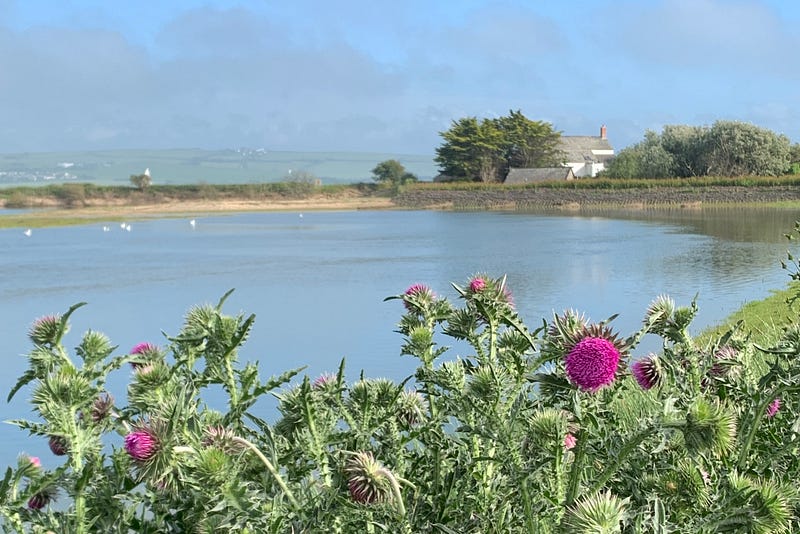
Readers of The Long Call will remember there’s a toll road down here, and the toll keeper’s cottage features in The Long Call. It’s a private road, hence the toll, with a white house right at the end. Perhaps this was Cleeves’ inspiration for Matthew Venn’s house Spindrift, a low white dwelling sheltered by wind-bent trees.
The real white house faces out to Crow Point, and a nearby unsurfaced road is known as the American Road — a vehicle track built by the US Army during World War 2. The area is still used for military practice on occasions. Otherwise, the roads around here are quiet and ideal for leisurely cycling or a stroll. The South-West Coastal Path runs alongside the toll road.
Braunton
Detective Matthew Venn describes Braunton as a village more like a small town, the gateway to the coast. In The Long Call, Braunton is the location of Simon Walden’s apartment and various meeting-place cafes. But don’t get thinking it’s a hotbed of murders. A recent crime mapping project noted Braunton as the safest small town in the whole of Devon. Braunton has a thriving year-round community that’s bolstered by a steady stream of holidaymakers and second-home owners. It’s not quite the Hamptons, but there’s a slightly upmarket feel compared with the nearby bucket-and-spade resorts. Readers gain a sense of this when Matthew Venn talks about the “terrific weekend brunch” and Saturday morning queues for tables in Braunton. Even the fish and chip scene is a foodie experience in Braunton.
If you’re into surfing, Braunton is an ideal place to stay as it’s close to the surfing beaches of Saunton Sands and Croyde. And Pink Floyd fans may recognise Saunton beach as the location for the album artwork for ‘A Momentary Lapse of Reason’, when hundreds of hospital beds were laid out on the sand.
Barnstaple
Barnstaple is the town on the Taw estuary where Matthew Venn’s police team is based. Cleeves describes it as sprawling away from the River Taw, and it’s true that the town fails to make the most of its riverside location. And compared with trendy Braunton brunches, in the books we hear only of Barnstaple’s rowdy pubs and “nowhere decent to eat”. That’s not entirely fair, as the town has some fine dining. And although it has some of Devon’s higher crime rates, these are still comparatively low for the country as a whole. But in truth, Barnstaple is outshone by the nearby coastal resorts. During the summer, Barnstaple tends to get a visit when it’s raining.
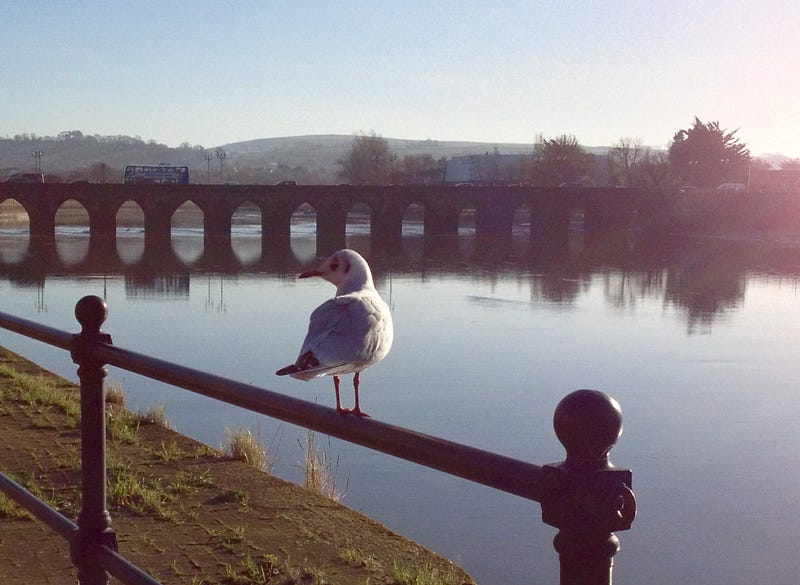
Barnstaple has been twinned with Barnstable, Massachusetts, since 1986. I wonder whether Barnstable’s twinning committee have read the literary travels of two famous American writers, both of whom were scathing about the town. Bill Bryson mentions his 1995 visit in Notes from a Small Island. He wrote using his characteristic exaggeration, claiming to be terrified he’d have to spend the night in Barnstaple.
Nor was Paul Theroux enamoured by “a slightly frumpish, down-at-heel town” when he stopped by in 1983 researching The Kingdom by the Sea. Theroux “rattled” along the “withering railway line” into Barnstaple, conveying a sense of emptiness by describing the “damp, haunted look” of a “silted-up seaport”.
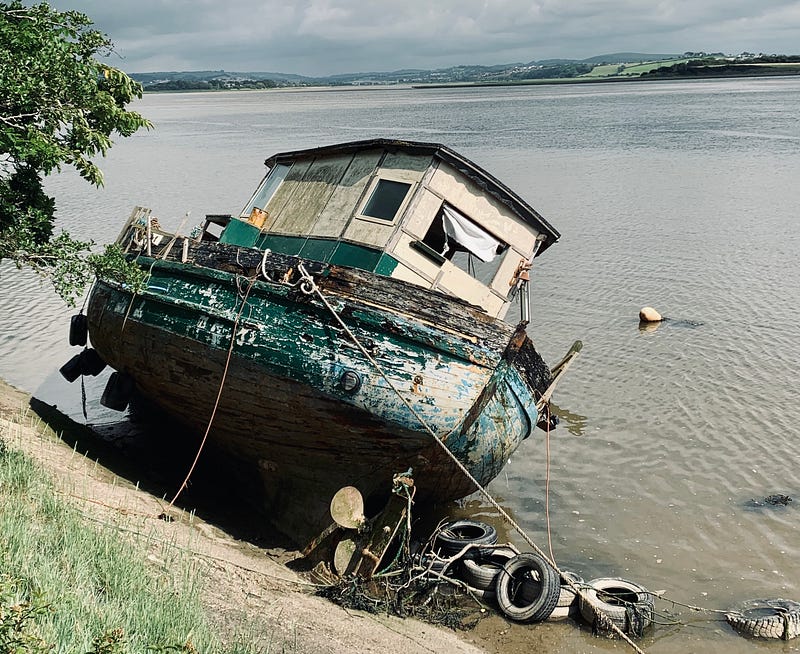
But if you’ve read this far, you’ll know North Devon offers much more than a nondescript town. Now you know the real setting of the Two Rivers series, perhaps you’ll be inspired to plan a visit to the Taw-Torridge estuary. There are holiday lets along the coast from Woolacombe to Instow, Appledore and Bideford. Just don’t mention Bill Bryson.