avatarLivia Dabs RN,MSc

Free AI web copilot to create summaries, insights and extended knowledge, download it at here

2554

Abstract

was quite narrow and at one point we got stuck with the wheels spinning out in the dust. After a bit of a run-up, we made it inside and felt like the real adventure is about to begin.</p><p id="e37a">Make no mistake, those hippies aren’t drug addicts, thugs, or criminals. Most of them moved here because they reject the capitalist system, the consumerism.</p><p id="c96b">Instead, they are searching for an alternative lifestyle that connects them with nature, gives a room to a free-spirited life where money seems to not play an important part in their lives.</p><p id="8864">The place looked like a mini paradise, very well taken care of, free of any trash. Some built tiny homes, but most parked their RVs and installed solar panels.</p><p id="19f9">Their life is remarkably simple, children are roaming freely and playing in nature all day or are homeschooled. The uses of technologies are minimal, many are doing simple gardening or running naked in their gardens.</p><figure id="4faa"><img src="https://cdn-images-1.readmedium.com/v2/resize:fit:800/1*QNlvFeY7Q0_ZF4cDIYUEHg.jpeg"><figcaption>One of the homes in Hippie Community in Orgiv, Spain</figcaption></figure><p id="b20b">Here are my 5 powerful observations:</p><h2 id="f1b2">Exchange Economy.</h2><p id="1dd4"><a href="https://saylordotorg.github.io/text_international-economics-theory-and-policy/s06-01-a-simple-pure-exchange-economy.html#:~:text=This%20model%20and%20many%20others,is%20exchanged%20for%20another%20good.">What is the exchange economy?</a></p><blockquote id="93d6"><p>This model and many others we will consider are barter economies. This means that no money is being exchanged between the agents. Instead, one good is exchanged for another good. However, since we are accustomed to evaluating values in monetary terms, we will often write important expressions, like the terms of trade, in terms of their monetary equivalents as we have done here.</p></blockquote><p id="467a">Residents of the hippie community set up a pirate ship where anyone can bring their stuff, they don’t need and exchange for something else. Usually, it is clothing. The clothes are in decent condition, just need to be washed.</p><h2 id="de11">Digital minimalism</h2><p id="2a58">Many of the residents have only solar panels, no electricity and they only use it to charge their phones, computers, and some use for the night. However, after talking to a few of them, the use is limited to 2–3 hours a day no more. Residents here do not have the luxury to use it as we do any time of the day. I l

Options

ove the idea of digital minimalism it forces kids and adults to spend time outdoors instead of being glued to the screens.</p><h2 id="6e47">Minimal spending</h2><p id="13a1">The spending is minimal. Some families live bellow 300 Euros a month, in the basic conditions but practicing 100% minimalism. You wonder how? The housing is free ( or they built tepee, tiny house, or have RV’s), energy from solar panels is shared among community residents. They grow their own garden as many are vegetarians. They don’t buy stuff beyond the basics.</p><h2 id="65cc">Connection with nature</h2><p id="b859">Children and adults are 24 hours connected to nature, they learn, eat, and sleep during the summer outside in nature. The kids know well what kind of animals live around, in the river, under which stone you can find a turtle or even a snake. It was fun watching them.</p><h2 id="a2f2">Artesian way of life</h2><p id="cff2">Many residents are artists creating everything by hand or for the community, personal use, or they sell it at the market in Orgiva every Thursday to earn some cash.</p><figure id="bf3d"><img src="https://cdn-images-1.readmedium.com/v2/resize:fit:800/1*IKHjNrWmhkxauek8zXm_XA.jpeg"><figcaption>A backyard at the hippie community in Orgiva, Spain.</figcaption></figure><p id="526d"><a href="https://www.theguardian.com/artanddesign/2017/mar/19/the-riverbed-exhibition-ben-murphy-photographs-secret-world-spain">The Guardian published a story in 2017</a> about the hidden paradise in Spain where they interviewed one of the long-term residents:</p><blockquote id="5e8b"><p>Murphy believes we can learn from the people of the Riverbed. “We are all being encouraged, and possibly forced, to live an unsustainable life,” he says. “The people I met are on the whole decent, compassionate and resourceful, and they care about the planet more than most of us. They may not fit into our society, but we have to be willing to accept such alternative views. They can help us think about our relationship to our home, and our own sense of freedom.”</p></blockquote><p id="881f">Please join me and share your views about living an alternative lifestyle. <a href="undefined">Desiree Driesenaar</a>, <a href="undefined">Chris Hedges</a>, <a href="undefined">Jezebel</a>, <a href="undefined">Chowa Sekai</a>, <a href="undefined">Cathy Sissens</a>, <a href="undefined">Timothy Key</a>, <a href="undefined">Joe Luca</a>, <a href="undefined">Michele Thill</a>, <a href="undefined">Aurora Eliam, CMP</a> and all of you beloved readers.</p></article></body>

A Life Beyond Off-Grid: A Sustainable Eco-Village in Spain

The search for an alternative lifestyle in Spain that doesn’t require money or at least requires a minimum
Photo by Krists Luhaers on Unsplash

My husband finally returned from the US and after 2 weeks of self-quarantine, we have decided to take a road less traveled this summer. Of course, because of the Covid-19. We decided to explore alternative lifestyles, here in the heart of Andalucia- the Alpujarras. To experience something new and to get inspired.

The Alpujarras is a mountain region with whitewashed villages, narrow roads, wild grapes, olive oil, and the famous Jamon.

We chose a place, very well known to be the capital of the hippie community of Europe: Orgiva. This little town is only a one-hour drive from our city Granada.

Orgiva currently has almost 700 hippies living in three different hippie or alternative lifestyle communities: Beneficio, El Morreon, and Los Tablones.

Benificio is the oldest hippie community founded in 1992 as a self-sustainable, ecological village in Spain. I heard Spain has gained popularity and the ecovillages are on the growth in Spain. Many move here to escape the consumerism, and to respect the environment.

Some are more or less popular among the residents of Orgiva. Few hippie communities have a good name called a sunshine family and some are known as the hideout for criminals from around the world, or drug tugs which aren’t the norm but an exception, as people from Orgiva assured me:

The most dangerous thing is the wide marijuana use.

Fortunately, I had a friend who knew someone who lived down with the sunshine families at El Marion.
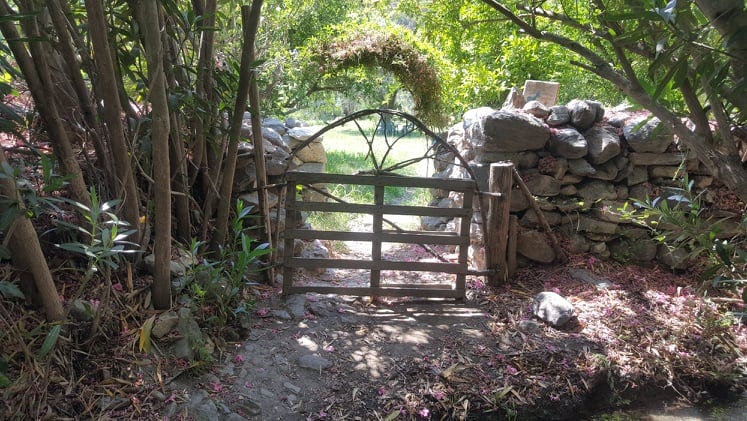
Gate to Hippie Community Home in Orgiva

The entrance to the community was turning down into a gravel track after you pass the road under the bridge. The drive was quite narrow and at one point we got stuck with the wheels spinning out in the dust. After a bit of a run-up, we made it inside and felt like the real adventure is about to begin.

Make no mistake, those hippies aren’t drug addicts, thugs, or criminals. Most of them moved here because they reject the capitalist system, the consumerism.

Instead, they are searching for an alternative lifestyle that connects them with nature, gives a room to a free-spirited life where money seems to not play an important part in their lives.

The place looked like a mini paradise, very well taken care of, free of any trash. Some built tiny homes, but most parked their RVs and installed solar panels.

Their life is remarkably simple, children are roaming freely and playing in nature all day or are homeschooled. The uses of technologies are minimal, many are doing simple gardening or running naked in their gardens.
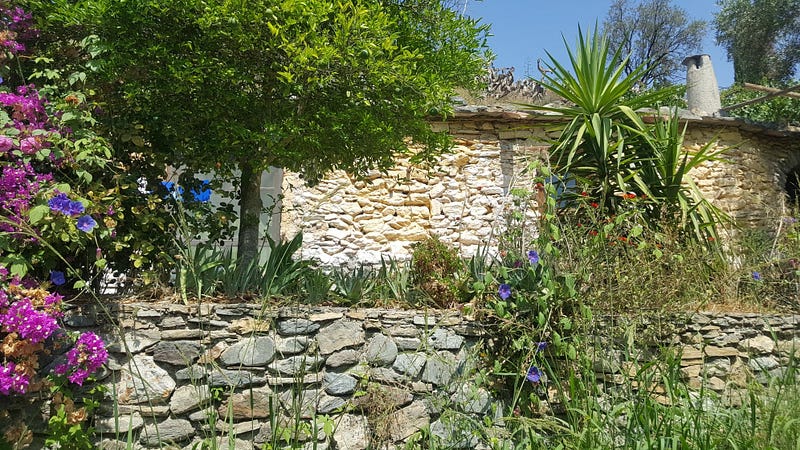
One of the homes in Hippie Community in Orgiv, Spain

Here are my 5 powerful observations:

Exchange Economy.

What is the exchange economy?

This model and many others we will consider are barter economies. This means that no money is being exchanged between the agents. Instead, one good is exchanged for another good. However, since we are accustomed to evaluating values in monetary terms, we will often write important expressions, like the terms of trade, in terms of their monetary equivalents as we have done here.

Residents of the hippie community set up a pirate ship where anyone can bring their stuff, they don’t need and exchange for something else. Usually, it is clothing. The clothes are in decent condition, just need to be washed.

Digital minimalism

Many of the residents have only solar panels, no electricity and they only use it to charge their phones, computers, and some use for the night. However, after talking to a few of them, the use is limited to 2–3 hours a day no more. Residents here do not have the luxury to use it as we do any time of the day. I love the idea of digital minimalism it forces kids and adults to spend time outdoors instead of being glued to the screens.

Minimal spending

The spending is minimal. Some families live bellow 300 Euros a month, in the basic conditions but practicing 100% minimalism. You wonder how? The housing is free ( or they built tepee, tiny house, or have RV’s), energy from solar panels is shared among community residents. They grow their own garden as many are vegetarians. They don’t buy stuff beyond the basics.

Connection with nature

Children and adults are 24 hours connected to nature, they learn, eat, and sleep during the summer outside in nature. The kids know well what kind of animals live around, in the river, under which stone you can find a turtle or even a snake. It was fun watching them.

Artesian way of life

Many residents are artists creating everything by hand or for the community, personal use, or they sell it at the market in Orgiva every Thursday to earn some cash.
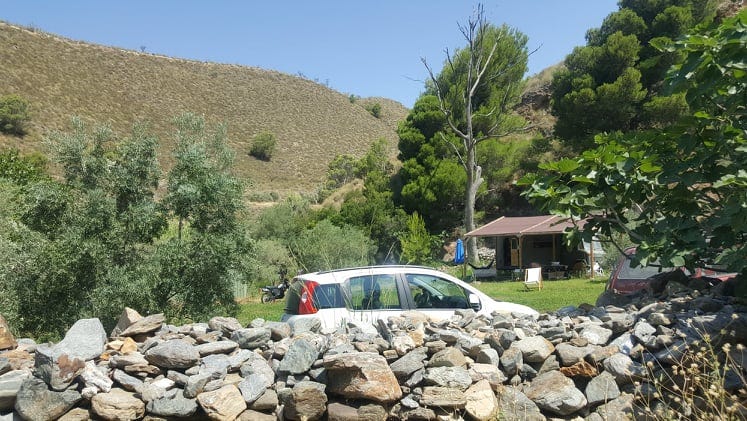
A backyard at the hippie community in Orgiva, Spain.

The Guardian published a story in 2017 about the hidden paradise in Spain where they interviewed one of the long-term residents:

Murphy believes we can learn from the people of the Riverbed. “We are all being encouraged, and possibly forced, to live an unsustainable life,” he says. “The people I met are on the whole decent, compassionate and resourceful, and they care about the planet more than most of us. They may not fit into our society, but we have to be willing to accept such alternative views. They can help us think about our relationship to our home, and our own sense of freedom.”

Please join me and share your views about living an alternative lifestyle. Desiree Driesenaar, Chris Hedges, Jezebel, Chowa Sekai, Cathy Sissens, Timothy Key, Joe Luca, Michele Thill, Aurora Eliam, CMP and all of you beloved readers.

Lifestyle
Life Lessons
Hippies
Environment
Nature
Recommended from ReadMedium