
A Lesson in Acceptance
As a person working on becoming more self-aware, sometimes, truth is found in the most unexpected places.
Sara was of Hispanic descent, and I noticed she had been sitting alone for a while. When her eye caught mine, her body language expressed a quiet demeanor wrapped snugly in social anxiety. Shyly, she explained that her spoken English wasn’t bad, but she found writing it difficult, and her essay was due soon. I told her that I could listen to her story and help her put it into words. With a quick smile and a grateful expression, she slid her paper over to me.
As I read, I noticed a void in her narrative; it didn’t ring true. So, I asked questions.
Sara’s story began with a very poor, but loving family in Mexico. Wanting the best for their daughter, they sent her to live with a more financially stable relative in the US. She enrolled at the local high school, but she said it “didn’t feel like enough.” One day, during the principal’s daily announcements, she learned about a work/study program that would allow a student to take classes for half the day, and for the remainder of the day, work at an internship related to their career interest. “Somehow”, she told me, “I knew this was for me.”
She took her morning classes at the high school and worked her internship in the afternoon. Just when she thought life couldn’t get any better, the relative she had been living with turned out to be, in her words, “not the best.” As a result, Sara had to provide for herself financially. When her day should have been ending, she went to work at a local restaurant. Through all of this, she maintained an A average. She is the first to graduate high school in her family and will be the first to attend college.
I sat stunned by the things she had shared with me, amazed by her strength, and totally unprepared for her answer to my next question.
“Why didn’t you write your true story?” I asked.
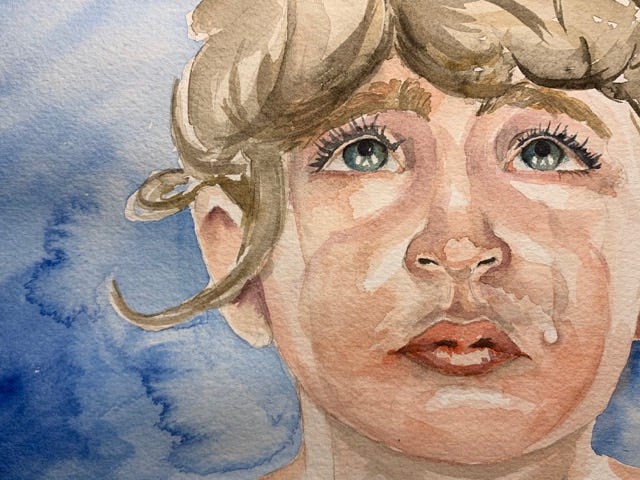
“My story isn’t good enough,” she said as a single tear slid slowly down her face.
Shame is the most powerful, master emotion. It’s the fear that we’re not good enough. ~Brene Brown
Then, there was Nathan.
At first glance, Nathan appeared to have no insecurities. He was tall, intelligent, and handsome. His family was very well-to-do, and Maslow would have been proud of how well Nathan’s needs had been met. He wanted to attend a prestigious college, so he brought his college essay for me to look over.
As I read, much like Sara’s, his words were hollow and inauthentic. So again, I asked questions.
I discovered that his father was from Norway, and his mother was American. They both held important, well-paid jobs, and Nathan had never lacked for anything. He spent his summers abroad in Norway with his Grandmother who he loved dearly. For the most part, his family was very happy, and there were no real challenges to speak of.
“Ok,” I said. “Tell me about your summers in Norway.”
“I visited my grandmother, and we traveled all over Europe,” he replied.
“That sounds lovely and educational. What did you do as you traveled?” I asked.
“Well, my grandmother and I traveled all over volunteering to help refugees. She taught me the importance of giving back and always taking care of others who are less fortunate,” his answer oozed with sincerity. He had spent all of his teenage years volunteering with refugees abroad, and while he was home, he volunteered at the local Humane Society. His goal in life was to have a mobile veterinary unit for endangered wildlife in Africa.
Unlike Sara, he had no language or educational barrier. He could afford to pay someone to write his college essay if necessary. There were no obstacles in his life. I finally asked him why he didn’t write down all he had shared with me. His answer blew me away.
He shrugged and with feigned apathy said, “I’m white, male, and privileged. I have never wanted for anything; I’ve traveled the world. People just think I’m worthless.”
In other words, his story wasn’t good enough.
Shame has no boundaries.
Most of us don’t walk in Sara’s shoes. We cannot identify with being a stranger in a foreign country, abandoned by a relative, and forced to make it on our own.
Unlike Nathan, most of us are not wealthy globetrotters who come from strong happy families. Most of us are somewhere in between — not on opposite ends of the socio-spectrum.
But, like Sara and Nathan, ALL of us have felt shame. At some point on our journey, we have feared that we are not good enough, and as such, will not be accepted by our friends and family.
When we find ourselves not in poverty or riches, but somewhere in the middle, it is easy to comfortably judge ourselves and the Sara’s and Nathan’s we meet. When shame is unresolved, we put everyone on trial, especially ourselves.
We think to ourselves, if we were Sara, we could have done better, worked harder, and would have been proud of it — not shameful.
The Nathan’s of the world are particularly easy to hate. They’ve had it made their entire lives and comforting our failings by belittling their honest work feels honorable. “Well,” we tell ourselves, “if I had never had a problem, I would be as successful as him, too.”
It isn’t wise to compare ourselves to others. When we do, we either become arrogant (because we see ourselves as better) or self-condemning (because we see ourselves as worse). On the flip side of that coin are those who compare themselves to us. It is their perceived judgment that we fear, and it is that fear that keeps us locked in shame.
You either walk inside your story and own it or you stand outside your story and hustle for your worthiness. ~Brene Brown
From an unexpected place, I learned the importance of owning my story and accepting it because, just like Sara and Nathan, I am enough. That doesn’t mean I’m perfect or have no more growing to do. Rather, I choose to value and respect myself and what life has brought me. This isn’t a one time deal. It is something that I have to choose every day, sometimes more than once.
Whether you are a Sara, a Nathan, or someone anywhere in the middle, remember — your experience in life — your story — is yours alone. It is personal and unique. Do not fear that uniqueness, but sit quietly with it, and befriend it. In acceptance, we disempower the shame placed on us and begin to walk in our own power and light.


