
ENTERTAINMENT
A Legend for the New American Century
“Avatar: The Last Airbender” tells a revolutionary humanitarian parable.
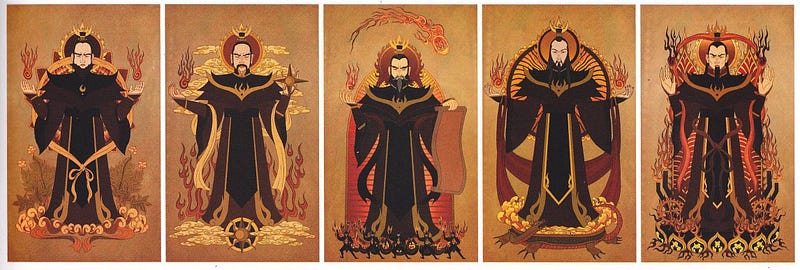
Water. Earth. Fire. Air.
Long ago, the four nations lived together in harmony. Then, everything changed when the Fire Nation attacked. Only the Avatar, master of all four elements, could stop them… But when the world needed him most, he vanished.
Avatar is back — and not a second too soon. Forged in the flames of post-9/11 America, the show is as timeless as a folk song: like it was never new, but will never get old. Avatar: The Last Airbender is a classic fantasy epic that confronts audiences of all ages with hard questions about war, redemption, family, responsibility, imperialism, and tyranny.
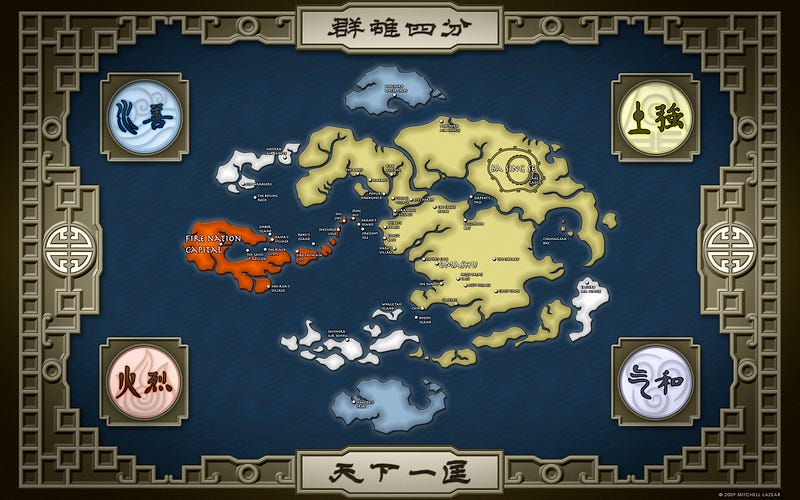
Each character belongs to one of four ancient civilizations: the Water Tribes, the Earth Kingdom, the Fire Nation, or the Air Nomads. But some characters are “benders”: they have psychokinetic powers over the element that corresponds to their country.
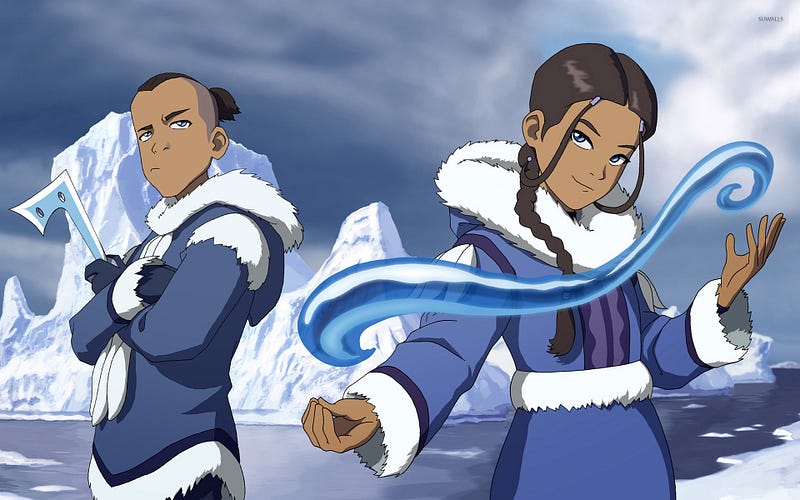
For example, Sokka and Katara are both members of a Water Tribe.
However, Sokka is not a waterbender — even though his sister and mother were both born with waterbending abilities.
In all four civilizations, bending powers are doled out seemingly at random.
Conflict between benders drives much of the plot — and fuels more than a few badass fight scenes. But bending is not just a device to facilitate telegenic violence. It is the primary link between living people and ancient spiritual traditions; moreover, its variants are based on real Chinese martial arts.
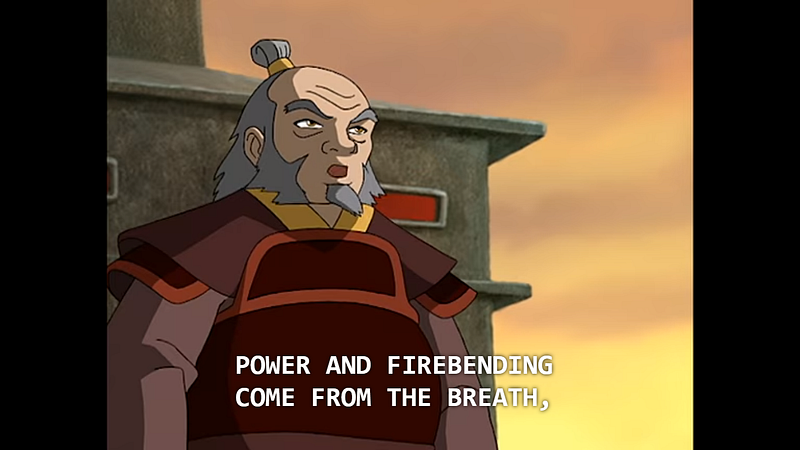
Avatar fearlessly explores these spiritual dimensions of bending, from the pilot to the series finale.
Even the royal family of the Fire Nation — the most aggressive imperialist force in the whole story — is shown to demand meditation, self-discipline, and patience from firebenders in training.
The depth of Avatar is what I want to highlight. To be sure, it has no shortage of kid-friendly humor; characters injure themselves in hilarious ways, evoking lowbrow TV from The Three Stooges to Spongebob. But Avatar is rich with narrative depth. Cloaked in the façade of a blockbuster cartoon, it covertly unveils a story spanning centuries. But even that label sells Avatar short. A saga of biblical proportions, Avatar draws on ancient wisdom to address the issues at the core of human civilization.
Nevertheless, it offers something unmistakably original, and it is genuinely fun for children. Avatar provides more than anyone could ask from a single TV show: it distills millennia of religious teachings in a cartoon that’s somehow witty, engaging, and action-packed. It confronts children about the costs of ethnic cleansing, counter-value strikes, and war more generally. It fearlessly challenges the foreign policy mainstream in favor of an unflinching humanitarian philosophy.
I guess I should explain what the show is actually about.
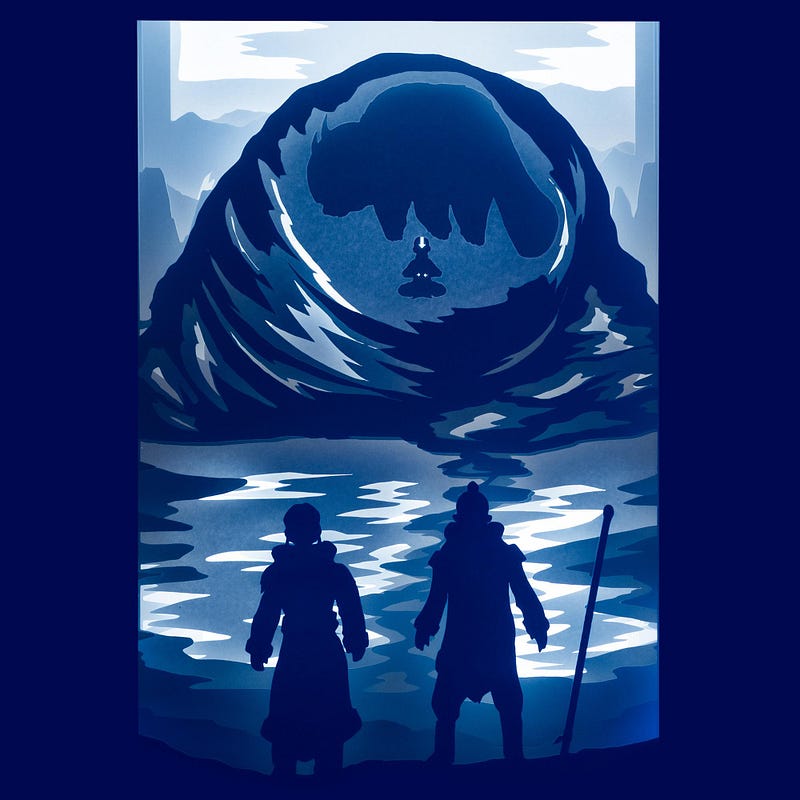
Sokka and Katara accidentally revive Aang — an airbender who’s been encased in suspended animation for 100 years. They learn that Aang is “the Avatar”: a messianic figure tasked with maintaining balance between the four elements and their corresponding civilizations.
It is revealed that Aang fled his Air Temple on a flying bison around his twelfth birthday. Using his powers, he preserved himself in ice to survive a snowstorm near the South Pole.
But Aang’s 100-year absence has been poorly timed: with no Avatar to intervene, the Fire Nation has nearly conquered the world.
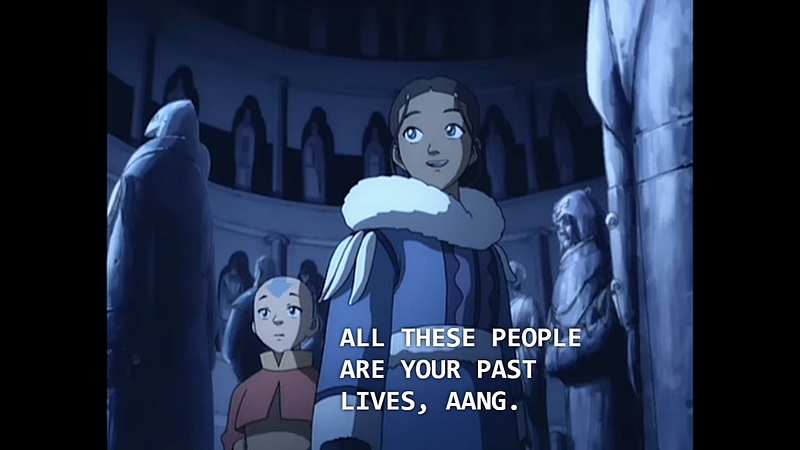
Since the Avatar is reincarnated in a quadripartite cycle (water-earth-fire-air), the Fire Nation anticipated which civilization would produce the next Avatar.
Firelord Sozin exterminated the Air Nomads in an effort to kill Avatar Roku’s unnamed successor.
Thus, by fleeing in a moment of pubescent angst, Aang narrowly escaped an ethnic cleansing.
Aang must master all four elements and restore peace. If he fails, all human life will answer to a totalitarian ethnostate.
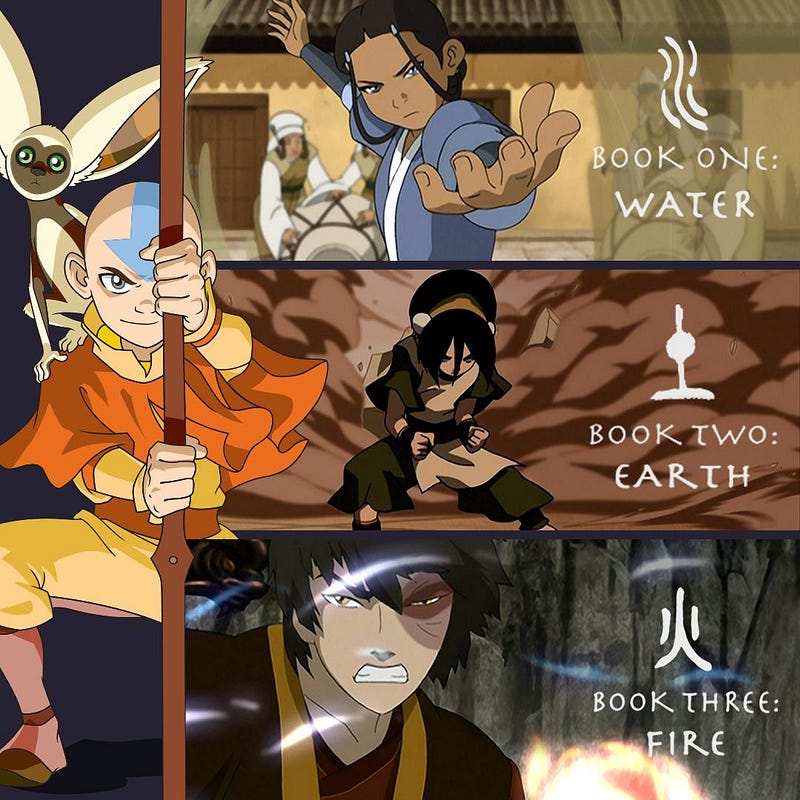
The show is loosely structured around Aang’s bending education.
In Book One: Water, Aang and Katara study waterbending in the North Pole.
In Book Two: Earth, Aang enlists the tutelage of a blind earthbending prodigy.
And in Book Three: Fire, Aang rushes to learn the basics of firebending before his showdown with Firelord Ozai.
Each episode is a work of art. The Asiatic score, the whimsical animation, and the fearless depictions of wartime moral quandaries make for stunningly beautiful parables about the virtue of unfettered idealism — even in a world where might makes right. Aang and his comrades sometimes compromise their moral beliefs for the greater good, but they never become jaded or shrewd. Their ethical calculations are sound and altruistic.
From its earliest episodes in 2005, Avatar brutally confronted kindergarteners and other children with thornier moral problems than they would ever have to consider in their own personal lives. Characters argue over whether to spare civilians of a genocidal empire; benders struggle to restrain themselves from using their powers unfairly; and, Aang himself tells occasional white lies to keep the peace. But the lines between good and evil are ultimately clear.
Avatar is truly an adventure like no other. Now that the show has been reincarnated as a streaming sensation, it’s becoming clear just how strongly the series influenced younger Millennials— like Lil Peep, who penned this pithy verse: “Gettin high, takin bars til we on Mars / I could make the ground move like I’m Avatar.”
Avatar is an unforgettable text that should be recognized for what it is: one of the greatest works of American literature.


