
Longing for Home
A Leaf Blowing in the Wind
Can a leaf ever put down roots?
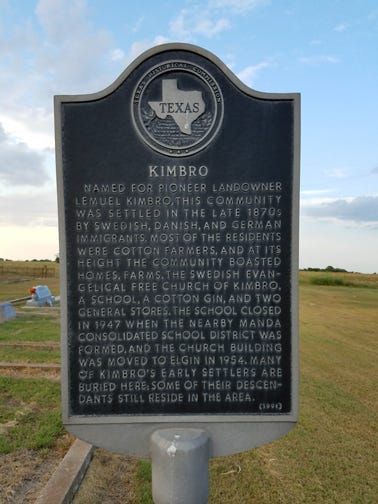
As I was driving this afternoon I came across a Historical Marker — one that I must have passed countless times. It is for the town of Kimbro TX, an unincorporated entity that was founded in 1870 by Swedish, Danish and German immigrants. There are a lot Swedish towns scattered across the fields around this area, though as far as I can tell not many of them actually exist any more, except for their small cemeteries. Kimbro has a City Limit sign on highway 1100. Manda, Carlson and Lund just have historical markers and roads named after them. New Sweden has a church and a somewhat larger cemetery, though no town in the way that people think of towns now — a geographic location with crossing streets and avenues. Here there are fields of corn and other crops, and the occasional house. I read that general stores and schools once existed, but they are no longer around. (One of the schools has its own historical marker where a building used to stand.)
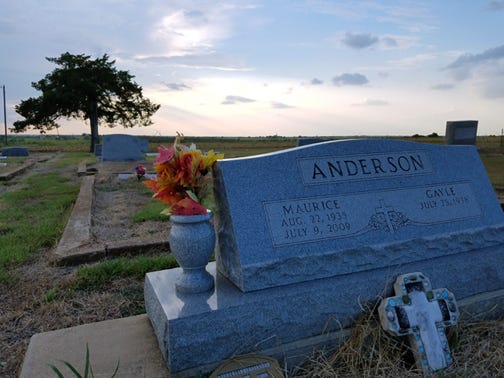
Maybe I’m still tired, but walking through the tiny Kimbro cemetery made me a little sad. In One Hundred Years of Solitude, Gabriel Garcia Marquez observes that a new community has truly planted roots when it buries its first citizen and establishes a cemetery. I feel a little like a leaf blowing in the wind. Like I don’t have a community of my own. I know that this could be perceived as a slap in the face to all of my family and friends, and I assure you all that it’s not intended this way.
I have lived in Elgin, TX off and on for over 10 years. This is my third time living here, as a matter of fact. I know people here; I have friends. However, the feeling remains that they are all Barry’s friends, and mine by extension. When I walk through the town I resist the temptation to like it, though the houses and trees are very appealing to me. I resist the temptation to fall in love with the house I live in, though I love the wooden floors, the front yard and the front porch. I’ve left so many places and I don’t feel that I have ever learned to belong anywhere.
I think the geographical aspect is key here. Yes, I have a large family, but none of them live in Elgin with me. I could live in Boerne, where I graduated high school, but I don’t know that this is the best thing for me at this point. I want to find a place to put down roots and call it Home. That requires action on my part, and I don’t seem to be good at that particular skill. I am sitting in a coffee shop writing these words, because I couldn’t think at home. From the time I first lived on my own (approximately 150 years ago), I’ve always avoided being home. Friends have commented on this all along. It’s easier just to be somewhere else.
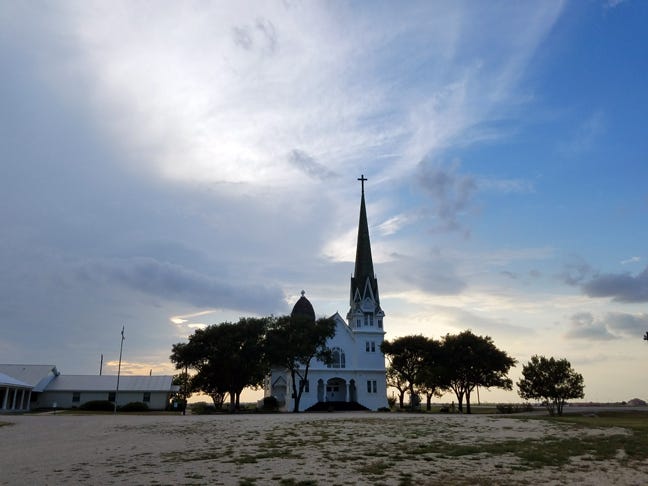
Churches also hold a community together. I have struggled to find a church, and I have enjoyed being a member in several throughout the years. There are two problems: One is the fact that I’m gay and this tends to go against Christian theology. The other problem is me. I admit it. I am not good at getting up on Sunday mornings and going to church. I’m not any better at Saturday evenings. The Catholic church has been the most comforting for me. I love the ritual of Mass. The reading of the Psalms is particularly comforting and I’ve spent a lot of time reading the Liturgy of the Hours. But again, as soon as I commit to doing it, I fall off. (I am such a large part of my own problem it’s amusing.) New Sweden has a beautiful church, and the sign promises that everybody is welcome. But, I’m not Swedish and I don’t know these people and while I’m certain that I would be welcome there, how long could it be before I truly belonged? Would I ever? Could I? My track record isn’t good.
So, where will I be buried when I die? Let’s pretend that’s not as morbid as it sounds. So many people are choosing to have their bodies cremated. My Aunt Roslyn was cremated when she passed, but none of us knows where the ashes are. Her husband said that he put them where she had requested, but hasn’t told us where that is. It seems like a nice idea to have a place — a physical place that I could go to visit her and think about her. A grave, for instance. A grave is in a cemetery and a cemetery is part of a community and do I have a community? I mean, a town — a physical location with crossing streets and avenues, with people around that I belong to and who would claim me. Would people visit my grave? That’s such a quaint, Old-World mentality — as foreign to me as the continent of Europe itself. It seems nice, though.
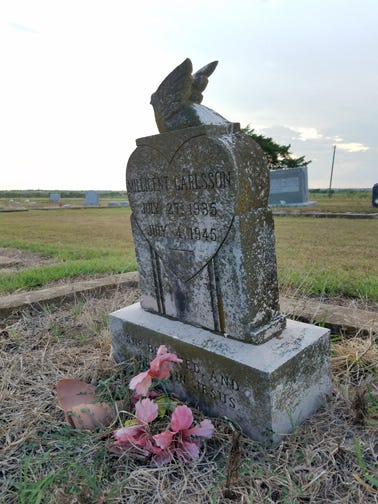
I sometimes feel that these words that I write are me — the only roots that I am capable of putting down, the only hope I have of being remembered. My published books will be my grave, their covers my gravestone. People will visit me by reading my words.
I am truly feeling like a leaf today — lost and blowing in the wind. Maybe that’s just who I am, and maybe I should embrace, rather than fight it. The North Wind calls and, again, I must move on. Maybe I’m anemic, and all of this is just a physical reaction. Maybe I’m just tired. My desire to create something beautiful out of all of this is matched only by my desire to lay down for about an hour and let sleep carry me away in its loving arms. When I wake will this all be gone? Will sleep gently stroke my face as it hands me back to wakefulness, who promises a new world, a new beginning and outlook? Perhaps these emotions will have ebbed with the circadian tide? In which case, I am glad I took the time to write this, so that I can remember how I felt. Because this is a powerful feeling, and it bears remembering.

Originally published at ratherearnestpainter.com on August 6, 2017. Please visit.