
A Lazy Guide to Getting Strong and How to Add 100+ Pounds to Your Lifts
Featuring Russian trainer Pavel Tsatsouline
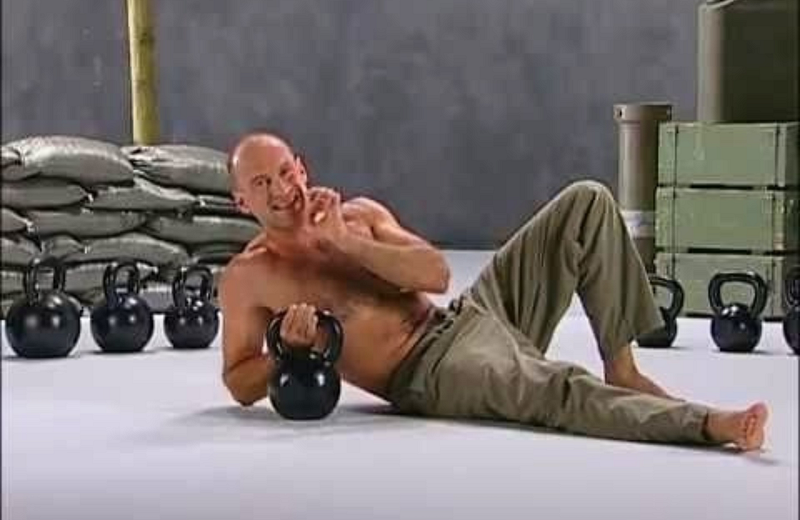
Pavel Tsatsouline is an international treasure.
The guy is like the handsome Squidward version of Joe Rogan.
He is also a physical training expert to the US Marine Corps, the US Secret Service, and the US Navy SEALs and a former instructor for Spetnaz, the Soviet special forces.
So yeah, he knows his stuff.
Pavel’s greatest contribution to physical fitness is introducing the kettlebell to the United States. The kettlebell is a great equalizer: after years of sprinting, squatting, and deadlifting, I realized that a simple 35lb kettlebell was enough to thoroughly challenge and humble me!
Suddenly my core and posterior chain felt like the weak links in what I thought was an unbreakable fitness chain.
Pavel believes in making fitness “simple” so you don’t get overwhelmed. Here are some of his core principles for “simple” fitness:
You Don’t Need Machines
Machines are good for advanced lifters when they are injured or want to focus on something specific. However, machines are bad for beginners.
“If you’re really messed up you can find some angle to using machines… but your typical person going to the gym has no business doing that. None,” says Pavel.
Doing leg extensions gets you better at one thing: leg extensions.
If you do barbell squats or kettlebell swings you’ll jump higher, hit harder, boost testosterone, and be more athletic. Focus on your general lifts then consider adding machines afterward.
The Kettlebell Swing is the Most Beneficial Exercise you can do
World-class marathoners and championship powerlifters use kettlebell swings; in fact, world record holder Donny Thompson added 70lb to his deadlift, 100lb to his bench, and broke the 3,000lb total record for compound lifting.
Donny’s coach said, “What kettlebells do is work the muscles without killing them.”
That’s the key. Kettlebells train power, train fast fibers (boosts mitochondria and resets your aging clock), strengthen your connective tissues (stability), and boost your endurance, all while not adding too much lactic acid to the muscles.
Training with kettlebells optimizes your metabolic processes to get exactly what you want.
Be Lazy and Train Smart; not Hard
“Light days” are essential for strength and muscle gain. You must take a day off after heavy training to give your body time to recover and grow.
Pavel recommends a light kettlebell regimen such as snatches or swings for conditioning and get-ups for shoulder health. Your light days are for honing technique, not for smashing yourself with more heavy weights.
He recommends weights that are 80% of the heavy days; so if you’re squatting 225lbs for 5 reps for heavy, your light day should be around 180lbs.
Bodyweight Training is Killing Your Gains
Bodyweight exercises take a lot of coaching and control to be beneficial.
Most people cannot get that proper coaching, however, and just end up wasting energy going through repetitions that don’t increase their strength or muscle. Not to mention bodyweight exercises don’t train the lower back effectively.
If you still want to do bodyweight exercise try doing slow repping (3–5 seconds up and 3–5 seconds down) with an isometric squeeze at the top of each rep.
Building Endurance the Right Way
There are two types of endurance: cardio and muscular. Muscular is more crucial and will help improve your performance in all facets of life, but regular cardio is important too.
Here is how to train both:
1. Cardio (lesser priority, still important):
- Method 1 (best for most) is steady state (~70% Max. HR), enough where you can talk to your comrade — Pavel’s favorite word. I learned from a cross-country buddy who ran D3 that consistency and low impact are keys to building cardio.
- Method 2 interval training (85–90% HR), but should be used sparsely, and after steady state. Interval training is best used before a competition as a “primer” to get your body used to the increased speed.
2. Muscular Endurance (higher priority):
- Method 1 (slow fiber): Running hills, loaded carries (kettlebells/ dumbells). You still want to keep this cardio below the anaerobic threshold, meaning you don’t fail the talk test.
- Method 2 (fast fiber; anti-aging): Sprints, jumps, and plyometrics until slight fatigue, then rest and repeat 5–7 times.
Develop Type 2 Fibers to Stay Young
Type 2 muscle fibers, or “fast-twitch” muscle fibers, are responsible for explosive movements and are the main type of muscle fiber associated with power.
Developing these also keeps you young and athletic. There are two ways to train these fibers: Lift heavy, or fast.
“There is no third way for aging. It’s heavy or fast. So when people want to train super slow or do pilates that — it’s not going to do it,” says Pavel.
Here Pavel recommends squatting, benching, and deadlifting. Keep in mind, the barbell is less forgiving than kettlebells. You can pull a tendon if you don’t have proper form.
Work with the bar’s weight initially (45lb) if you’re not used to working with barbells and then increase the weight gradually. It’s a journey, not a race.
Slow training: Develop type 1 fibers
Type 1 fibers, or “slow-twitch” muscle fibers, are tasked with slower movements and endurance.
To be trained correctly you have to do slow movements for 30 to 60 seconds, with pauses between sets, and no momentum.
After this kind of set, you should be resting for 5 minutes minimum.
Slow training is very good for wrestlers and grapplers to develop tight control of their limbs and for general health.
Bonus Tip and Closing Thoughts
“I’m not as good as I once was, but I am as good once as I ever was. ”— Pavel Tsatsouline
The kettlebell is a panacea for all health, strength, and fitness problems.
If you have limited time or resources, Pavel recommends using the kettlebell for 3 days a week. I bought mine on Amazon for less than $50.
Right now I’m doing his workout regimen where you do sets spaced out throughout the day, every day, and not to fail. I’m doing it for pullups and kettlebell swings. Then like every two weeks or so you see what your max has become.
I also recommend reading his book “Kettlebell Simple & Sinister: Revised and Updated Edition.”
And one last piece of advice: Never start a fitness routine because you want to impress a girl or guy or your friends/colleagues. You will quit the moment it gets hard. Do it for yourself and you will stick with it.
Good luck! That’s all from me for now. I’m off to the gym.
Bonus Tip: I Found Pavel’s Training Guide on Tim Ferriss’s Blog
Monday –heavy squat (SQ) Tuesday –heavy benchpress (BP) Wednesday –heavy deadlift (DL) Thursday — light SQ Friday –light BP Saturday –off Sunday –off If training five days is not an option, four will do: Monday –heavy SQ Tuesday –heavy BP Wednesday –heavy DL Thursday –off Friday — light SQ, light BP Saturday –off Sunday –off Not ideal, but if you have to cram your training into three days: Monday — heavy SQ Tuesday –off Wednesday –heavy BP, light SQ Thursday — off Friday — heavy DL, light BP Saturday — off Sunday — off
Get unlimited access to ALL of Medium by signing up for a Medium subscription through my referral link.
Join 2500+ people on my Substack for a copy of my new eBook “Gold2.0.”