
|Society|Graphic Design|Social Change|
A Language That Unites Us
Meet Liron Lavi Turkenich, the designer who might change the Middle East, with her script that can be read by both Hebrew and Arabic Speakers
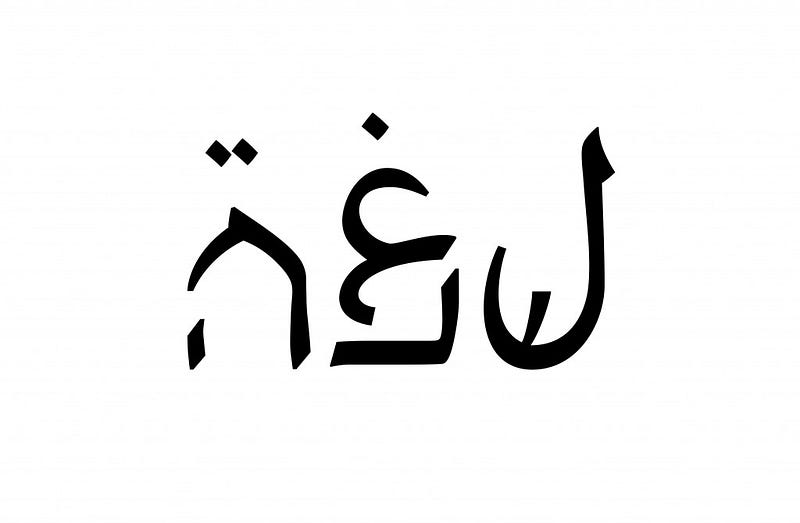
I write from Israel, one of the most conflict-ridden regions of the world, and on this day that Israeli Prime Minister Benjamin Netanyahu has threatened to destabilize the region by unilaterally annexing portions of the West Bank regarded by the international community as falling outside of the borders of the State of Israel (The day has come and gone without incident), and at a time when Israel is enjoying an extended period of peace, cooperation and coexistence, while racial tensions rage in places that have long neglected such matters, I want to introduce you to Liron Lavi Turkenich, the designer who has used her art to bring peace, in an unusual way.
Meet Liron Lavi Turkenich
Though international headlines can imply otherwise, Hebrew and Arabic speaking Israelis live side by side as equal citizens of Israel. In the north of the country, where I call home, the population is made up of 50/50 Hebrew and Arabic speakers. The supermarket where I shop is decorated with signs in three languages (Arabic, Hebrew, English), and celebrates the holidays of Judaism, Christianity and Islam. While I am Jewish, one of my closest friends is a Bedouin Muslim resident of the Bedouin village one 1km from my home, and we agree that we are both blessed to be Israeli, and both want only to enjoy each day, and to raise our children in peace and security.
Nonetheless, accusations of Israel being an apartheid state are not entirely unfounded. The Israeli school system, unchanged from the time when Israel was a part of the Ottoman Empire (prior to 1919), is arranged according to religion, meaning that unless families actively choose otherwise, children grow up in segregated schools. While Israel’s major cities are thriving integrated metropolises, small towns are still largely divided by racial, ethnic and religious group. Still, as a woman making my life here, I can tell you, most Israelis want what Jamal and I want, to enjoy life and to live side by side, in peace.
How can we move from the divisiveness that captures so many headlines to the simple truth that people just want the freedom to live their lives in peace and security?
Graphic designer Liron Lavi Turkenich has offered us a new font as a bridge to peace.
Hebrew and Arabic are both Semitic languages, which share similar structures, sounds and a large number of loan words. What is more, according to Israeli law, all children growing up in Israel are required to learn both languages. In spite of this, language divides persist. Knowing these facts, a bit about the brain and armed with her graphic design skills, Liron designed a new font, that can be read by both Arabic and Hebrew speakers.
Brain researchers tell us that in order to read, the human brain only needs to see a portion of a letter, a sentence and/or a paragraph in order to decode what we’re looking at. Knowing this, Lavi Turkenich set out to splice and combine Hebrew and Arabic letters, yielding a single, shared alphabet.
Her efforts prove that the path to peace is paved as much with creativity and positive thinking as with negotiations or bloodshed, and if peace is possible in Israel, the most contested soil in recorded history, it is possible anywhere.