
A Killer Reading Strategy That Will Make You A Better Writer
4 simple steps and you’ll be on your way to writing that best-selling novel
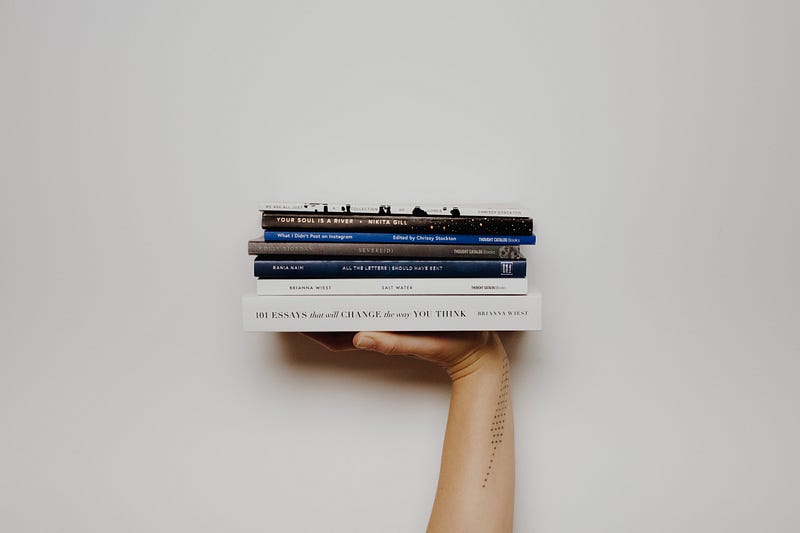
If you’re like most people, you bounce around from book to book without giving it a second thought.
I used to have a haphazard mess of books on my nightstand, my coffee table, kitchen counter, TV stand, you name it. Books from various authors ranging from a variety of different genres were scattered everywhere.
Maybe you’re the complete opposite. Perhaps you can’t even remember last time you picked up a book and read the whole thing through. You’ve grown accustomed to either skimming, reading summaries online, or just watching the movie when it came out.
The Pew Research Center reported that roughly a quarter of U.S. adults (27%) haven’t read a book in whole or in part in the past year, whether in print, electronic or audio form.
If your goal is to become a better writer, you already know that to write well; you also need to read well.
“If you don’t have time to read, you don’t have the time (or the tools) to write. Simple as that.” — Stephen King
So to become a better writer, you need to learn how to become a better reader. And to do that, I’ve compiled a list of tips to start your journey.
Schedule Your Reading Time
If you add ‘reading’ to your daily to-do list, you’re guaranteed to read more.
I always used to assume I’d have time to read whichever book I had recently purchased. And because of that, I would allow other tasks and activities to constantly get in the way of that, resulting in my books to remain unread.
However, I always managed to find time to purchase more books, which resulted in the stack of unread books on my nightstands to grow taller and taller.
Time is our greatest resource, and the unfortunate truth is that there’s simply not enough time in the day to accomplish everything we want to achieve.
Planning your reading will help to ensure that you prioritize what matters, and if becoming a better writer is one of your goals, then reading should be at the top of the list.
Make a Book List
Having a book list allows you to set a goal for yourself. It’s a way for you to tell yourself, “these are the books I’m interested in, and these are the books I plan to read.”
A list can ensure that you read the books you truly want to and not just the ones that capture your attention on a random occasion. This happens often, we hear a book recommendation or see a sponsored post somewhere about an intriguing new story with an attractive book cover, and we’re sold — completely forgetting about our own bucket list of books.
Having a mental list is not enough — the chances of you remembering a particular novel amongst all the others are slim, so writing a physical list will ensure that you follow through with your goal of reading those books.
Pick a Number
Set a goal to read a certain amount of books a year.
If you can read 1 book a month, you’ll have read 12 books in 1 year.
If you can read 2 books a month, you’ll have read 24 books in 1 year.
If you can read 1 book per week, you’ll have read 48 books in 1 year and if you can keep that up for say, 10 years? Well, you’ve just read a whopping 480 books.
If you’re a slow reader, pick 2 a month. It’s a doable goal, and if you read 10 or so pages a day, that’s 300 pages — the average length of a book.
It would also probably be in your best interest to avoid reading too many books all at once.
You know yourself better than anybody, so be cautious, but understand if you try to read 5–6 books at once, you probably won’t finish all of them, and it’ll be difficult for you to remember whats going on in each story.
I like to read according to my mood. In the morning, I prefer a self-help book.
In the evening, I enjoy a good fiction novel. Two books a week is a doable goal for me, and I’m able to finish 8 books a month by abiding by that goal.
Resulting in 96 books a year.
Read Widely
If you’re someone who only sticks to one genre — you’re missing out on a lot of mental gold.
By reading a wide range of books, you’ll dig a deeper creative well to pull from.
“Go and read outside of your comfort zone, go and learn stuff.” — Neil Gaiman
I used to be obsessed with classic literature. I refused to read anything else, and I think I got fortunate in that area because a lot of people fail to understand that classics are where it all started.
It’s easy to get caught up in what’s hot or in at the time, but don’t ignore the books that have stood the test of time.
Read everything, from classic literature to horror to self-help. Get a wide range of variety in your life so that it could seep through your writing and, in turn, make you well-rounded and a significantly better writer.
Bottom Line
Having a list of books is self-knowledge and clear evidence of change.
Throughout the years, you’ll be able to see a glimpse of what used to spike your curiosity.
Everybody likes to be an expert, and that’s what your list of books will allow you to be.
Another tool I utilize to better my reading and writing skills is annotating as I read — allowing myself to think on specific phrases and feelings.
Yes, you can use some sort of soulless spreadsheet online — but I prefer the intimacy of a journal or merely highlighting sentences and adding a few thoughtful notes.
So today, schedule in some reading time, and create a reading list, and watch your writing flourish.