
NATURE
A Journey Through Japanese Waterfalls
Written in answer to the Reciprocal prompt: Wondrous Waterfalls
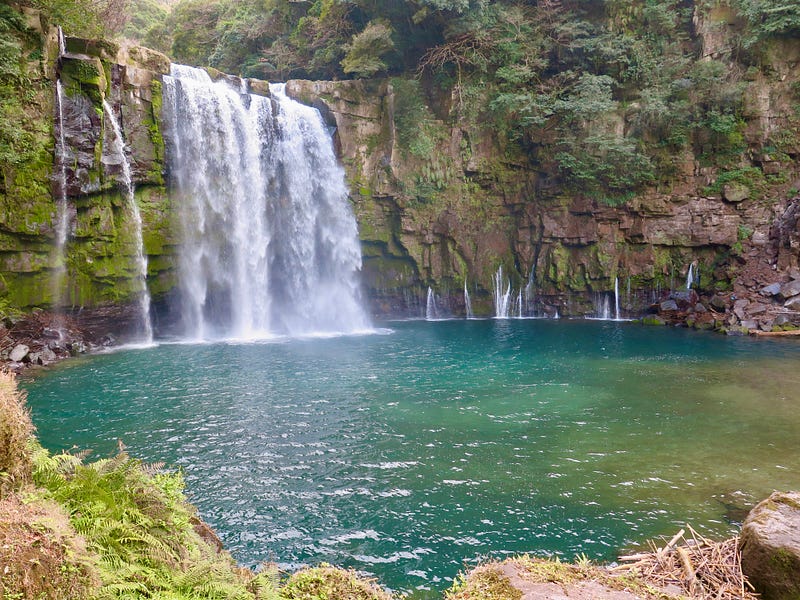
Reciprocal’s Sahil Patel asks in his writing prompt, Have you seen a waterfall?
Oh, Sahil. I have seen waterfalls. I hunt for them like elusive treasures. I scramble over disused and overgrown trails to find them. I venture to say, I collect them.
Here in Japan, waterfalls are so magnificent that some are considered Shinto kami, or deities. Like the country’s tallest, with a drop of 133 meters and one of Japan’s 3 Great Waterfalls, the glorious Nachi Falls in Wakayama.
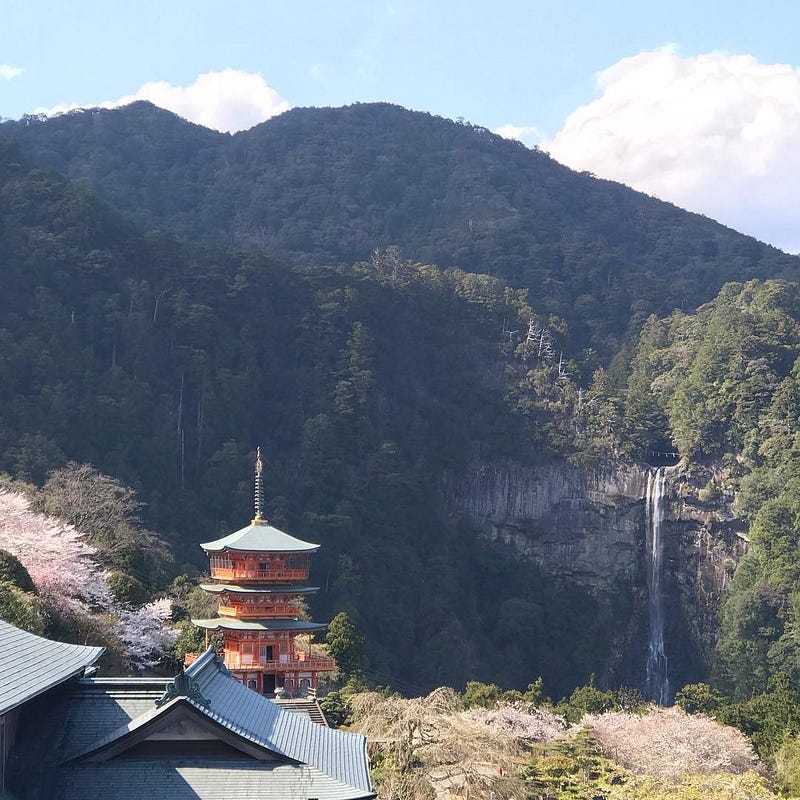
But one needn’t go far to find waterfalls in this country.
In my home prefecture of Kagoshima, there are hundreds. Among them is the hidden Nagano Falls, where water cascades and twists between moss-covered craggy rocks into an open cave.
It is not easy to find. One must follow the few inconspicuous, small Japanese signs that point the way along narrow country roads, passing by age-old farms, rice fields, and vegetable gardens. Then down an even narrower road to a path that leads to the 13-meter-tall Nagano Falls.
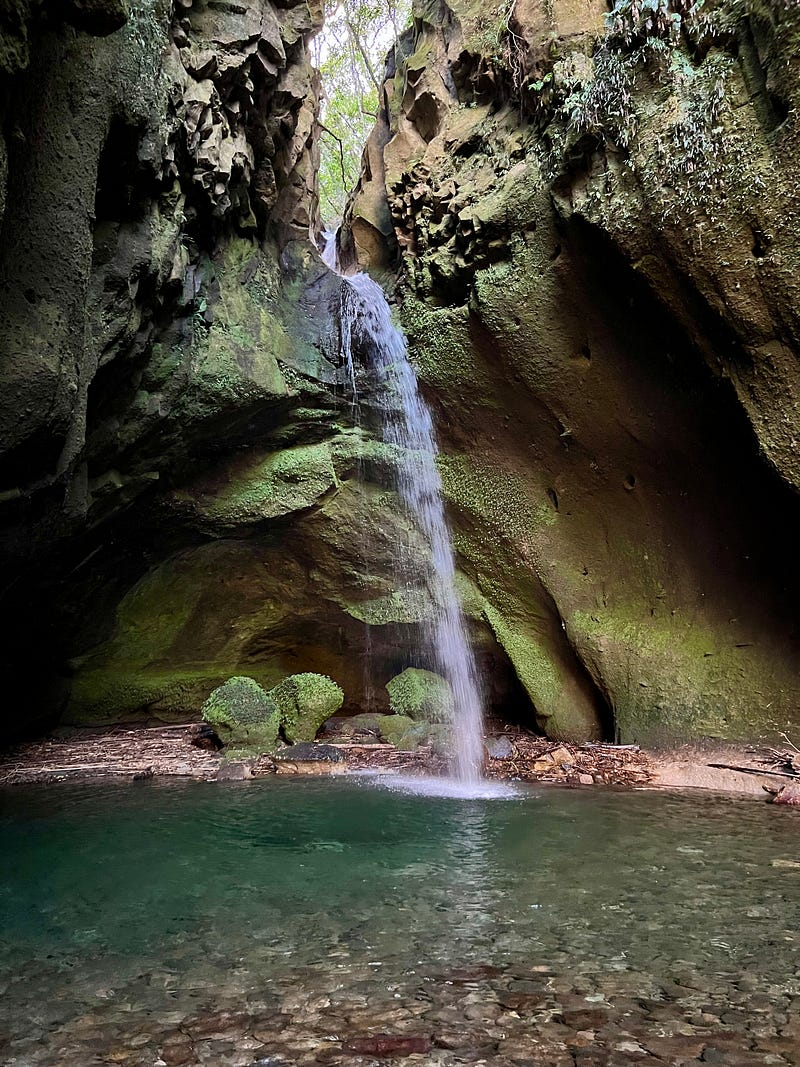
Surely, the allure of waterfalls is universal. Being in their presence has an almost enchanting effect — their beauty lifts heavy hearts, the thunder of falling water fills our ears, and our eyes are captivated by the dance of water on stone. The air carries a refreshing coolness. The moss covering the stones is soft and delicate.
Waterfall hunting
A couple of years ago, my quest for waterfalls led me to Aomori Prefecture, in the far north of the island of Honshu. I had read that Oirase Gorge was waterfall heaven.
My journey to get there took a full day.
From my home in southern Kyushu, I flew to Tokyo, then took the Shinkansen bullet train to Hachinohe, a city on the northeastern coast of Honshu. There, I rented a car to drive 90 minutes for the last leg of my journey to Lake Towada.
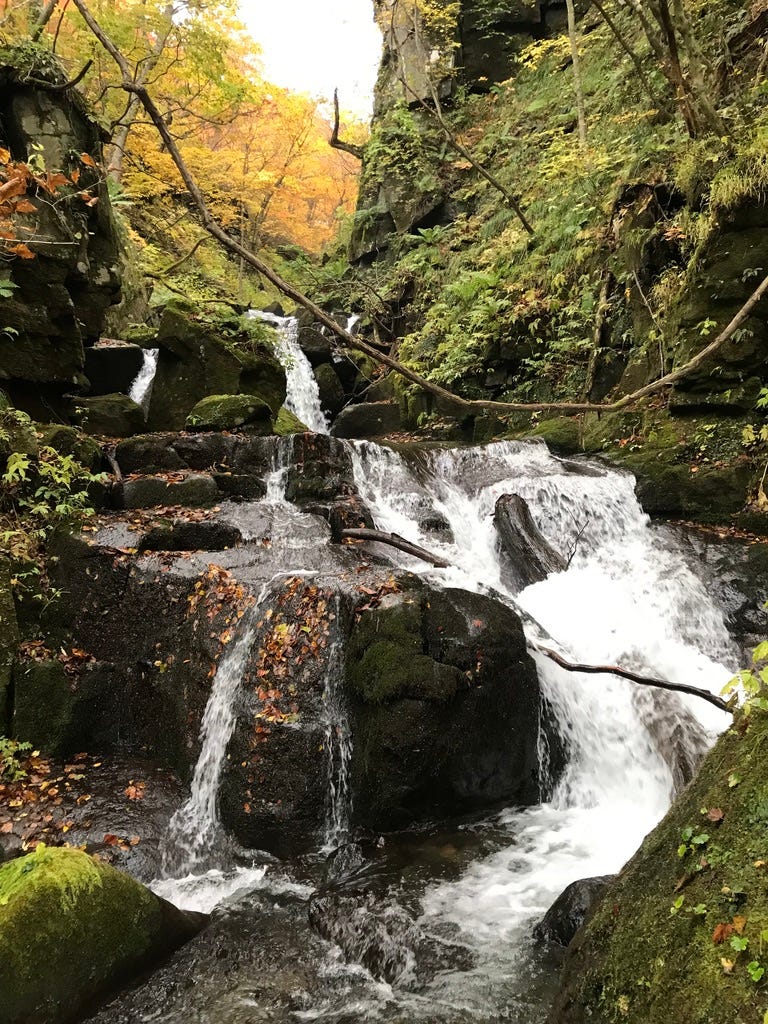
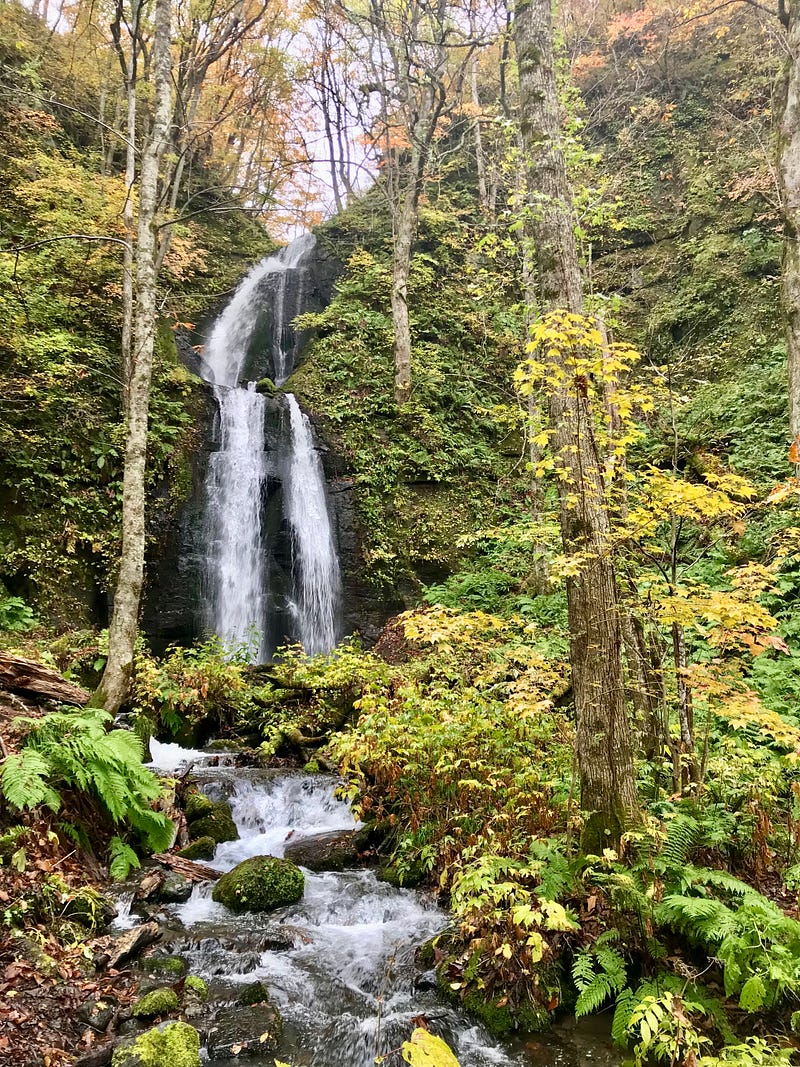
The Oirase Gorge traces the course of the Oirase River as it winds its way northward from Lake Towada through a forest of trees and a near-endless variety of moss.
Photos cannot do justice to the glory that is Oirase Gorge. I spent several hours leisurely hiking along the trail, immersed in the splendor of its countless falls and cascades.
After two nights at Lake Towada, I drove back to Hachinohe, returned the car, and again took the Shinkansen. This time, south to Sendai in Miyagi Prefecture. After a good night’s sleep, I boarded a local train to Yamadera in Yamagata Prefecture.
On the way, I noticed a station with the intriguing name, Omoshiroyama Kōgen, “Amusing Mountain Highlands.” As the train whisked past the station, I caught a glimpse of a placard with a map of a hiking trail on the platform.
A new place to explore!
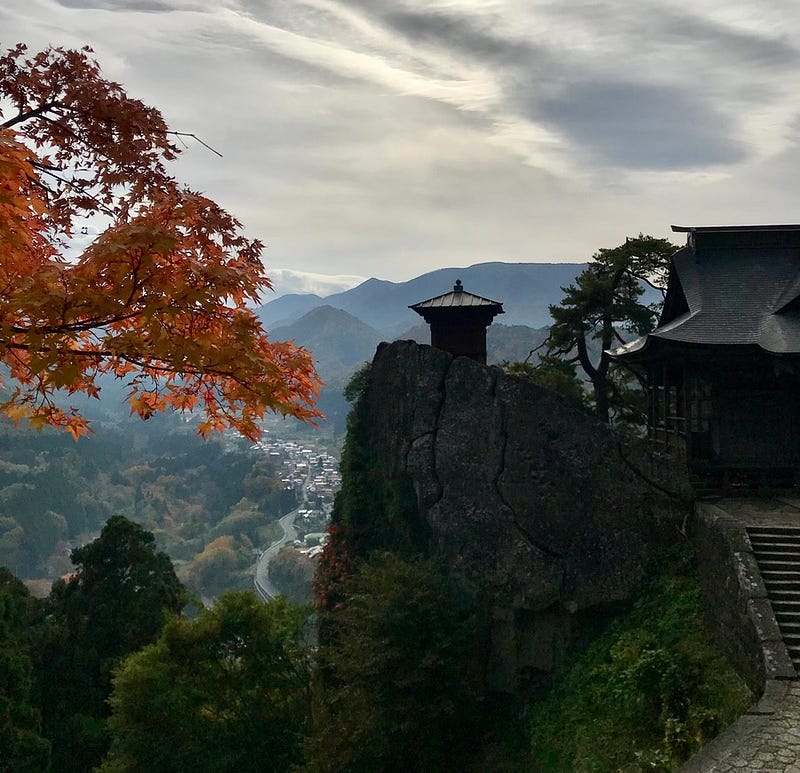
After climbing the 1,015 steps to the top of Yamadera and back down, I had plenty of daylight left to explore the “Amusing Mountain.”
I was glad I did. Walking along the aptly named Kōyō River, I felt I had entered another world. (Kōyō is the Japanese word that describes the changing colors of leaves in autumn.)
The first waterfall I came across took me down a narrow path, over an old, wooden bridge that had seen better days, and across patches of mud and uneven stones. But it was worth it.
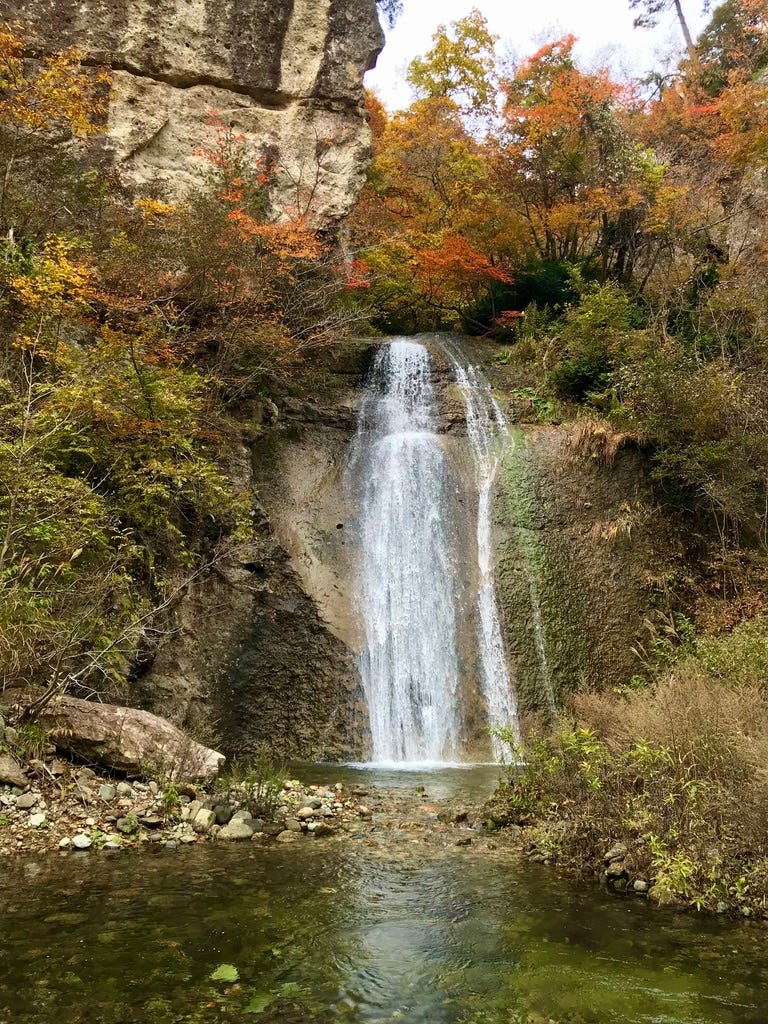
Called Arare Falls, meaning “Hail Falls,” this hidden gem is a modest 10 meters tall.
I backtracked, crossed over the railroad tracks, and found the path down to the Kōyō River.
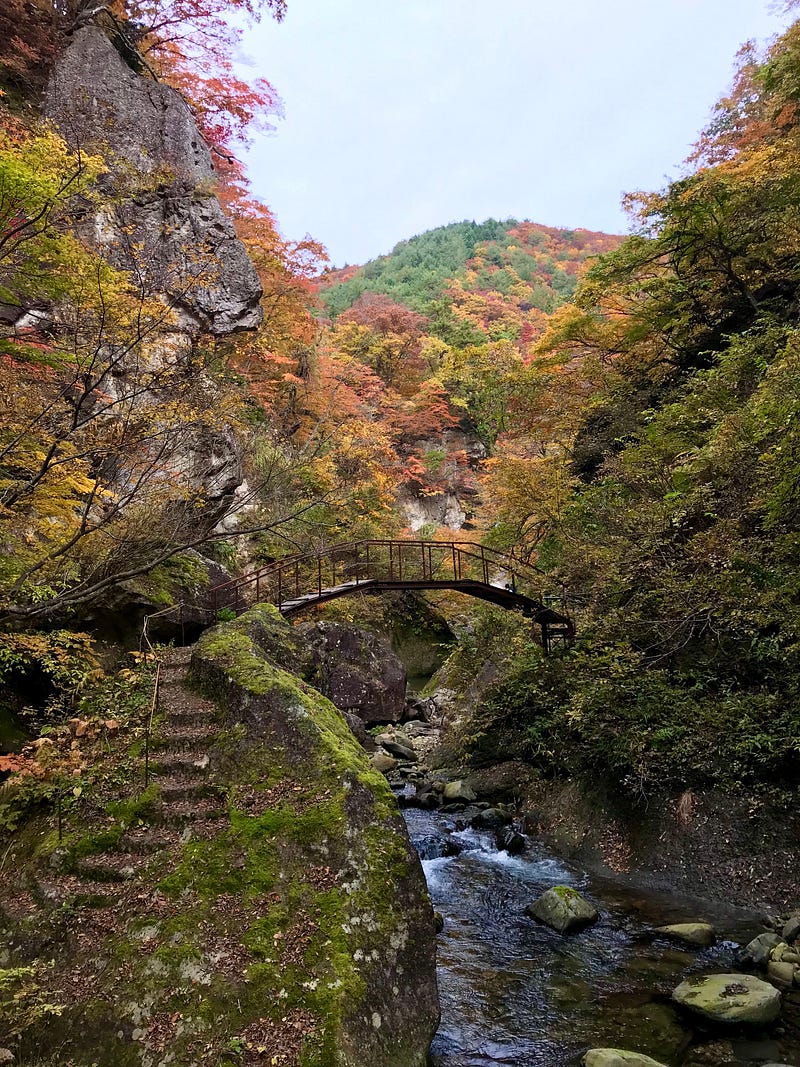
I couldn’t believe my good fortune! I had wandered into paradise. The gorge was a symphony of nature’s best — the colorful trees, the crystal-clear stream, the waterfalls, both small and grand, and even the path itself with its charming bridges — I was in awe.
Enveloped by the crisp autumn air, surrounded by the amazing colors of the leaves, and serenaded by the burbling of flowing water, I once more found myself lost in the wonders of nature.
Then my breath caught when I turned the corner and gazed upon this beauty.
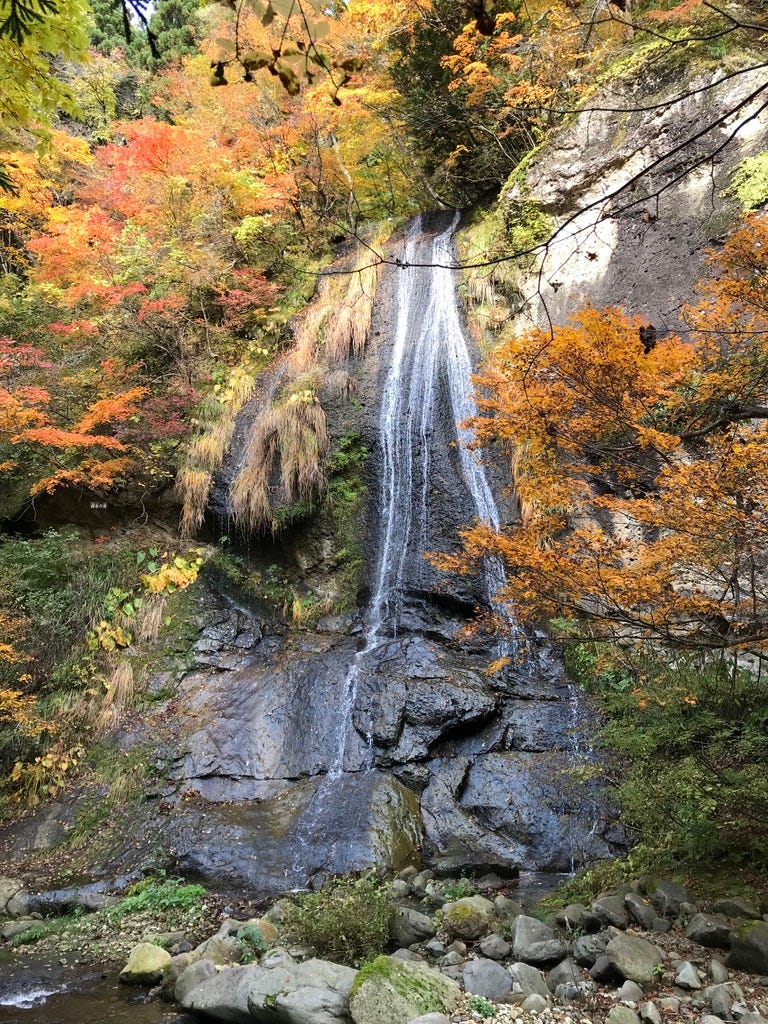
Kinuito Falls, “Silk Thread Falls,” gracefully spreads like threads as it descends 22 meters along a stone face. On that serendipitous day in Omoshiroyama, it was merely one of the many wonders I had the privilege to view.
Another outstanding hike occurred a few years back when I took advantage of the Japanese government’s domestic travel subsidies during the pandemic.
Nikkō, Tochigi Prefecture
Located around two hours by train north of Tokyo, Nikkō is a quaint city where the first shogun of the Edo Era (1603–1867) is deified at the Toshogu Shrine. When I traveled to Nikkō to visit that magnificent masterpiece of a Shinto Shrine, I could not resist taking a bus to the east to hike in the beautiful Senjogahara Highlands to find more waterfalls.
And find them, I did. Tochigi is home to another one of Japan’s 3 Great Waterfalls, Kegon Falls, with an impressive drop of 97 meters.
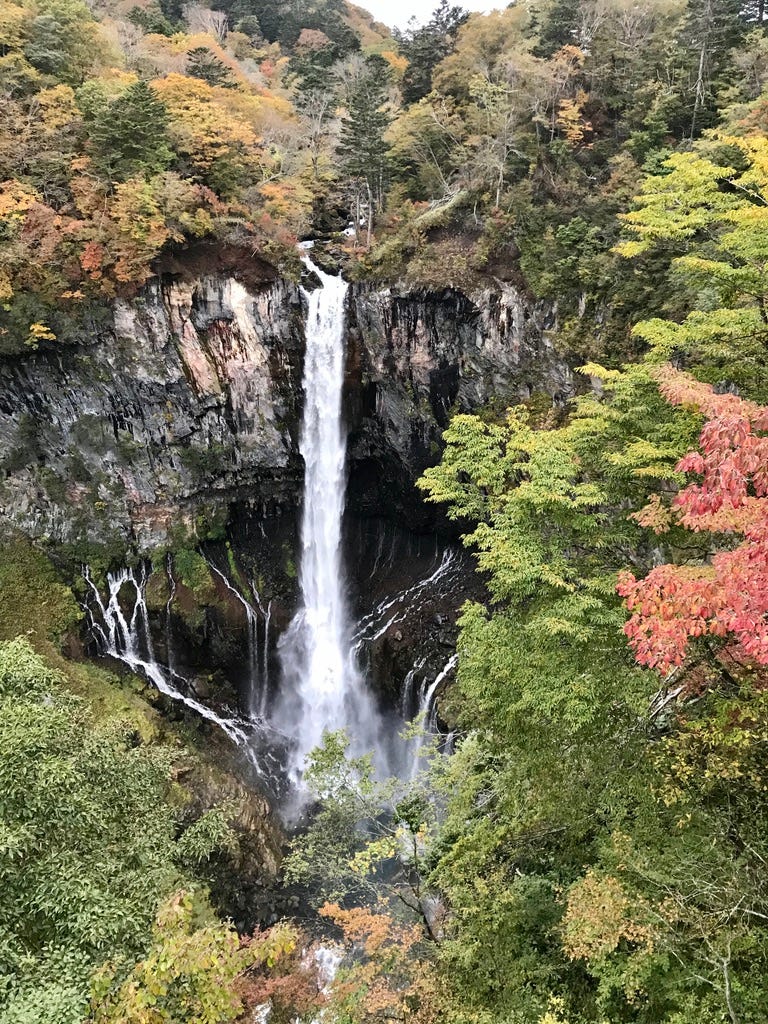
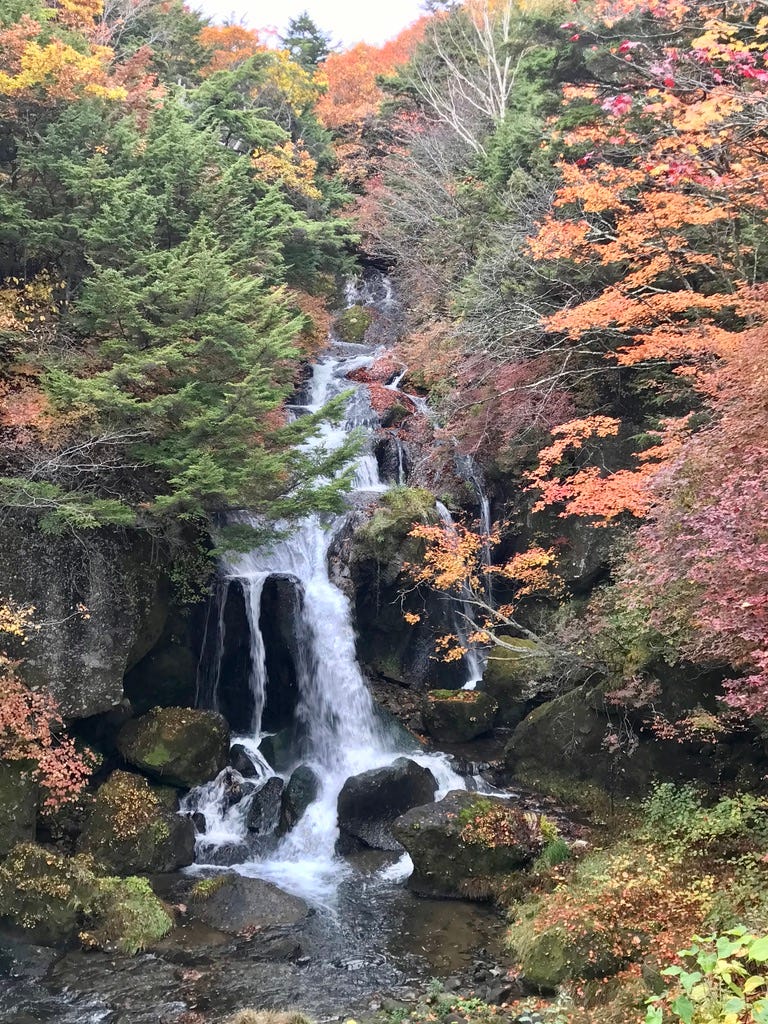
An easy hike along the shore of Lake Chuzenji, then along the Yu River to the north, lies Ryuzu Falls, “Dragon Head Falls.” It cascades in a graceful dance, crisscrossing 210 meters down to its rocky pool below.
Niagaras of the East
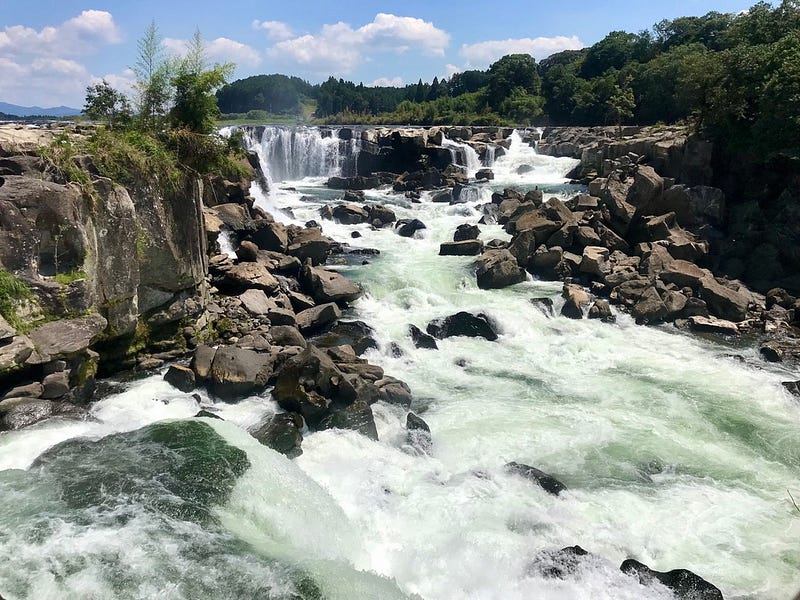
On the southern island of Kyushu, we have not one, but two imposing waterfalls that have claimed the title of “The Niagara of the East.”
In northwest Kagoshima Prefecture, stands the 210 meter wide, 12 meter tall, Sogi Falls:
In Oita, Harajiri Falls spans a width of 120 meters and stands 20 meters tall:
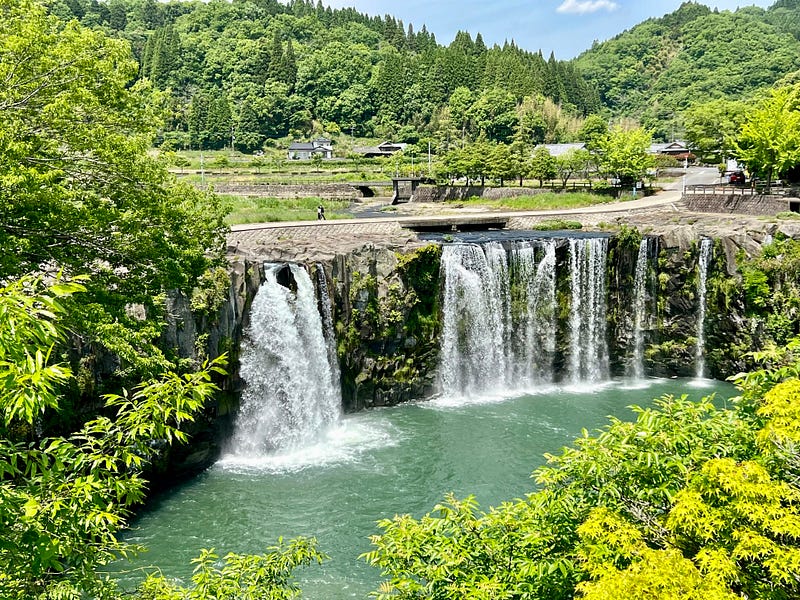
Please let me know in the comments which one of these glorious falls you think is most deserving of the title of “Niagara of the East.”
My favorite
This exploration of waterfalls wouldn’t be complete without mentioning my favorite, although deciding on just one has been difficult.
To see the hidden falls I’ve chosen, you first need to ferry from Kagoshima City over to the peninsula on the Pacific coast side of Kagoshima, called Osumi. From there, drive down nearly to the end, the southernmost point of Japan’s main islands, Cape Sata.
About 30 minutes before reaching Cape Sata, turn left and follow narrow winding roads for about 20 minutes. After parking, you then hike 1.2 kilometers through a forest along a stream of crystal-clear, aquamarine water.
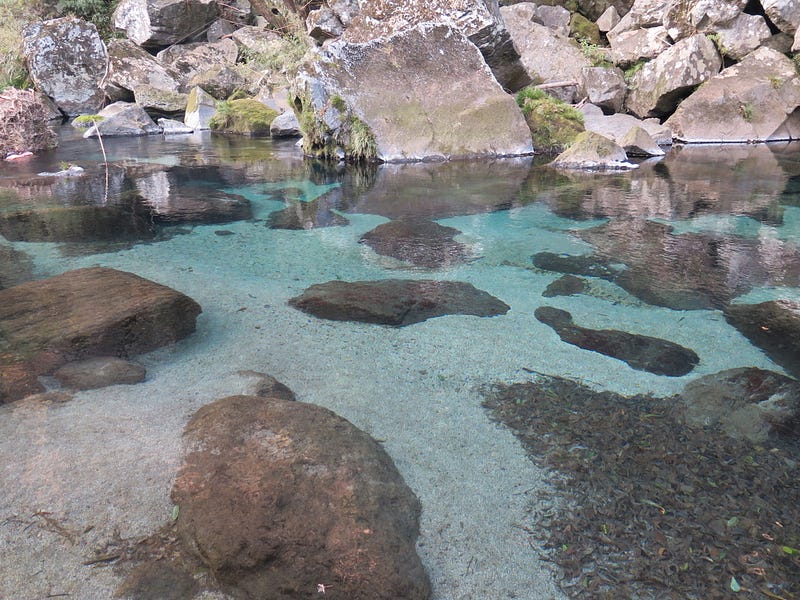
Rounding the last turn, you will behold this marvelous sight. My photo does not come near to capturing its wonder.
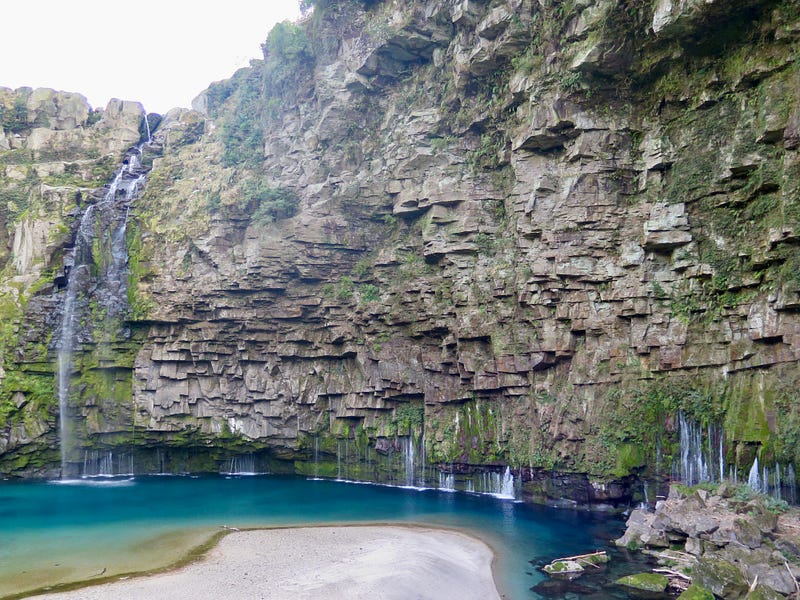
Ogawa Falls tumbles down a 46-meter drop and seeps through the jagged 60-meter wide cliff face forming a pool of extraordinarily colored water.
As this journey through Japan’s waterfalls comes to a close, my wish is that you, too, will have the opportunity to explore some of the fabulous falls and diverse natural treasures that this beautiful country holds.
As is the custom with Reciprocal, please allow me to introduce you to two writers:
DC Palter. DC is one of the editors of Japonica Magazine who has been kind enough to publish many of my articles. He has recently published his first novel, To Kill a Unicorn. Get to know him here:
Mary Mahoney. I read her memoir a few years ago and learned a lot about the psychology of why people join and remain in cults. Her life is a testament to what people can overcome and heal themselves from, which she has done admirably. Read her story here:
*The two links to Amazon are affiliate links.


