
A Human’s Guide to Surviving the Pandemic: 4-Steps to Shift from Surviving to Thriving
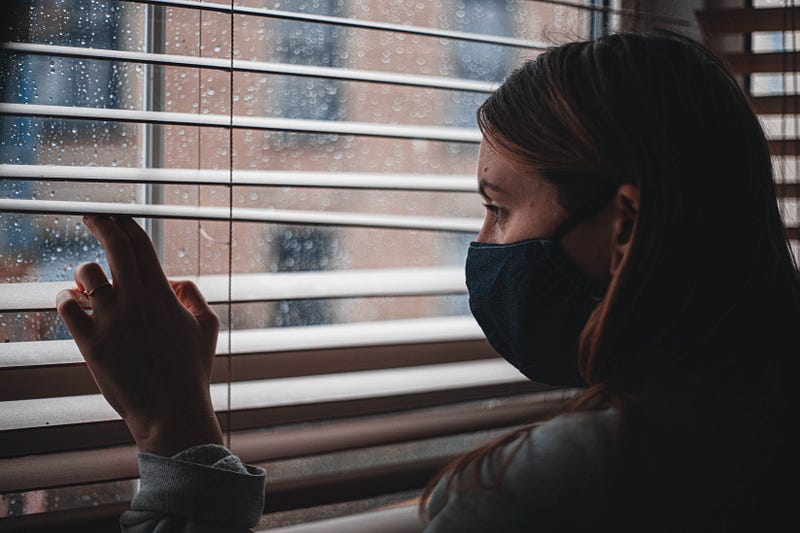
I wake up moments before my two young children after sleeping a solid 12 hours the night of Thanksgiving. I’m exhausted from battling what I instinctively know to be COVID, and we had socially distanced ourselves purposefully the day before.
Half-awake and half-clothed on the toilet in the early morning hours, I grumble as I realize we are out of toilet paper. As a society, we are back to toilet paper hoarding. I missed the memo until it was too late and the shelves were cleared. Begrudged, I waddle my way into my kitchen and grab a fist full of napkins. I waddle back to the bathroom and wipe, tossing the napkin into the trash.
I scream internally when I prepare my morning coffee and re-realize that my taste is gone. Of all the symptoms, that was the one that was practically trademarked by COVID. Of course, it was on Thanksgiving morning that I had lost my sense of taste. I bring the warm, tasteless coffee to my lips. Nothing ever felt so unappealing, and yet I couldn’t afford to skip the caffeine in my current state.
I watch the clock, counting down the minutes. 7:00AM. Immediately, I call and schedule drive-up COVID test. I drag both of my small children out of bed and drive to the clinic to have my nose abused by perhaps the most painful screening process I’ve ever undergone. In less than 24 hours, I learned what I already knew: I was COVID positive.
I drive back home and have my second cup of tasteless warm coffee, fighting intense fatigue to keep my eyes open. It’s 8:30am and I am ready for the day to be over already. I contemplate this moment as a new all-time low. It doesn’t quite make the top of the list, but I settle on a spot on the top five worst moments of my life.
For me, this wouldn’t be the first time I had to learn to survive. In fact, I’ve been to this place more times than I care to count. It is in this place where I have learned to reach deep down and find the part of me that is indestructible…and then activate it.
COVID & Me (& You, Too…Probably)
When the pandemic hit the US in March of 2020, myself along with millions of others in the US felt the enormity of its impact on our economic and social systems. The idea of physically distancing from one another feels so asinine for the twenty-first century that no one possibly could have seem this coming. When the orders for the shutdown came, we were completely blindsided.
The first wave hit us unexpectedly, and its effects were riveting. Aisles and aisles of empty shelves in grocery stores with no toilet paper in stock for miles. Hospitals frantically re-assigning staff to make hundreds of make-shift masks, preparing for the influx of COVID patients. Businesses forcibly closed, many with little warning and no funding available to keep them afloat. Hundreds of thousands of employees laid off with skyrocketing unemployment claims within a matter of days.
In that moment, Americans were jerked full-force into reality: people were gravely ill, and unless we took drastic measures, we would soon collapse into utter chaos as our hospital systems became overwhelmed, much like Italy’s experience. Italy became the black sheep of the modern world. You don’t want to end up like Italy. They were arrogant, and now look at them: helpless.
We shut down schools. We banned public gatherings. We closed the entertainment industry. We shut down the world, it felt like.
As we cautiously reopened, the awareness of the inevitability of a second round of infections lingered on our lives. Some of us went back to work. Others began venturing back out into the world; small gatherings, outside mostly, just keeping things small.
Even while the world seemingly began to spin again as we entered the summer months, many questioned why it even stopped. Certain people question the honesty of reports. For those of us who witnessed and experienced firsthand the pandemic, we couldn’t help but wonder: how tenuous is each day of the face-to-face connection that we allow? How quickly can our realities change? What will happen if there is another outbreak?
Now, for those of us fortunate enough to have survived both waves thus far in the pandemic, there is no way around it. We are wading the waters, and there is no end in sight. Unless you are living in a state of denial, most of us recognize that this is incredibly pivotal moment in the history of the world and plenty of us will not make it out alive. It’s not morbid. It’s realistic.
Yet, the task remains: we must make it through this. Ideally, we should make it through this while also finding some amount of health and happiness throughout this ordeal. Especially for those who must still give of themselves during this pandemic, we have to bring some amount of wellness into our lives if only to survive and in turn, help others survive as well.
As a frontline social worker, I have learned how to survive and — dare I say — even thrive at times, amidst a worldwide pandemic. Combining behavior analysis and integrative social work techniques along with my own personal experience, here are the four steps I’ve developed to guide fellow humans in surviving and thriving through COVID pandemic.
From Surviving To Thriving
Step One: Survive
First and foremost, survive. In all honesty, this part of ourselves is instinctual. Don’t judge yourself on how you choose to survive. Think of yourself as a friend and try to encourage yourself. Would you tell your friend she was worthless because she stress ate? Of course not. Would you scream at your friend for drinking the entire bottle instead of just a glass? Never. Be kind to yourself as your body tries to process what has happened to you.
Listen to your internal cues. Do you need to sleep for 12 hours? Sleep. Need to bake your feelings? Bake away. Want to scroll on social media for 12 hours? Have at it. You do you. Do what feels good, keep yourself as sane as you can. At the end of the day, do what you need in the moment to survive. This is critical.
It is completely normal to feel anxious and depressed for a time. I would be worried about the people who reportedly feel nothing right now over the people who feel a lot with the state of this world. Truly, these mental health disturbances only become an issue if they become chronic. Follow these steps so that the chronic feelings subside. But first, allow full-on survival mode to happen because it must. Then, your next step is to tune into why you need this to survive.
Step Two: Determine Your Why
Okay, so we know you’ve figured out what you need. Next, it’s time to identify why you are seeking out whatever it is that you need to survive. This why is incredibly important to changing your behavior. Your body is smart. It needs certain things, and it will figure out a way to get what it needs.
All behaviors have maintaining factors. Something about what you’re doing is working for you, or else you wouldn’t be doing it. What about the bottle of wine does it for you? Do you like the feeling of release? Maybe you enjoy the escape. Perhaps you use it to feel good.
There are distinctly different reasons, and they can vary from time to time. For me, drinking is usually all about escape. Food is about feeling good. Just like everything else, it can vary depending on the day and time. Maintaining factors often evolve so it’s important to constantly ask yourself why you’re seeking out what it is that you need to survive.
Typically, behaviors serve one of four functions: escape/avoidance, sensation or tactile function, attention, or access to something tangible like money or something physical that you want or need. Chances are that your why falls under one of these categories. Take note of which category or categories your why falls under for the next step as we identify an alternative way to fulfill your why.
Step Three: Identify an Alternative
So far, we’ve identified what you need to survive and why you need it. Now, the magic happens. You know what you need to survive and why you need it. Now, it’s time to use self-awareness and strategy to find alternative ways of getting what you need to survive in a way that serves you and adds to your life.
Let’s say that you are like me and you tend to use food to feel good at times when life gets hard. First, I identify that the thing that I need is food. I am using food to have a sensation in my body. So really what I’m seeking is positive sensation. What are some things that bring me positive sensations? There are lots alternatives I could identify for myself. Each person differs. For me, I enjoy fruit-flavored teas for their sensation, and I also enjoy a host of physical movement (dance, yoga, running) for positive bodily sensation.
Important thing to note: does this mean I don’t need food? Of course not. I will continue to need food, just like every other human (and animal) alive on the planet. But I won’t need the food to make me feel good. Now I can use food however I want, and I have more freedom in my choices.
Step Four: Build Capacity to Thrive
This final step is a critical one that many people miss. And by many, I must include myself in this category. It’s not always easy, but I must constantly remind myself to replace maladaptive behaviors (or the things that don’t make you feel good in the end) with behaviors that add value to my life. Think about it like this: there are a ton of things I can choose to make me feel good, but some of them add more value than others. For instance, alcohol adds very limited value to my life; it works as long as I am using it…but no longer.
Now, consider something like yoga. Yoga also feels good to me physically, but yoga has longer-term significant impacts for my health. Research demonstrates that yoga can help lower my blood pressure, increase my flexibility, and reduce tensions in the body. Not to mention to profound psychological impact many yoga participants experience as well, including improved self-imagine, reduced anxiety, and increased mindfulness. In this way, it is clear that yoga adds much more value to my life than alcohol. In adding things of value to our lives, we build our capacity to thrive.
When you replace maladaptive behaviors with behaviors that add value to your life, what you really are doing is enhancing your capacity. Essentially, you are adding to your system a set of tools — a box of goodies in your brain so to speak. Now, your brain has resources available to it to process the problems it is handed. Your body is working well, so your brain is working well, and in conjunction, they can work through problems or issues that were once completely overwhelming for you.
Final Thoughts
Really, what’s most important when you are first begin your journey is that you focus on setting small, obtainable goals. Truly, you shouldn’t expect yourself to choose the valuable behavior every single time. It’s just not realistic, and to be honest, setting an unattainable goal can deter you in your journey. How many days a week do you typically drink now? Try substituting yoga just once or twice a week, then work your way up until it’s more often than not that you are choosing the valuable behavior.
Picture this: next time you come to a hard place — because let’s face it, if it’s not COVID, it’s something else — you are ready to face the issue with a set of tools available to you that you’ve never had before. Tools that are there because of the behaviors you use to add value to your life. You’re practically a ninja with your toolbox! You might have journaling, or breath work, or meditation, or ice hockey, or audiobooks, or candles, or [insert literally anything you need] in your box in your brain to pull you out of a place of survival and into a place of thriving.
Chances are, there will always something challenging in your life, because life is challenging. In the words of pioneering psychologist Carl Rogers, “It’s an awful risky thing, to live.” Life is full of uncertainty, disappointment, and difficulties. But it doesn’t have to be full of misery if we give ourselves the right tools.
Does this mean I’m not allowed to me miserable? Circle back to step one if you’re unsure of the correct answer to that question. Be kind to yourself, friend. You’re not perfect, and nobody is. But you are worthy of health an abundance, and you deserve to thrive in your life. Give yourself a fighting chance by giving yourself access to your very own tool box that you can turn to in times of difficulties so that you can shift from a place of surviving into a place of thriving.