
Housing crisis
A House For Everyone May Not Be The Best Idea
Some reasons to rethink our living arrangements
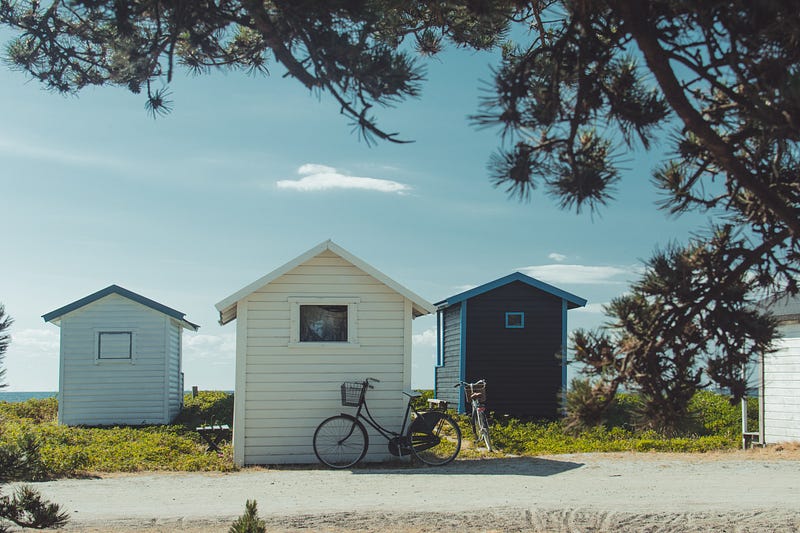
Throughout most of history, people lived communally to some degree. Young people did not move to their own private cave, and building a new structure for every young adult was never the norm.
Modern American culture celebrates the ideal of leaving the parental nest just as soon as possible. The number of people living alone has more than doubled since 1960, according to this good read from the Population Reference Bureau.
Most people do not want to live with anyone but their partner and children if they have them; it’s relatively unusual for single people to choose to have roommates if they can afford not to.
Living alone offers many freedoms, of course, privacy chief among them. There’s no judgment if you decide to leave dishes in the sink overnight or bring your date home. You can sit around in your underwear eating pizza and watching trash TV all night if you want.
It also means higher costs. Nobody else is chipping in on the rent and utilities. That’s obvious, but there’s another factor: It takes a lot more resources to provide a dwelling for every adult.
When people live in a group, there is an economy of scale. My family of four, when my kids lived at home, required one vacuum cleaner, one lawn mower, one set of dishes, one set of pots and pans, one set of tools. One internet provider. One furnace, one central air unit.
Now? My daughter (who lives with her spouse and children) and my son (who is single and lives alone) have duplicates of pretty much everything. This includes big things, like washing machines, and all the small things you don’t really think about until you move out and suddenly need one, like bottle openers and nail clippers.
In my ideal world, I’d purchase a big piece of land out in the country where there would be a main house for my husband and me and auxiliary dwellings for my kids, plus extra cabins or tiny houses for all the writers/musicians/artists in residence I’d invite to join us. We’d have chickens, orchards and a big communal garden. I’d have a huge kitchen where I’d prepare wonderful meals from scratch for everyone, because that’s my thing. (I can’t guarantee whether my kids would be eager to move in; this is my fantasy.)
I’m not the only one with such a daydream. These people took it to a new extreme, with a tiny house for each minor child. Ironically, the family is quoted as saying they wanted to live more sustainably, but it’s hard to see how multiple different houses is actually more sustainable; one structure with one big furnace and a lot less exterior surface area would be more practical. I see that level of privacy as more appropriate for adults than adolescents, personally.
Many years ago, as a newly divorced single mom in a suburban house that was bigger and more expensive than my single-mom budget could bear, I invited another newly single mother to move in with me. The idea was we could share expenses and have each other’s back with childcare. I thought it was a great idea, but she declined.
Side note: The other woman was from Ukraine; as far as I know she’s the only Ukrainian I have ever met. She sent her toddlers back to Ukraine to live with her parents for a couple of years rather than have to use daycare. I think about them daily right now and I hope she and her family are safe.
That story, to me, illustrates how cultural influences shape living arrangements. I could not imagine sending my children to another country to live for a couple of years, particularly children young enough that they would not remember me. But to her, it felt like the best solution available.
My husband and I have more space than we need in our empty nest. I’ve thought about the possibility of a roommate, but I know that choice is fraught with complications. We also like having the extra space when my daughter’s family comes for visits.
One of the reasons housing is so unaffordable in some areas is that people who have single-family houses do not want big multi-family apartment buildings near them. But one lot with many apartments uses a lot fewer resources to build — not to mention eating up much less ground. Apartments are very practical for many lifestyles, especially for anyone who doesn’t want to spend time mowing the yard or weeding a garden.
We just keep building more single-family homes in this country, but even though I live in one, I recognize that they have their downsides. They’re much more wasteful than apartments, for one thing. This isn’t an issue where I live, because existing housing is relatively plentiful and inexpensive. My house has been around since 1897. Would I have built this house today? No. It would be insanely wasteful, but since it already exists, it would be even more wasteful to tear it down and start new.
Meanwhile, despite all the talk about insufficient housing, there are still many towns with numerous inexpensive houses that nobody wants. People want newer houses with more up-to-date floor plans, and they want “better” neighborhoods that are built on former farmland.
But older houses don’t require new infrastructure because the roads, water, sewer, gas and electricity were installed decades ago. They do not require the use of new resources. Often, these older houses are solidly built with old-growth wood using traditional (and better) building techniques. Moving into one can be seen as a greener alternative to building, but there’s a class of people who are vocal about their low-carbon-footprint lives who build brand-new showplaces on which they spent a fortune on special green technologies that people like me can’t afford. I suppose that’s better than building a showplace that doesn’t contain any green tech.
Does it make sense to keep building big houses on large lots, eating up more and more farmland and woodland? No. It really doesn’t. I could see it if these people wanted some space for a big garden, but that’s not what I see when I drive around. I see vast yards where the only “crop” is grass, and it’s kept a uniform green through fertilization, herbicide and irrigation. It’s an environmental disaster.
Different people living different lifestyles need different kinds of housing, but I think we can be more intentional about our housing. We can normalize things like having roommates even as adults who can afford our own places. We can decide to bring new life to older houses rather than building new ones. We can engage in intergenerational living without shaming people who want to keep living with their parents.
Part of me would like to move into my own cave, honestly. Let me know if you have a cheap one with good wifi available.


