
A Hotel-Chain’s Marketing Coup in a Crisis
It sold hotel rooms as quarantine facilities
It is a truism that every crisis is an opportunity to innovate, to rethink possibilities and to reinvent established practices.
I live in the southern Indian state of Kerala. Tourism is one of the state’s economic engines. The travel and hospitality industries, that depend on tourists, have been badly hit by the pandemic.
With tourist footfalls trickling down to single numbers, many hotels have shut shop. The hotel industry has laid off thousands of employees.
Few credit government- owned businesses with business -related savviness. A hotel-chain owned by the Kerala government, Kerala Tourism Development Corporation ( KTDC ), hit upon a brilliant idea to survive in the present crisis.
Kerala has a large population of expatriates working abroad. Many Keralites also work in other Indian states. The pandemic has forced many of these expatriates to return. The Kerala government has made it mandatory for all the returnees to observe a 14-day quarantine either in their homes or in government facilities.
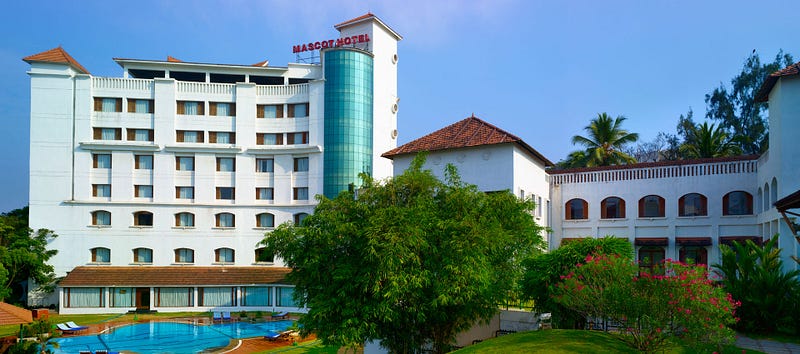
The KTDC has a fleet of hotels and lodgings in major tourist spots in the state. The KTDC’s managers are government employees. They don’t have fancy MBA degrees. But they seem to be posses abundant common sense. They hit upon the brilliant idea of offering rooms as quarantine facilities to those who could afford paid quarantine.
They sensed that there was a demand for paid quarantine as many expatriates were well off economically. The government’s quarantine facilities were overflowing with people.
The KTDC’s paid quarantine facility has seen good occupancy in its facilities in the capital city of Thiruvananthapuram. Encouraged by the good response, the KTDC wants to replicate the experiment in its other facilities across the state.
The KTDC hotels strictly adhere to the heath protocols and safety precautions. They do not allow the staff to mingle with the guests.They provide three meals a day to the guests who have to collect the food themselves. There are two packages for the guests- a seven-day quarantine and a 14-day quarantine. Those opting for the seven-day quarantine will have to isolate themselves for another week in their homes.
The KTDC also provides psychological counselling to the guests who experienced mental stress because of loss of jobs, separation from families, and fear of infection.
Private hotels were initially hesitant to let their rooms as quarantine facilities. Now some of them, especially the luxury hotels, have followed the KTDCs example. As a ripple effect, the state’s private houseboat industry has also jumped into the quarantine hospitality bandwagon. Many houseboats owners have converted their vessels into quarantine facilities.
By aligning public interest, commercial viability, and private comfort, the KTDC has scored a marketing coup. Its bold experiment to offer hotel rooms as quarantine facilities has proved that marketing offers endless opportunities to survive and flourish even amid an unprecedented crisis.
Businesses need to abandon the survival mindset and embrace the growth mindset to seize hidden opportunities that every crisis provides.
Business acumen sees the possible in the seemingly impossible.
Marketing is not about selling Ferrari cars to billionaires; it is about designing innovative products to satisfy the emerging needs of new consumers, irrespective of whether the business environment is friendly or unfavourable.
Thanks for reading.


