
Hacks and Remixes
A Homebrew Wargame for Toy Junkies
Welcome to my private island of Misfit Toygaming
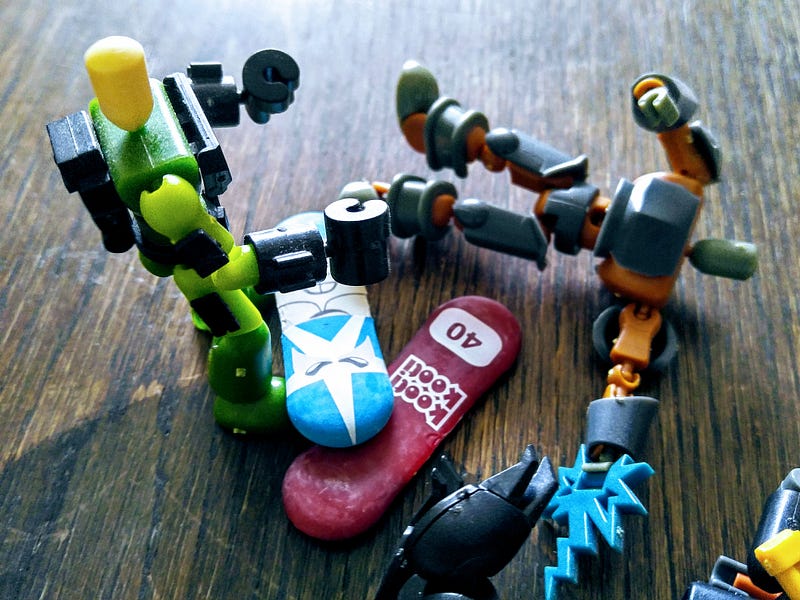
About 10 years back I tried to make a game out of build-your-own-action-figure toys called Stikfas. Stikfas were hot shit among uber-geeks before the company imploded and the creator was jailed for sexual assault.
StikBash is what you get when you become obsessed with turning a soon-to-be-discontinued vinyl toy into a tabletop game. Mechanically, it’s a deranged mashup of Little Wars, 1000 Blank White Cards, and a collectible dexterity game called KootiKooti. Other influences include Z-G, BrikWars, Attacktix, Knightmare Chess, Catacombs, and Calvinball.
Now the chances of the average reader owning Stikfas and KootiKooti are minimal. That said, you can easily change some terms and play with My Little Ponies, index cards, and erasers. Or add Fabrikations and a list of “Calvinball” options to a billiard table. Whatever.
A Note on the Word “Wargame”
H.G. Wells was a pacifist. He also may have published the very first tabletop wargame, Little Wars. He felt that wargames could somehow scratch certain aggressive itches. He also felt that if people in power played more games like it, they’d feel less inclined to start real wars. Food for thought.
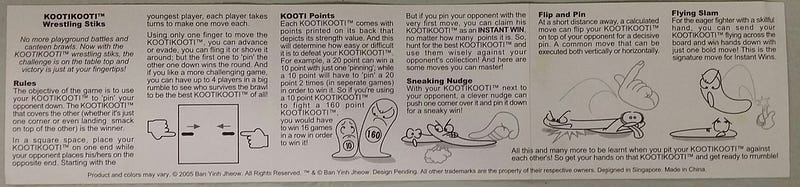
StikBash: A Dexterity Wargame
Components
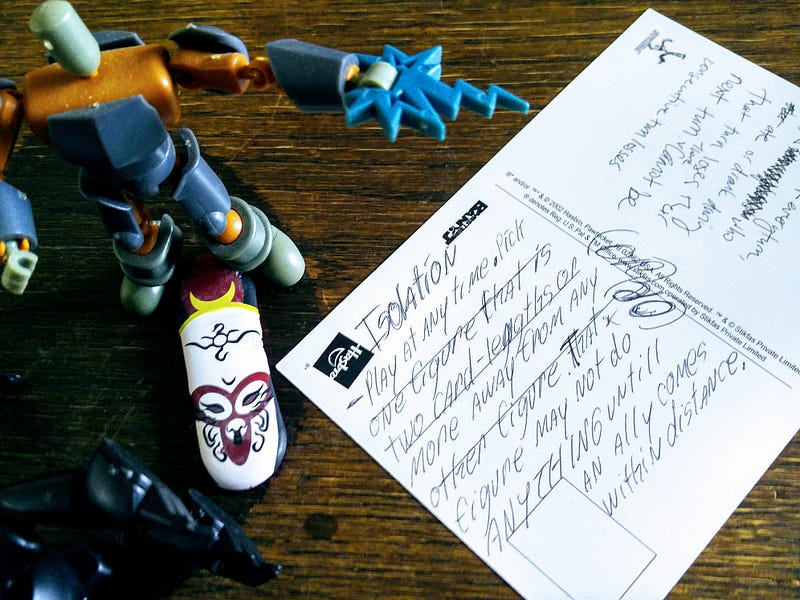
Stikbash is played with four types of components:
- Figures: There are two kinds of Figures. Figures that look like the can stab, punch, or kick others in the junk are HITTERS. Figures that look like the can shoot guns, throw things, or zap others with magic are SHOOTERS.
- Stiks: Rubber Kootikooti wrestling stiks. These are used to resolve movement and attacks. A Figure plus a Stik equals a Character.
- Cards: The postcards included with most Stikfas kits. These are used to alter the game.
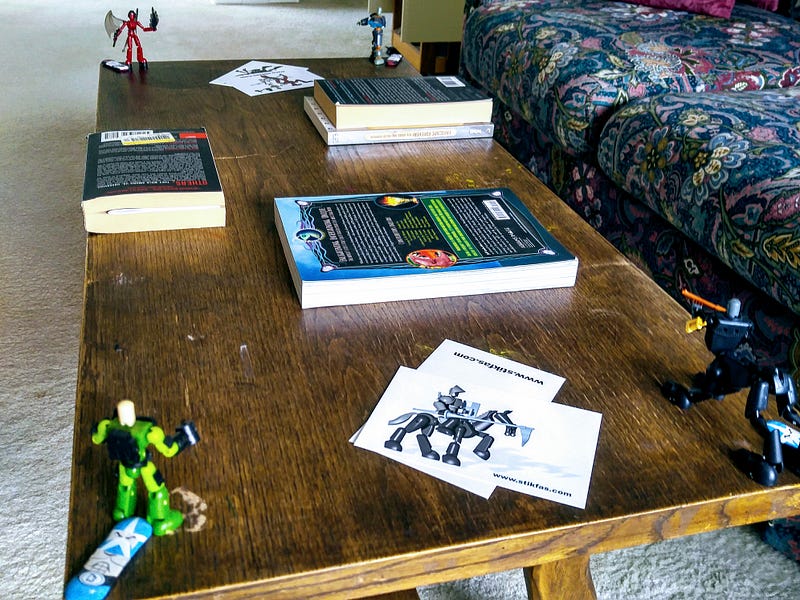
- Blocks: Boxes, books, and other simple shaped items that block line of sight and make the battlefield more interesting to move around in. Blocks are used to break up the battlefield. Traditionally, Stikfas boxes are used, but books or board game boxes work too.
Setup
Before play beings, players agree on the X Value of the game. X Values range between 1 and 5 per player. If there is an equal number of players, players can form teams. This means a 2X Value game with two teams of two players each will have a total of 8 Characters and 8 Blocks on the table, and each player will have 2 Cards in their hands.
The youngest player than drafts Figures, Stiks, Cards, and Blocks, then places their Character(s) and Block(s) on the table. This is all done before the next player selects and places their components.
- Figure and Stik: Select X number of Figures and Stiks. Pair each Figure with a Stik to form a Character, then place the Character.
- Card: Sort through the deck and pick X number of Cards. Your cards should be kept face-down or otherwise hidden from the other players, but you can show your Cards without playing them if you want.
- Block: Choose X number of Blocks and place them anywhere on the the table. You can do this before of after placing your Character.
The player to the left then does the same. This continues until all players have drafted and placed their components.
Characters must be placed in a corner unless all corners are occupied. Then, Characters can be placed halfway between any two previously placed Characters. Teams have no bearing on placement.
Gameplay
On a player’s turn, the player may take a number of Actions equal to the X Value, or the current turn number, which ever is lower. You can Characters no more than 1 Action per turn. Example: in a two player 3X game, the first player takes only 1 action on the first turn, the second player takes 2 actions on the second turn, then players take 3 actions each turn going forward.
An Action is made by flicking, flipping, or nudging a Stik. Actions taken with Hitter and Shooter Figures differ in the following ways.
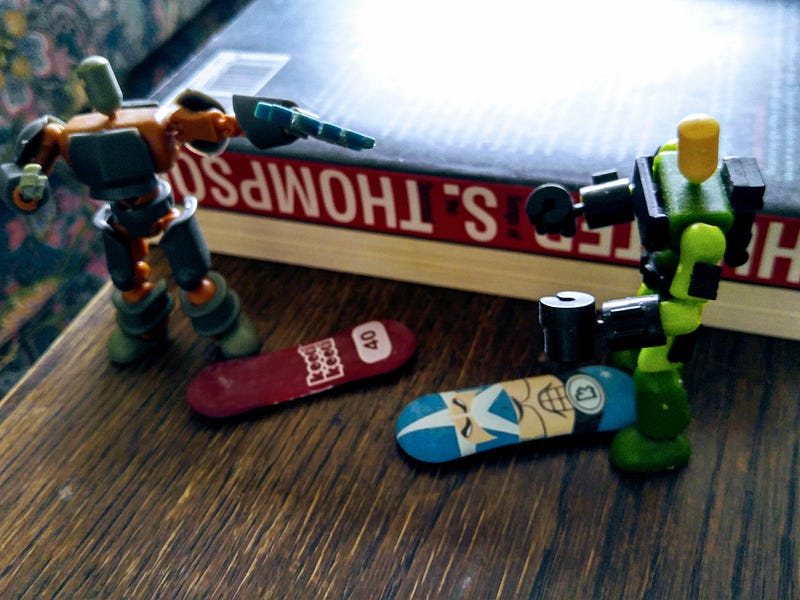
- Hitters move and attack at the same time with one Action. When using a Hitter, remove the Figure from the table, flick the Stik, resolve the attack (more on this below), then reconnect the Figure to the Stik.
- Shooters may either move OR attack from a distance without moving. When using a Shooter, the player much declare if they’re moving or shooting first. If the Shooter is attacking, you can reposition the Figure to get a better shot, but the Figure must still be connected to or directly over the Stik before attacking. Then, flick the Stik to attack. Whether you hit or miss, reconnect the Stik with the Figure. Note that a Shooter can’t do damage to another Character while moving, even if it accidentally pins an opponent’s Stik (but it can cause Knockback or Knockdown).
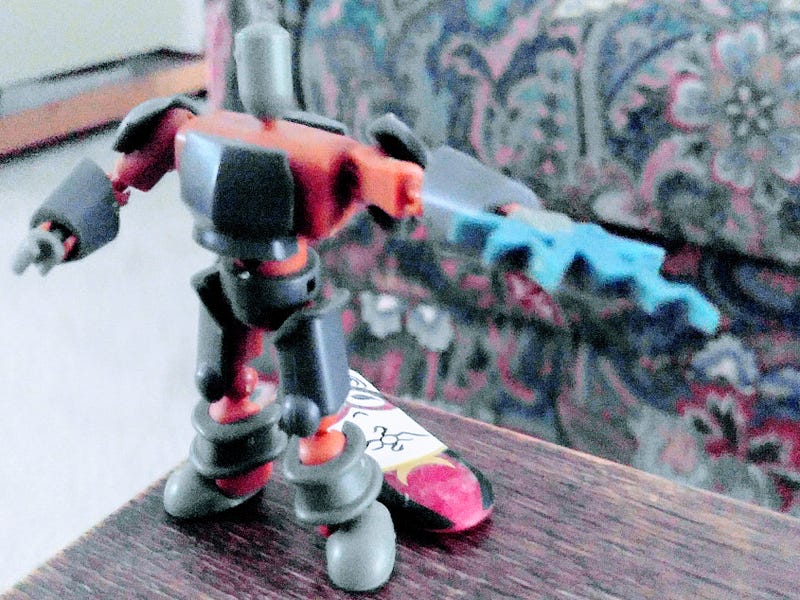
Figure/Stik Placement Notes
- A Figure should usually remain in contact with the Stik, or over it.
- When moving, you can remove the Figure before flicking. Then, replace the figure so that it is touching or over its Stik at its new location.
- When shooting, you cannot remove your Figure before shooting with the Stik. You may hold the Figure in place, however. You can also reposition the Figure to get a better shot. Basically, either the Stik or the Figure must remain on the table to remove any guesswork about it’s placement.
- Design Note: Placement rules are anal to keep players from nudging their figures into a better position without taking a proper Action.
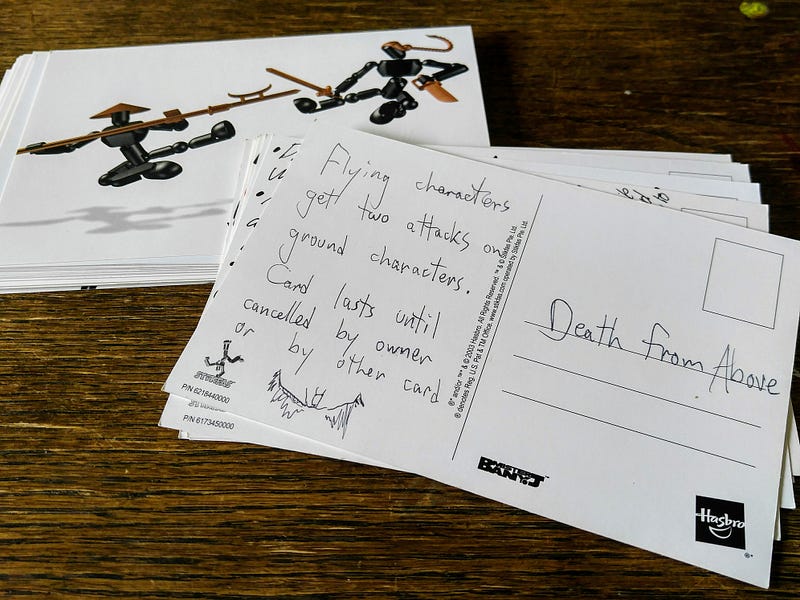
Card Play: Instead of useing a Character, a Player can spend an Action to play a Card. When played, follow the instructions on the Card. After the Card’s effect is resolved, discard the card. Note that you do not redraw another Card.
Some Cards can be played without spending an Action. Most of these are Cards that allow you to react to an attack, another Card being played, or some other event.
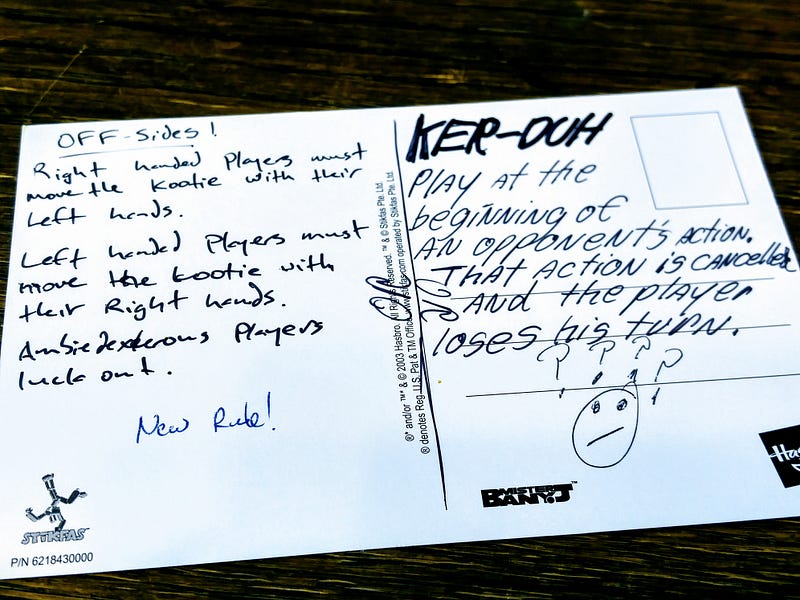
- Split Cards: Some card are split into two sections. Cards with multiple sections may be used for only one of listed effects.
- Paper Over Plastic: Cards change the rules of the game, and override the normal rules.
- Blank Cards: If you ever draw or draft a blank card, you must give it a title, effect, and image before you can play it.
- WYSIWYG: Figure traits are vague in StikBash. Cards that mention Figure sizes (Alpha, Omega, etc.) Figure types (Police, Nurse, etc.) parts (rifles, roller skates, etc.), or other features (punk, horse, etc.) can be played if you think the Figure fits the description. If a Figure looks like a soldier, it’s a soldier. If it looks like an super villain, it’s a super villain.
- Sample Cards: Note that a lot of my cards reference old rules. We either interpret them to fit the current rule state, or we change them.
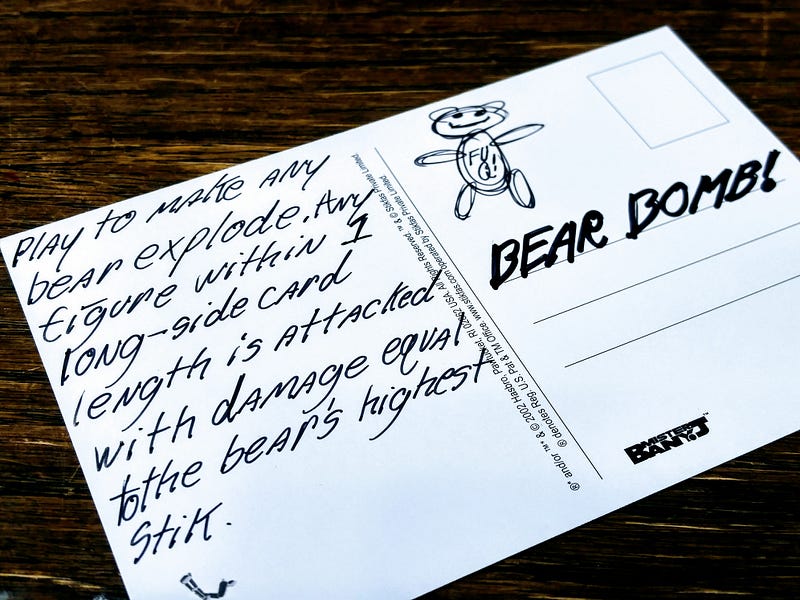
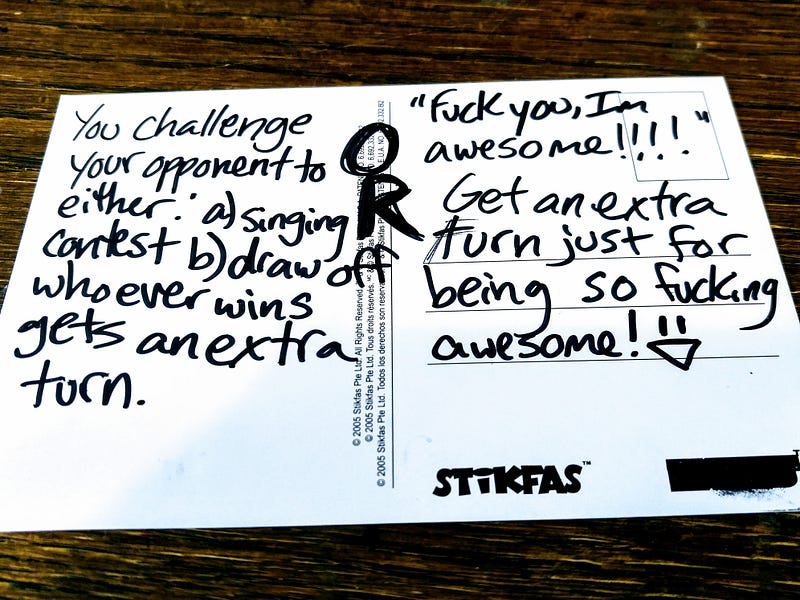
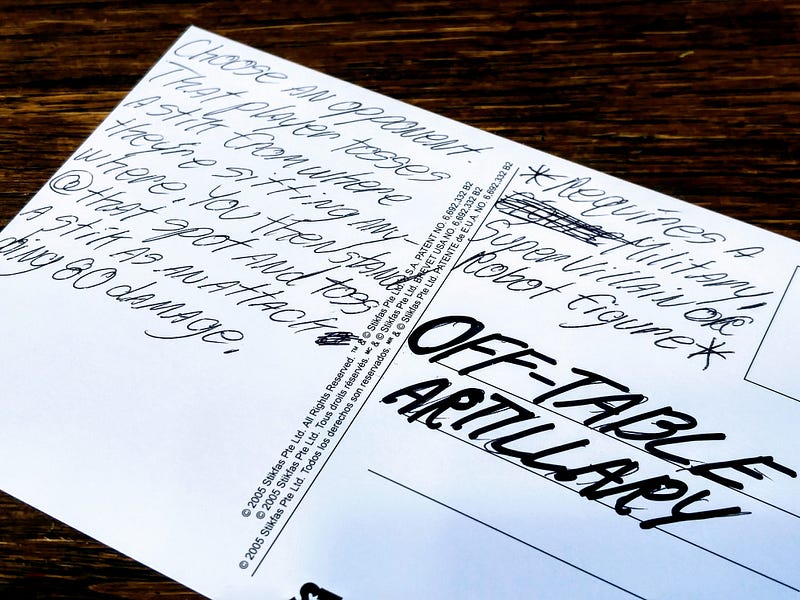
Defeat: When a Stik pins another Stik, the target Character is defeated. You can remove that Character from the table if you want. We usually left their carcasses on the table, but removed the Stik to mark them as dead.
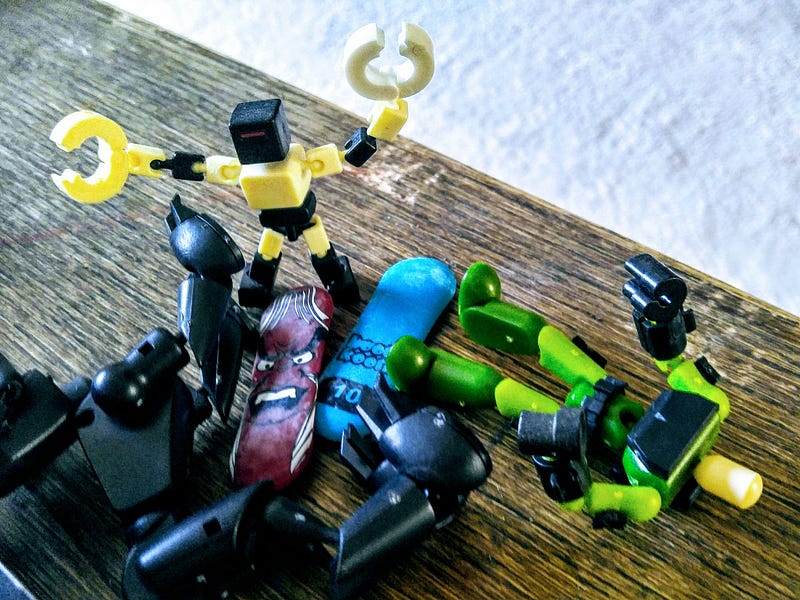
- Knockback: When a opponent’s Figure is moved or knocked over by another player’s action, this is called Knockback. This simulates getting shoved by an attack that dealt no actual damage (or it could represent diving for cover, dodging, and basically trying to not get shot or stabbed). Knockback is independent from damage. It can happen without a pin. If a Figure is knocked back without being knocked DOWN, there’s no other effect. Just move that Figure’s Stik so that it’s in contact with the Figure again.
- Knockdown: If a Figure is knocked down, the only Action that it can take is to pick itself up, which takes an action. If separated from its Stik, move the Stik to the Figure, just like with Knockback.
- Terminal Knockback: Knocking an enemy Figure off the table counts as an instant kill.
- Involuntary Suicide: Flicking your Stik off the table during a move counts as an involuntary suicide. It’s dead.
End Game
The last player with Figures left is the winner. Pretty simple.
Hacks, Remixes, and Variations
Eventually I’ll get around to building this rules out more. Some of the examples below are old rules that I want to reintegrate into the game.
- Using the points on KootiKooti Stiks as damage values
- Adding more base Figure types (probably based on Little Wars/Kriegsspiel units [Generals, Transports, Cavalry, etc])
- Assigning 1 Stik to represent a team/band of Figures
- Assigning multiple Stiks to multi-type or “hero” Figures.
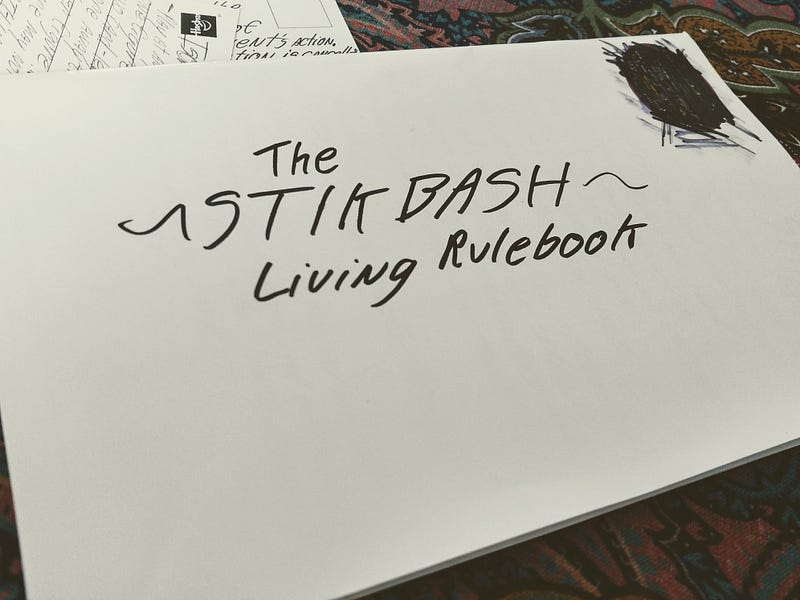
Eventually, I’ll have to rewrite the whole thing so it makes more sense. I actually have a physical rulebook made from a blank comic. This way, winners can cross out old rules or add new ones, making it kind of a Legacy game. I won’t show you what’s inside. It’s a hot mess, and only me and the original players can decipher it.