avatarJoseph Chancey

Free AI web copilot to create summaries, insights and extended knowledge, download it at here

2491

Abstract

<figure id="6115"><img src="https://cdn-images-1.readmedium.com/v2/resize:fit:800/1*vyOrpj1fXpugxi2NLhD3SA.png"><figcaption></figcaption></figure><p id="f0e8"><a href="https://www.amazon.com/Journey-through-Genius-Theorems-Mathematics/dp/014014739X/ref=sr_1_1?crid=1TGKILE3821H6&amp;keywords=%22Journey+Through+Genius%3A+The+Great+Theorems+of+Mathematics%22+by+William+Dunham&amp;qid=1700381851&amp;s=digital-text&amp;sprefix=journey+through+genius+the+great+theorems+of+mathematics+by+william+dunham%2Cdigital-text%2C129&amp;sr=1-1-catcorr">William Dunham</a> takes readers on a journey through pivotal theorems throughout mathematical history. From Euclid (Geometry) to Cantor (Set Logic), Dunham provides a narrative that demystifies the stories behind these breakthroughs. Computer science majors will find inspiration in understanding the problem-solving strategies and innovative thinking that underscore the development of algorithmic thinking and computational methodologies. This book is a great one-stop-shop to reference the most influential theorems in our history.</p><h1 id="45f6">“Men of Mathematics” by E.T. Bell</h1><figure id="9fd1"><img src="https://cdn-images-1.readmedium.com/v2/resize:fit:800/1*zZ1Dk3IfQQKE9l_FDbdl6g.png"><figcaption></figcaption></figure><p id="b7a9"><a href="https://www.amazon.com/Men-Mathematics-Touchstone-Book-Bell-ebook/dp/B00IGVH9KO/ref=sr_1_1?crid=4M1WJQEIR09T&amp;keywords=Men+of+Mathematics&amp;qid=1700381879&amp;s=digital-text&amp;sprefix=men+of+mathematics%2Cdigital-text%2C121&amp;sr=1-1">“Men of Mathematics”</a> offers a captivating series of biographical chapters that shed light on the lives of some of the most influential mathematicians (like Euclid and Cantor mentioned above). The book stands as a compelling introduction to the humanity behind great mathematical minds. For computer science students, these biographies provide more than historical anecdotes — they offer a glimpse into the perseverance and intellectual curiosity that drive innovative problem-solving in both mathematics and computing. I cannot recommend this book enough, it’s a light read that can easily be picked up and enjoyed.</p><h1 id="ed40">“Discrete Mathematics: Elementary and Beyond” by L. Lovász, J. Pelikán, and K. Vesztergombi</h1><figure id="e6f7"><img src="https://cdn-images-1.readmedium.com/v2/resize:fit:800/1*_0hwredYRFwxOLCQqbOwhg.png"><figcaption></figcaption></figure><p id="9f94"><a href="https://www.amazon.com/Discrete-Mathematics-E

Options

lementary-Beyond-Undergraduate-ebook/dp/B00FB4BNG0/ref=sr_1_1?crid=2J6ZRH5G9NDLJ&keywords=Discrete+Mathematics%3A+Elementary+and+Beyond&qid=1700382101&s=digital-text&sprefix=discrete+mathematics+elementary+and+beyond%2Cdigital-text%2C126&sr=1-1">“Discrete Mathematics: Elementary and Beyond”</a> provides a comprehensive journey through the foundations of discrete mathematics. Covering logic, set theory, and combinatorics, the book unveils the historical development of these essential structures. Discrete math is so important for Computer Science majors because it is the core of data structures and computational logic. Learning Discrete math puts the IF statements, the WHILE loops, and ELSE operations into mathematical context. Once you make this connection between math and code, it will forever change your perspective as a Computer Scientist. This focus on distinct values applies directly to problem-solving in code. Learning about the history of it all will help you better understand the language our machines speak.</p><h1 id="0c01">“The Princeton Companion to Mathematics” edited by Timothy Gowers</h1><figure id="29f1"><img src="https://cdn-images-1.readmedium.com/v2/resize:fit:800/1*1sjaKalQ5NQkzjM0VywNrA.png"><figcaption></figcaption></figure><p id="e646"><a href="https://www.amazon.com/Princeton-Companion-Mathematics-Timothy-Gowers-ebook/dp/B005N8WNT0/ref=sr_1_1?crid=X1GVN20MWR4L&amp;keywords=The+Princeton+Companion+to+Mathematics&amp;qid=1700382122&amp;s=digital-text&amp;sprefix=the+princeton+companion+to+mathematics%2Cdigital-text%2C133&amp;sr=1-1">“The Princeton Companion to Mathematics”</a> is a compendium featuring articles by leading experts across mathematical fields. This comprehensive guide offers historical context alongside contemporary insights into diverse topics (such as abstract algebra and topology). Computer Science majors will find this book fosters interdisciplinary connections, encouraging a broader approach to applying math principles in computer science research. You can think of this book as the ultimate reference guide for any Computer Science student who is doing research and needs to brush up on modern mathematics.</p><h1 id="2098">Conclusion</h1><p id="7a34">I hope these books not only showcase the history of mathematics, but also provide computer science majors with an understanding of the intellectual foundations that shape their discipline. Happy reading.</p><p id="a7db">-Joe</p></article></body>

A History of Math in 5 Books

Putting Computer Science in Context

Photo by Pawel Czerwinski on Unsplash

This article has five books I selected to highlight the history of math in a way that illuminates the foundations of Computer Science. Some of these books are mathematically rigorous, while others are light and easy to pick up and jump into.

Why the history of math for a Computer Science major? Well, if for no other reason, let it be for fun! As I said, some of the books in this list are light. You might enjoy reading about the lives of the mathematicians that shaped modern computing. You might also enjoy sitting down to tactfully study some of the greatest theorems in our history. So, in this list you should be able to find one book you’ll enjoy!

“The History of Calculus and Its Conceptual Development” by Carl B. Boyer
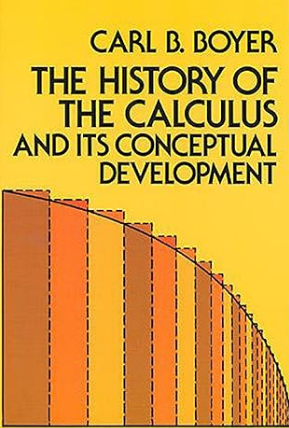
Carl B. Boyer’s book serves as a meticulous guide through the evolution of calculus. From ancient mathematical insights to the groundbreaking work of Newton and Leibniz, Boyer illuminates the historical journey that spawned modern calculus. This book should come as really interesting for Computer Scientists because it reveals the intellectual foundations that led to contemporary computer optimization techniques (Big O), algorithms/data structures, and advanced computational modeling. Though that association might be a bit of a stretch since the book starts by discussing Calculus all the way back in Antiquity, it isn’t that hard to see the groundwork for the Calculus used in Computer Science being developed.

“Journey Through Genius: The Great Theorems of Mathematics” by William Dunham
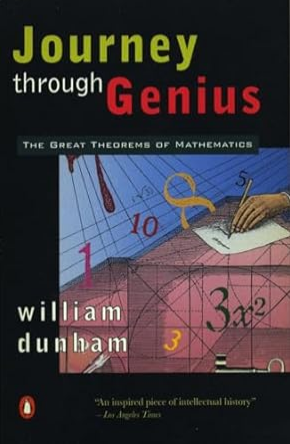
William Dunham takes readers on a journey through pivotal theorems throughout mathematical history. From Euclid (Geometry) to Cantor (Set Logic), Dunham provides a narrative that demystifies the stories behind these breakthroughs. Computer science majors will find inspiration in understanding the problem-solving strategies and innovative thinking that underscore the development of algorithmic thinking and computational methodologies. This book is a great one-stop-shop to reference the most influential theorems in our history.

“Men of Mathematics” by E.T. Bell
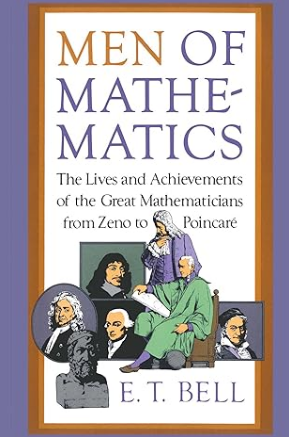
“Men of Mathematics” offers a captivating series of biographical chapters that shed light on the lives of some of the most influential mathematicians (like Euclid and Cantor mentioned above). The book stands as a compelling introduction to the humanity behind great mathematical minds. For computer science students, these biographies provide more than historical anecdotes — they offer a glimpse into the perseverance and intellectual curiosity that drive innovative problem-solving in both mathematics and computing. I cannot recommend this book enough, it’s a light read that can easily be picked up and enjoyed.

“Discrete Mathematics: Elementary and Beyond” by L. Lovász, J. Pelikán, and K. Vesztergombi
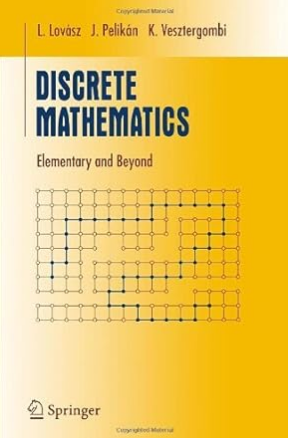
“Discrete Mathematics: Elementary and Beyond” provides a comprehensive journey through the foundations of discrete mathematics. Covering logic, set theory, and combinatorics, the book unveils the historical development of these essential structures. Discrete math is so important for Computer Science majors because it is the core of data structures and computational logic. Learning Discrete math puts the IF statements, the WHILE loops, and ELSE operations into mathematical context. Once you make this connection between math and code, it will forever change your perspective as a Computer Scientist. This focus on distinct values applies directly to problem-solving in code. Learning about the history of it all will help you better understand the language our machines speak.

“The Princeton Companion to Mathematics” edited by Timothy Gowers
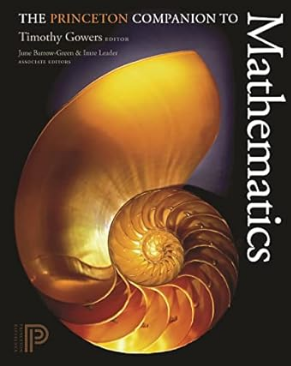
“The Princeton Companion to Mathematics” is a compendium featuring articles by leading experts across mathematical fields. This comprehensive guide offers historical context alongside contemporary insights into diverse topics (such as abstract algebra and topology). Computer Science majors will find this book fosters interdisciplinary connections, encouraging a broader approach to applying math principles in computer science research. You can think of this book as the ultimate reference guide for any Computer Science student who is doing research and needs to brush up on modern mathematics.

Conclusion

I hope these books not only showcase the history of mathematics, but also provide computer science majors with an understanding of the intellectual foundations that shape their discipline. Happy reading.

-Joe

Books
Computer Science
Software Engineering
Book Recommendations
Computer Science Student
Recommended from ReadMedium