
Mathematics
A Historical Overview of Calculus
The invention of integrals and derivatives
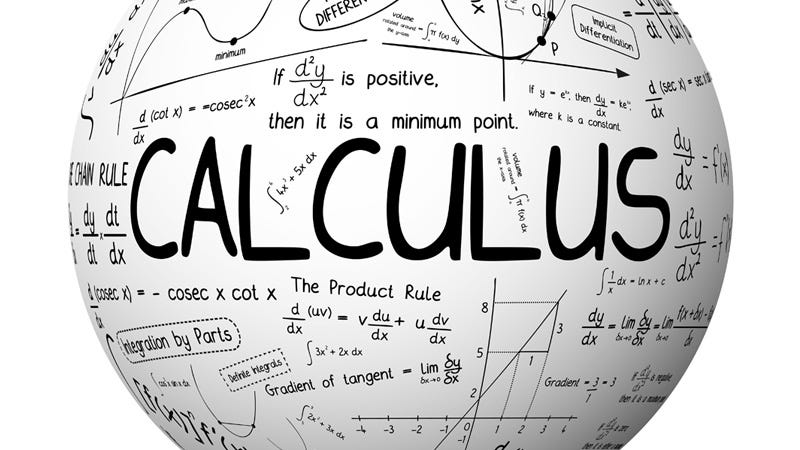
Calculus is a mathematical discipline that focuses on the study of limits, continuity, derivatives, integrals, and infinite series. Its development can be traced back to ancient times, with contributions from various cultures, including Greece, Egypt, Babylonia, China, and India. However, it was in the late 17th century that calculus, as we know it today, was independently developed by Sir Isaac Newton and Gottfried Wilhelm Leibniz. Their work led to the Leibniz-Newton calculus controversy over priority, which continued for many years.
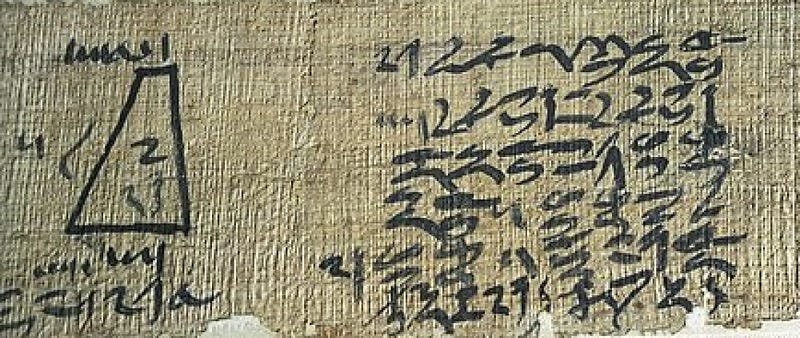
During the ancient period, the groundwork for integral calculus was laid through various ideas. For instance, calculations of volumes and areas, which are fundamental to integral calculus, were present in the Egyptian Moscow papyrus around 1820 BC. However, the formulas provided were specific to particular numbers, lacked precision, and were not derived through deductive reasoning.
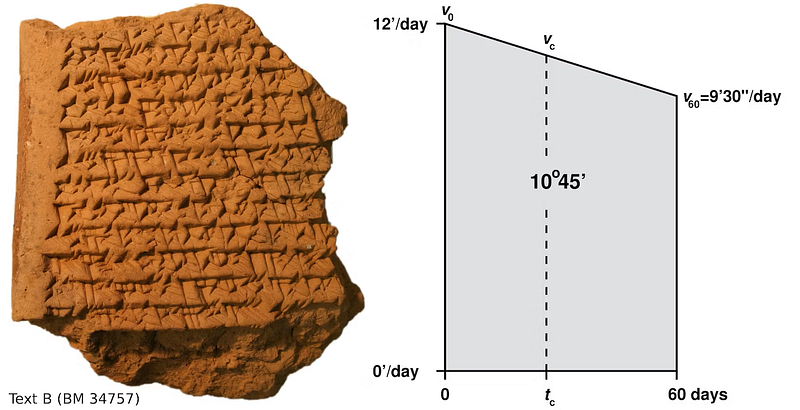
Similarly, it is believed that the Babylonians might have encountered the trapezoidal rule while observing Jupiter’s movements in astronomy.
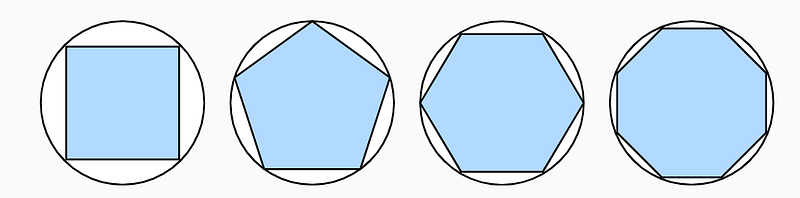
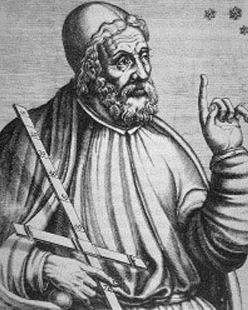
In Greek mathematics, Eudoxus (408–355 BC) used the method of exhaustion to calculate areas and volumes, which laid the groundwork for the concept of limits in calculus. Archimedes (287–212 BC) further developed this idea and introduced heuristics resembling integral calculus methods. Democritus was the first to consider dividing objects into an infinite number of cross-sections, but the lack of his ability to reconcile them with the smooth slope of a cone impeded widespread acceptance. Zeno of Elea’s paradoxes further discredited the use of infinitesimals during that time.
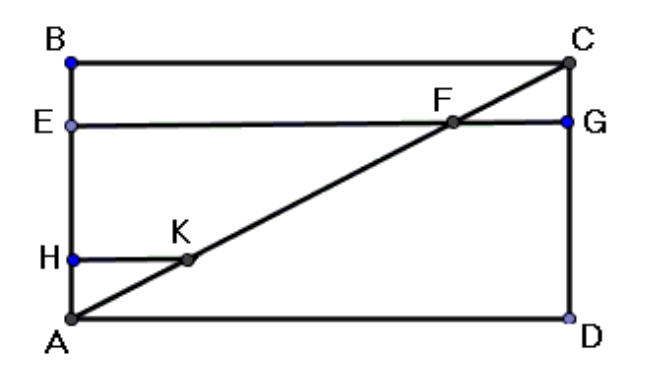
Archimedes continued refining the method of exhaustion in works like “The Quadrature of the Parabola,” “The Method,” and “On the Sphere and Cylinder.” However, infinitesimals were not rigorously formalized until the 17th century when Cavalieri developed the method of indivisibles, which eventually became part of Newton’s general framework for integral calculus. Archimedes also made advancements in finding tangents to curves. His influence extended to later pioneers of calculus, such as Isaac Barrow and Johann Bernoulli.
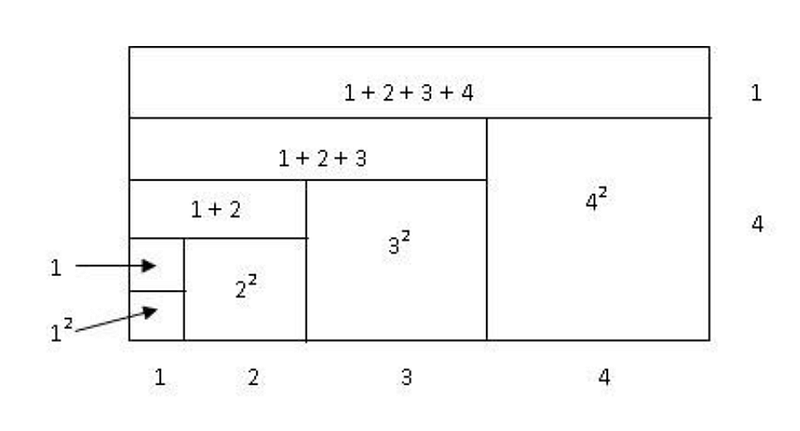
In the Middle East, Hasan Ibn al-Haytham, also known as Alhazen, developed a formula for the sum of fourth powers. Using these results, he performed a calculation similar to integration, allowing him to find the volume of a paraboloid. Additionally, Roshdi Rashed proposed that the 12th-century mathematician Sharaf al-Dīn al-Tūsī might have used the derivative of cubic polynomials in his Treatise on Equations. However, some scholars have disputed this claim, suggesting that al-Tūsī’s results could have been obtained through alternative methods that did not necessarily require knowledge of the function’s derivative.

In Indian mathematics, specifically at the Kerala School of Astronomy and Mathematics, some aspects of calculus emerged. Mathematicians like Madhava of Sangamagrama in the 14th century, along with later scholars from the Kerala school, introduced elements of calculus, including the Taylor series and approximations using infinite series. However, despite these advancements, they did not integrate the various ideas into the cohesive concepts of the derivative and the integral.
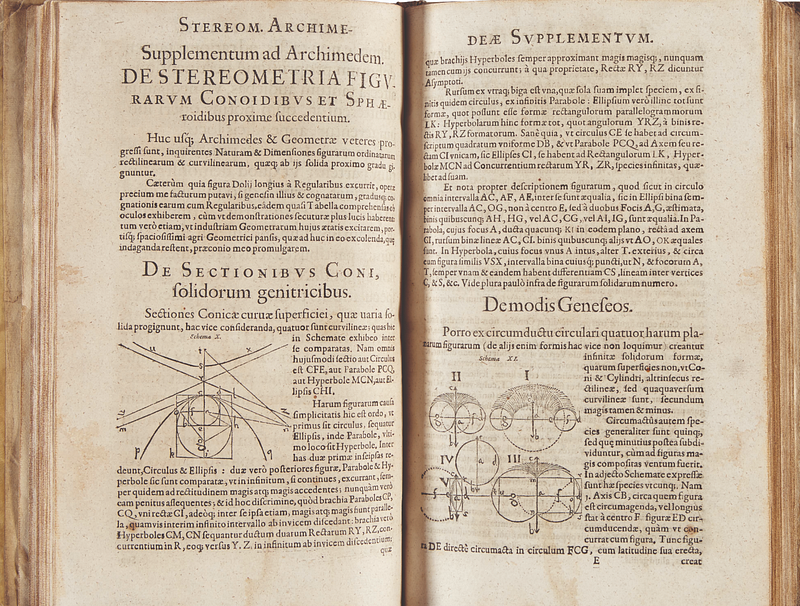
In 1615, Johannes Kepler’s work “Stereometrica Doliorum” laid the foundation for integral calculus. Kepler devised a method to calculate the area of an ellipse by summing up the lengths of numerous radii drawn from a focus of the ellipse.
Another significant contribution came in 1635 when Bonaventura Cavalieri published a treatise based on Kepler’s methods. Cavalieri proposed his method of indivisibles, arguing that volumes and areas could be computed by adding up infinitesimally thin cross-sections. He discovered the quadrature formula, which allowed the computation of the area under curves of higher degree, previously computed by Archimedes for the parabola in “The Method,” a treatise believed to be lost until the early 20th century.
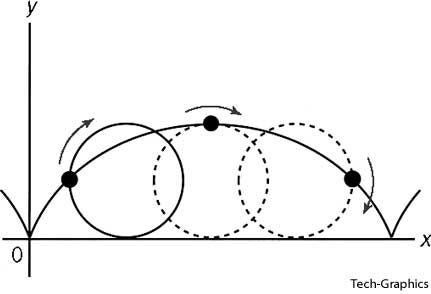
Cavalieri’s methods initially met with disapproval due to the potential for erroneous results and the use of infinitesimal quantities. However, later mathematicians like Torricelli extended his work to other curves, such as the cycloid, and Wallis generalized the formula to fractional and negative powers in 1656.
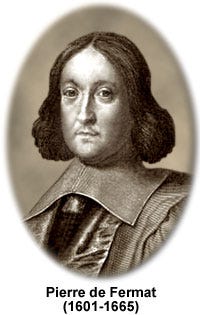
In 1659, Fermat presented a trick to directly evaluate the integral of any power function. He also devised a technique for finding the centers of gravity of various planes and solid figures.
During the 17th century, several prominent European mathematicians, including Isaac Barrow, René Descartes, Pierre de Fermat, Blaise Pascal, John Wallis, and others, engaged in discussions about the concept of a derivative.
Pierre de Fermat made notable contributions to the field by introducing the idea of adequality in his works “Methodus ad disquirendam maximam et minima” and “De tangentibus linearum curvarum” published in 1636. Adequality represented a form of equality that considered infinitesimal error terms. This concept allowed for determining maxima, minima, and tangents to various curves and was closely related to what we now know as differentiation.
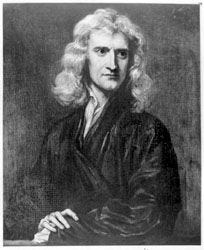
Isaac Newton, a renowned mathematician, and physicist, later acknowledged that his early ideas about calculus were directly influenced by “Fermat’s way of drawing tangents.” Newton built upon Fermat’s work and went on to develop his own independent calculus.
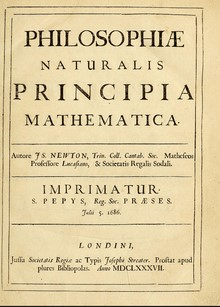
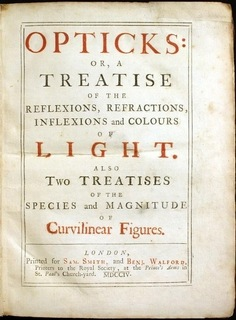
Newton’s work on calculus was not presented in a definitive publication but rather communicated through correspondence, smaller papers, and integrated into his major works like the Principia and Opticks. He began his mathematical journey as Isaac Barrow’s chosen successor at Cambridge University. In 1664, Newton made a significant contribution by advancing the binomial theorem, extending it to include fractional and negative exponents, and applying the algebra of finite quantities to analyze infinite series.
Crucial insights into calculus occurred during the plague years of 1665–1666 when Newton’s scientific pursuits flourished. During this time, he formulated the first written conception of calculus in his unpublished work “De Analysi per Aequationes Numero Terminorum Infinitas.” Newton determined the area under a curve by calculating a momentary rate of change and extrapolating the total area. He began by considering an infinitesimally small triangle with area as a function of x and y, then reasoned about the increase in abscissa to form a new expression.
Newton began to realize the central concept of inversion, using a momentary increase to calculate the area under a curve. This led him to the fundamental theorem of calculus, though he was aware of the limitations of his approach.
To provide a rigorous framework for calculus, Newton compiled “Methodus Fluxionum et Serierum Infinitarum” in 1671. This work reflected Newton’s empirical approach and reliance on instantaneous motion and infinitesimals. Newton delayed publishing this work until 1736.
In an attempt to avoid the use of infinitesimals, Newton based his calculations on ratios of changes. He introduced the concept of fluxion, represented by a dotted letter, to denote the rate of generated change, and the fluent to represent the quantity generated. This revised calculus of ratios was clearly defined in his 1676 text “De Quadratura Curvarum,” where Newton introduced the modern-day derivative as the ultimate ratio of change. This ratio was defined at the exact moment when the increments vanish into nothingness. Newton justified the existence of this ultimate ratio by appealing to the notion of motion, explaining that it represents the velocity of a body at the very instant it reaches its destination.
While Newton began developing his fluxional calculus in 1665–1666, his findings remained relatively unknown until later. During this period, Leibniz also independently worked on creating his own calculus. Unlike Newton, who engaged with mathematics from a young age, Leibniz pursued rigorous mathematical studies with a mature intellect. His intellectual pursuits extended across various fields, including metaphysics, law, economics, politics, logic, and mathematics.
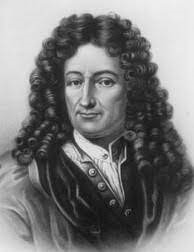
In 1672, Leibniz met the mathematician Huygens, who urged him to dedicate more time to mathematics. By 1673, he was studying Pascal’s “Traité des Sinus du Quarte Cercle,” and it was during this self-directed research that Leibniz experienced a breakthrough. Similar to Newton, Leibniz viewed the tangent as a ratio, but he defined it more simply as the ratio between ordinates and abscissas. He further argued that the integral was the sum of ordinates for infinitesimal intervals along the abscissa, essentially adding up an infinite number of rectangles. These insights revealed the inverse relationship or differentials. Unlike Newton, who utilized multiple approaches, Leibniz adopted infinitesimals as the cornerstone of his notation and calculus.
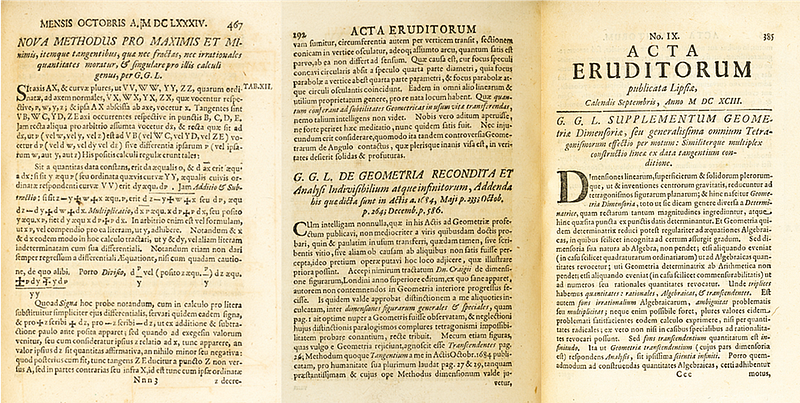
In his manuscripts from October 25 to November 11, 1675, Leibniz documented his discoveries and experiments with various forms of notation. His earlier plans to develop a precise logical symbolism became evident in his work. Eventually, he denoted the infinitesimal increments of abscissas and ordinates as dx and dy, and the summation of infinitely many infinitesimally thin rectangles, which evolved into the present integral symbol ∫.
Three centuries after Leibniz’s work, Abraham Robinson established a solid foundation for using infinitesimal quantities in calculus, affirming the soundness of Leibniz’s approach.
Newton’s calculus viewed change as a variable quantity over time, while Leibniz’s calculus considered the difference ranging over a sequence of infinitesimally close values. As a result, the descriptive terms used in each system to describe change were distinct.
The historical debate over the true inventor of calculus, involving Newton, an Englishman, and Leibniz, a German, led to a contentious dispute in the European mathematical community for over a century. Leibniz published his investigations first, but it is now known that Newton had already been working on calculus several years before Leibniz and had even developed a theory of tangents prior to Leibniz’s involvement. Students and supporters initially made accusations of plagiarism of the two mathematicians, but after 1711, Newton and Leibniz personally engaged in the dispute, accusing each other directly.
Thank you for reading this story and see you again. Feel free to leave a comment if you have any thoughts, feedback, or suggestions about it!
If you like my work and wanna support me then please sign up to become a medium member using this link it will cost $5 per month only, and a portion of your fee supports us writers and keeps us creating amazing content. Or else, you can buy me a coffee ☕️. If you do so, thank you a million times. 🙂


