A Hike Through History - We Explored The Cave Settlements of Tara Luanei
Last weekend, the promise of sunshine and fresh air called me away from the confines of the city and onto another adventure. This time, my trusty hiking companion was none other than Uncle M! We both share a deep love for the outdoors, a connection forged over countless shared trails and breathtaking vistas. The weather forecast was practically begging for us to explore, and there was one destination in particular that had been piquing our curiosity for some time: The Cave Settlements of Tara Luanei.
These weren’t your typical hiking trails. These were whispers of history clinging to the cliffsides, remnants of a bygone era promising a glimpse into the past. Unlike the well-worn paths through national parks, the Cave Settlements of Tara Luanei offered a unique blend of exploration and pilgrimage. Carved into the very rock face of the Buzău Mountains in Romania, these settlements were once home to a monastic community who sought refuge and a place of worship centuries ago.
The exact origins of the settlements remain shrouded in some mystery, but historical estimates place their establishment sometime between the 13th and 14th centuries. Some believe they were founded by hermits seeking a life of solitude and devotion, following the traditions of eremitism — a form of monasticism where individuals lived a solitary life dedicated to prayer and contemplation. Others suggest the settlements may have been built as a refuge for monks fleeing religious persecution during a turbulent period in Romanian history.
Regardless of their origin story, the settlements themselves are a marvel of human ingenuity and faith. Justa community living and worshipping in dwellings carved directly into the mountainside. Each settlement typically consisted of a church, cells for the monks, and utility spaces like storage chambers. Natural caves were often incorporated into the design, and ingenious rainwater collection systems were implemented to sustain the inhabitants.
The most famous settlement is arguably Peștera lui Dionisie (Dionisie’s Cave), named after a hermit monk believed to be the founder. Here, visitors can marvel at a well-preserved church with frescoes depicting biblical scenes. Another notable settlement is Biserica rupestră Sf. Iosif (Joseph’s Cave Church), known for its intricate carvings and its secluded location. *I’ll get to them soon, don’t wory*
The Cave Settlements of Tara Luanei offer a glimpse into a way of life far removed from our own. They stand as a testament to the deep faith and unwavering determination of those who carved them into the mountainside.
We woke up at the crack of dawn on Saturday. The crisp morning air held the promise of a refreshing adventure, and the excitement crackled between us like static electricity. Knowing we had a long drive ahead, we fueled up for the day with a hearty breakfast. Uncle M, ever the seasoned adventurer, whipped up a delicious spread of scrambled eggs, sizzling bacon, and fluffy pancakes. Hot coffee, strong enough to jumpstart the sleepiest soul, completed the pre-dawn ritual.
But Uncle M’s culinary talents went beyond just the savory. He knew the importance of a good breakfast for a long day on the trail, so he also whipped up a batch of his famous blueberry muffins. These weren’t your average grocery store muffins — these were fluffy masterpieces bursting with fresh blueberries, their sweetness a perfect counterpoint to the savory bacon.
With full bellies and a thermos filled with additional coffee for the road, we packed our backpacks with essentials — water, snacks, maps, a first-aid kit, and, of course, my camera. This time, Uncle M graciously offered to take the wheel, allowing me to relax and soak in the scenery with a steaming mug of coffee in one hand and a blueberry muffin in the other. As we weaved through the city streets, the urban jungle slowly gave way to rolling green hills and quaint villages. The rhythmic hum of the engine lulled me into a comfortable silence, broken only by the occasional burst of excited chatter as we pointed out interesting landmarks or marveled at the unfolding scenery. The sun, a giant ball of golden yolk, peeked over the horizon, bathing the landscape in a warm glow.
The road itself became a prelude to the adventure. We wound our way through picturesque villages, their colorful houses clinging to the hillsides like wildflowers. Emerald valleys cradled quaint farmhouses, their smoke curling lazily into the clear blue sky. Every now and then, a herd of sheep or goats dotted the landscape, their bells creating a gentle symphony. The further we ventured, the more the roads narrowed, transforming from smooth asphalt to a patchwork of gravel and dirt. But the bumpy ride only heightened our anticipation, each twist and turn promising a glimpse of our hidden destination.
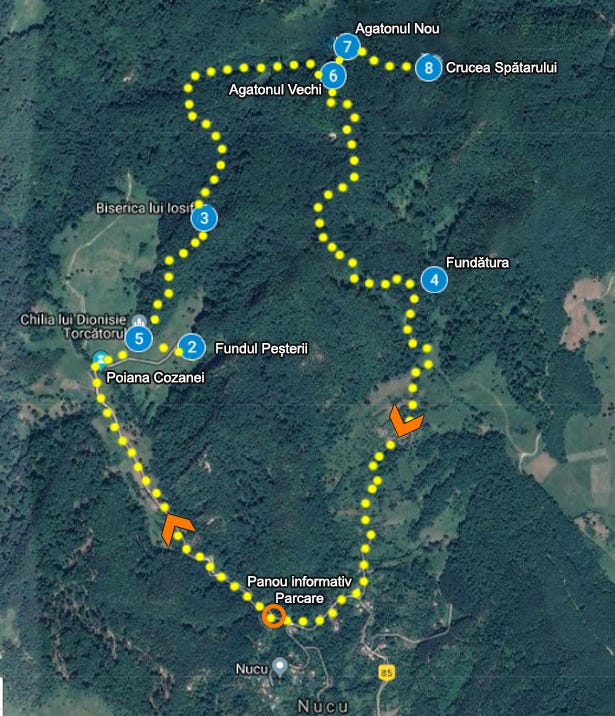
After a good 3–4 hours, the road finally reached its end, depositing us at a designated parking area. Here, with a mix of excitement and nervous energy, we stretched our legs and donned our backpacks. The trail beckoned, a dusty ribbon disappearing into the embrace of the Buzău Mountains. With a final glance at the car, a symbol of civilization fading into the distance, we embarked on our journey towards the Cave Settlements of Tara Luanei, ready to discover the secrets they held within their ancient walls.
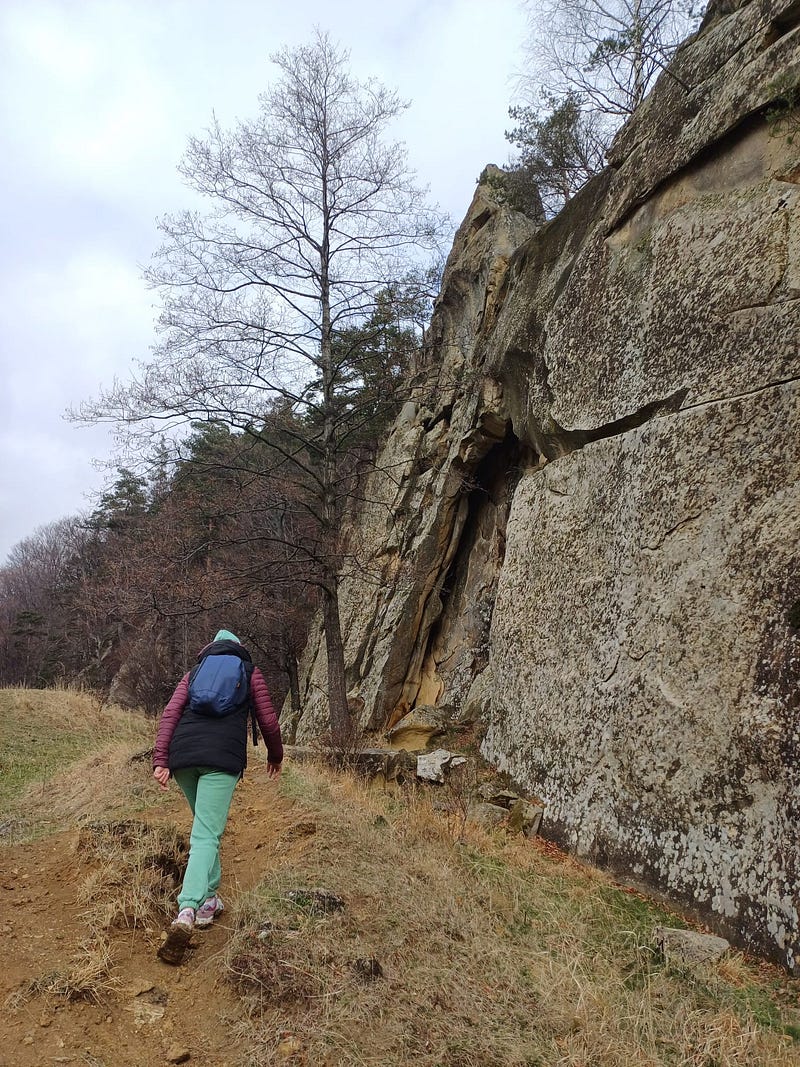
The anticipation grew with every step as we ventured deeper into the trail. The dappled sunlight filtering through the leaves cast an ethereal glow on the forest floor, and the crisp mountain air invigorated our lungs with each breath. The rhythmic crunch of our boots on the gravel trail provided a steady counterpoint to the symphony of birdsong that filled the air. Every now and then, a flash of blue or emerald green caught my eye — a flitting jay or a perched woodpecker, adding a touch of life to the verdant tapestry around us.
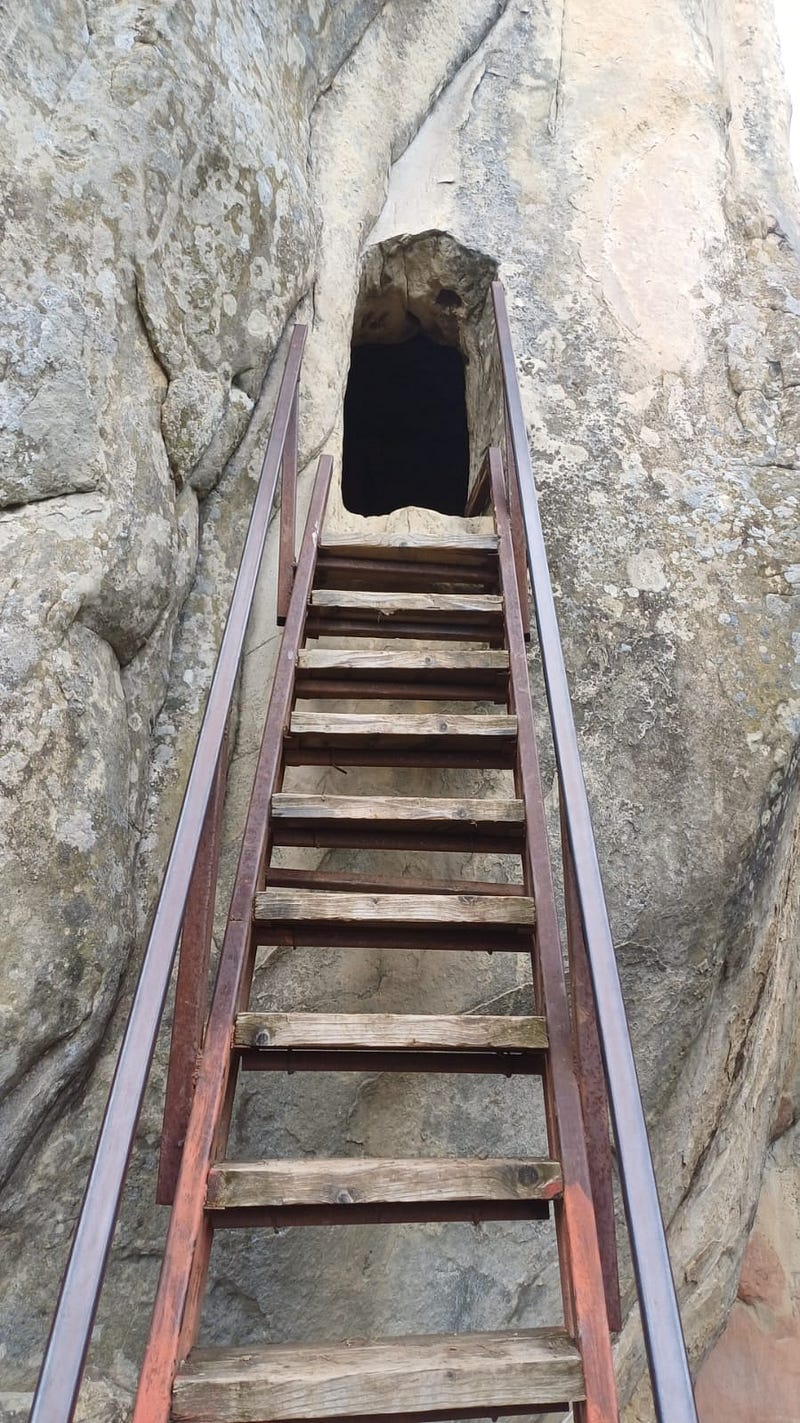
After a steady climb of about an hour, the dense forest began to thin, revealing glimpses of a breathtaking panorama. The air grew cooler, hinting at the altitude we were gaining. The trail eventually led us onto a rocky plateau, and there, perched defiantly on the cliffside like a swallow’s nest, stood the first historical gem — Dionisie’s Cell. Nestled into the very rock face of the Buzău Mountains, it was a remarkable sight. Aplace of worship carved directly into the mountainside, centuries ago, overlooking a vast expanse of rolling green hills and distant,rocky peaks.
This wasn’t just a historical landmark; it was a portal to the past, a window into the lives of hermits and monks who sought solace and communion with God in this remote and rugged setting. The thought of their unwavering faith and the sheer determination it must have taken to carve this sanctuary into the mountainside filled me with awe.
Eager to discover the secrets it held within its ancient walls, I quickened my pace, leaving Uncle M to catch his breath for a moment. He chuckled behind me, a knowing glint in his eyes — the same spark of curiosity that fueled my own adventurous spirit. “Hold on there, grasshopper”, he called after me, a hint of amusement in his voice. “We have a long day ahead, and there’s more to see than just this one cell”.
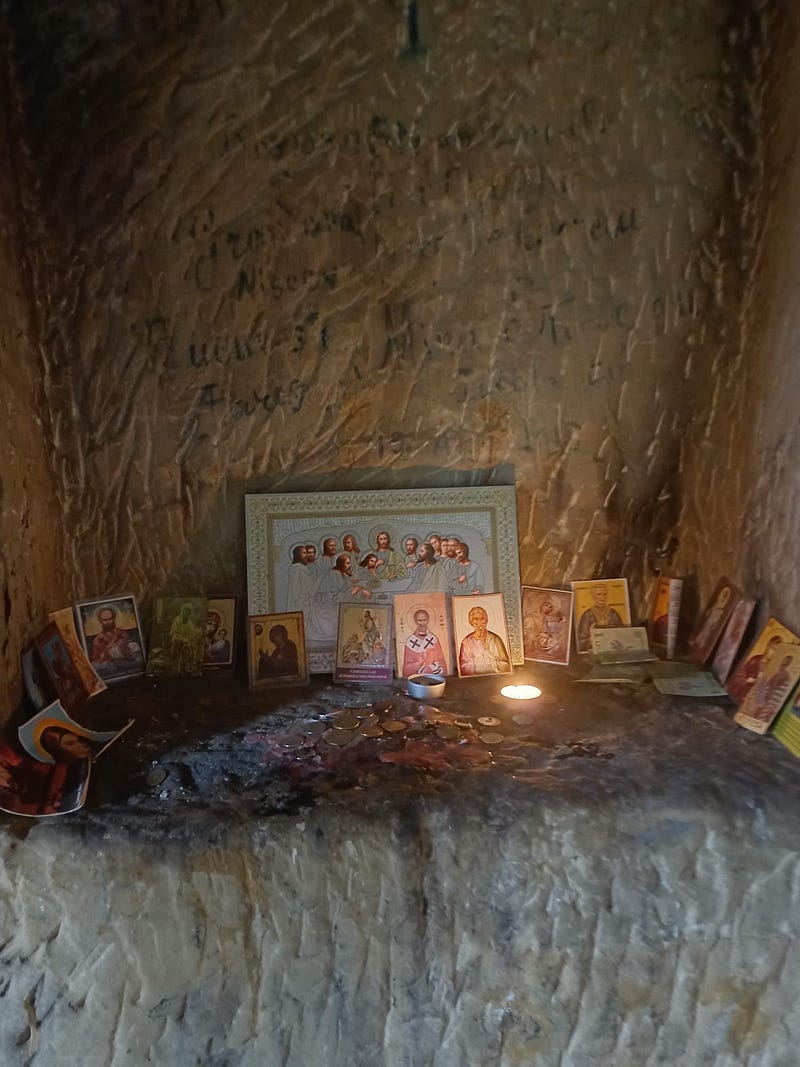
I grinned, realizing my excitement had gotten the better of me, and slowed down to wait for him. Together, we approached Dionisie’s Cell. The entrance, carved low into the rock face, cast an air of reverence. Stepping inside, we were enveloped by a cool stillness. The interior was small and sparsely decorated, but a sense of peace pervaded the space. Carvings of saints adorned the walls, their faded outlines whispering stories of faith from a bygone era. In a small alcove, nestled on a chipped stone shelf, we found a collection of Orthodox religious icons. Beside them lay a few flickering candles, their soft glow a testament to pilgrims who had come before us, seeking solace or leaving a piece of themselves in this sacred space.
The sight ignited my imagination. Who were these pilgrims? What stories did they carry within their hearts? The simple act of finding these religious items, these tangible links to the past, transported me back in time, momentarily blurring the lines between history and the present.
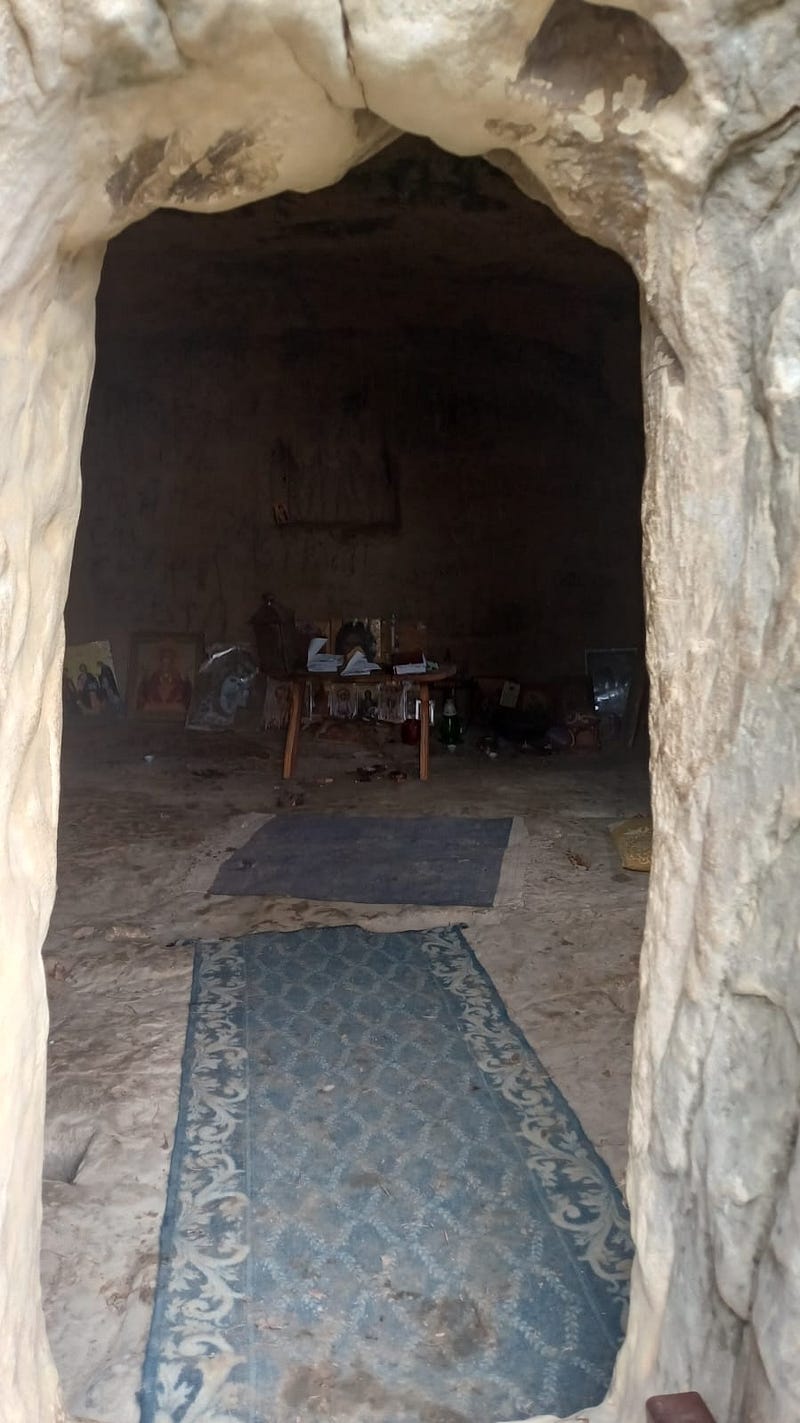
Feeling energized by the discovery, we lingered for a few moments in Dionisie’s Cell, soaking in the atmosphere of quiet contemplation. The flickering candles cast an otherworldly glow on the aged frescoes, and I could almost hear the murmurs of prayer echoing through the chamber. Finally, with a sense of reverence and a renewed sense of curiosity, we emerged back into the sunlight.
The trail continued along the cliffside, now a narrow ribbon snaking its way through the mountains. The panorama unfolded further before us, revealing a tapestry of emerald valleys, winding rivers, and distant villages nestled amongst the foothills. The crisp mountain air carried the sweet scent of pine and damp earth, a welcome change from the city’s exhaust fumes. With each step, the anticipation for the next hidden gem grew.
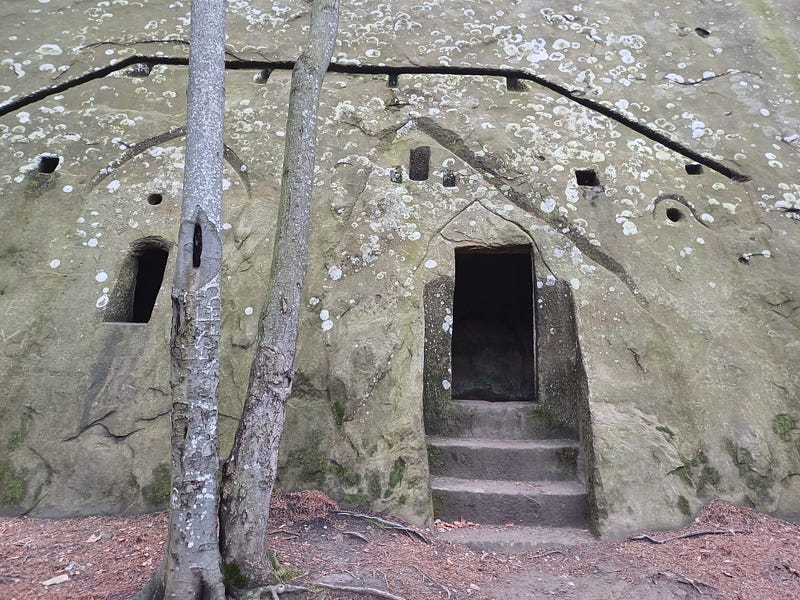
After a pleasant hike that lasted about thirty minutes, the trail deposited us at a clearing. Nestled amongst the trees, shrouded in an air of mystery, stood Joseph’s Church. Unlike Dionisie’s Cell, this structure was a more substantial building, partially carved into the cliffside and boasting an extension built from rough-hewn stone. The entrance, adorned with a faded intricate carving depicting a scene from the Bible, beckoned us closer. Here, we were about to read another chapter in the story of the Cave Settlements of Tara Luanei.
Stepping inside Joseph’s Church, we were met with a cool, hushed reverence. The interior was larger than Dionisie’s Cell. Carvings of biblical figures adorned the walls, their colors muted by time but their message still clear. Sunlight streamed through narrow windows carved high in the cliffside, casting beams of golden light onto the worn stone floor.
Evidence of the church’s former inhabitants was scattered throughout. In a small alcove, we found a collection of well-worn religious texts, their pages filled with faded Cyrillic script. Beside them lay a beautifully crafted wooden prayer beads, the smooth surface hinting at countless times it had been used in silent prayers. Unlike Dionisie’s Cell, which offered a glimpse into the life of a solitary hermit, Joseph’s Church spoke of a small community. Maybe the monks were gathering here for daily prayers, their voices echoing through the chambers as they sought solace and communion with God.
Despite a growing fatigue settling in our legs and the day swiftly slipping away like grains of sand through an hourglass, we pressed on. The trail, now a winding path of packed earth and loose stones, hugged the cliffside even closer. The sun, once high in the sky, began its descent, casting long shadows that stretched like skeletal fingers across the mountainside. The air, though still crisp, held a hint of chill, a reminder of the approaching dusk.
Every so often, we’d pause to catch our breath, our lungs burning slightly from the exertion. But the breathtaking panorama that unfolded before us with each step fueled our determination. Below, the valleys deepened, and the distant villages transformed into clusters of twinkling lights. The silence was occasionally broken by the cry of a hawk soaring high above, its silhouette stark against the turning sky.
Finally, after a challenging but rewarding climb that lasted for nearly an hour, the path leveled out, leading us to a clearing. There, bathed in the golden light of the setting sun, stood a sight that stopped us in our tracks. It wasn’t the traditional hermitage carved into the mountainside that we expected. This wasn’t Dionisie’s Cell or Joseph’s Church. This was something entirely different.
This was The New Agaton. Unlike the other settlements, The New Agaton wasn’t built into the cliffside. Instead, a collection of modern, prefabricated cabins clustered together in the clearing, their clean lines and geometric shapes stark against the rugged backdrop of the mountains. Smoke curled from chimneys, and the soft glow of lights emanated from the windows, hinting at a life lived not in solitude, but in a small, close-knit community.
A wave of surprise washed over me. What was this modern development doing here, nestled amongst these ancient cave settlements? Was it a monastery reborn, embracing modern comforts? Or something entirely different? Intrigued and eager to unravel the mystery, I quickened my pace towards The New Agaton, my questions a jumbled mess in my mind. Uncle M chuckled behind me, a knowing glint in his eyes. “Looks like our adventure is just getting started”, he boomed, his voice echoing in the crisp mountain air.
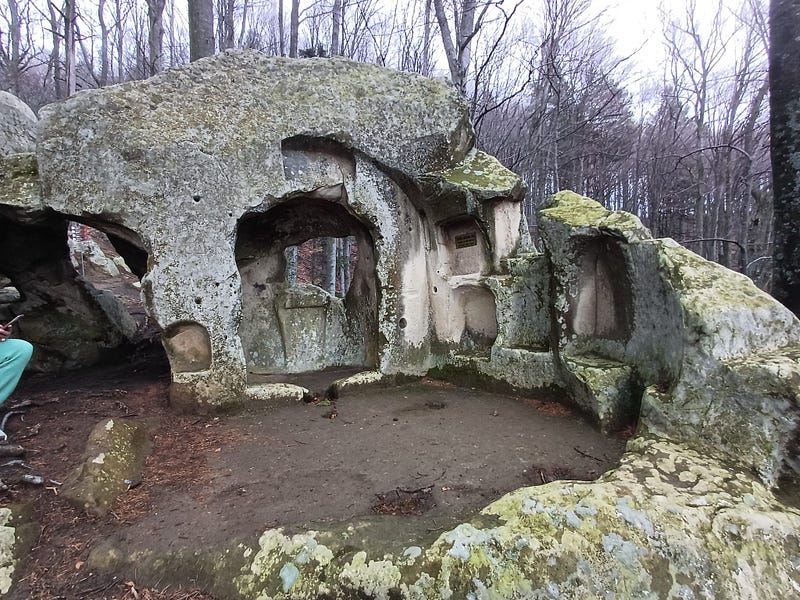
By the time we reached The New Agaton, the sun was a glowing ember sinking behind the distant peaks. A sliver of orange light painted the sky, casting long shadows that stretched like skeletal fingers across the clearing. We lingered for a while, our initial surprise morphing into a deep fascination as we talked to the residents of this unexpected community. They were a motley crew — young families seeking a simpler life, artists inspired by the beauty of the surroundings, and even a retired couple yearning for a connection to nature. They all spoke of a desire for peace and a spiritual connection, but their modern approach to living in this ancient place sparked lively conversation and debate.
As the last sliver of light faded, a different kind of concern settled in. We realized the descent back to the trailhead would be a challenge in the dark. Thankfully, both seasoned hikers, we came prepared. Our backpacks yielded headlamps and flashlights, transforming us into fireflies on the dusky path. The familiar crunch of gravel underfoot became our guide, the symphony of birdsong replaced by the nocturnal chorus of chirping crickets and hooting owls. The star-studded sky, cleared by the absence of light pollution, became our breathtaking ceiling.
Despite the growing fatigue in our legs, a sense of accomplishment buoyed our spirits. We had not only discovered the secrets of the ancient Cave Settlements but also stumbled upon an unexpected chapter in their story. Reaching the designated parking area felt like a victory, even in the cloak of darkness. Exhausted but exhilarated, we looked at each other, the unspoken question hanging in the air — drive back tonight, or spend the night in the nearby village?
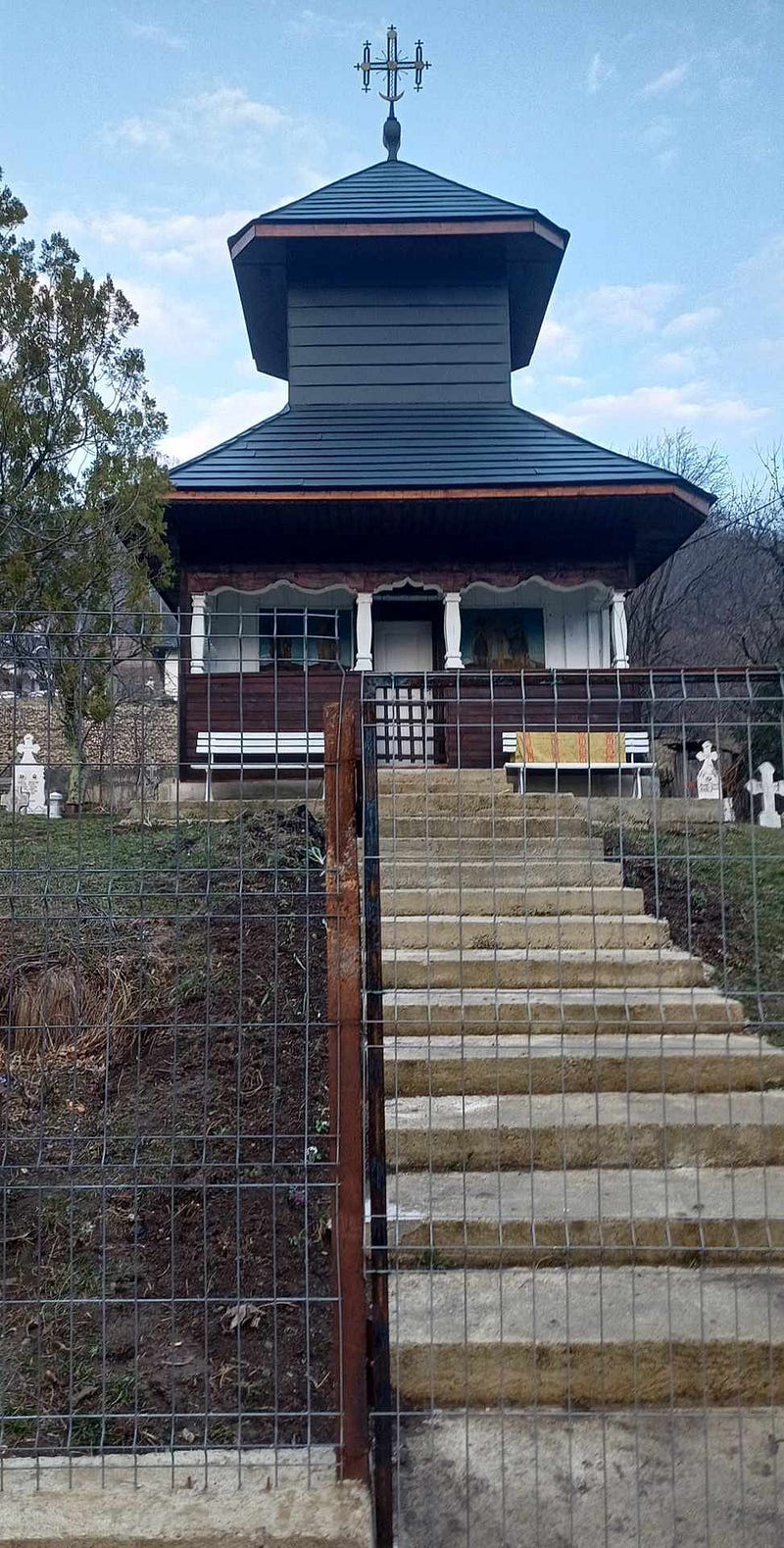
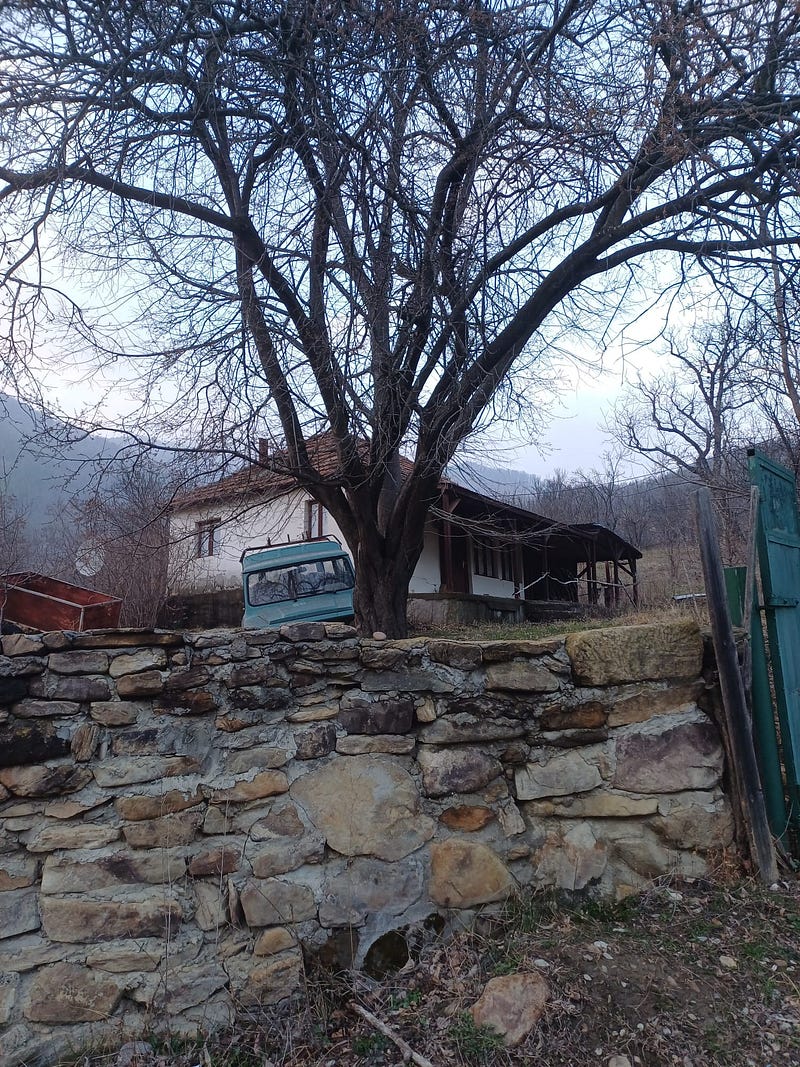
Thankfully, a small village called Nucu nestled picturesquely at the foot of the mountains. The faint glow of lights from a local guesthouse beckoned us closer. The thought of a warm meal and a comfortable bed was too tempting to resist. With a shared grin, we decided to save the drive for another day, ready to explore the charm of Nucu before embarking on the final leg of our adventure.
This hike was truly magnificent! Surrounded by nature, I felt revitalized and brimming with inspiration for future adventures and articles. Hiking with loved ones, be it family or friends, is an experience I hold dear. There’s a unique camaraderie that forms on the trail, a shared sense of accomplishment as you conquer each incline and revel in the breathtaking panoramas that unfold with every step. It’s a return to our roots, a simple act of traversing forests and mountains that connects us to something fundamental — the raw beauty and humbling vastness of the world around us.
It was more than just a physical challenge; it was a historical intrigue, a chance to unravel the secrets of these hidden gems. And most importantly, it was a cherished experience shared with Uncle M. The memories we created together, the laughter exchanged amidst the crisp mountain air, and the sense of accomplishment we shared at the end of the trail — these are the things that truly make this adventure unforgettable. It’s a reminder of the importance of connecting with loved ones, forging new bonds with nature, and the simple joy of exploration that awaits us just beyond the city limits. And who knows, perhaps this is just the beginning of many more adventures to come?