
A Hand Written Letter from a friend
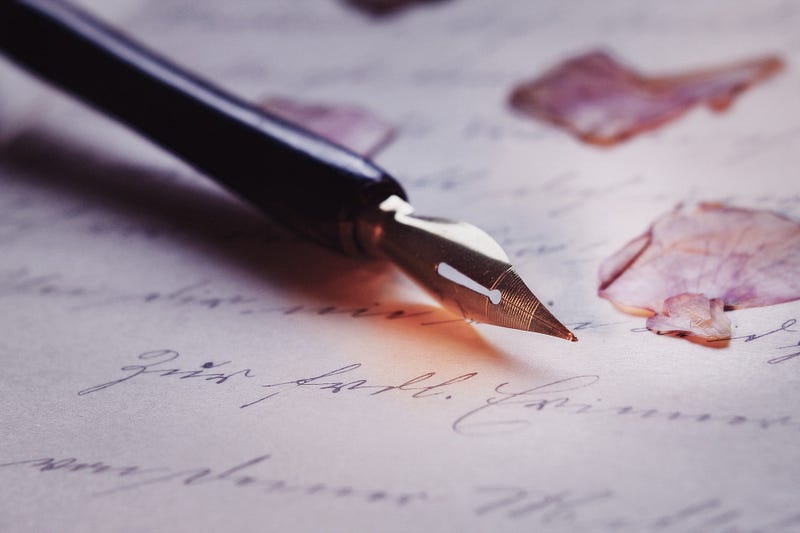
When we came back from a two week trip, there was an envelope in the post box. It was a letter from one of my boyfriend’s old friends who had stayed a couple of nights in our flat just before we left.
“When was the last time I got an enveloped letter from someone, besides the invoice from the utility company or bank statements?” I thought.
It was a letter appreciating our hospitality when for when he had stayed with us.
“His handwriting is not bad”, said my boyfriend. It sounded like it was the first time he had seen old friend’s handwriting and maybe was a little jealous by it’s neatness.
The message was very vivid because I couldn’t stop imagining how much time he must have spent to prepare and send that letter; pick up a piece of paper, carefully write the message with a pen, fold it, put it in an envelope and seal it, go to the post office to buy a stamp to put on, and post it.
We live in the digital world where we can easily send a text message using the phone or emailing with our laptop. That’s why receiving an old fashioned letter brings a special feeling.
Also, the handwriting tells you who the writer is.
Calligraphy is quite popular in China and Japan. Both of us share Chinese characters called “Kanji” in Japanese. The letters are symbolic, not phonetic. Every single letter has a meaning. In Chinese or Japanese calligraphy, how you write (or draw, I should say) tells your audience your feeling, while the letter you write tells its meaning.
When I was travelling in China, I met some people who could recite poems, and write them on the concrete ground using a brush with water. I met an old man who stayed next to my room in a guesthouse. He had a couple of long hairs coming from a mole on his face, which means “lucky” in China, and he said he was a calligrapher. He gave me a piece of his work, a rectangle paper where he wrote two Chinese letters “宁静,” which means “tranquil”. We were staying by a lake, and his calligraphy looked as quiet as the water of the lake.
In medieval times, Japanese noble couples, who were not allowed to meet face to face without consent, exchanged poems to tell their passion. They must have had to imagine what kind of a person it was, and how he or she looked like, through their handwriting.
We can read lots of things from people’s calligraphy, it could be very talkative and expressive when you try to read carefully.
No matter which language you are writing, handwriting tells something more than it literally means.
Now that we live in a world where we can communicate quickly and easily, it might be a good idea to go back to the old-fashioned way of messaging, sometimes.