
A habit is more dependable than inspiration.
Octavia Butler on talent. (The Commonplace Book Project #21)
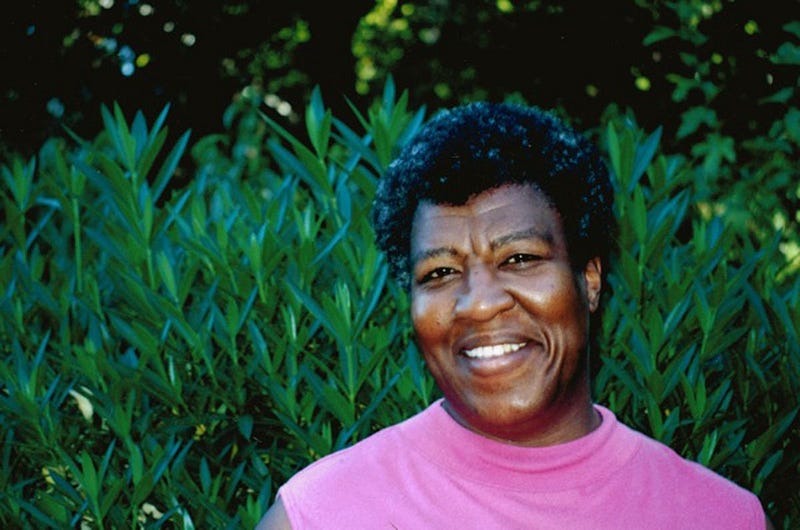
The Commonplace Project is a daily post based on Ray Bradbury’s advice to aspiring writers: read a poem, a short story, and an essay every day for 1000 days. These posts start with a quote and go wherever the rabbit hole leads. Follow The 1000 Day MFA so you don’t miss a thing.
“Forget talent. If you have it, fine. Use it. If you don’t have it, it doesn’t matter. As habit is more dependable than inspiration, continued learning is more dependable than talent.” — Octavia Butler, Blood Child: and Other Stories
There is something about Octavia Butler.
I wish I had known her. That I could have taken a class from her or just had lunch with her. I think that studying at Clarion West when she was on the faculty would have been life changing.
I am so drawn to her — her stories, but also just her.
Here’s an interview she gave to Charlie Rose — who kind of makes a fool of himself, speaking over her and just generally making a fool of himself.
I‘ll talk about her stories in a minute. But it’s Octavia Butler’s advice to readers that I find refreshing. It’s so straight forward. So — true. And real.
In the quote above, she says that being willing to learn and developing a writing habit are more important than talent. And it’s true, isn’t it? What good is talent if you don’t develop it and then actually use it regularly?
I love this one, too, from Conversations with Octavia Butler.
I have advice in just a few words. The first, of course, is to read. It’s surprising how many people think they want to be writers but they don’t really like to read books.
And the second is to write, every day, whether you like it or not. Screw inspiration.
And this one. This one is a mantra for me.
You don’t start out writing good stuff. You start out writing crap and thinking it’s good stuff, and then gradually you get better at it. That’s why I say one of the most valuable traits is persistence.
Octavia Butler was the daughter of a housekeeper and a shoeshine man. Her father died when she was seven. She was a painfully shy and awkward child who was the target of bullies. And all she wanted was to be a writer.
No one ever has proof going in that they’ll be successful, but Butler especially didn’t. There were no women of color writing science fiction before her. She sought to ‘write herself in’ to science fiction, filling a gap she found unacceptable.
She was the first nationally prominent African American science fiction writer. Butler won the Nebula and Hugo awards, as well as a McArthur Fellowship.
We have nearly caught up to the timeline of Butler’s book The Parable of the Sower. In it, society has collapsed, largely due to climate change and wealth inequality. Reading it now is almost uncomfortable, it’s so real.
The book, and it’s sequel The Parable of the Talents, serve as an autobiography of her fictional character, Lauren Oya Olamina. Olamina has developed her own religion. Earthseed’s aim is to place human life in the stars. In the video above, Butler calls the project of putting human life off the planet Earth the cathedral of it’s time.
I find it fascinating that there is a small, but real life Earthseed movement.
There aren’t many books that I really feel like every single person should read. The Parable of the Sower and The Parable of the Talents are on that short list.
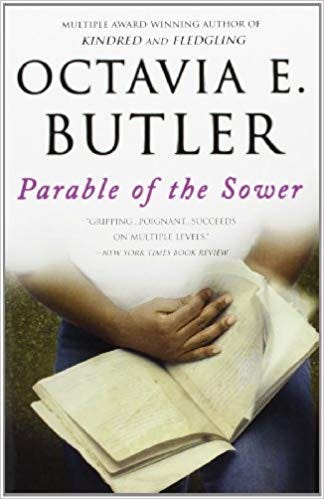
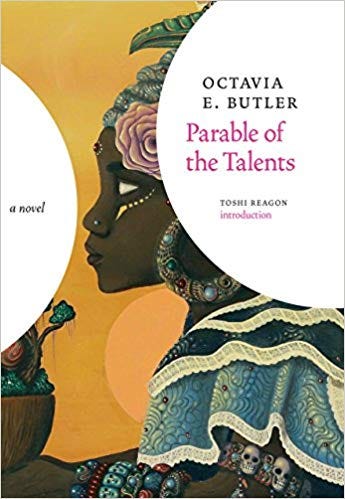
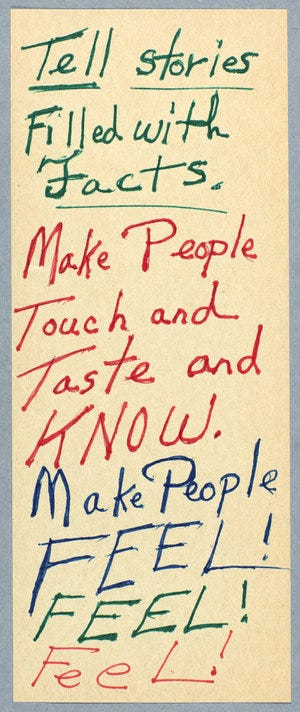
One of my favorite writerly things of all time is this. Octavia Butler’s pep talk to herself, written on the back of a cheap spiral-bound notebook.
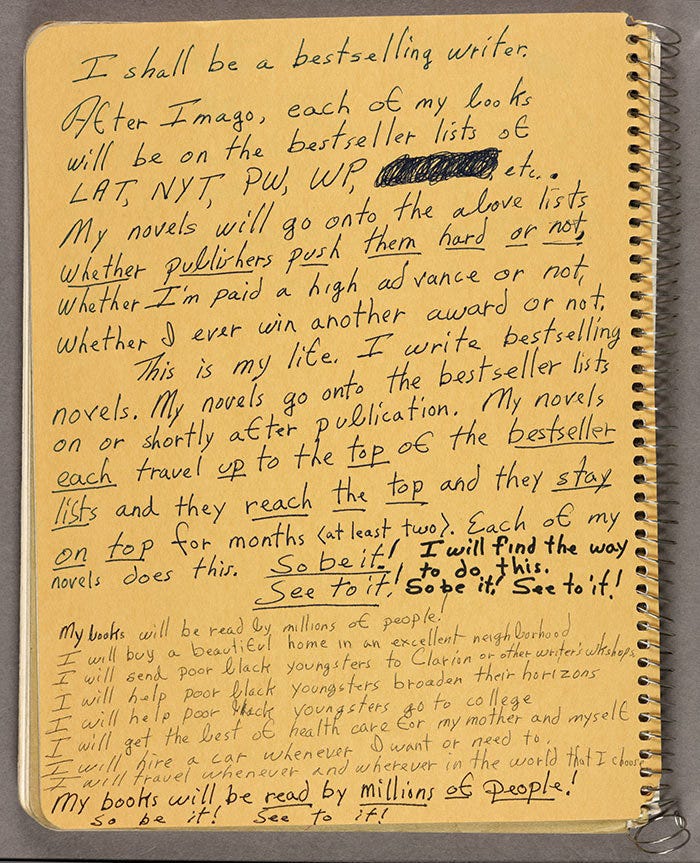
Butler’s papers — more than 8000 items including unfinished drafts (including of The Parable of the Trickster, which would have been the third Earthseed book), notes, and journals — are housed at The Huntington in San Marino, California.
Sometimes, when I need a kick in the butt, I imagine Octavia Butler reminding me: Talent doesn’t matter. Inspiration doesn’t matter. Just write. So be it! See to it!
Today’s Poem:
From Parable of the Sower by Octavia Butler
All that you touch You Change.
All that you Change Changes you.
The only lasting truth Is Change.
God Is Change.
Here’s my secret weapon for sticking with whatever your thing is.
Shaunta Grimes is a writer and teacher. She is an out-of-place Nevadan living in Northwestern PA with her husband, three superstar kids, two dementia patients, a good friend, Alfred the cat, and a yellow rescue dog named Maybelline Scout. She’s on Twitter @shauntagrimes and is the author of Viral Nation and Rebel Nation and the upcoming novel The Astonishing Maybe. She is the original Ninja Writer.


