
A Guide to Time Series Models in Machine Learning: Usage, Pros, and Cons
As businesses and organizations collect and store massive amounts of data, the need to analyze and make sense of this data has become increasingly important. Time series data, which consists of measurements taken over time, is a particularly valuable source of information in many fields. Machine learning models can be used to analyze time series data and make predictions about future values. In this article, we will explore some popular time series models used in machine learning, their usage, pros, and cons.
💡I write about Machine Learning on Medium || Github || Kaggle || Linkedin. 🔔 Follow “Nhi Yen” for future updates!

1. Autoregressive Integrated Moving Average (ARIMA)
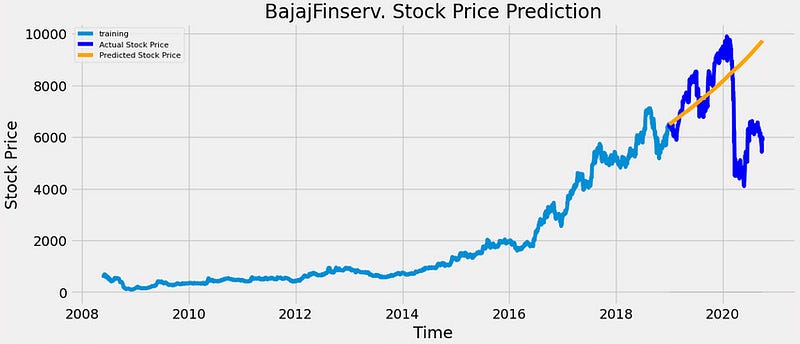
ARIMA is a widely used model for time series analysis. It is a statistical model that uses past values to predict future values of a time series. ARIMA models are widely used in fields like finance, economics, and meteorology. The model works well when the data has a clear trend, seasonality, and is stationary.
Pros:
- ARIMA can handle a wide range of time series data.
- It is relatively easy to understand and implement.
Cons:
- ARIMA requires stationary data, which can be difficult to achieve in practice.
- It can be challenging to determine the optimal parameters for the model.
Usage: To forecast the stock prices, weather forecasting, economic analysis.
Python Code Example:
from statsmodels.tsa.arima_model import ARIMA

model = ARIMA(data, order=(p, d, q))
model_fit = model.fit(disp=0)
prediction = model_fit.forecast(steps=n)
2. Seasonal Autoregressive Integrated Moving-Average (SARIMA)
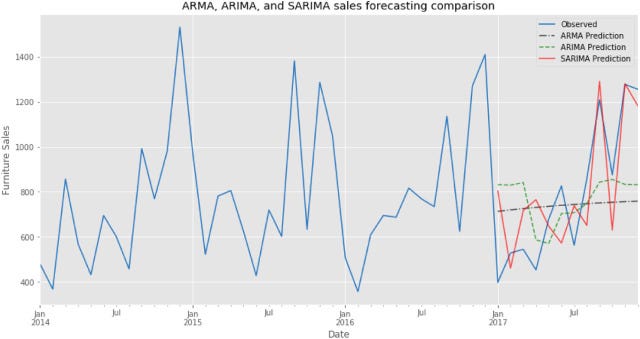
SARIMA is an extension of ARIMA that is designed to handle time series data with seasonal patterns. It uses the same approach as ARIMA but takes into account seasonal factors that can affect the data. SARIMA is widely used in fields like retail sales and marketing to forecast sales for specific seasons.
Pros:
- SARIMA is effective in capturing seasonal patterns.
- It can handle non-stationary data.
Cons:
- SARIMA requires a large amount of historical data to build accurate models.
- It can be challenging to determine the optimal parameters for the model.
Usage: To forecast seasonal sales in retail, predicting demand for certain products during specific seasons.
Python Code Example:
from statsmodels.tsa.statespace.sarimax import SARIMAX

model = SARIMAX(data, order=(p, d, q), seasonal_order=(P, D, Q, s))
model_fit = model.fit(disp=0)
prediction = model_fit.forecast(steps=n)
3. Long Short-Term Memory (LSTM)
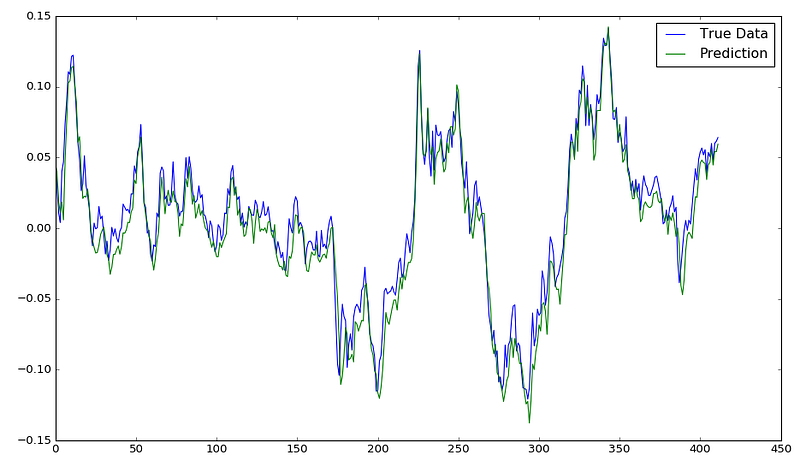
LSTM is a deep learning model that can handle time series data with long-term dependencies. It can capture complex patterns in time series data and is widely used in fields like speech recognition, image recognition, and natural language processing.
Pros:
- LSTM can capture long-term dependencies in time series data.
- It can handle non-stationary data.
Cons:
- LSTM requires a large amount of training data and can be computationally expensive.
- It can be challenging to interpret the results of an LSTM model.
Usage: To forecast stock prices, predicting the number of sales for e-commerce companies.
Python Code Example:
from keras.models import Sequential
from keras.layers import LSTM, Dense

model = Sequential()
model.add(LSTM(units=n, input_shape=(X_train.shape[1], X_train.shape[2])))
model.add(Dense(1))
model.compile(loss='mse', optimizer='adam')
history = model.fit(X_train, y_train, epochs=n_epochs, batch_size=n_batch, validation_data=(X_test, y_test))
prediction = model.predict(X_test)
In conclusion, time series data is a valuable source of information for businesses and organizations. Machine learning models can be used to analyze this data and make predictions about future values. ARIMA, SARIMA, and LSTM are some popular models used for time series analysis. Each model has its strengths and weaknesses, and the choice of model depends on the nature of the data and the specific problem at hand. With the examples and Python code provided in this article, you can get started with time series modeling and explore the potential of this field.
Sources
- “ARIMA Model — Time Series Analysis” by Ritika Bhasker, Analytics Vidhya
- “SARIMA for Time Series Forecasting” by Jason Brownlee, Machine Learning Mastery
- “A Gentle Introduction to Long Short-Term Memory Networks” by Jason Brownlee, Machine Learning Mastery.
Hand-on Projects
👏If you found this article interesting, your support by giving the article 50 claps will help me spread the knowledge to others.
❗Found the articles helpful? Get UNLIMITED access to every story on Medium with just $1/week — HERE
☕Buy Me a Coffee — HERE
#MachineLearning #TimeSeries #DataAnalysis #PythonProgramming


