
A Children’s Guide To Machine Learning (ML)
A descriptive guide to Machine Learning for children
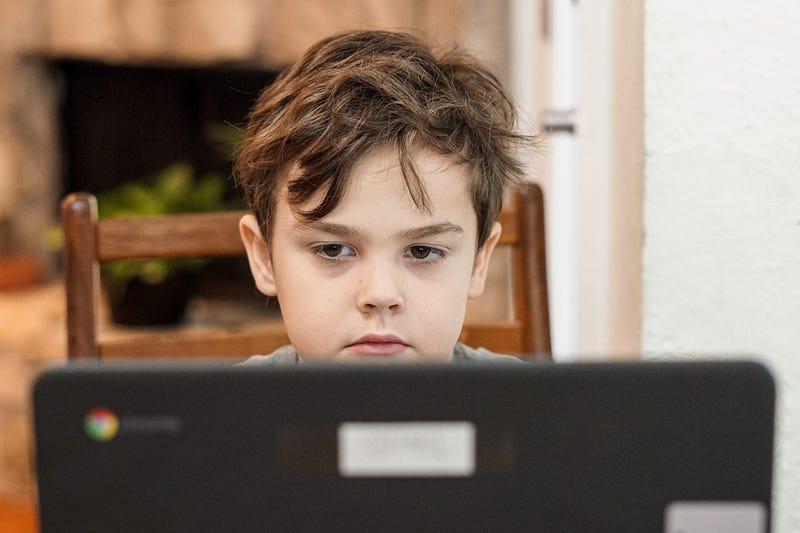
What if there was a school for machines? What if your phone had to sit in hours of class learning math, English and science?
Good news, there is no school for machines — lucky! But machines do have to learn new things, and adults call this process machine learning. Unlike the classrooms you attend, machines learn by themselves here.
If you’re wondering what machines have to learn and why, then you’ve come to the right place. Let’s explore this further!
Start with A-B-C
Machine learning has been trending for years. In the beginning, adults gave up on it several times because they didn’t get the results they wanted. But, we’re glad these leading men and women of science continued their efforts. It has led to so many inventions (which we’ll read about towards the end of this article).
‘M’ for Machine
A machine is anything that helps make our job easier. But, for a long time, that’s all machines did — we told them what to do and they did it, just like when you go to McDonald’s and ask for a burger meal, and they give you just that. Eventually, some scientists found a way to teach a machine to think on its own, sort of like asking for that burger meal, but they give you ice cream along with it because they know you love dessert.
‘L’ is for Learning
How do you teach a machine? Well, scientists did it by playing a guessing game! For example, your teacher taught you the color of the sun is yellow. After that, you were also able to see other things that had the same color, right? Like, bananas, sunflowers and rubber ducks.
Similarly, scientists taught machines several things, including that the sun is yellow. They showed machines a picture of a cat and taught them it was a ‘cat.’ This pile of information machines had to learn has a name, ‘dataset.’ It is sort of like the syllabus you have for every school term.
Once the machines learn the datasets, it’s time to play the guessing game, where they are quizzed. Similar to asking them — if the sun is yellow, the scientist will ask them, ‘is the sky yellow?’ The machines then have to go back to what they learned and guess. This process has a name, ‘prediction.’ But, like us, after a while, they begin to understand the questions better and find ways to guess the right answer more often.
Scientists call this process of self-correction ‘gradient descent.’ Over time, machines learn from their mistakes and become S-M-A-R-T!

‘G’ is for Graduation
Does a machine ever stop learning? It depends on the size of the dataset. If the machine is learning from the internet — oh boy! It’ll be learning its whole life, just like the smartphone your parents use.
You see, a smartphone is an intelligent machine! It does the usual things phones are used to, like call, text and record a video. But now, it can also suggest movies you’d like to see. How can a machine do that? You guessed it…by learning. Smartphones slowly begin to learn all the things you love and don’t. It stores this information, so when you ask for its help, it knows exactly what to do.
‘A’ is for Application
When machines graduate from school, what do they do? Well, they go on to do many cool and amazing things!
There are cars now that drive themselves with machine learning. Grown-ups don’t need to worry about keeping their hands on the wheel anymore. The car automatically knows when it is on the correct road, when it is at a safe distance from the car before it and when you have reached your destination. These cars have a name; they’re called ‘smart cars.’
Some machines can draw paintings and speak as humans do. These are called ‘Artificial Intelligence.’ They’re very smart machines that have been created to think and act like humans.
Also, did you know if you tell your smartwatch you want to watch a movie, it will ask your TV to switch on and play that movie? You don’t even have to lift a finger. These are called the ‘Internet of Things.’ They’re machines that can be connected with each other so they can work together and complete the task you’ve given them.
Conclusion
Wrapping up, we learned the basics of machine learning and some applications of it. This is a field that is going to continue to see a lot of development. Many adults only saw their first smartphone when they were fifty years old. But now, children are interacting with smart machines from a young age. So, it is important to know what they are and how they work. One thing is clear, smart machines deserve an A+!