
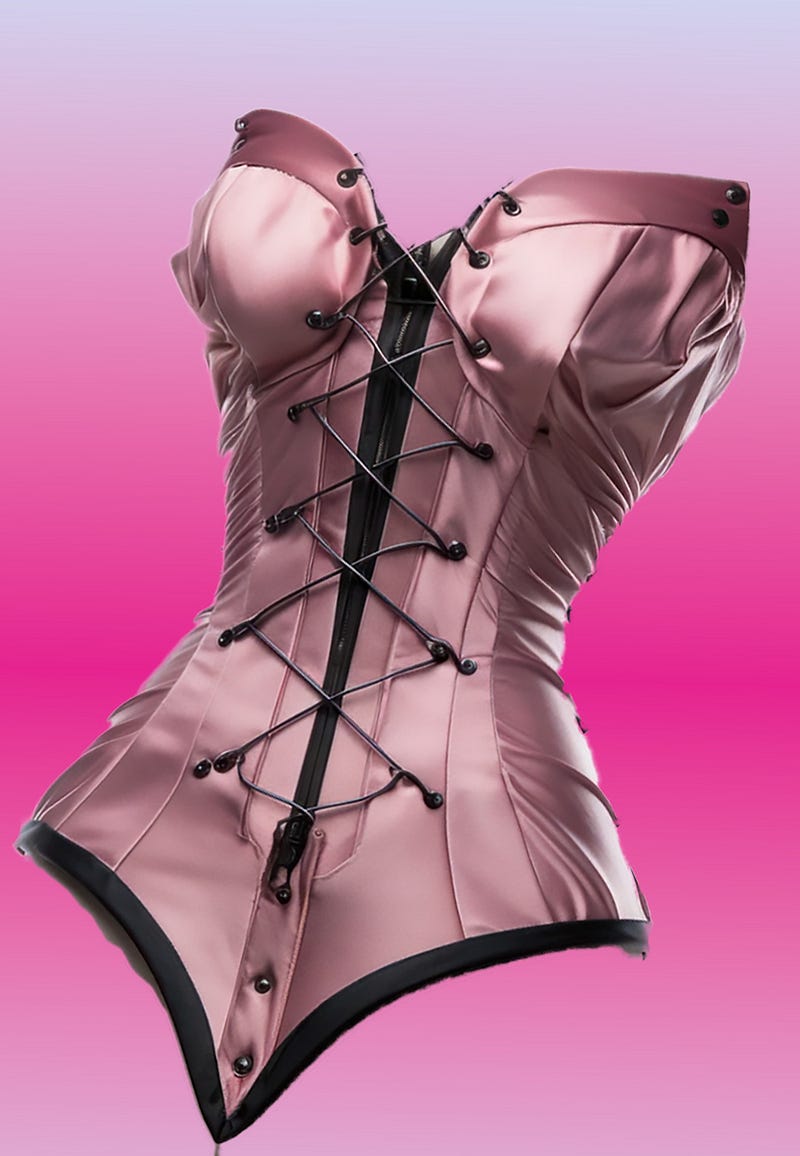
A Great Editor Is Like Shapewear.
She provides unseen support by keeping things tight.
When I open a book for the first time, I immediately go to the acknowledgments page. Why? I need to know who enabled the writer, especially the editor. I adore editors and the efforts they put forth in the service of improving my writing. And, although I don’t need an editor’s help to know the difference between a burro and a burrow, I like it when they catch the humor in the quip.
Editors are magicians whose sleight of hand improves our craft. While it may sound contradictory, I want an editor who is cold-blooded yet compassionately engaged with my work. I want an editor who is frank but not cruel, a dominatrix of the written word.
But on occasion, an editor’s suggestions might not align with my intent. Sometimes, an editor misreads or misunderstands a Spanish or Indigenous language word or phrase. Most times, with some discussion, we can clarify its meaning, improve the editor’s understanding of the piece, and shape the contours of my writing.
However, these incidents underscore the lack of Latines and other people of color working in the industry. A recent study showed that 84% of the publishing workforce is white. I’ll continue to work with editors, no matter their heritage, as there are so few who share my background. And with careful selection on my part, the pros always make me a better writer.
Twenty years ago, I was a first-time book author assigned to work with the publisher’s senior editor, Elizabeth “Beth” Hadas. She was well acquainted with the nuanced cultural expressions that were the backstory of my book about Chicana painters. Her previous work with award-winning Chicano writers like Arturo Islas, Rodolfo Anaya, and Gary Soto gave her the framework for understanding my manuscript. Beth helped me become modestly confident in my writing because she didn’t dampen my newbie enthusiasm, even as I fumbled my way through the publishing process.
More recently, I’ve worked with Roz Warren. She doesn’t know the ins and outs of Chicana culture, but she treats my work with respect. How does that respect show up? She reads closely, and not a single misplaced comma or ill-chosen word escapes her attention. I enjoy our consultations because she has a wicked sense of humor and applies it well when delivering her razor-edged critiques. Roz doesn’t parse her responses, and we’re able to work with efficiency. This is a good thing when we are working on the clock and time is money. (No, she didn’t work with me on this essay. But I have no doubt that she will point out those instances where I might have improved the piece.)
Having friends and family read my stuff is great for testing the emotional aspects of my writing. But working with an editor takes the writing to a different level because of their dispassionate reading. And I will continue to treasure their liberal use of a red pencil when they read my stuff.


