avatarMazen Ahmed

Free AI web copilot to create summaries, insights and extended knowledge, download it at here

1780

Abstract

id="cbdd">We can have an upward trend, downward trend and stationary/horizontal trend:</p><figure id="bd94"><img src="https://cdn-images-1.readmedium.com/v2/resize:fit:800/1*7QyGWCRHKnlKSHNNpAO-gg.png"><figcaption></figcaption></figure><p id="3eeb"><b>Cyclical component: </b>Up and down movement around the trend line.</p><figure id="615f"><img src="https://cdn-images-1.readmedium.com/v2/resize:fit:800/1*XYQxDNuxLD3eyqYsHlsQJA.png"><figcaption></figcaption></figure><p id="c15e"><b>Seasonal Component: </b>Regular fluctuations around the trend line during a fixed interval. This could be during the same season or months every year.</p><figure id="6b74"><img src="https://cdn-images-1.readmedium.com/v2/resize:fit:800/1*rA4vULv6F_8z0h8kUcLm4A.png"><figcaption></figcaption></figure><p id="fd52"><b>Irregular Component: </b>The unpredictable component. This could be a high fluctuation for example.</p><figure id="d5da"><img src="https://cdn-images-1.readmedium.com/v2/resize:fit:800/1*pNFxJ0MV7gPDphElT_dG8g.png"><figcaption></figcaption></figure><h2 id="55aa">Stationary and Non-stationary Time Series</h2><p id="d537">A stationary time series is one whose properties do not depend on the time at which the series is observed. Time series with trends or seasonality are not stationary since the trend and seasonality effects the time series values at different times.</p><figure id="4721"><img src="https://cdn-images-1.readmedium.com/v2/resize:fit:800/1*31EixOkuDMnU4abE3e2R0g.png"><figcaption></figcaption></figure><p id="53a5">Often, a stationary time series does not have a predictable pattern in the long term.</p><h2 id="c41f">Time Series Analysis Techniques</h2><p id="1291">Here is an overview of 3 methods used in Time Series analysis.</p><h2 id="d439">Traditional T

Options

echniques</h2><p id="9516"><b>Moving Average Models: </b>A moving average model uses a regression-like model consisting of past forecast errors for future predictions.</p><figure id="8079"><img src="https://cdn-images-1.readmedium.com/v2/resize:fit:800/1*AB_zVVEkJG42t53OBea9wg.png"><figcaption></figcaption></figure><p id="928c">where εₜ is white noise and θ₁ to θq are parameters.</p><p id="5fa0"><b>Autoregressive Models: </b>We use a linear combination of past values of the variable to make forecasts.</p><figure id="7b0a"><img src="https://cdn-images-1.readmedium.com/v2/resize:fit:800/1*yeSkHMzJEFCn2p3c408D4g.png"><figcaption></figcaption></figure><p id="9018">where εₜ is white noise and ϕ₁ to ϕq are parameters.</p><h2 id="2ef6">Machine Learning Techniques</h2><p id="8240"><b>Machine Learning Models: </b>We can use machine learning regression models like linear regression, LightGBM or a neural network regressor to make predictions on time series data.</p><h2 id="c35f">Prev Episode | Next Episode</h2><h2 id="06e6">If you have any questions please leave them below!</h2> <figure id="1813"> <div> <div> <img class="ratio" src="http://placehold.it/16x9"> <iframe class="" src="https://cdn.embedly.com/widgets/media.html?src=https%3A%2F%2Fwww.youtube.com%2Fembed%2FQf_ONKvoNtE%3Ffeature%3Doembed&amp;display_name=YouTube&amp;url=https%3A%2F%2Fwww.youtube.com%2Fwatch%3Fv%3DQf_ONKvoNtE&amp;image=https%3A%2F%2Fi.ytimg.com%2Fvi%2FQf_ONKvoNtE%2Fhqdefault.jpg&amp;key=a19fcc184b9711e1b4764040d3dc5c07&amp;type=text%2Fhtml&amp;schema=youtube" allowfullscreen="" frameborder="0" height="480" width="854"> </div> </div> </figure></iframe></div></div></figure></article></body>

A Gentle Introduction to Time Series Analysis

With video explanation | Data Series | Episode 17.1
Objectives:

  1. Understand what time series data is and its applications
  2. Understand the difference between stationary and non-stationary time series
  3. Be familiar with the different components of time series
  4. Have an overview of the different techniques used in time series analysis

Before we delve into Time Series Analysis, let us familiarise ourselves with what time series data actually is:

Time Series Overview

Time Series Definition: An ordered sequence of values of a variable obtained at successive times.

Example: The temperature recorded every two hours during a day would produce a time series.
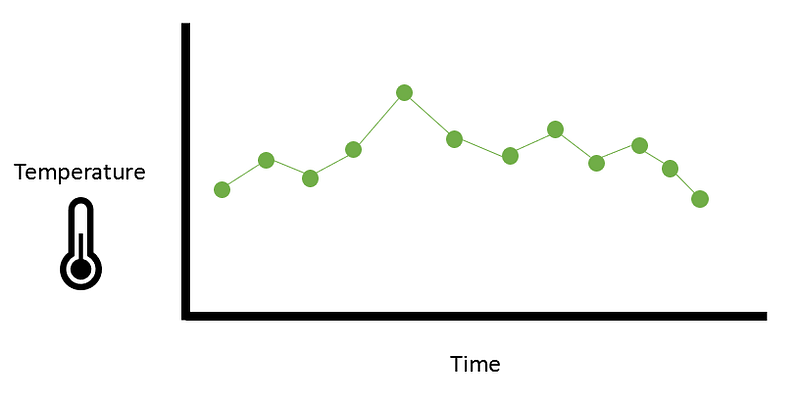
Image by Author — Microsoft PowerPoint

What we can do with Time Series Data:

  • Understand the governing forces and structure that produced the observed data
  • Model observed data and make forecasts

General Applications

Some applications of time series analysis include:

  • Sales forecasting
  • Yield projections
  • Workload projections

Components of Time Series

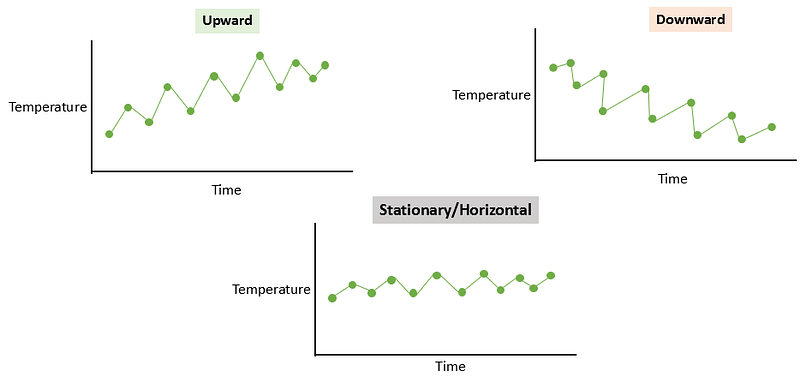
Trend component: The long term-term pattern of a time series.

We can have an upward trend, downward trend and stationary/horizontal trend:
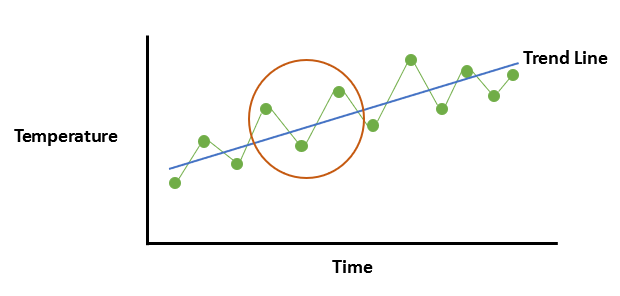
Cyclical component: Up and down movement around the trend line.
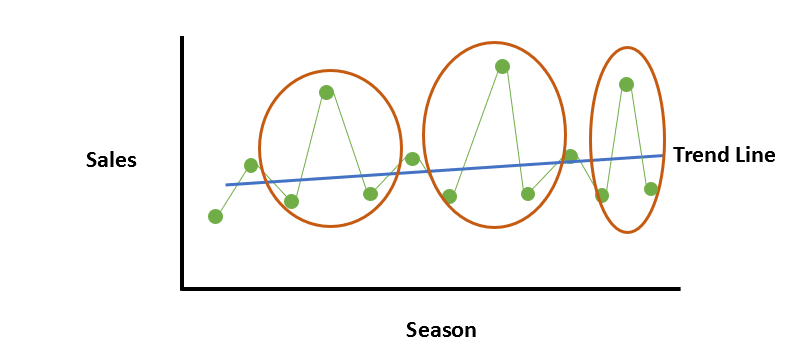
Seasonal Component: Regular fluctuations around the trend line during a fixed interval. This could be during the same season or months every year.
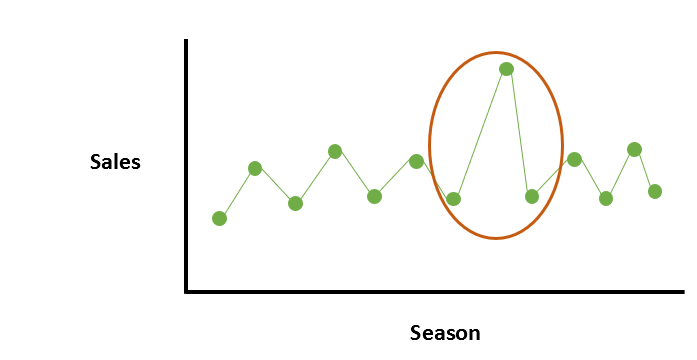
Irregular Component: The unpredictable component. This could be a high fluctuation for example.
Stationary and Non-stationary Time Series

A stationary time series is one whose properties do not depend on the time at which the series is observed. Time series with trends or seasonality are not stationary since the trend and seasonality effects the time series values at different times.
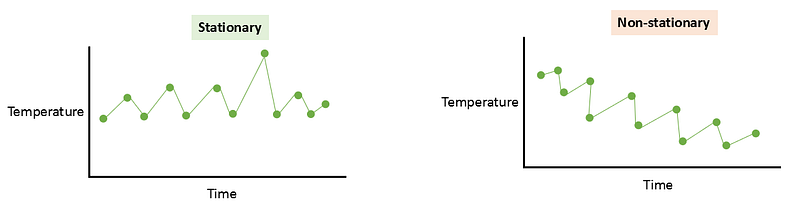
Often, a stationary time series does not have a predictable pattern in the long term.

Time Series Analysis Techniques

Here is an overview of 3 methods used in Time Series analysis.

Traditional Techniques

Moving Average Models: A moving average model uses a regression-like model consisting of past forecast errors for future predictions.

where εₜ is white noise and θ₁ to θq are parameters.

Autoregressive Models: We use a linear combination of past values of the variable to make forecasts.

where εₜ is white noise and ϕ₁ to ϕq are parameters.

Machine Learning Techniques

Machine Learning Models: We can use machine learning regression models like linear regression, LightGBM or a neural network regressor to make predictions on time series data.

Prev Episode | Next Episode

If you have any questions please leave them below!

Data Science
Machine Learning
Time Series Analysis
Recommended from ReadMedium