TRAVEL
A “Free Trip to Chefchaouen”
Learning to take promises with a grain of salt
It’s intoxicating to sit behind the wheel and drive through a foreign country. Since arriving in Morocco a month earlier, I had always just been a passenger and observer — day trips to El Jadida with Mr. Harim, nightmarish rides in the petit-taxis of Casablanca, or that bus to Agadir, sitting behind two women who vomited for the entirety of the twelve-hour ride (I’ll never forget the sound — sitting half-awake in my rumbling seat in the dark; unable to see, but reluctantly hearing the heavy, viscous-sounding liquid splattering down onto the aisle).
I hadn’t planned on doing any driving in Morocco, but an opportunity to do so fell into my lap. The school I was staying at offers a “free trip to Chefchaouen” for volunteers who stay long enough; and the owner, Mr. Harim, had planned to take myself and three other volunteers to Morocco’s blue city for a few days. At the last minute, he backed out of the trip but offered to lend us his van (with an empty petrol tank) if one of us could drive a manual and felt comfortable navigating the chaotic traffic of Casablanca and the winding, crumbling roads of the Rif mountains.
I thought back to dark, winter nights in Italy, being the lone driver among three of my closest friends, gripping the steering wheel with white knuckles as I navigated treacherously icy winding roads in the Dolomites late into the night. Renting a foreign car is novel and liberating, but it can also be exhausting when you’re the only one driving. None of the girls felt comfortable making the five-hour drive, so it was either we splurged on bus tickets last minute, or I took the keys.
By “the girls,” I mean three of my fellow volunteers from the Casablanca school: Jiaqi, hailing from China, was traveling Morocco while simultaneously working on her master’s degree (virtually, from Spain) and working remotely as a language tutor. Sarah, a Haitian American from New Hampshire, who just a couple of weeks prior had stepped away from her undergraduate studies to take her first solo international trip. Delphine, from Northwestern France, had been studying engineering in Lyon, and was taking a gap year to travel; spending most of her time surfing, but had also done a bit of volunteer repair work on watercraft in the Netherlands.
After the four of us had finished with classes on a busy Saturday, Mr. Harim gave me the car and apartment keys, and an authorization for me to drive the car printed on the school’s letterhead in case we ran into issues at the police checkpoints along the way.
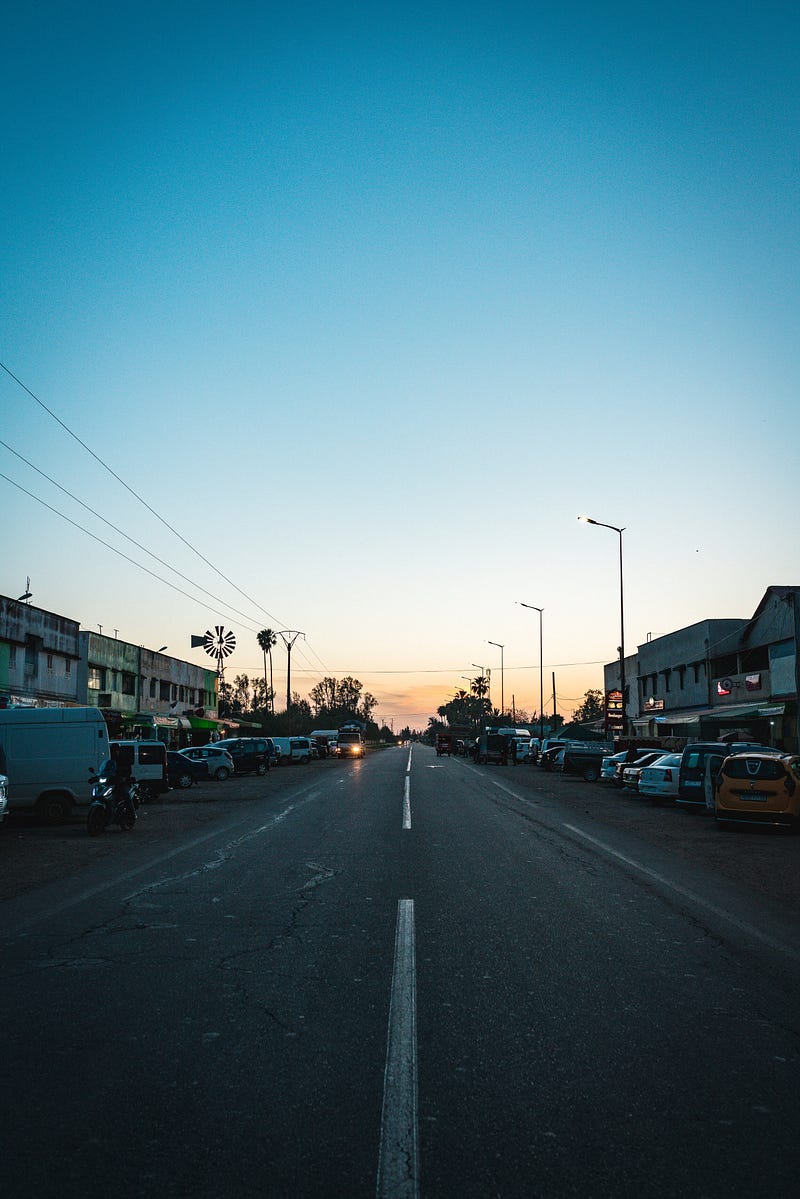
It was easier than I had anticipated getting out of the city and onto the motorway. It felt good to be driving a manual again after so long, and we had the windows down, the radio tuned to classics: Beatles, Stones, Michael Jackson. On top of adjusting to a new car, and the erratic driving norms of Moroccan motorists, all of the signage was in Arabic and French (sometimes Amazigh/Berber too, depending on where you were at).
All of these small differences combined to create the sensation of learning how to travel cross-country all over again. And that’s so true of international travel in general: being in a place where you can’t speak the native language, all of the food is brand new to you, and you have to be shown how to do even the simplest of things — everything you took for granted before becomes interesting again and requires renewed focus.
After long waits in multiple toll lines, I missed an important exit, taking us on a half-hour detour through the lush, green backcountry of Morocco. A territory of handbuilt stone walls, fields being plowed by donkeys, supplies carried on horse-drawn carts — nothing that you would go out of your way to see. But it gave us a closer look at rural Morocco, which we couldn’t have seen from the monotonous, well-maintained national highway. We stopped at a crossroads gas station and cafe to use the toilet — one with the holes in the floor that you squat over. This was one of the few places in Morocco I had been where the locals all turned from their conversations to stare at us. In the cities, I felt like a ghost, passing through inconspicuously. But here, it was a kind of event for a multi-racial crew to make a pit stop.
After making it back to the intended route, we proceeded down a provincial two-lane highway over a flatland. An aqueduct ran parallel to us, and both sides of the road were lined in an orderly fashion with stately trees that cast a seemingly endless canopy over the narrow highway. We drove through this green tunnel, with the sun setting frighteningly behind us. The sunlight cast our surroundings in dramatic hues; giving birth to long, streaking shadows that made the sunset feel more like some apocalypse on our heels; and seeing only glimpses of it in my rearview mirror and its vibrant light on the road ahead, I felt like it was a presence chasing us across the plain.
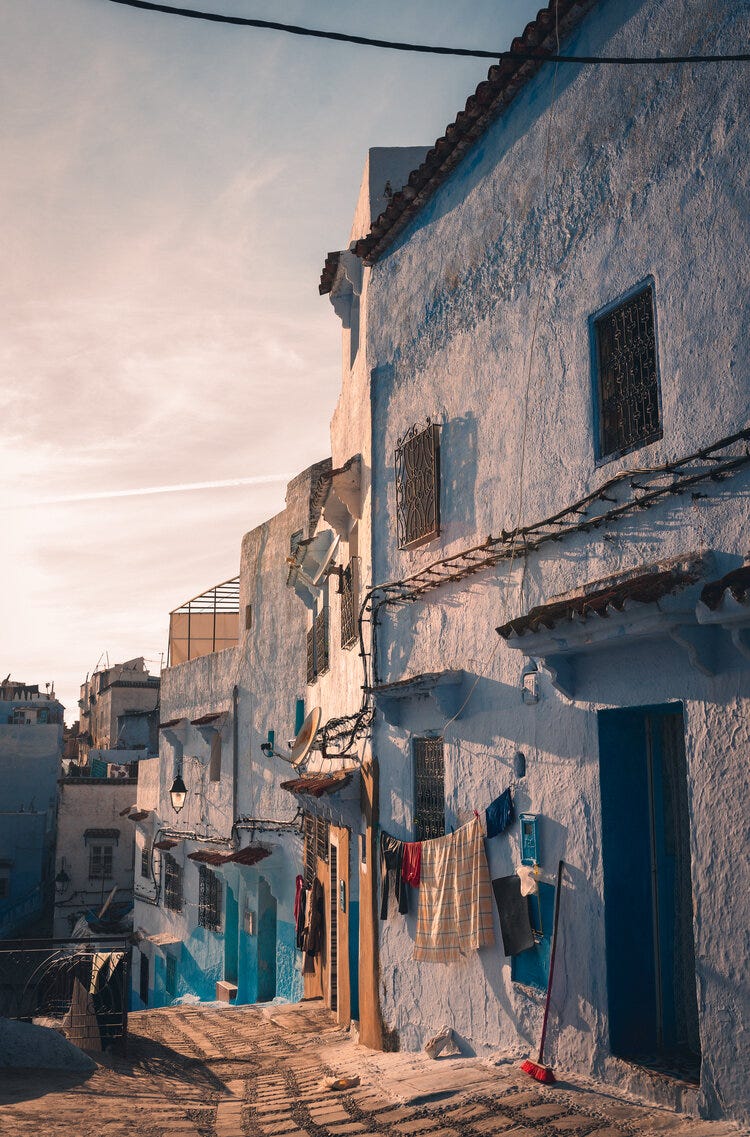
We stopped for a quick dinner in a small, unassuming town after sunset. By the time we started off again, it was quite dark outside. The last two hours of the drive were strenuous, traversing rough mountain roads in the dark. My companions were silent, either asleep or too uncomfortable to talk in between the violent bumps and jolts of the road. We were stopped at only one of the police checkpoints. Thankfully, the car has massive decals all over the exterior advertising the school’s branding, which grants us a great alibi as foreign drivers.
When the policeman shined his flashlight on me through the open window and realized I likely wasn’t going to be capable of a substantial conversation about our business on the road after curfew (COVID times), he just waved us through the barrier. At one point later on, somewhere in between villages, I found a suitable shoulder to abruptly pull the car over onto. I killed the engine and we opened our doors. We stood silently out in the cold for a few minutes on the gravel, breathing mountain air under a starry sky.
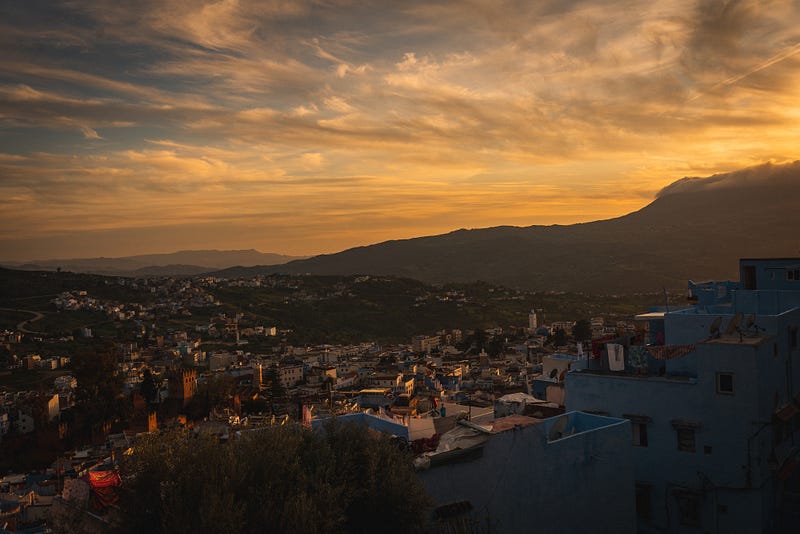
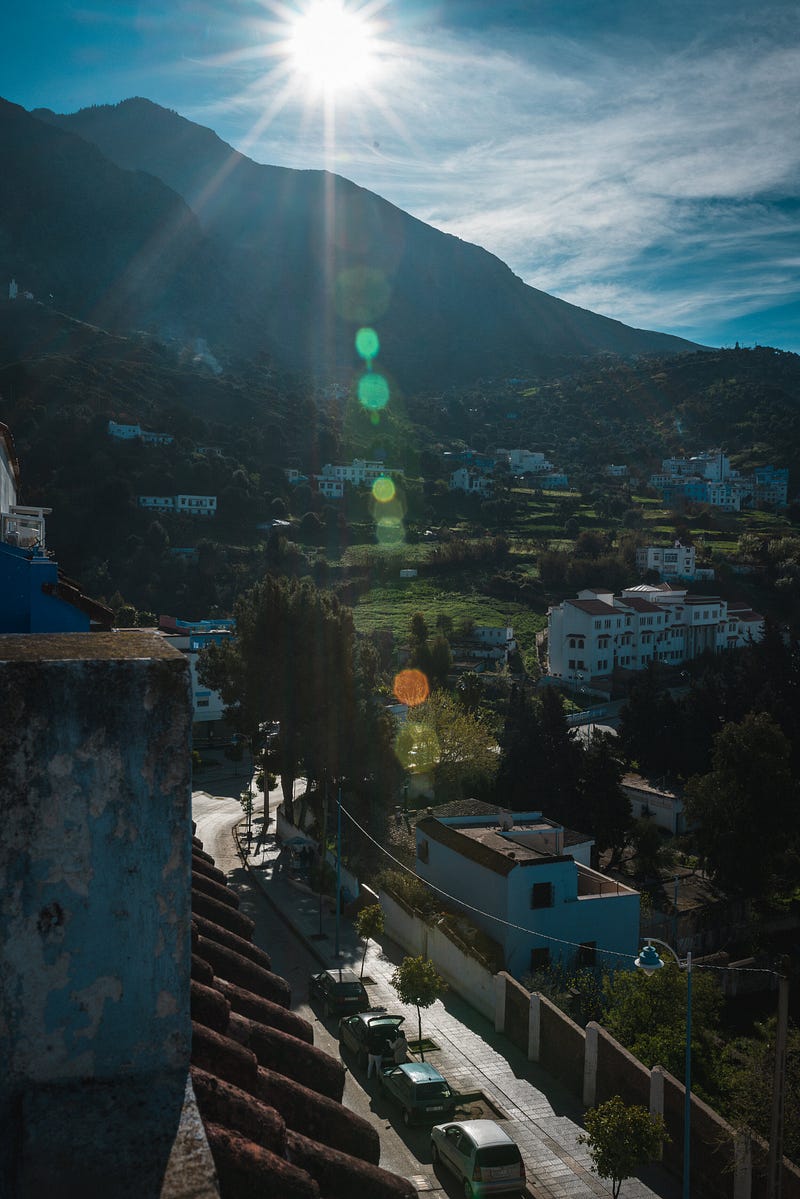
Shortly after 11 pm, we finally reached Chefchaouen. I had to parallel park the van on a steep hill, which is extra fun when you’re tired and have got a clutch to worry about. Moustafa, the owner of the shop next door came outside and kindly helped to spot me. We somehow remembered Mr. Harim’s elaborate instructions (“After entering Chefchaouen, you will drive up a hill, pass a middle school, and an association. It’s important you park on the same side of the street as the association, or the vehicle will be towed. Across the street from the association, there are some stairs leading to an alleyway. In the alleyway, you’ll find a black door…” and so on) for how to locate and provide power and water to his apartment in the blue city.
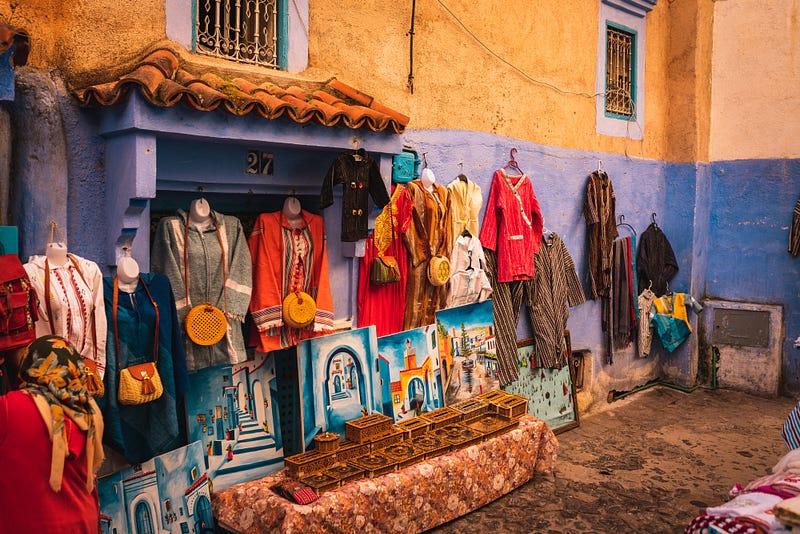
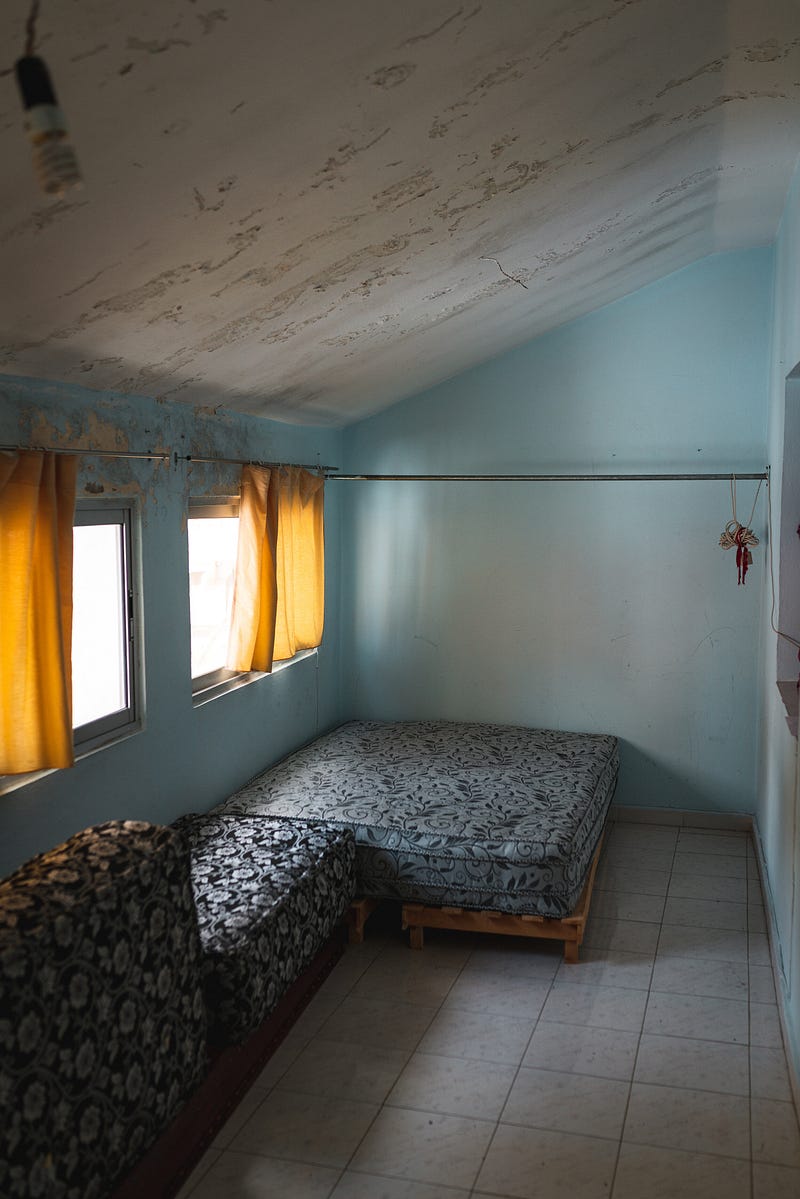
Weary from hours of driving cross-country, we climbed to the top floor of the apartment building hoping to find a cozy and comfortable accommodation at which to crash. Just to enter, we had to use a different key for each of the four locks on the old door, which felt like some kind of ridiculous escape chamber riddle. After entering and turning on the lights, we found a destitute living situation. The only furniture in the apartment included Moroccan-style couches along the walls, and ten or so mattresses scattered across the floor or stacked upon each other. The tile floor was dusty, and there was a pile of dirt sitting by the door that had been swept up and then forgotten.
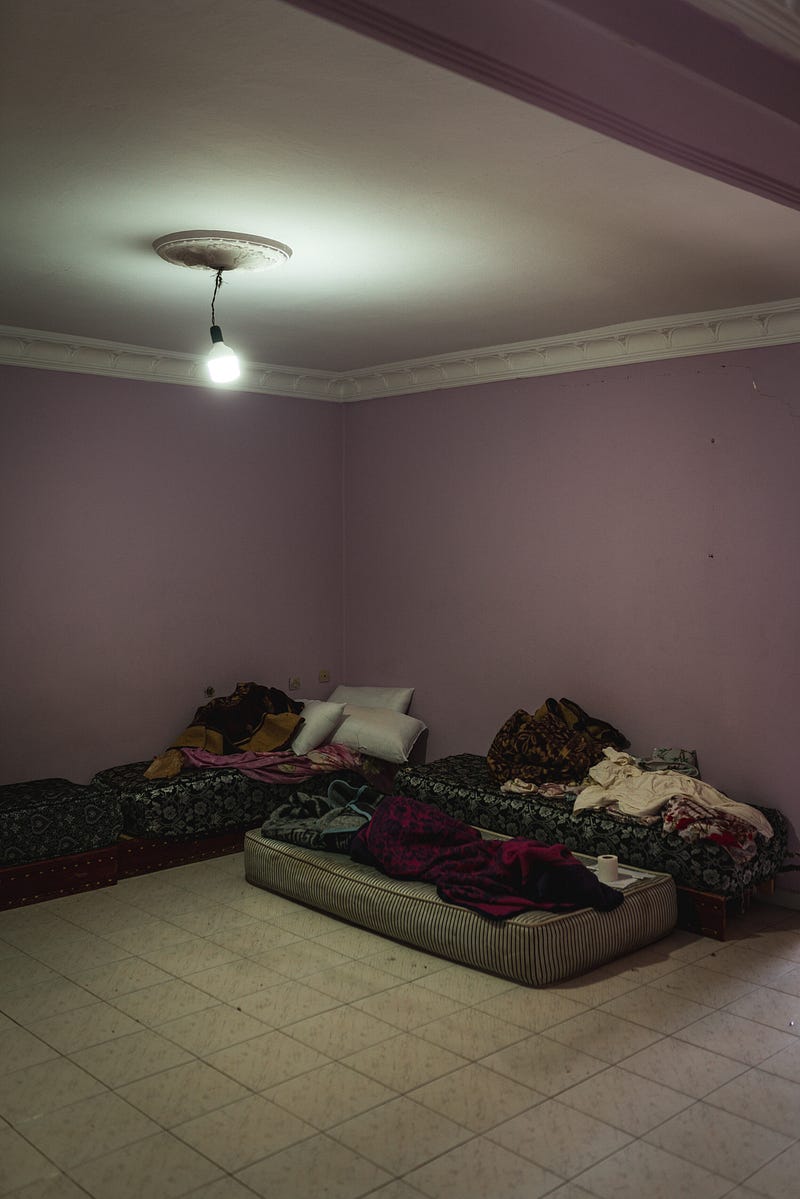
There were two side rooms, each with two or three bare mattresses on the floor, and light bulbs dangling from wire fixtures. The only chair present was a lawn chair sitting out on the terrace. The bathroom was filthy, mud all over the floor; the toilet broken and full of foul refuse, and the light didn’t work. There was a bucket so we could manually flush the toilet, which none of the girls would even touch.
The kitchen was not much better. The refrigerator was unplugged, and in it was a bowl containing rotten, forgotten leftovers from previous guests. It was late, and we were too tired to try and find other accommodation (and of course we had no internet). Indeed, we weren’t paying to stay at the apartment, but was it worth all of the trouble and discomfort?
We divided up blankets and pillows (assuming they hadn’t been washed for some time), and went to sleep, leaving any planning for the morning. The next day, I was up early and went out to find a quick breakfast of bissara (Moroccan soup famous in the North) with bread served at a local joint, reading Vonnegut’s Cat’s Cradle as I ate. I brought back some fresh harcha (a cornmeal pastry) for the girls and found that our water no longer worked. I ran downstairs and outside the apartment to check the water main. Someone had switched it off. So I turned it back on and climbed back upstairs.
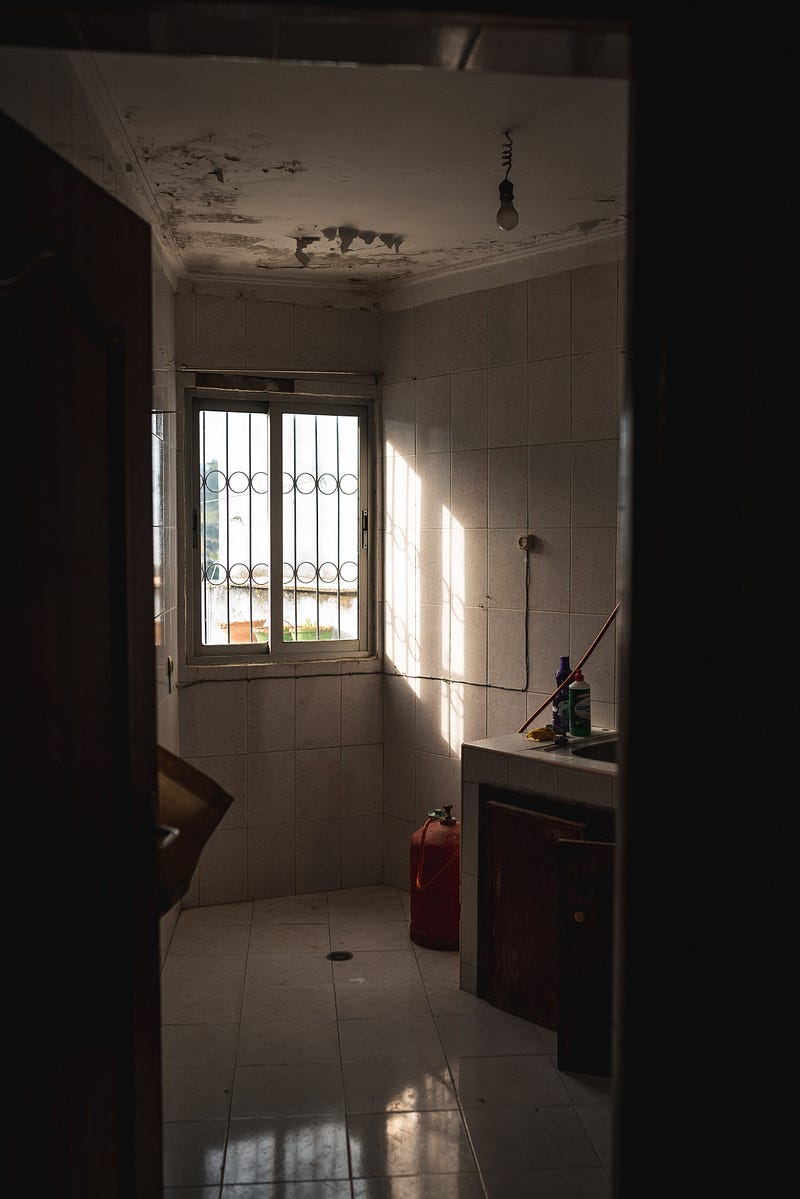
As I brushed my teeth, the water stopped yet again, and I headed back downstairs to find it had been turned off again. I climbed back upstairs to report the comical situation to the girls and found that we had visitors: the neighbors from both units below us, standing in their bathrobes in a concerned posture with arms crossed. It appeared that water had been leaking from our apartment down into the apartments below, and so they had been turning off our water, not knowing that we were upstairs. So not only could we not even use the water at our dismal apartment, but we had also caused a minor crisis for two local homeowners. “So much for our ‘free trip to Chefchaouen,’” I thought.