
A Franz Kafka Story That Illuminates Us With the Real Purpose of Life
Clearing the understanding of the right thing
Franz Kafka, a German-speaking Bohemian novelist is widely considered to be a major literary figure of the 20th century. Like Van Gogh or Mozart, he died before 40 but left an indelible mark through his insightful stories and memoirs. He died as an abject failure. The creative genius of the man was far ahead of his time.
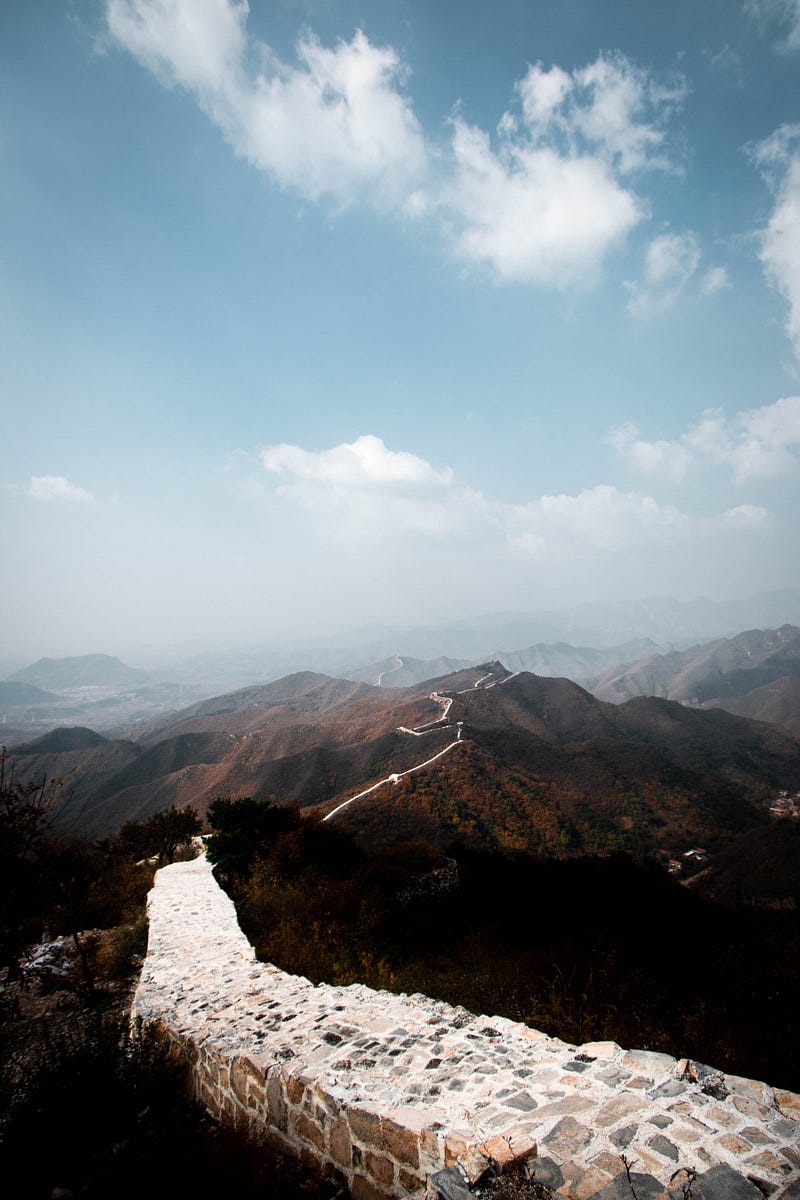
The Great Wall of China — a short story by Kafka is an allegorical account about the building of this monumental Wall whose purpose was to barricade the borders from the barbarian tribes from the north. In Kafka's story, the construction of the Wall began many years previously. Generations of men and women were enrolled to build it. These people, separated from the world, build a community of their own in the barren remoteness of the north. The conscripted workers bred and their children and grandchildren worked and died building the lengths of that Wall.
An emperor’s messenger on a horseback would reach them, typically after a gap of a decade or two. These intermittent messages were carried over in a relay through thousands of miles by a chain of runners. The Emperor sitting in a distant imperial palace passed orders about the strategic aspects of the construction.
The Emperor’s palace was so far away that one messenger couldn’t traverse the distance. These commands are always oral, nothing was in writing. The construction supervisors have no assurance whether the messenger is an authentic one or an imposter. The message always had the risk of getting hopelessly garbled while passing through a series of verbal interpretations and relays.
Furthermore, the distance is so huge and it took enormous time to cover, the likelihood that the emperor who issued the order may well be dead long before it is delivered. There is no way for messengers to know if the emperor’s successor, too, wanted the same orders to be executed or had something entirely different in mind than his predecessor.
The workers on the wall had no option but to obey the order unquestionably. Even if the instruction contradicted all the other previous ones they can’t defy the imperial directive. They had no freedom to follow the pursuit of building the wall, their lifelong dream, the way it should have been made. They were brainwashed to mindlessly follow the edict.
What if the new emperor doesn’t want the Wall to be built but demolished? What would happen to the dreams of tens of thousands of workers?
There is no plausible answer to these questions. The workers toiled on, doing what they have been doing: building the Wall. Remarkably, the Wall was built in stretches of 500 metres blocks that were later joined. The colonies of workers would be hoarded up once a stretch is finished, which roughly took 5 years. The workers would get transported to a different stretch hundreds of miles away. This scheme worked well because workers wanted to see the result of their work in the form of the finished wall.
The workers who couldn’t see, in their lifetimes, the completion of the full stretch of the wall would be crestfallen otherwise. The journey to distant places and a fresh beginning rejuvenated their flagging spirits. They always hoped of doing the right thing. If indeed there is something called ‘the right thing’, as opposed to the wrong thing — as Kafka remarked.
Their universe was limited to following the imperial commands.
This parable about the Wall, like Kafka’s other writings, has been interpreted to imply the inscrutability of the mighty powers that shape our existence. Who we are and what are we doing here? What is the meaning and purpose of everything, if at all there is such a thing as purpose or meaning?
Over the long history of humans, messengers in the form of godmen, gurus, and messiahs, came to us with instructions from an infinitely far-off Emperor telling us what we should do. Like these hapless workers, we are seldom given proof of the authenticity of these messages or messengers. We know nothing of this Emperor, of its existence or its awareness about us or our insignificant doings.
As the plight of Kafka’s workers, we know little to nothing about these unanswerable questions. We have a job at hand to build our wall — to lead our lives as best as we can, taking full responsibility for what we do.
We can’t pass the buck for our wrongs, our shortcomings, our misdeeds to a messenger, or an Emperor who may or may not exist. After all, if there is a message then it is — like the Emperor’s edict —likely twisted from its intended form. We simply don’t know!
We have no way to separate the real messenger either, from the impostor. We naively believe that both are real. We have not known a world order other than that.
The only real thing is the next decision that we are going to make, we are the mason for the next block of stone we are about to place on the Wall of our life. Our job is to place it right.
P.S.: First, you may choose to get my posts in your inbox. Do that here! Secondly, if you like to enjoy the full experience of Medium yourself, consider supporting me and thousands of other writers by signing up for a membership. It only costs $5 per month, and you have the chance to make money with your writing as well.


