
A Flexible Healthcare Is Needed for Effectively Managing COVID
COVID requires transferring resources from one state to another state

In April-May 2021, India saw a deadly second COVID wave. Within a few days, COVID cases surged. The Delhi government, like other states, was unprepared for the sudden increase in COVID cases. Bed occupancy increased from 33% to over 90%, although the cases fell after 18 days.
By January 2021, Delhi was using less than 20% of its COVID bed capacity. In February, the Delhi government decided to reduce COVID beds to 5,000. The government reduced the beds as the cases were low, and keeping up 100% of COVID beds was costing the government. But when the cases increased sharply, the downside of reducing the beds became clear: Ramping up healthcare facilities wasn’t possible at such short notice. COVID waves require the health care facilities to be flexible, spread out. If districts and states experience COIVD cases increase at different times, can the health care facilities be mobilized from states that have a low case count to worst-affected states and districts?
The second wave battered the same districts. The 145 districts that contributed for 75% of cases in the first wave, surprisingly, contributed for 80% of cases in the second wave. These districts are known as “permanently at risk” districts. These districts need a standby reserve capacity to manage the surges. If resource capacity could be broadened in these districts to track early surges and contain the spread, these districts could tackle the cases effectively.
Elasticity and Mobility
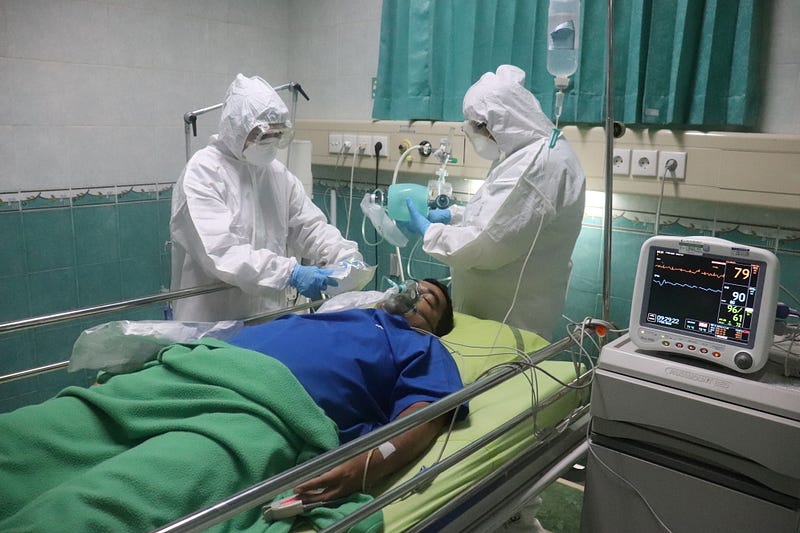
What about the health care facilities? Can the government mobilize the facility from one part of the state to another or a different state? The resources can be mobilized, but before the resources are mobilized, cost and elasticity need to be considered. Beds and concentrators have low mobility costs but have a high elasticity (supply can be imported) while ICU’s have high mobility costs. Healthcare workers have limited elasticity (one cannot train a person in a short period) but are highly mobile.
What can be done?
Even before the pandemic, India never met the WHO recommended doctor-population ratio: 1:1456 against the WHO recommendation of 1:1000.
Many states allowed final year medical students and nursing students to work as health care workers. These students are almost trained, so they require little additional training before they can work as healthcare workers. A few states also hired retired medical personnel to deal with a surge in cases.
Second, resources having high mobility costs need to be evenly spread and not limited to “permanently at-risk districts.”
Third, spatial equality entails bringing patients to resources if resources can’t be brought to patients. Patients will be willing to travel if the transport is available to take passengers to hospitals.
Last, if states can share resources, it will ensure maximum utilization of resources. But the sharing of resources depends on trust. Trust that the state which is sharing its resources will get back those resources when it needs them. A federal institution can coordinate resource sharing for effectively managing COVID.
Resource sharing was seen in the second wave between states although it was unstructured. For example, at the request of a union minister, Andhra Pradesh supplied ventilators to Maharashtra, and the Odisha Chief Minister responded positively to the request of the Maharashtra Chief Minister for oxygen supply. India cannot afford to have fixed-unutilized healthcare resources in one state, while another state exhausts its healthcare resources. For effectively managing the COVID crisis, cooperation across states is necessary.