
A Few Notes on Independent Filmmaking
(Including: A Little Rant on the Need for Quality Film Critics and Media Literacy)
A Few Notes on Independent Filmmaking
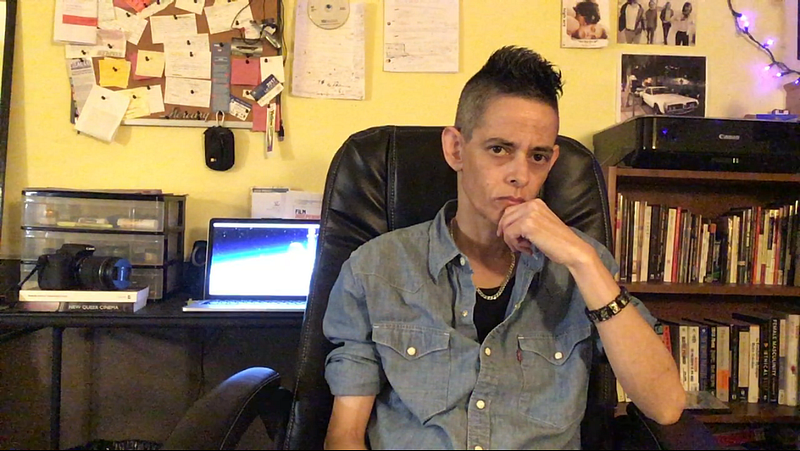
For the last several months I’ve been filming my thoughts on independent filmmaking, including an actual manifesto for a new independent film movement.
Some of the footage will be used in my feature documentary The Queer Case for Individual Rights, (which I’m preparing a work sample for right now as well.)
And some of it will be posted online in the form of several short videos, specifically for the launch of the nonprofit film organization The Auteur (in the very near future.)
I don’t want to say too much about the actual contents of the videos, other that than I’m talking about a pretty thorough examination of independent filmmaking and where we can realistically take it from here, if we want it to survive at all and be an accessible alternative to a film industry largely dominated by big budget American superhero entertainment.
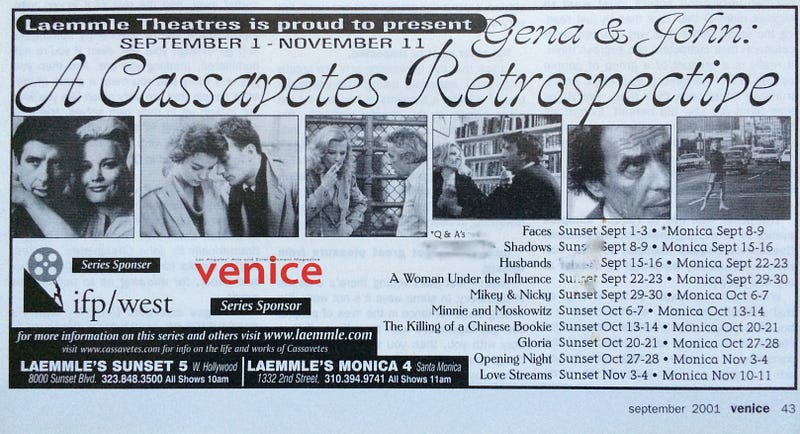
Below: Flyer for John Cassavetes Film Retrospective ‘Gena and John: A Cassavetes Retrospective’ A Bregman Films Production (2001)
I will say the following few things though.
It is pretty clear to me that big budget filmmaking is mostly reserved for an elite few, (and not something I’m very interested in on a personal level anyway,) while many of the more established independent filmmakers in the film industry have mostly crossed over into episodical television and internet shows.
However, a significant number of filmmakers, who do not make big films for the Hollywood studios nor have regular television gigs, just scramble to get by, often working mostly freelance jobs on other people’s film projects or maintaining all kinds of other jobs.
In their free time they mostly pander their creative work online, (which might get them much needed publicity and recognition for their work and the chance to build an audience, and which definitely could lead to bigger things of course but which often times does not directly translate into immediate money.
Other than a whole new generation of YouTube influencers and branders most actual filmmakers are not making their money online, as many of us probably expected would happen in the age of the internet. Instead they still rely on distribution deals from major companies.
So the players have changed but the game has pretty much stayed the same. In the 90s an independent filmmaker would be ecstatic to be picked up by Miramax Films, out of all companies of course, whereas now everyone wants a Netflix deal, which I personally don’t think is the smartest route to go at all for smaller budget projects and less established filmmakers.
I think instead that it would be wise to want distinguish yourself in the pack and actually shoot for lower budget filmmaking as a “career choice,” and as an overall preferable aesthetic, and actively promote yourself to be interested in working with smaller production and distribution companies, keeping them in business and in competition with the biggies. (Take the power away from the big companies somewhat by actively choosing to go shop elsewhere, no differently than shopping at local stores over corporate chains.)
But in general most independent filmmakers do this all “side hustling,” as it’s called these days, and increasingly more just to be able pay the skyrocketing rents in LA.
This means in reality that between a dwindling independent filmmaking industry and significantly higher rents in this industry town a fairly decent size number of very creative and talented individuals are being squeezed out or kept out of the film industry altogether, and even literally out of Los Angeles as well.
And to put some of this in perspective I just wanted to give you this little bit of my own personal background again.
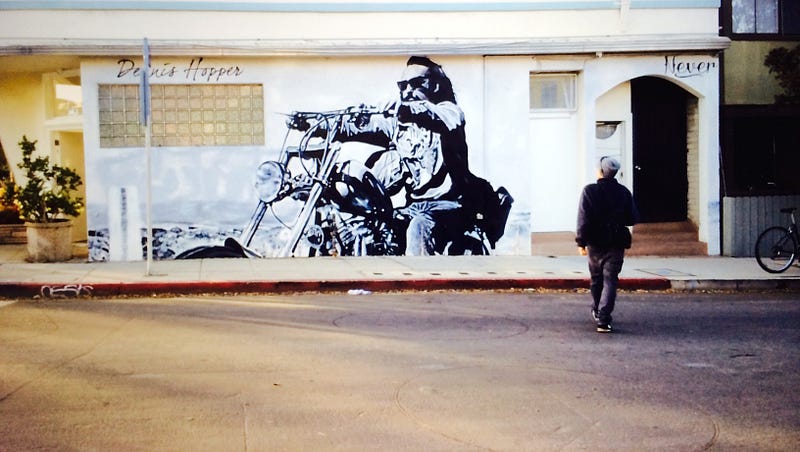
When I was growing up, in the 1980s, heavily influenced by classic 1970s films of the New Hollywood Era myself, like Sidney Lumet’s ‘Dog Day Afternoon,’ Dennis Hopper’s ‘Easy Rider,’ John Schlessinger’s ‘Midnight Cowboy,’ Terrence Malick’s ‘Badlands,’ Martin Scorsese’s ‘Taxi Driver’ and many others, which stimulated my imagination in a small town in the Netherlands to the point of deciding to become a filmmaker in the US myself, not much on the actual craft of filmmaking was available, at all.
(A lot of contemporary fare had felt too slick and commercial for me personally to really hold my attention, and I felt similarly about the Golden Age of Hollywood, which with it’s black and white glamour had seemed too glamorous for me, the black and white imagery creating mostly too much of a distance for me as well, of a past I didn’t belong to.
And while I was already exposed to, and very much appreciated, the Italian Neo Realists and the French New Wave filmmakers back in the Netherlands they still proved a little too mature for my tastes back then, didn’t have the same spark that the rebellious American 70s films had, and I didn’t really completely embrace the European Film Movements until I was already living in Los Angeles, catching a lot of those classics in the art houses here, like the New Beverly Cinema, the Landmark Theaters, and The Laemmle Theatres, where I worked myself through most of the 90s.)
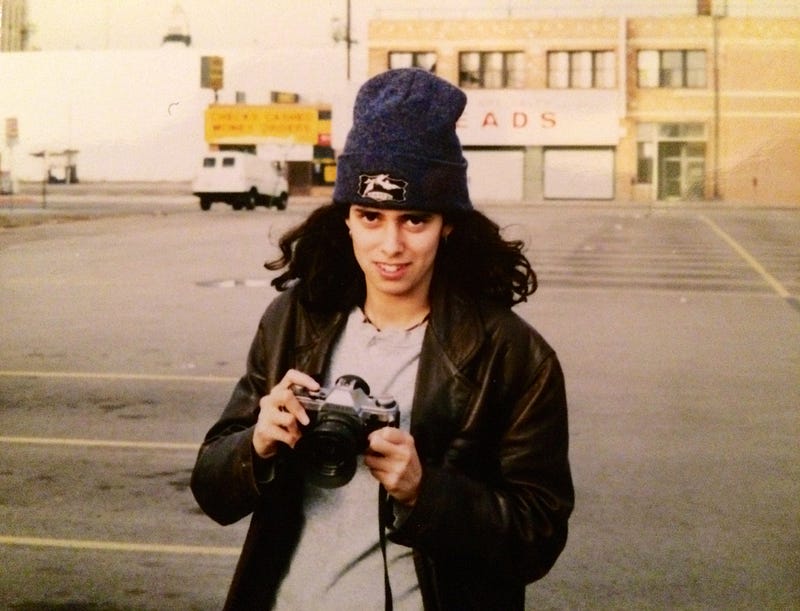
In the early 1990s, fresh out of High School in a college town called Leiden, I really didn’t know where to start, although I figured applying to get into Film School in Los Angeles might be the place.
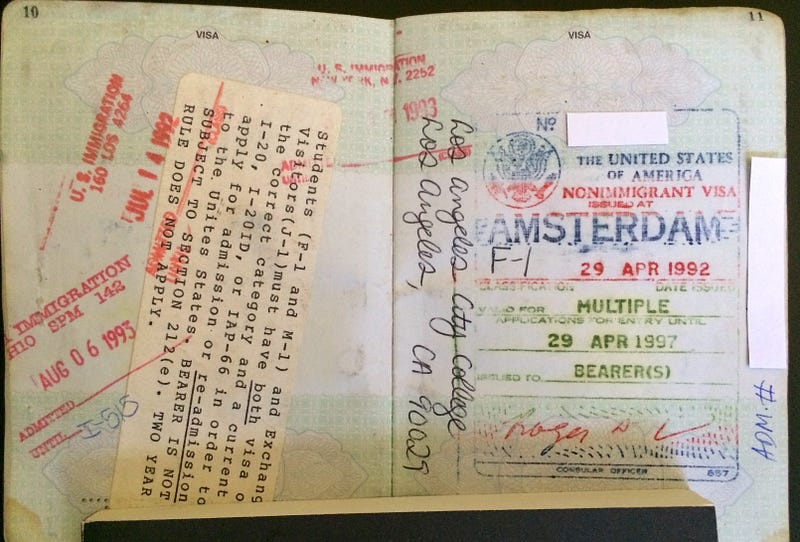
This of course essentially meant I would end up immigrating from the Netherlands to the US but even as I was going through all the motions of legally applying for my paperwork, a somewhat lengthy and costly process, I had certainly never framed it in such a big way myself.
(Technically a student enters the US on a nonimmigrant student visa but study opens up potential pathways to work and so to immigration options, even though in reality these options are practically next to nothing within the real US immigration system.
And for many heterosexual foreigners the main option becomes marriage to a US citizen, something that simply wasn’t available for LGBTQ people, not before nor during the Defense Of Marriage Act that was law of the land from 1996 until 2015, complicating things significantly for myself.
I always knew I could never voluntarily marry a man, not as a lesbian nor as a trans-masculine and gender nonconforming person, even though those gender identity affirming words weren’t even available to me to express what I felt inside all along and was just emulating on the outside unconsciously.)
If I had truly framed it this way, that I was going to have to immigrate to the US in order to actually be a filmmaker in Los Angeles, instead of just dreaming up that I was going to be a successful filmmaker in LA somehow, picturing everything from my ideal career to ideal house, ideal car, wardrobe and girlfriend and all, and if I would have known how the US immigration system truly operated as opposed to how simple and pleasant it was presented to me at the American Embassy in Amsterdam over coffee and cookies, I might have never ended up moving to the United States at all, but this only only speculation after the fact of course.
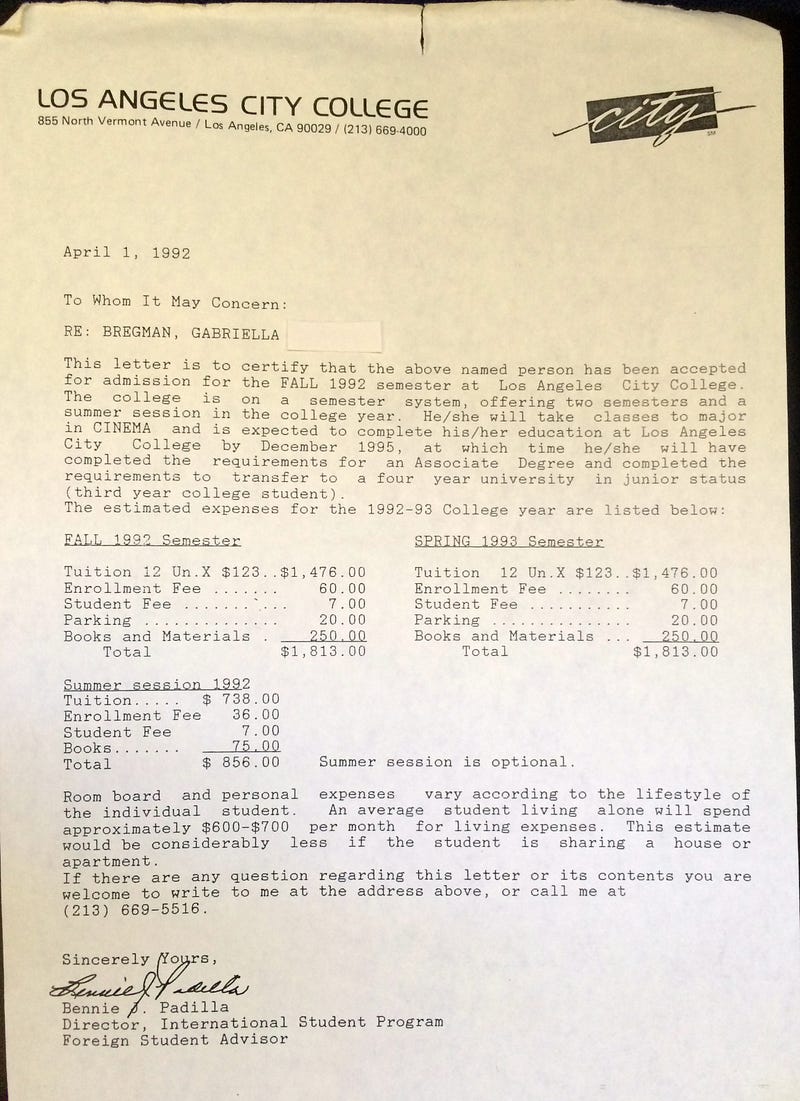
Film school (at a 4-year university) turned out to be way above my immediate budget, especially since foreigners pay way higher tuition than US citizens, and so I settled for a decent film program at a community college at a much lower cost, still expensive for out-of-state students but more reasonable anyway, to at least get the whole thing started.
I could always transfer, and UCLA seemed like a great option, (mainly because my idols at the time, James Dean and Jim Morrison had gone to film school there, not because I was actually overly familiar with their film program reputation,) but the main thing was to get into Sundance, as I already figured out as a 19 year old.
In the pre-internet early 90s I didn’t fully understand what routes filmmakers could really take at all yet but I somehow came at it more from an artist’s perspective, and was inspired by people like James Dean and Jim Morrison exactly because they seemed to have some sort of unique passion and vision and they would attempt to take charge of their lives, creatively and financially and in every way, and as an LGBTQ kid growing up in the homophobic 80s this is exactly what I subconsciously craved for.
In hindsight I’m surprised I was actually able to think even this practical back then but I desperately wanted to be a filmmaker in LA, and so I was just doing what seemed possible to attain that.
On some level it had sort of escaped me that the New Hollywood Era I was so inspired by was in fact long over though, and I was actually growing up in the more commercially oriented 1980s.
But by the late 1980s I had started to see signs of change and opportunity. A small badge of really interesting independent films started popping up out of the US and making its’ way into European movie theaters and art houses and I started catching films like ‘Drugstore Cowboy’ and ‘My Own Private Idaho’ by a then new filmmaker Gus Van Sant, and She’s Gotta Have It and ‘Do The Right Thing’ by a then new filmmaker Spike Lee, and ‘Sex, Lies, and Videotape’ by a then new filmmaker Stephen Soderbergh, the latter which got sold on the spot at Sundance in 1989, putting the Sundance Film Festival on the map as the go to place for new filmmakers, and setting in motion the new independent film movement of the 1990s.
(I always thought it was kind of ironic John Cassavetes, widely regarded as “the father of independent cinema” in the US died in February of 1989, only weeks before this fateful sale.)
So by 1992, when I actually moved to Los Angeles as a film student on a student visa through enrollment in the Film Program at Los Angeles City College, by myself at age 19, the filmmaking landscape had already begun to significantly change in my favor.
Even though it took me quite a long while to fully realize that as a person belonging to the LGBTQ community, and having my immigration status challenged under DOMA, and technically being treated as a woman in Hollywood, and so necessarily heterosexual as well, despite my trans-masculine and gender nonconforming gender identity and lesbian sexual orientation, my chances at being a filmmaker would be a hell of a lot smaller.
A whole new independent film industry had just started to burgeoning when I arrived in LA in ’92, and the school campus was buzzing with excitement at the possibilities in the coming years, as the new titles and filmmakers kept rolling out, Quentin Tarantino with ‘Reservoir Dogs,’ ‘Pulp Fiction,’ Richard Linklater’s ‘Slacker,’ ‘Dazed and Confused,’ Robert Rodriguez’s ‘El Mariachi,’ (the $6000 budget alone making anyone giddy at the wide open opportunities that lay ahead,) Allison Anders’ ‘Gas, Food, Lodging,’ ‘Mi Vida Loca,’ Jennie Livingston’s ‘Paris is Burning,’ Michael Moore’s ‘Roger & Me,’ Rob Epstein and Jeffrey Friedman’s ‘The Celluloid Closet,’ Todd Haynes’ ‘Velvet Goldmine,’ Larry Clark’s ‘Kids’ and the list kept growing.
And even more encouraging by the mid-90s was what was then called “the digital revolution,” the invention of digital cameras and at consumer prices, (I had to start out on Super 8 film cameras with Nagra recorders and work my way up to 16 mm, with the dreaded 35 mm blowup print to look forward to to be accepted into any festival then,) and this also gave birth to the Swedish film collective Dogme ’95, led by Lars Von Trier, who took absolutely full advantage of this revolution, (and without even having to leave his native Sweden.)
And then finally there was the internet, initially primitive but with social media options ever expanding seemingly opening up an unheard of range of marketing and exhibition possibilities for low budget filmmakers.
But somehow it all ended up disintegrating anyway and the almost endlessly diversified media landscape that is the internet, (and most definitely controlled by a just few big corporations in the big picture of course,) becomes increasingly difficult to navigate for any realistic filmmaking avenues that might lead to making a living anymore for creative individuals.
So to come back to the present, just the following.
I’ve kind of come to the conclusion that documentary is basically the new independent filmmaking, in terms of what type of film funding is available in the lower budget ranges anymore anyway, and while I am personally super excited about the booming documentary industry, as I absolutely love documentaries and am of course making one myself currently, I don’t want it to become a replacement neither.
Independent filmmakers of all sorts face a strange and limiting challenge financially to either resort to horror, which though wildly popular is not for everybody and certainly not for me, or episodical, with its’ own pros and cons, or documentary, which is not something to be entered in to for convenience’s sake.
Documentary filmmaking is its’ own specialty filmmaking, reserved for a unique kind of truthfulness, which must be fully respected. But independent narrative filmmaking is its’ own creative thing, and I honestly fear it’s on the verge of almost going extinct, at least within the US.
Of course smaller narrative films are still being made but the funding has become increasingly limited, and documentary has actually become a safer alternative for many filmmakers but like I said documentary serves a unique purpose, as it deals with truthfulness to just about the largest extent that is creatively possible.
The heyday of small film production and distribution companies (pretty much the 1990s) is long over, and with it specialized distribution and exhibition of lower budget, artistic films went mostly out the window as well.
I’ve witnessed many of the changes firsthand in my 27 years of living and working in Los Angeles.
Many of the actual buildings on Santa Monica Blvd. and Sunset Blvd. and a bunch of other main streets housed small film production companies and one by one they went out of of business and got replaced by other, bigger companies. Just as a number of the buildings themselves eventually got torn down and made way for bigger buildings.
And just like all the little coffee houses with their sunken couches and poetry nights disappeared, and made way for the few big coffee store chains, and just like all the small and second hand book stores disappeared, making way for chain bookstores, which then also mostly disappeared, and just like the record stores, the second hand clothing shops, the mom and pop pizza joints, etc., are all gone and mostly replaced by big ugly corporations in big ugly corporate buildings.
So I believe we have to reinvent the rules of independent filmmaking once again, (as has happened many times before in the history of independent filmmaking,) if if we want it to stay alive, as an enjoyable art form and as a way to make a living.
In my videos I attempt at coming up with ways to do this, taking it all the way to the basics in order to reform filmmaking from the ground up, from examining the actual functions of art in human life to the crucial importance of viewing filmmaking as an art form rather than just entertainment and as a form of escape from reality, and come up with actual, realistic ways to accomplish this creatively and financially.
Not only is the art of independent filmmaking worth saving because film is beautiful as an art form and has brought us many wonderful films throughout its’ existence but it is realistically foolish to think that big budget filmmaking will be accessible to most of us.
This is particularly important to keep in mind for creative people who belong to minority groups.
While I obviously champion inclusion and diversity in the more mainstream branches of the industry I really think it is simply foolish to believe you are going to get handed the big bucks and cash in on some blockbuster success and have an actual career based on that.
This will happen to few and far in between and in the meantime most talented and passionate filmmakers won’t ever see a creative penny to pay their rent with.
If you live in Los Angeles as I do, (and I do believe there are still many benefits to actually living in LA itself if you want to make a living being a filmmaker in the US,) you will continue to see panels on the many trends coming and going in the film industry but very few will go into depth about any kind of reform that is needed from the ground up.
We simply have to make filmmaking more financially sustainable again. We have to seriously simplify on methods and techniques and equipment and get deeper into story and acting again.
We need less people working in a wide variety of smaller jobs in a chain of command on big film sets, and more people in creatively satisfying jobs on a wide variety of smaller projects instead.
And most importantly, we need to recognize the true meaning of the art of filmmaking as a deep need for authenticity, to see vulnerability, to feel related, to share small heroics and big insecurities, to use independent filmmaking to make sense of our shared human experience, and not use it as an escape from it.
A Little Rant on the Need for Quality Film Critics and Media Literacy
I think the art and craft of Film Criticism, as a way to make a living for a writer, should be taught, to garner more interest in it, as an actual profession. I haven’t really seen this in Los Angeles and since there’s a real problem with the exclusion of female film critics I just think that Film Criticism and Media Literacy in general should be paid more attention to.
There are also more opportunities than ever to have individual articles, as well as whole publications, (like online film magazines for instance,) published on writers platforms like medium.com, (including paid opportunities through their Medium Partner Program,) so Film Criticism does stand a real chance to improve.
It would also be smart if filmmakers themselves reviewed other filmmakers’ work more often, I mean write actual film reviews of their fellow filmmakers’ work, and get that published online and in print somehow. This goes particularly for women of course.
There’s really no reason for professional film critics to review films exclusively, since filmmakers and writers should and do have the capabilities to intelligently “judge” other artists’ work as well.
Filmmakers vote for each other’s work. Why not review and interview each other more often?
I’ve personally always appreciated the whole concept of the Cahiers du Cinema of the French New Wave film movement, and do like the idea of film reviewing in general, even if I don’t necessarily rely on reviews when picking films to watch myself but I could see the value in it for a more general public, who could use some more education in media literacy.
In a sense mainstream audiences do need to be more stimulated to watch intelligent films, and film reviewing as well as film interviews need to really improve on quality if you want audiences to be more sensible and actually appreciate smaller, independent films.
And since a lot of interviewers in general seem less interested in what filmmakers and actors actually have to say about films they’ve made, and more interested in their own programs’ ratings, filmmakers and actors should take more active control of interviews, by consistently steering these interviewers back to the subject of the film, rather than digress into general chatter and fame worship basically.
A real interest in smaller, independent films should be stirred in the more general public if we want to keep the art of independent filmmaking alive. Mainstream films don’t really do anything to keep a lot of filmmakers in business, and focus only on a small, privileged group to make the big money, so if filmmakers want to continue working in the actual film industry we’d all be smart to downsize on budgets more often, and get people exited about filmmaking as a real art form again.
Thank you for reading,
The Auteur
An Independent Filmmakers Publication
Brief Bio:
My name is Gabriella Bregman, I am a Writer-Filmmaker-Producer.
I identify as a Gender Nonconforming Lesbian, (“non-op”) Trans-Masculine, am Bi-Racial (white & Asian,) from the Netherlands, and Los Angeles-based.
My pronouns are: they/them/theirs.
I also go by Orlando, as in Gabriella Orlando Bregman, (in a nod to Virginia Woolf.)
I am currently in production of a Feature Documentary titled ‘The Queer Case for Individual Rights’ through Los Angeles-based Film Production Company Bregman Films.
The Documentary is about LGBTQ US-Immigration Exclusion-Policy, including my personal story of US immigration discrimination as International Film Student under DOMA (Defense Of Marriage Act, 1996–2015.)
It is based on the book ‘The Queer Case for Individual Rights & Other Essays’ (2020.)
The John Cassavetes Film Retrospective ‘Gena and John: A Cassavetes Retrospective’ at the Laemmle Theatres in Los Angeles is a Bregman Films Production (2001.)
I am the Founder of a Nonprofit Film Organization The Auteur (2020)(theauteur.org) and an accompanying Film Theory & Film Criticism Publication The Auteur: An Independent Filmmakers Publication at medium.com/theauteur
A small book of Film Theory articles titled ‘Notes for a New Independent Film Movement’ will also be published in 2020, including a 4-Point Film Manifesto for a new Independent Film Movement.
And a related, untitled Feature Documentary project is in early development stages.
Below is a Complete List of Articles as they will appear in Book Format, titled: ‘The Queer Case for Individual Rights & Other Essays’ (2019)