
A Few Odd Birds I’ve Seen in San Francisco
And how to start watching and identifying birds
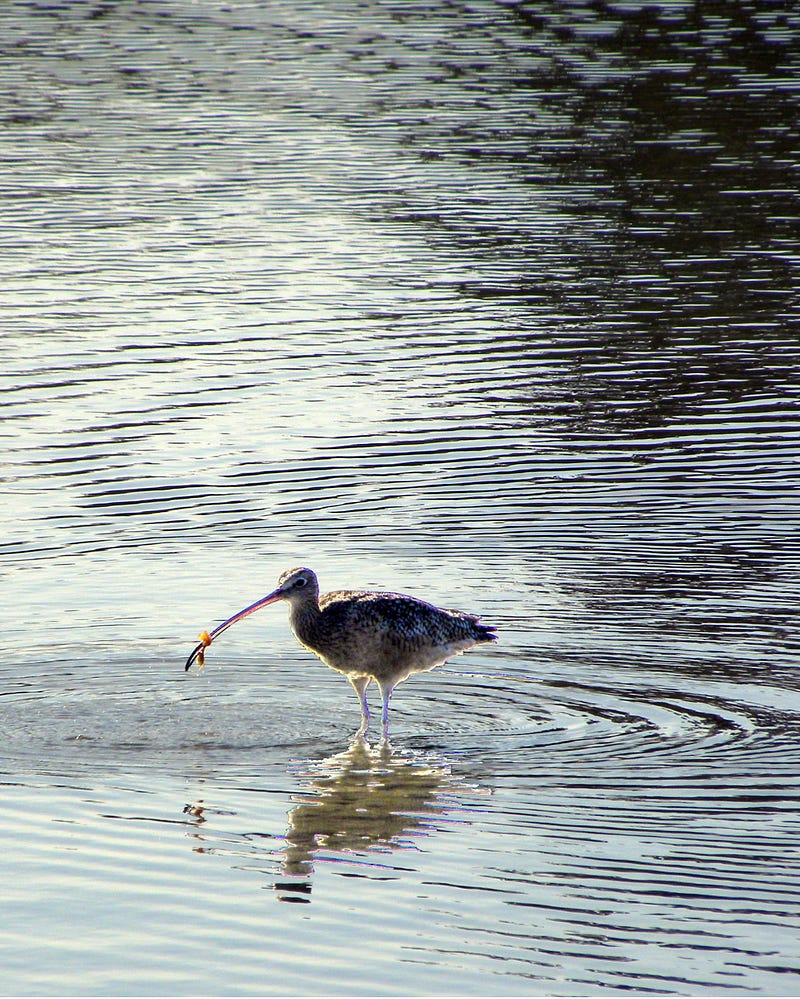
A couple of articles got me interested in birdwatching. The first, on how to do nothing, (which I’m pretty good at), described a relationship the author had with some crows. She started leaving nuts out for them on her balcony and soon enough, they were following her down the street when she went for a walk, hopping along behind her in their happy crow gait. She went on to inform readers how intelligent crows were, and that they could recognize individual people and pass on information like “this is a good human” or “this is a bad human” to their family and friends. Besides the charming and fascinating article, I liked that the author was a woman, that she lived near me in Oakland, California, and that her observations were made in my general area.
The second was an article on how to recognize birds by their song. This story led me to some super fun and interesting resources, like the Merlin Bird ID app; The Backyard Birdsong Guide, a book with recorded snippets of songs from 150 types of bird; and the Cornell Lab of Ornithology, a vast off- and online resource involved in the creation of both the book and the app.
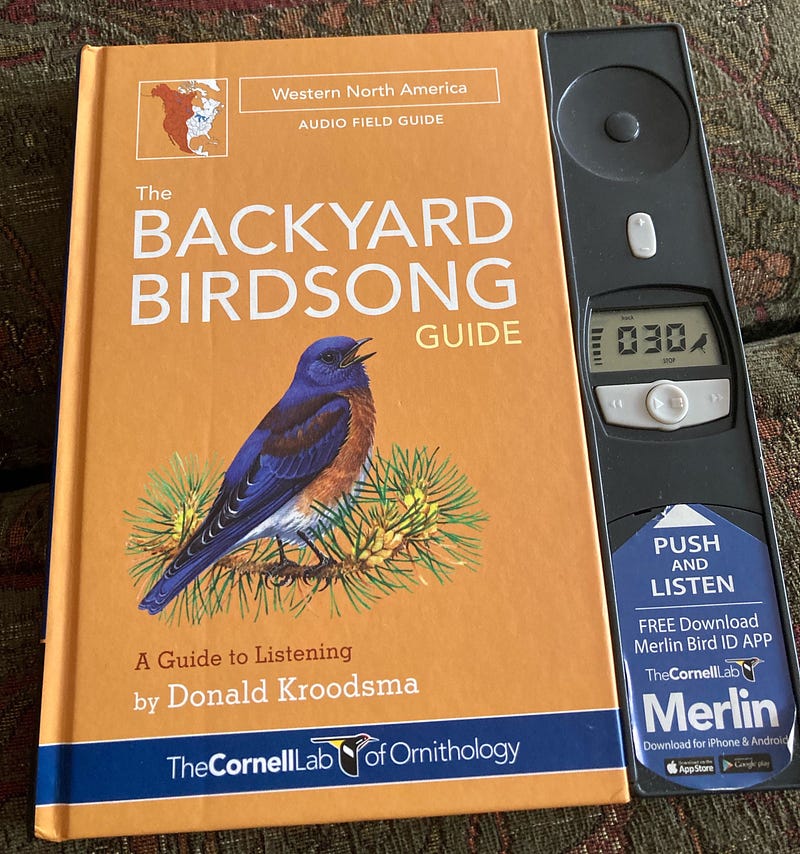
It was because I’d spent time listening to the birdsongs in that book with my baby granddaughter that I noticed a red-tailed hawk flying overhead when I was having lunch outside in Yerba Buena Gardens recently. I heard the distinctive scree scree sound of the hawk, looked up, and pointed it out to my companions, who were suitably impressed.
Soon after getting the book I downloaded the app, and the first time I used it to identify a bird was a revelation. My partner and I were walking along next to the Bay out by Marina Green when we spotted a bird on the rocks that I’d never seen before. He was something like a duck, but bigger, blacker, and had a bright red bill with a funny looking spot on his beak that mimicked an eyeball. I opened my app, answered four questions, and voila! There was my bird!
It was a Surf Scoter, which the app describes as a “large, dark sea duck” which “dives for mussels and other aquatic invertebrates.” I was amazed that Merlin Bird ID could figure out what kind of bird I was looking at based on such sparse information. It asked where I was geographically, the general size and colors of the bird, and what it was doing, e.g. swimming or flying, then provided a list of possibilities.
Since that first happy experience I’ve identified several more birds and am beginning to feel like a pretty good “bird noticer,” as Jenny Odell dubs herself in one of the many reviews of her book: How to Do Nothing: Resisting the Attention Economy.
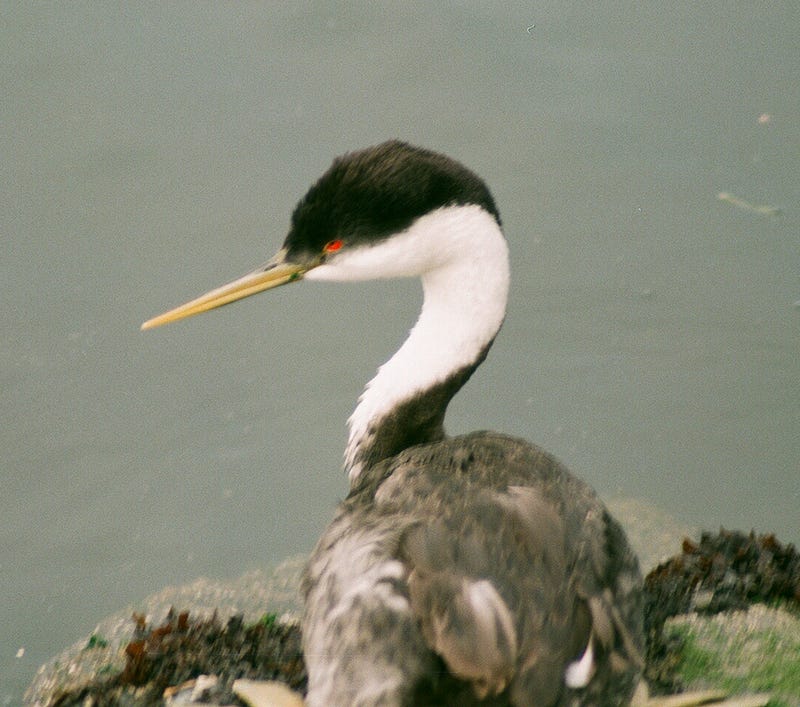
One time I noticed a bird in Aquatic Park which didn’t show up on Merlin’s list after I answered the four questions. That led me eventually to download eBird, another app which is gathering data about birds from citizen ornithologists. Unlike Merlin, eBird allowed me to choose my bird from its entire list, so I was able to record seeing a Western Grebe. But eBird asks a lot more questions than Merlin, and I’m not usually in the mood to answer them while out walking around. I’m not sure why the Grebe didn’t appear on Merlin’s list. Was it perhaps out of place — in an unexpected habitat?
My partner and I are also in a new habitat. We moved to an apartment in the Marina District a year and a half ago, and at first I didn’t like the location because it feels suburban. But over time I came to appreciate the ready access to the Bay. We can get out on a walking and biking path and take it all the way to the Golden Gate Bridge if we’re feeling energetic. Along the way, we pass Chrissy Field Lagoon, a total bird hangout. That’s where I first noticed this beautiful flock of Elegant Terns, or possibly Caspian Terns or Forster’s Terns — the distinction is beyond me.
I’d seen these pretty, small white birds before, but never wondered what they were called. Once I began noticing birds, I was charmed by their interesting names, which often sound musical or poetic, and sometimes humorous. One day I’ll make an ASMR sound track over the video above, whispering the names of several birds you might see in Chrissy Field Lagoon.
Killdeer, Whimbrel, Marbled Godwit, Mourning Dove, Black Phoebe, Scub-Jay, Cliff Swallow, Wilson’s Snipe, Hooded Oriole, Snowy Plover, Surfbird, Sanderling, Wandering Tattler, Greater Yellowlegs, Common Murre, Northern Flicker, Hermit Thrush, Common Yellowthroat, Western Meadowlark,Belted Kingfisher, Red-Throated Loon…
Just yesterday we were walking along the lagoon when I noticed a small, fluffy bird with a black and white head diving under water. The Merlin app informed me it was a “squat diving duck” known as a Bufflehead, which is now my new favorite taunt: “Don’t be a bufflehead!”
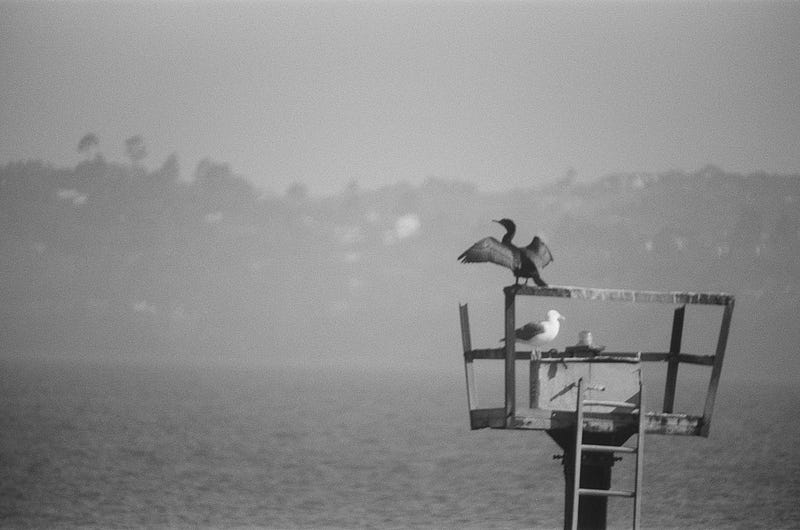

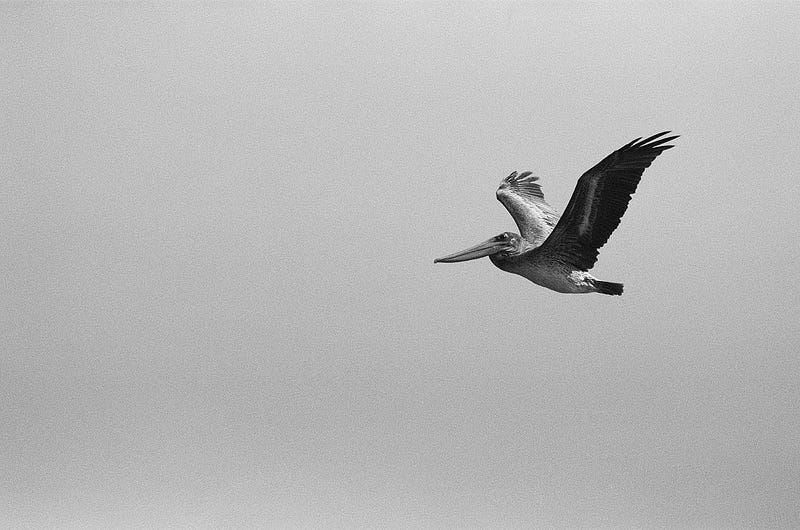
Bay Area residents are used to seeing seagulls everywhere, and pigeons, and pelicans, and Canada geese, who’ve decided they aren’t that into migration, and crows. It took me a little longer to identify cormorants, the ancient species of diving bird that has to hold its wings out to dry in the sun since it lacks the water-repelling oil on its feathers that most waterfowl have. Now I see them standing around with their wings out everywhere I look.
Other common sights near the water’s edge are Great Blue Herons and Snowy Egrets. It’s marvelous to be walking along and suddenly encounter a 3-foot-tall bird doing same.
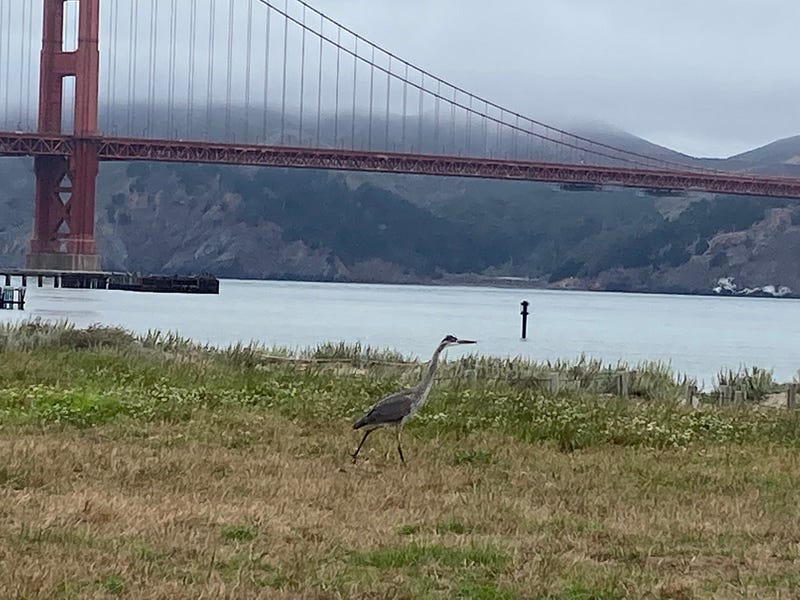
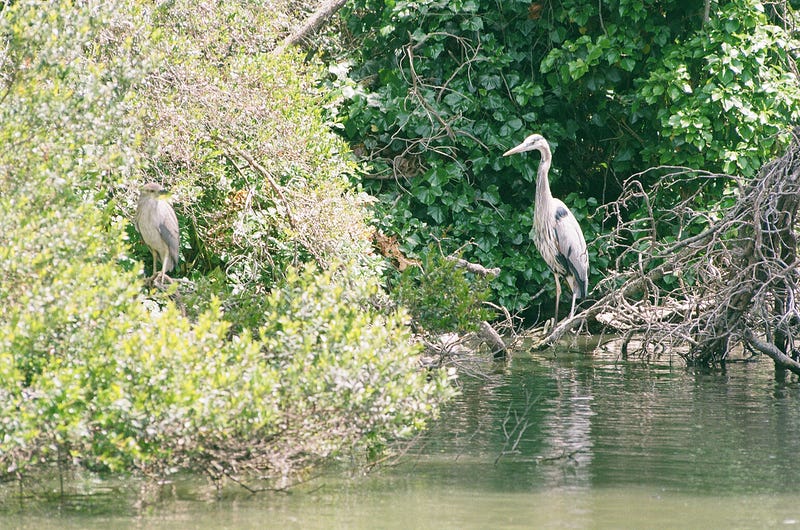
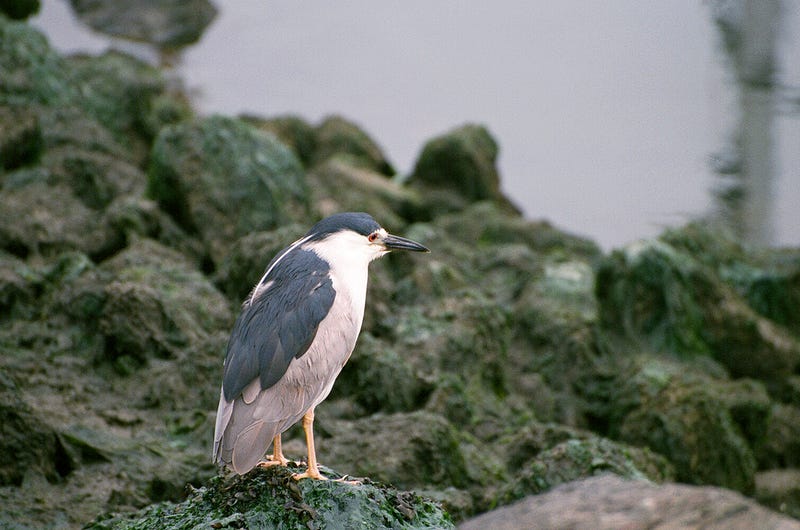
Another place herons like to hang out is the lagoon at the Palace of Fine Arts, where you’ll find both the Great Blue and the Black-Crowned varieties, which I assume are related, but look nothing alike. The Great Blue Heron stands tall, while the Black-Crowned Night Heron looks like a grumpy old man, with his neck all scrunched up and his head burrowed into his chest.

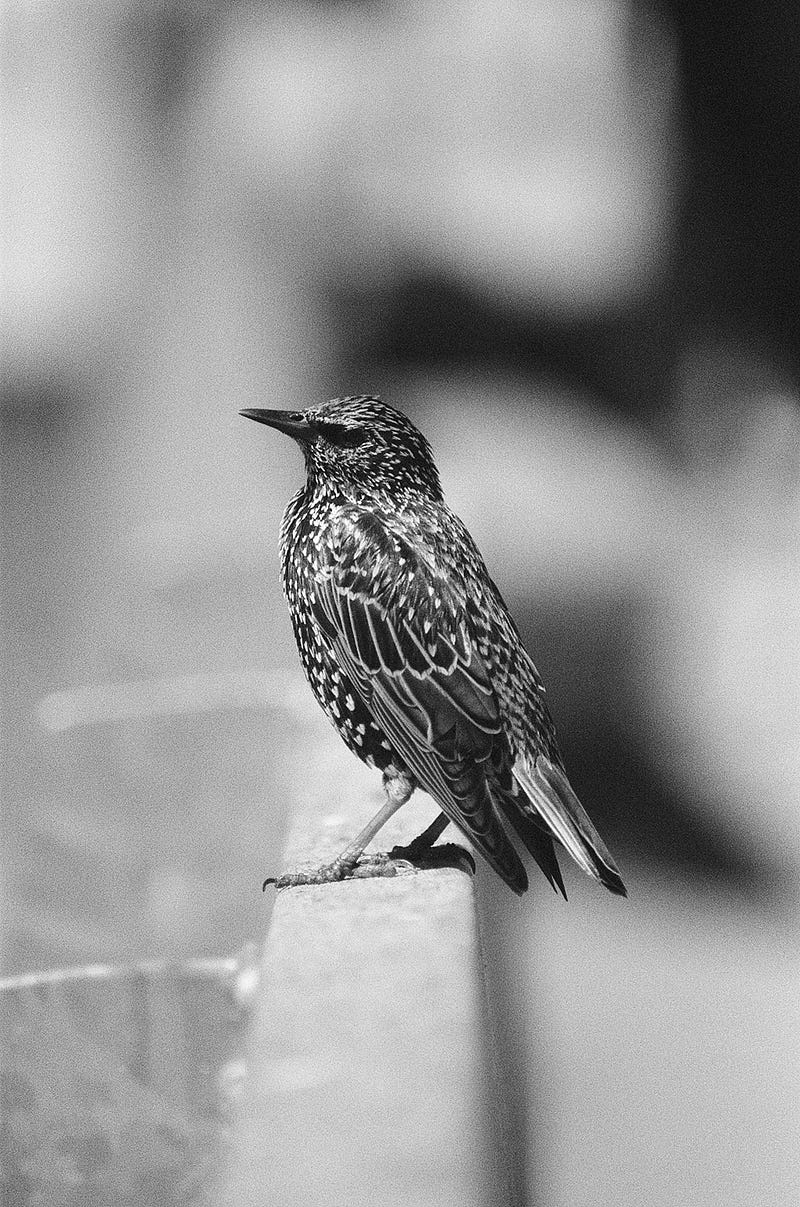
I was impressed by the iridescent coat of the European Starling, which glimmers in the sunlight like mother of pearl. Then on the TV Series Ozark I learned it was a pest when the son asked for permission to shoot them. How is pest status determined? I was also happy to meet my first chickadee, being a fan of W.C. Fields, who often called women “my little chickadee” and understood the special magic of language.
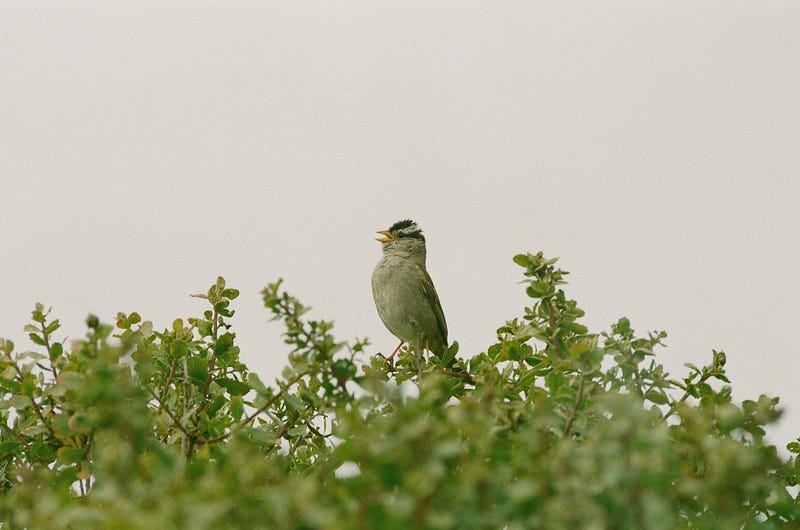
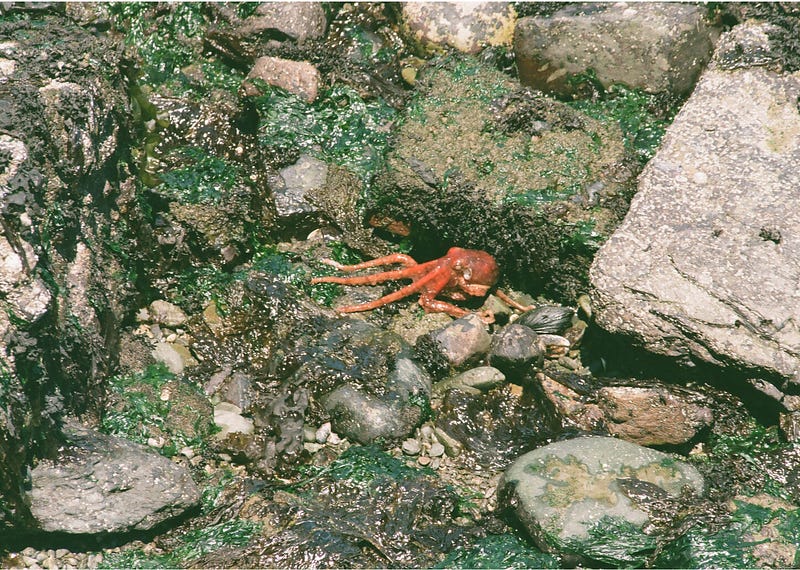
Keeping my eye out for birds has made me more observant of wildlife in general, which may be why I spotted this small red octopus slithering over the rocks on the edge of the Bay by Marina Green, apparently looking for food. We looked it up later and found this species — the East Pacific Red Octopus — used to be common in the Bay, but has rarely been encountered lately. So the fact that we saw one is a bit of good news.
With the constant onslaught of alarming and upsetting news on every outlet, one good way to decompress and lower your anxiety is to get outside and walk around. The world is, perhaps, not quite as crazy or on the brink of collapse as it looks on TV and sounds in the newspapers.
Whether you live in a big city or out in the country, you will surely see and hear some birds once you get outside. Download Merlin Bird ID if you want to start identifying them. It’s uplifting and fun.
For more of the good stuff, follow Fourth Wave, where we’re changing the world for the better, one story at a time. Got one of your own? Submit to the Wave!


