
A Female Tech Industry Veteran’s Response to the Googler’s Manifesto
Not Only is the Proposition Sexist and Offensive, It’s Bad For Businesses and Their Customers
As a futurist and design/user experience/market researcher who has spent nearly 25 years in the tech industry, I have now run across too many revelations regarding sexism in Silicon Valley (and Silicon Valley North, where I live) to remain silent about my story any longer.
Especially not now that Silicon Valley sexism is being immortalized and shared widely, having an effect on a culture that is already intolerant, uninclusive, and without remorse for the human toll their short-sighted policies create. Google’s recent PR nightmare — a manifesto created by one of their male engineers, called ‘Google’s Ideological Echo Chamber’ is littered with stereotypical stances (females are neurotic, anxiety-prone, etc.) and supposedly biological rationale for why women should be excluded and why a gender pay gap is reasonable. It’s basically ten pages of the same sort of rhetoric the alt-right has been spinning — men are being oppressed by female demands for equality, which is not deserved because only men are good at software engineering:
These two differences in part explain why women relatively prefer jobs in social or artistic areas. More men may like coding because it requires systemizing and even within SWEs, comparatively more women work on front end, which deals with both people and aesthetics.
Neuroticism (higher anxiety, lower stress tolerance).This may contribute to the higher levels of anxiety women report on Googlegeist and to the lower number of women in high stress jobs.
Competitiveness and self reliance can be valuable traits and we shouldn’t necessarily disadvantage those that have them, like what’s been done in education. Women on average are more prone to anxiety.
In addition to the Left’s affinity for those it sees as weak, humans are generally biased towards protecting females. As mentioned before, this likely evolved because males are biologically disposable and because women are generally more cooperative and areeable (sic) than men. We have extensive government and Google programs, fields of study, and legal and social norms to protect women, but when a man complains about a gender issue issue [sic] affecting men, he’s labelled as a misogynist and whiner[10]. Nearly every difference between men and women is interpreted as a form of women’s oppression. As with many things in life, gender differences are often a case of “grass being greener on the other side”; unfortunately, taxpayer and Google money is spent to water only one side of the lawn.
My Perspective as a Contributor to Dozens of Tech Industry Projects
I can assure anyone that I am very good at software engineering myself, but I have struggled for recognition and inclusion throughout my career. This despite decades of effort constructing a design savvy and sensibility, as well as familiarity with all aspects of software engineering, including strategy, UX/UI (user interface) and information/interaction design, prototyping, content development, coding, scripting, databases, etc.
As you can imagine, this movement to marginalize people like me, while utilizing us for work we will not be recognized for, is not only unfair, it’s illegal. But it happens anyway. We female and minority employees try to adapt, but through that adaptation we have had to relinquish certain fundamental rights. Rights that I thought were sacrosanct in our culture and the new industries we have been inventing.
The biggest problems in the tech industry have to do with waste, inefficiency, limiting cultural beliefs including elitism and exclusion, and systems-centric approaches to software and human factors. Some of the policies are flagrantly abusive of women and minorities, the disabled, and other undesirable groups, despite all we have to offer.
I, personally, am a socio-cultural anthropologist and design/UX (user experience) researcher with a B.A. in anthro from UC Berkeley, a master’s in Education, and a Ph.D. in Screen and Media studies. I study users and other audiences starting with their role as human beings, work I have been doing since first inspired by Jakob Nielsen’s Alert Box (a usability site) in the 1990s. I started my career in very technical roles (systems integration, networks, technical support, web development), but moved into more creative/front end roles as my career progressed. I found that there was a gap in backend development due to a lack of understanding of the users they were trying to serve — I began trying to apply my academic skills for human observation to these problems. I also did a lot of academic work related to technology, learning, and gaming/virtual worlds. (Google Scholar)
I found out early in my career that I was as nerdy and knowledgeable as my male counterparts. I was raised on Star Trek and got my first computer at 15. Attended user group meetings and programmed in BASIC. I’ve also been on BBSes (bulletin board systems) and the Internet since the pre-graphical days myself, and have always had some site or community I have run, in addition to work in IT (networks and systems), web design and development, learning and game design and development, marketing, business strategy and management, business development, as well as coding, scripting, databases, etc. I am both technical and design-oriented, but I tend to lead with people and strategy. (LinkedIn)
I spent 25 years in the tech industry, which is dominated by what I referred to as ‘masculine’ approaches to business. Very few women are able to crack the silicon ceiling, because of a lack of respect for how we choose to work and a lack of awareness that there is another way. I also see this happening in other corporate and governmental milieus. I think ‘male’ culture is privileged, because men vastly outnumber women in STEM-related settings. Women therefore try to conform to the established culture, but it means many missed opportunities to mentor them into leadership roles they can excel at. (Source: Why I Wrote How to Lead Like a Woman)
As a culture, I understand our Western Internet well. I am both consumer and participant and creator of Internet things, one of which was nominated for a Webby way back at the turn of the century. I have always encouraged understanding people and their natural proclivities first, then I have conducted user research and led teams to design tech that responds naturally to our inherent proclivities. My role is not a common one, even at companies like Microsoft and Amazon, where I have worked only as a contract employee (despite half a dozen contract roles and applying for dozens of permanent roles over the years), embedded with design and development teams, usually only brought in late in the software development lifecycle, when my input cannot substantially benefit projects already in crunch and wanting to push a less-than-ideal product out the door. In fact, it became well-established in UX research circles at Microsoft that researchers had been relegated to bug testing roles (products were not thoroughly bug tested before user research studies), which I also experienced myself.
What we really have is a problem of culture in the tech industry and engineering circles, and the predominantly male populations that guide the formation of that culture. Seeking diversity and equality is an absolute necessity in the tech sector, not just because it is the moral or empathetic thing to do, but because it is what fuels innovation. It also means that not all software is being designed for young, white guys rather than the actual realities of the marketplaces companies like Google, Amazon, and Microsoft seek to serve.
What does the tech industry really need to work on? Some innovation and creativity-limiting habits and practices that I have observed this last quarter century:
1. Cognitive Intelligence Is Privileged Over Emotional and Social Intelligence
Diversity should not only apply to our physical dimensions, but our psycho-social ones, as well. But the Googler’s Manifesto refers to a sort of ideological control and domination meant to demean and marginalize female engineers.
What I am is an engineer, and I was rather surprised that anyone has managed to make it this far without understanding some very basic points about what the job is. The manifesto talks about making “software engineering more people-oriented with pair programming and more collaboration” but that this is fundamentally limited by “how people-oriented certain roles and Google can be;” and even more surprisingly, it has an entire section titled “de-emphasize empathy,” as one of the proposed solutions. — Yonatan Zunger, formerly Google
Also, forgetting that diversity is the leading cause of innovation:
2. Not Aspiring to Optimal, Cohesive User Experiences
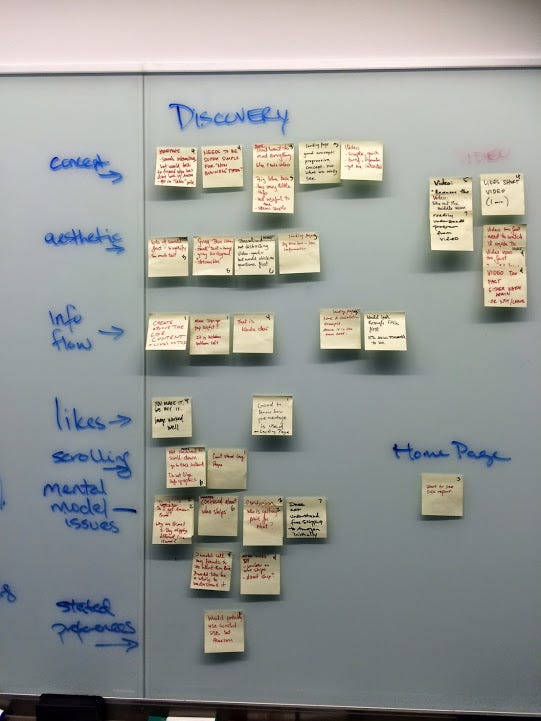
I have had clients and co-workers tell me that user or market research is unnecessary because they are the experts and they know what’s best. I have worked on projects where I was brought in as a contractor on the 45th design iteration in a project in decision grid-lock (at a major tech company), where it turned out that nobody on the 40-person team knew what the business model for the new service was. They also didn’t know who their target audiences were. So I spent 4 months working 60-hour weeks (paid for 45 hours only) with senior management, designers, and developers to get their million dollar project back on track. The process? A complex blend of market and user research that had to start at the beginning. What problem are we solving? And for whom?
My fate for being the bearer of bad news from their actual audience around the time the unnecessary service was to be launched? Terminated with no reason given when I was working at home caring for my sick child. I also reported some egregious human resources violations (too terrible for me to write about yet) at one of their subsidiaries. I still don’t know what caused them to terminate me days after my manager said my contract would be extended and I might even be promoted to a blue-badge carrying permanent employee of Amazon. I had just gotten on health insurance that month, and my agency didn’t even offer me COBRA, which I know is illegal, but I was unable to hold them accountable despite my best efforts at the time.
My role as an advocate for the consumer in the software development process is a necessary one, but it is also dangerous because of several inherent biases and because no one wants to hear that their baby is ugly. Engineering culture needs to remind itself constantly what it is actually in the business of:
Engineering is not the art of building devices; it’s the art of fixing problems. Devices are a means, not an end. Fixing problems means first of all understanding them — and since the whole purpose of the things we do is to fix problems in the outside world, problems involving people, that means that understanding people, and the ways in which they will interact with your system, is fundamental to every step of building a system. (This is so key that we have a bunch of entire job ladders — PM’s and UX’ers and so on — who have done nothing but specialize in those problems. But the presence of specialists doesn’t mean engineers are off the hook; far from it. Engineering leaders absolutely need to understand product deeply; it’s a core job requirement.) — — Yonatan Zunger, formerly Google
3. Cults of Personality That Laud the Young, Rich, and Cut-throat
Who is the most famous of all celebrity tech founders? Steve Jobs, of course. And while I appreciate some of the impacts of his genius, well, Steve Jobs was a known asshole. That is the sort of culture that is worshipped in engineering circles with no questions asked.
This is also about Trump and the culture he is bringing with him, based on hatred, intolerance, exploitation, and bullying. He is lauded for being an extraordinary businessman, but all I see is ignorance, dishonesty, exploitation, and abuse. Steve Jobs is also worshipped, even though he was himself a horrible leader who hurt people working for him day in and day out. (Source: Why I Wrote How to Lead Like a Woman)
4. Not Demanding That All Employees Understand Design and Design Thinking
Design thinking requires that we first understand our target audiences — also known as human-centered design:
Unfortunately too many Agile (a software development methodology) teams forget about the importance of user research early in and throughout the project lifestyle. Daily meetings have everyone thinking they are on the same page, but there are usually glaring holes in the experience due to no one having a complete and holistic view of the DESIGN of the product. Instead product requirements are one line in a spreadsheet and usually only fully defined when a designer or developer tries to adapt their understanding of the requirements in whatever way they deem adequate. I developed an antidote to this problem with a user research method I dubbed Nimble, which involved research communities of practice and emerging capabilities like remote usability. These methods allowed us to access a wider, even global, pool of user research participants, for one thing, and could potentially have saved millions on usability lab setups limited, say, to participants in the Puget Sound area.
Female contributors like are more likely to have education in areas of general intelligence, like the liberal arts and education related to art and design. Women are known to be more intuitive and in sync with people and cultures. Most women do not seek out a narrow STEM because that sort of education tends to leave people (which is what our technologies should fundamentally be about) out of the design and development equation.
It’s true that women are socialized to be better at paying attention to people’s emotional needs and so on — this is something that makes them better engineers, not worse ones. It’s a skillset that I did not start out with, and have had to learn through years upon years of grueling work. (And I should add that I’m very much an introvert; if you had asked me twenty years ago if I were suited to dealing with complex interpersonal issues day-to-day, I would have looked at you like you were mad.) But I learned it because it’s the heart of the job, and because it turns out that this is where the most extraordinary challenges and worthwhile results happen. — Yonatan Zunger, formerly Google
5. Not Doing Everything to Save Organizational Memory
What struck me most often was how often the projects I was involved with inched slowly forward despite dysfunctions that would slow and curtail its success. High turnover means that an entire human consciousness is wiped away with each pink slip. Layoffs, budget cuts, etc. had a big impact on research and development in particular following the Great Recession of 2008 and beyond. People spending months getting up to speed or landing mid-project unguided, and a bit like either bulls in a china shop or so out of touch with the problem they are solving that so much of their effort goes to waste. This approach to software development is a huge component of engineering culture everywhere these days and we need to accept that it is not infallible. No matter how well the stock seems to be doing.
Companies need to find and adopt question and answer platforms like Quora (who need to white label their service) to expose latent knowledge in organizations and give access to leadership, guidance, and up to the minute information across the organization It’s about the Internet of People, not the Internet of Things.
6. Forgetting That Diversity is a Leading Cause of Innovation
Watching people is my thing and I started noticing patterns in the big corporations I was being allowed to contract for. For one thing, temporary/contract employees are resources that are brought in for particular tasks, but not full-time employees. They also tend to make up a disproportionate number of older, disabled, and minority people working in the industry. What the tech industry desperately needs is a dose of empathy and an appreciation for diverse and divergent styles and thinking:
Essentially, engineering is all about cooperation, collaboration, and empathy for both your colleagues and your customers. If someone told you that engineering was a field where you could get away with not dealing with people or feelings, then I’m very sorry to tell you that you have been lied to. Solitary work is something that only happens at the most junior levels, and even then it’s only possible because someone senior to you — most likely your manager — has been putting in long hours to build up the social structures in your group that let you focus on code. — Yonatan Zunger, formerly Google
7. Creating Second Class Culture via Contract and Temp Employees — Not Allowing Certain Populations to Progress in Your Organizations
Despite my location and proclivities, none of our tech behemoths seems interested in my unique skills and knowledge. At this point I am so much more than someone who can be distilled to a job description. But I, like so many other tech leaders and potential leaders, are marginalized and left without a seat at the table. Meanwhile, it’s behind closed doors sexism culture at work leaving businesses without a style of feminine leadership, which is really what they need:
The world can benefit from developing a respect for the particular style of feminine leadership and come to understand how critical it is. Some of the world’s most lauded leaders, people like Steve Jobs and Donald Trump, are known for their aggressive, hair-trigger, dominating, controlling, and even abusive leadership styles. Respected in fact, even though they degrade and demoralize their employees, which arguably does not bring out employees’ productivity, let alone their passion. They also encourage these sorts of behaviors in others. (Source: Learn to Lead Like a Woman)

8. No Clear Vision For a Future That is Inclusive and Always Improving
My credo in life is the idea that the best way to predict the future is to invent it. I live in a city dominated by tech companies and inhabited by two of the richest billionaires in the world. I live a mile from Amazon in a neighborhood full of those who have benefited from certain ideological leanings.
But I find that I am subjected only to offerings that are temporary and short-sighted in nature. Why? I am now middle-aged. I strive for work/life balance. I have mobility issues and mental injuries that don’t affect the quality of my work. I care about the social good associated with projects I work on. I operate on the fringes of known science and technology at times. I am known to speak truth to power and to challenge authority. Because as a customer and user researcher type, that is my job.
What I have been told through marginalization is that there is no place for me. Because my profession is about people, not about code, but trying to thrive in an industry that is exactly the opposite: Code First, People Last.
I have spent the last 11 years in Seattle looking for a professional home of sorts. I now live on a meager disability stipend and occasional freelance work. I see men all around me skyrocketing in their careers. The silicon ceiling hit me hard and with a humanistic, tech-loving, artist teenager trying to make their way in this world, I need to say something important:
STOP TEARING WOMEN DOWN! We are your and your customers’ greatest advocates. We have a humanistic point of view that yes, includes emotions, intuition, and a drive to not just change the world, but to change it into something better. You are designing potentially life-altering products for human beings of all persuasions. Your customer base isn’t all male, and neither should your research and development teams be. Or as the Vulcans say: Infinite Diversity=Infinite Combinations
Please read this former Googler’s response to the manifesto. Many things I couldn’t have said better myself:
I’d also like to say to employers, please cast your nets more widely and do not leave knowledgeable and invested talent behind. There are so many unemployed and underemployed contributors who need your attention.
AND, please pay us what we deserve:
Please connect with me if you have similar stories or perspectives to share!
#TheResistance #Resist #WomenInTech #IAmRemarkable
More here:
In this podcast, I discuss Quora, my work as a design researcher, and a couple of other tidbits from my past work. I have been contributing to Quora since 2011 and have about 2500 answers there, including many recounting my professional knowledge and experiences:


