
A Fascination With Imagination
There’s More To Imagination Than Meets The ‘I’
My imagination is stirred by fairytales as I explore the words of Albert Einstein in relation to imagination and intelligence.
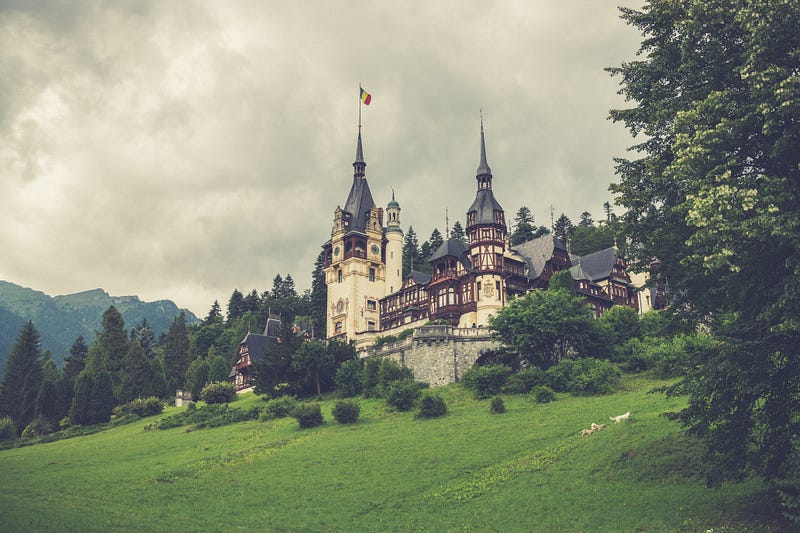
Einstein Encouraged Children To Read Fairytales.
It was George J. Ziogas who stimulated my thoughts on the phenomenon of imagination in the following article: What Albert Einstein Can Teach Your Children About Confidence. You will find the link below in the featured reading list.
If you want your children to be intelligent read them fairy tales. If you want them to be more intelligent read them more fairy tales.
The genius mathematician and physicist advised children to read fairy tales?
Pause for a moment and think about it: a dashing prince on a white horse rides to the rescue of a fair princess held in captivity by a wicked stepmother, fights fire-breathing dragons, awakes a sleeping beauty with a kiss, finds his way through a labyrinthine forest to a mystical castle where a pining damsel is imprisoned in a tower, makes a plan, and in no time, is carrying her home in his arms.
These are the heroes and heroines actively solving problems, overcoming evil with good, and defeating the powers arrayed against them. They ride triumphantly in the minds of children, their imagination stirred: I will be Superman and perform daring feats. I want to be like Anna and Elsa, heroines of Frozen, or Merida of the clan Dunbroch. How about Moana and Maui? Children wear the costumes, sing the songs, and they’re away into their own Wonderland. Let It Go was my granddaughter’s signature tune for months.
A Stimulated Mind Is An Intelligent Mind.
Children have a particularly vivid imagination. Let them use it. Help them fantasize. Encourage them to visualize they’ll be doing something important or fulfilling when they grow up. (Einstein)
A child whose imagination is set alight by characters and events in fairy tales acts out her imagination and starts telling her own version of the characters she has met. Fantasy blends into reality and stimulation of the mind continues throughout life.
My granddaughter is six years old and now, she ‘reads’ to me. I have to listen to her version of stories; they are all slotted together, appearing in a mix of the original and sometimes with quite different endings. What does it matter if Cinderella never marries the prince? In my granddaughter’s version, one of the ugly sisters walks up the aisle, and Cinderella spends her life as a servant. When I asked, “But if the prince doesn’t know it’s not Cinderella, won’t he realize it’s not her voice? ” The answer was: “She keeps quiet and doesn’t talk.” Well, I asked a simple question and I got a simple answer!
Thought Enables Strategies.
Einstein linked imagination to intelligence; thought works out strategies; how did the prince find his way into the tower to rescue Rapunzel? How can the fireman reach the little girl in the second-floor bedroom? A child imagines what he will do as a fireman to save his friend trapped in a burning building; he is playing at heroes. “Look at me, I am an achiever. I am saving my friend.” Or, as one of Robin Hood’s Merry Men: “I am overcoming evil with good.”
My Observation of Children and Imagination.
I have always thought of imagination in relation to children. Children often have an imaginary friend they talk to constantly and who accompanies them everywhere; the friend has a name, often it is a strange name to us, made up by the child. This friend is a confidante, someone the child relates to, who fills a special place in the child’s play-life.
Children like to imitate a person of authority by, for example, acting out the role of a teacher, nurse or doctor. You will hear a child as a teacher, in full control of the class, taking no ‘nonsense’ from her pupils. This is an important aspect of imagination because the child is impersonating a role model, she is using power to control a situation.
Related Reading:
Adults and Imagination.
Charlotte Zobeir Ali wrote a poem about clouds; I was reading it a week or so ago. (See link above.) Two phrases stood out for me:
The cloud is where I long to stay, and
I close my eyes and here I am

My Response was: Clouds. Joining our world of wonder, you make me long to float on a cloud! Changing shapes, hardly ever still…Thank you for clouds.
Suddenly we are on a cloud! We are flying. Up there, among the clouds, we see them stretching to the horizon and our imagination takes flight!
Further Thoughts On Imagination.
William Wordsworth…imagination, which is, in truth, but another name for absolute power. (1)
Pablo Picasso: Everything you can imagine is real. (2)
Einstein: Logic will get you from A to Z; imagination will get you everywhere.
Historic battles have been won on the world’s stage by great generals. The sheer power of the imagination is used in strategic planning before a battle; an impossible situation often leads to heroic action as the soon-to-be hero visualises a plan to save the situation.
Conclusion: Please, Don’t Forget The Fairytales.
Imagination plays a far more important role in our lives and a child’s imagination is a building block to adulthood. An artist, a statesman, an army general, a playwright, an author, a poet, a housewife, a gardener, a craftsman and grandparents: all are strategists.
A Challenge To Fellow Writers: Ride a Cloud and Let It Go!
Illumination exists because Dr Mehmet Yildiz had a vision of what a publication could be and he used his imagination to create it. I nominate the following writers to take up a challenge: please share your ideas on imagination as a follow up to my article.
Tagging: Terry Mansfield Mary Holden Kathryn A. LeRoy, PhD Selma Amy Marley George J. Ziogas Tim Maudlin Daniella Mini Agnes Louis Sumera Rizwan Charlotte Zobeir Ali Suzanne V. Tanner Tom Byers Kevin Buddaeus Jill Ebstein Salam Khan René Junge Volo Vash Julia E Hubbel Charlotte Zobeir Ali Ksenia Sein Zsanyla Cabansag Britni Pepper T. Mark Mangum
We look forward to a feast, be it lighthearted, poetic or academic. Whatever shape you want your cloud to take, we want to read it.
References:
Lynette Clements. 2020. Copyright Reserved.


